



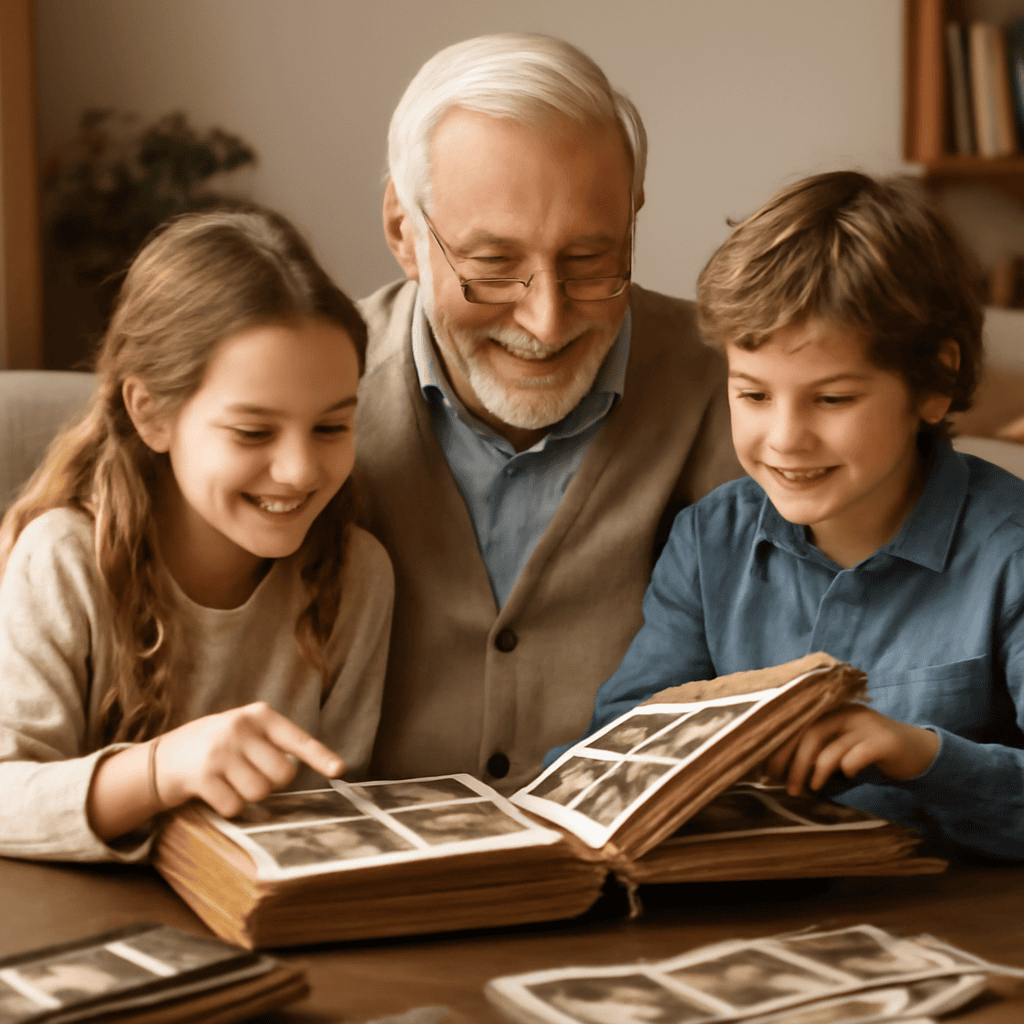
Why old photo albums are valuable for grandchildren
Old photo albums are more than just collections of pictures – they are windows into your family's past. When you discover these treasures together with your grandchildren, you give them something priceless: the opportunity to learn about their own family history and understand where they come from. This shared time not only strengthens the bond between you and your grandchildren, but also gives children a sense of identity and belonging.
For your grandchildren, it is a special experience to see how their grandparents looked as young people, what adventures you experienced, and how life was in the past. These insights help them see you not only as grandparents, but as people with your own history full of experiences, dreams, and adventures. This perspective can bring the relationship between you and your grandchildren to a deeper level and show them that you are people with a rich past.
The shared discovery of old photo albums is also a wonderful opportunity to pass on values and traditions. When you tell stories about the pictures, you can show your grandchildren what is important to you, what experiences have shaped you, and what values have carried you through your life. These conversations are more valuable than any lesson, because they arise naturally in the moment and are connected with real emotions and memories.
Making family history tangible
Family history only becomes truly interesting for children when they can experience it. Old photo albums make the past tangible and show your grandchildren that history is not just something abstract, but consists of real people, real moments, and real stories. When your grandchildren see how their great-grandparents looked, how your wedding was, or how the family home looked in the past, family history comes alive for them.
These experiences also help your grandchildren understand their own position in the family. They see that they are part of a larger story that began long before their birth and will continue after them. This feeling of continuity and belonging can give children a strong foundation on which they can build their own lives. As grandparents, you can help your grandchildren feel this connection and understand that they are part of something bigger.
When you browse through the photo albums together, you can also show how the family has developed over the years. Your grandchildren see how new members have joined, how the family has changed, and how traditions have been passed down. These insights help them understand the family as a living, growing system in which everyone has their place and everyone is important.
Strengthening identity and belonging
For children, it is important to know where they come from and which family they belong to. Old photo albums can help your grandchildren develop their identity and gain a sense of belonging. When they see that they have similarities with family members, that certain traditions have existed in the family for a long time, or that their grandparents had similar interests to them, this can strengthen their self-confidence.
This connection to family history can also help your grandchildren master challenges. When they know that their family has already overcome many difficult times and that they are part of a strong community, this can give them courage to face difficult situations themselves. As grandparents, you can show your grandchildren that they are not alone, but part of a family that supports them and has already mastered many challenges.
The shared time with the photo albums also strengthens the emotional bond between you and your grandchildren. When you tell stories and share memories, you show your grandchildren that you trust them and that your relationship is important. These moments of connection are valuable for both sides and create memories that will accompany both you and your grandchildren throughout your lives.
Preparation for the shared discovery journey
Before you discover the photo albums together with your grandchildren, it is worth preparing a little. Take time to look through the albums and think about which stories you want to tell. It doesn't have to be perfect – spontaneous moments are often the most beautiful – but a little preparation can help make the shared time particularly enriching.
Also think about which albums might be particularly interesting for your grandchildren. Perhaps there are albums with pictures of family celebrations, vacations, or special moments that are particularly exciting for children. You can also think about which stories you want to tell and which questions your grandchildren might have. This preparation helps you make optimal use of the shared time and ensures that your grandchildren learn a lot and have fun.
It is also important that you don't put yourself under pressure. The shared time with the photo albums should be relaxed and pleasant, not stressful. If you don't have all the stories ready or if you can't remember everything exactly, that's completely fine. The most important thing is that you spend time together and that your grandchildren feel that you want to show them something special.
Sorting and selecting photo albums
If you have many photo albums, it can be helpful to make a selection beforehand. Think about which albums might be particularly interesting for your grandchildren and which stories you want to tell. Perhaps there are albums with pictures of family celebrations, vacations, or special moments that are particularly exciting for children. You can also select albums that show different life phases so that your grandchildren get an overview of the family history.
If the albums are not sorted or if you have many photos, you can also make a selection together with your grandchildren. Let your grandchildren help decide which albums they want to see, and show them that their interests are important. This participation can make the shared time even more interesting and give your grandchildren the feeling that they are actively involved in the discovery.
It can also be helpful to organize the albums chronologically or by topic. If you have albums that show different life phases – for example, childhood, youth, adulthood – you can go through them in the right order so that your grandchildren understand the development of the family over time. This structure can help understand the stories better and get an overview of the family history.
Preparing stories
Before you browse through the photo albums together, you can think about which stories you want to tell. You don't have to know everything by heart – spontaneous memories are often the most beautiful – but it can be helpful to remember important moments and think about how you can tell them in an interesting way for your grandchildren.
Also think about which details might be particularly exciting for your grandchildren. Perhaps there are stories about adventures, special places, or interesting people that could fascinate your grandchildren. You can also think about which questions your grandchildren might have and prepare to answer them. This preparation helps you make optimal use of the shared time and ensures that your grandchildren learn a lot and have fun.
It is important that you don't put yourself under pressure. The stories don't have to be perfect – the most important thing is that you spend time together and that your grandchildren feel that you want to show them something special. If you can't remember everything exactly or if you discover new stories spontaneously, that's completely fine. The shared discovery is a process that should develop naturally.
Designing the shared time
The shared time with the photo albums should be relaxed and unforced. Create a quiet, cozy atmosphere where you and your grandchildren feel comfortable. Perhaps you can sit together on the sofa, drink a cup of tea, or simply browse through the albums in peace. It is important that you take your time and that the shared discovery is not rushed.
Let your grandchildren take the albums in their hands and browse through them themselves. Children learn best when they are actively involved, and the opportunity to see and touch the photos themselves makes the experience much more intense. Point out details that you find interesting, and encourage your grandchildren to ask questions or share their own observations.
Be patient and take time for questions. Your grandchildren will probably have many questions – about the people in the photos, about the time when the pictures were taken, or about the stories behind them. These questions are a wonderful opportunity to have conversations and share family history. Take time to answer in detail, and show that you are happy to tell these stories.
Age-appropriate approach
The way you discover the photo albums with your grandchildren should be adapted to the age of the children. For younger children, you can tell simpler stories, focus on the pictures, and give fewer details about historical contexts. For older children and teenagers, you can have more complex conversations about the time when the photos were taken, about historical events, or about the significance of certain moments.
For younger children, it is important that the shared time does not become too long. Children have a shorter attention span, and it is better to have several short sessions than one very long one. You can also incorporate playful elements – for example, you can ask your grandchildren who is in the pictures, or encourage them to invent stories about the pictures. This playful approach makes the shared time more interesting for younger children and helps them concentrate better.
For older children and teenagers, you can also have deeper conversations. You can talk about the importance of memories, about the development of the family over time, or about the values that have been passed down through the generations. These conversations can help deepen the relationship between you and your grandchildren and show them that you see them as equal conversation partners.
Asking questions and listening
Encourage your grandchildren to ask questions and share their own observations. Ask them what they see in the pictures, what they find interesting, or what they would like to know. These questions can help initiate conversations and ensure that your grandchildren are actively involved in the discovery.
Also listen attentively when your grandchildren tell their own stories or share their thoughts. Perhaps they see something in the pictures that you yourself did not notice, or they have questions that lead to interesting conversations. These moments of exchange are valuable for both sides and help strengthen the relationship between you and your grandchildren.
Also be open to questions that you may not be able to answer immediately. If you can't remember something exactly or if you don't know something, that's completely fine. You can think together or ask around, and this shared search for answers can make the shared time even more interesting. It is important that you are honest and that your grandchildren feel that their questions are important.
Telling stories and sharing memories
The stories about the photos are the heart of the shared discovery. When you tell stories, you bring the pictures to life and help your grandchildren understand the people and moments behind the photos. Don't just tell what is visible in the pictures, but also what happened before and after, what feelings were connected with the moments, and what these moments meant to you.
Also share personal anecdotes and memories. Perhaps there are funny stories about mishaps, special moments of joy, or touching experiences that you want to share with your grandchildren. These personal stories make the shared time particularly valuable and help your grandchildren see you as people with your own history.
When you tell stories, you can also show how times have changed. Explain to your grandchildren how life was in the past, what technologies did not yet exist, or how society has developed. These insights help your grandchildren understand the past and appreciate what they have today. At the same time, you can show that change is normal and that each generation has its own challenges and opportunities.
Including personal anecdotes
Personal anecdotes make the stories about the photos particularly vivid and interesting. Tell about funny moments, special experiences, or people who were important to you. These stories help your grandchildren see the people in the pictures as real people with their own personalities and stories, not just as names or faces in photos.
You can also tell stories that show how you were as a young person. Perhaps there are stories about adventures, friendships, or dreams that you had. These insights help your grandchildren understand you as people with your own history and see that you were also once young and had similar experiences to what they have today.
When you tell personal anecdotes, you can also show how your relationships have developed. Tell about friendships that have grown over the years, family members who were important to you, or moments that have shaped your relationships. These stories help your grandchildren understand the importance of relationships and see how important it is to maintain connections with other people.
Conveying historical context
The photos in the albums show not only personal moments, but also the time when they were taken. When you convey the historical context to your grandchildren, you help them understand the past better and see how the world has developed. Explain how life was in the past, what technologies did not yet exist, or how society has changed.
You can also talk about historical events that were important at the time of the photos. Perhaps there are photos of special occasions, trips, or moments that were connected with larger historical events. These insights help your grandchildren understand the past and see how personal stories are connected with the larger history.
When you convey the historical context, you can also show how times have changed and what progress has been made. At the same time, you can also show that some things have not changed – that family, friendship, and love have always been and will remain important. This balance between change and continuity can help your grandchildren understand the past and appreciate the present.
Activities around photo albums
The shared discovery of photo albums can also lead to further activities that strengthen the bond between you and your grandchildren. Perhaps you want to create new albums together, digitize photos, or start creative projects around family history. These activities can make the shared time even more enriching and help your grandchildren actively participate in preserving family history.
You can also think about how you want to preserve the memories for the future. Perhaps you want to create a new album together with your grandchildren that summarizes the most important moments, or you want to digitize the photos so they are accessible in the future. These projects can help preserve family history for future generations and show your grandchildren that their participation is important.
The shared activities can also lead to your grandchildren developing an interest themselves in exploring family history. Perhaps they want to learn more about certain family members, or they want to collect photos and create albums themselves. These interests can strengthen the relationship between you and your grandchildren and help them develop their own connection to family history.
Creating new albums together
A wonderful activity is to create new albums together with your grandchildren. You can select the most important photos, put them together, and write stories about them together. This shared work can strengthen the bond between you and your grandchildren and help your grandchildren actively participate in preserving family history.
When you create new albums, you can also show how important it is to preserve memories. Explain to your grandchildren that these albums will be important for future generations and that they themselves are part of this history. This perspective can help your grandchildren understand the importance of memories and develop an interest themselves in preserving family history.
The shared work on new albums can also lead to interesting conversations. While you select and arrange the photos, you can tell more stories, answer questions, or think together about which moments are particularly important. These conversations can make the shared time even more enriching and help deepen the relationship between you and your grandchildren.
Digitizing and sharing photos
Another valuable activity is to digitize the old photos. This not only helps preserve the memories for the future, but also makes them accessible to the whole family. You can scan or photograph the photos together with your grandchildren and then create digital albums that you can share with the family.
When you digitize the photos, you can also show how technology has developed. Explain to your grandchildren how photos were made in the past and how photography has changed over the years. These insights can help understand the past and appreciate the opportunities we have today.
The digitized photos can also lead to further projects. Perhaps you want to create a presentation together with your grandchildren, build a website with the family stories, or display the photos in a digital frame. These projects can help preserve family history for future generations and show your grandchildren that their participation is important.
Dealing with difficult memories
Not all memories in the photo albums are happy or easy. There may be photos connected with difficult times, losses, or sad moments. When you browse through the albums together with your grandchildren, it is important to deal sensitively with such memories and explain in an age-appropriate way what is visible in the pictures.
When you encounter difficult memories, it is important to be honest, but also to remain age-appropriate. You don't have to tell all the details, but you can explain that every family also has difficult times and that this is normal. It is important that you emphasize the positive aspects and show that the family has also overcome difficult times together.
You can also show how the family dealt with difficult situations and how they stuck together. These stories can help your grandchildren understand that challenges are part of life and that the family is an important support. At the same time, you can show that it is okay to be sad or to grieve for people who are no longer there.
Age-appropriate explanations
When you encounter difficult memories, it is important to explain in an age-appropriate way what happened. For younger children, you can give simpler explanations and focus on the positive aspects. For older children and teenagers, you can also have more complex conversations about loss, grief, or difficult times.
It is important that you don't tell too much at once and that you pay attention to your grandchildren's reactions. If you notice that your grandchildren are overwhelmed or that the topic is too difficult for them, you can steer the conversation to lighter topics. The shared time should be enriching, not burdensome.
You can also show that it is okay to ask questions or talk about difficult topics. If your grandchildren have questions, take time to answer in detail, and show that you are there for them. This openness can help build trust and ensure that your grandchildren know they can talk to you about anything.
Emphasizing positive aspects
Even if there are difficult memories, it is important to emphasize the positive aspects. Show your grandchildren that the family has also overcome difficult times together and that the connections between family members have remained strong. These stories can help your grandchildren understand that challenges are part of life and that the family is an important support.
You can also show how the family emerged stronger from difficult situations. Tell about moments of support, solidarity, or positive developments that came after difficult times. These stories can help your grandchildren understand that difficult times can also lead to growth and strength.
It is also important that you show that it is okay to be sad or to grieve for people who are no longer there. At the same time, you can show that memories of these people are important and that they live on through the stories and photos. This balance between grief and appreciation can help your grandchildren deal with difficult feelings and understand that memories remain important even after loss.
Strengthening the connection between generations
The shared discovery of old photo albums is a wonderful way to strengthen the connection between generations. When you tell stories and share memories, you show your grandchildren that you trust them and that your relationship is important. These moments of connection are valuable for both sides and create memories that will accompany both you and your grandchildren throughout your lives.
The shared time with the photo albums can also lead to your grandchildren developing an interest themselves in learning more about family history. Perhaps they want to learn more about certain family members, or they want to collect photos and create albums themselves. These interests can strengthen the relationship between you and your grandchildren and help them develop their own connection to family history.
As grandparents, you can help your grandchildren understand the importance of memories and family history. When you discover the photo albums together, you give your grandchildren not only insights into the past, but also tools that will accompany them throughout their lives. These shared experiences are valuable for both sides and help strengthen the bond between generations.
Age-appropriate approach for shared discovery
Activities around photo albums
Tips for successful shared time
Preparation checklist
- Look through photo albums and select interesting albums
- Think about stories for important photos
- Prepare quiet, cozy environment
- Plan time without rush or stress
- Think about which questions grandchildren might have
- Be ready to respond spontaneously to interests
Questions you can ask your grandchildren
- "What do you see in this picture?"
- "Who could that be in the photo?"
- "What do you think life was like back then?"
- "What story could belong to this picture?"
- "What do you find particularly interesting about this photo?"
- "Are there questions you have about this picture?"
Signs that your grandchildren show interest
- Grandchildren ask many questions about the photos
- They want to look at certain albums again and again
- They tell their own stories about the pictures
- They want to collect photos or create albums themselves
- They ask about certain family members
- They show enthusiasm for the stories