



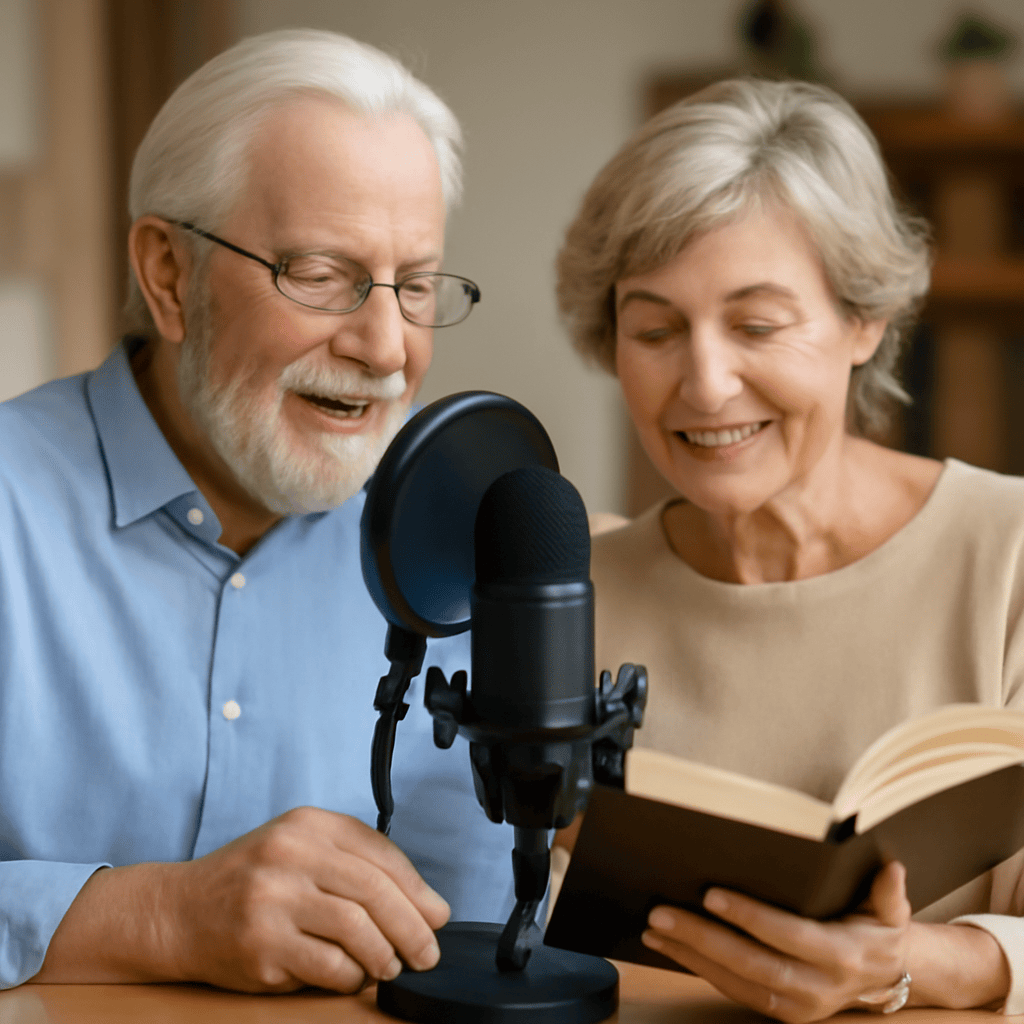
Why audio recordings are valuable for grandchildren
As grandparents, you have a unique opportunity to give your grandchildren something special: your voice and your stories. Audio recordings are more than just spoken words – they preserve the emotion, warmth, and personality of your voice for the next generation. Your grandchildren can hear you even when you are no longer there, maintaining a connection to you and your family history.
Audio recordings are particularly valuable because they create an emotional connection that goes beyond photos or written texts. The voice carries not only information but also feelings, intonations, and the personality of the speaker. When your grandchildren hear your voice, they feel your presence and can better imagine how you were and what was important to you. This connection is a gift that your grandchildren will treasure throughout their lives.
For your grandchildren, audio recordings are a way to get to know their grandparents better and understand where they come from. They can hear stories that might otherwise be lost and develop a deeper understanding of their family history. These recordings become a valuable family heritage that can be passed down from generation to generation.
Emotional connection across generations
The voice is one of the most personal characteristics of a person. When your grandchildren hear your voice, an emotional connection is created that exists across time and space. This connection is especially important when you can no longer be with your grandchildren, whether due to distance or aging. Audio recordings allow your grandchildren to maintain this connection and remember you.
Research shows that the voice can trigger strong emotional reactions. When your grandchildren hear your voice, they can remember shared moments, find comfort, or simply feel that you are with them. This emotional connection is a gift that will accompany your grandchildren throughout their lives and help them understand their own identity and roots.
Audio recordings also allow multiple generations to benefit from your stories simultaneously. Your children can listen to the recordings and remember their own childhood, while your grandchildren discover new stories. These shared listening experiences can enrich family gatherings and inspire conversations about family history.
Preserving family stories
Many family stories are lost because they were never written down or recorded. Audio recordings are a simple and effective way to preserve these stories for the future. You don't need to be a writer or master complex technology – you just need to tell your stories, and the technology does the rest.
Through audio recordings, you can preserve stories that might otherwise be forgotten. Perhaps you have memories of your grandparents, special events in your family, or traditions you want to pass on. These stories are part of your family history and deserve to be preserved for the next generation.
Audio recordings are also a way to preserve your perspective on events. Your grandchildren can hear how you experienced certain situations, what feelings you had, and what was important to you. This personal perspective is something that is often lost in written texts but remains alive in audio recordings.
The right equipment for audio recordings
To get started with audio recordings, you don't need expensive equipment. A modern smartphone is completely sufficient to create high-quality recordings. Most smartphones today have very good built-in microphones that are more than adequate for voice recordings. So you can start immediately without having to buy additional equipment.
However, if you want to create more professional recordings or if you want to record stories regularly, it may be worthwhile to invest in a good microphone. There are various types of microphones suitable for voice recordings, and the choice depends on your needs and budget.
In addition to hardware, the right software is also important. There are many apps for smartphones and programs for computers that help you create, edit, and store recordings. Most of these apps are easy to use and require no technical knowledge.
Smartphone recordings for beginners
Modern smartphones are excellent for audio recordings. The built-in microphones are of high quality and can create clear, understandable recordings. For beginners, it is completely sufficient to simply use your smartphone's voice memo app or download a free recording app.
It is important to keep your smartphone still during recording and not move it. It is best to place it on a table or stable surface so that no sounds are created by movement. Also, don't hold the smartphone too close to your mouth – a distance of about 20 to 30 centimeters is ideal for voice recordings.
Also pay attention to the environment: choose a quiet room without disturbing background noise. Close windows and doors, turn off the TV or radio, and inform other people in the household that you are making a recording. These small preparations can significantly improve the quality of your recording.
Professional microphones for better quality
If you want to make recordings regularly or if you want particularly high quality, investing in a good microphone can be worthwhile. There are various types of microphones suitable for voice recordings: USB microphones that connect directly to the computer, or external microphones for smartphones.
USB microphones are particularly easy to use: you simply plug the microphone into your computer's USB port and can start immediately. These microphones are available in various price ranges and usually offer very good quality for home use. They are ideal if you want to edit recordings on your computer.
For smartphone recordings, there are special external microphones that can be connected via the headphone jack or via Bluetooth. These microphones are compact and easy to transport, so you can make recordings on the go. They offer better quality than built-in smartphone microphones but are still easy to use.
Recording apps and software
There are many apps for smartphones that help you create audio recordings. Most smartphones already have a built-in voice memo app that is completely sufficient for simple recordings. However, if you need more features, such as editing options or different file formats, you can download free or paid apps.
For computers, there are various programs for audio recording and editing. Some programs are free and offer basic functions, while others offer more features but are paid. For beginners, free programs are completely sufficient to create high-quality recordings.
It is important to choose an app or software that you understand and enjoy. You don't need to master complex software – simple programs are completely sufficient to create professional recordings. Try different apps and find the one that best suits you.
Preparing the recording
Good preparation is the key to successful audio recordings. Before you start recording, you should think about which stories you want to tell and how you want to structure them. You don't need to plan everything perfectly, but a rough structure helps you not lose track during recording.
The recording environment is also important for the quality of your recording. Choose a quiet room without disturbing noises, and make sure you feel comfortable. You will be able to speak better if you are relaxed and in a pleasant environment.
Technical preparation means you should make sure your equipment works and that you have enough storage space. Test your equipment before the actual recording so you don't have technical problems during recording.
Selecting and structuring stories
Before recording, think about which stories you want to tell. Perhaps you already have certain stories in mind that you would like to pass on, or you want to tell spontaneously. Both are possible – what matters is that you feel comfortable and that the stories are interesting and understandable for your grandchildren.
You can also roughly structure your stories: think of a beginning, a middle, and an end. You don't need to plan everything word for word, but a rough structure helps you not lose track during recording. You can also make notes to record important points you definitely want to mention.
If you want to record multiple stories, you can group them thematically. Perhaps you want to tell all stories about your childhood in one recording session, or all stories about certain family members. This thematic grouping helps you stay organized and makes it easier for your grandchildren to find and listen to the recordings later.
Preparing the recording environment
The right environment is crucial for the quality of your recording. Choose a quiet room without disturbing background noise. Close windows and doors to avoid street noise or sounds from other rooms. Turn off TV, radio, or other sources of noise.
The acoustics of the room are also important. Rooms with many hard surfaces, such as bathrooms or empty rooms, can create echo. Rooms with carpets, curtains, or furniture absorb sound better and create a more pleasant recording quality. If possible, choose a room with soft surfaces.
Also make sure you feel comfortable during recording. Sit comfortably, have a glass of water ready, and make sure you won't be disturbed. Inform other people in the household about your recording so they know you need quiet. A relaxed atmosphere helps you speak more naturally.
Technical preparation
Before you start recording, you should test your equipment. Make a short test recording to ensure everything works and the quality is good. Check the volume and make sure you can be heard clearly and understandably.
Make sure you have enough storage space. Audio recordings can require a lot of storage space, especially if you are recording longer stories. Check the available storage space on your device and delete old files if necessary to make room.
Also charge your device's battery as a precaution so the recording doesn't stop in the middle. If you are using an external microphone, make sure it is properly connected and that the batteries are full if it needs them. These small preparations can avoid a lot of trouble during recording.
Recording techniques and tips
Good recording techniques help you create clear and pleasant recordings. You don't need to be a professional speaker – with a few simple tips, you can already achieve very good results. What matters is that you speak naturally and that you feel comfortable.
Mistakes and repetitions are completely normal and no cause for concern. You can pause during recording if you make a mistake and then simply continue speaking. Most editing programs allow you to cut out mistakes later, so you don't need to worry if you stumble once.
Use pauses and emphasis to make your stories more lively. Pauses give your listeners time to process what they have heard, and emphasis helps highlight important points. Don't speak too fast – your grandchildren should have time to understand and enjoy your words.
Speaking techniques for clear recordings
For clear recordings, it is important to speak clearly and at an appropriate pace. Don't speak too fast so your listeners can follow you, but also not too slowly so it doesn't become boring. A natural, relaxed speaking pace is ideal.
Make sure you articulate clearly. Don't speak too quietly, but also not too loudly – a normal conversation volume is perfect. If you are unsure, make a test recording and listen to it to check if your volume is appropriate.
Breathe naturally and take breaks when you need to catch your breath. These natural pauses make your recording more lively and help your listeners process what they have heard. Don't try to say everything in one breath – pauses are a natural part of speaking.
Dealing with mistakes and repetitions
Mistakes and repetitions are completely normal and happen to everyone. If you make a mistake or stumble during recording, simply take a short break and start the sentence or passage again. You can cut out mistakes later in editing, so you don't need to worry.
If you notice you have lost track or don't know how to continue, take a break and collect your thoughts. You can also use your notes to orient yourself. It is completely fine to pause and think during recording.
Don't try to be perfect. The most natural recordings are created when you are relaxed and simply tell, as if you were speaking with your grandchildren. Your grandchildren will love your stories even if they are not perfect – they will appreciate the warmth and personality of your voice.
Using pauses and emphasis
Pauses are an important tool when telling stories. They give your listeners time to process what they have heard and help build tension. Use pauses before important moments in your story to increase your listeners' attention.
Emphasis helps highlight important points and make your story more lively. Emphasize important names, dates, or events so they are better remembered. But don't overdo it – too many emphases can sound artificial. Natural, varied speaking is best.
Also vary your voice to make your story more interesting. You can become quieter to create tension or louder to convey excitement. These variations make your recording more lively and help your listeners better immerse themselves in the story.
Post-processing and storage
After recording, you can edit your recording to improve it. Most editing programs allow you to cut out mistakes, shorten pauses, or adjust the volume. You don't need to be an expert – simple editing steps are completely sufficient to create a professional recording.
Storing your recordings is important so they don't get lost. Choose a file format that can be played on various devices and store your recordings in a safe place. Also create backups so you don't lose your recordings if something happens to your device.
Also think about how you want to organize your recordings. Perhaps you want to sort them by topic, by date, or by the grandchildren they are intended for. Good organization makes it easier to find the right recording when you or your grandchildren want to listen to it later.
Basic editing steps
Basic editing includes removing mistakes, shortening overly long pauses, and adjusting volume. Most editing programs are easy to use and offer visual representations of your recording so you can see exactly what you are editing.
Start by removing obvious mistakes or repetitions. Listen to your recording and mark places you want to remove. Most programs allow you to simply cut out these places. Make sure the transition after cutting sounds natural.
Adjust the volume if necessary. If your recording is too quiet or too loud, you can adjust the volume with most editing programs. Make sure the volume is even – there should be no sudden volume jumps.
File formats and storage
Choose a file format that can be played on various devices. MP3 is a widely used format that is supported by almost all devices. WAV offers higher quality but requires more storage space. For voice recordings, MP3 is usually completely sufficient.
Store your recordings in a safe place. You can store them on your computer, on an external hard drive, or in the cloud. It is important to choose a place that is safe and where you can find the recordings in the future.
Name your files meaningfully so you can easily find what you are looking for later. Use names like "Story-Childhood-Grandma-2025.mp3" instead of generic names like "Recording1.mp3". Good naming makes it much easier to organize and find your recordings.
Backup and archiving
Regularly create backups of your recordings so you don't lose them. Store copies of your recordings in different places – for example, on your computer, on an external hard drive, and in the cloud. This way, your recordings are protected even if one device breaks.
Also think about how you want to archive your recordings long-term. Perhaps you want to burn them to CDs or DVDs, or you want to store them in the cloud. It is important to choose a format that can still be played in the future.
Also share your recordings with your family so multiple copies exist. You can send the recordings by email, copy them to USB sticks, or share them in a cloud. This ensures your stories are still available even if something happens to your copy.
Story ideas for audio recordings
There are many different types of stories you can record for your grandchildren. Think about which stories might be interesting for your grandchildren and which you would like to pass on. You don't need to record all stories at once – you can record different stories over a longer period.
Childhood memories are particularly valuable because they show how life was back then and how you grew up. Family stories and traditions help your grandchildren understand their roots, while life wisdom and advice can help them learn important lessons for their own lives.
You can also record stories about special events, such as weddings, births, or other important moments in your family. These stories help your grandchildren better understand and appreciate their family history.
Childhood memories
Childhood memories are particularly valuable for your grandchildren because they show how life was back then. Tell about your childhood, games you played, friends you had, or special moments that shaped you. These stories help your grandchildren understand that you were also once a child and had similar experiences.
You can also tell about your parents or grandparents and thus create a connection across multiple generations. Tell how your grandparents were, what values they taught you, or what traditions they maintained. These stories help your grandchildren better understand their family history.
Special events from your childhood can also be interesting – perhaps there was a special celebration, a move, or an event that shaped your life. These stories show your grandchildren that life is full of ups and downs and that you can learn and grow from difficult situations.
Family stories and traditions
Family stories and traditions are an important part of your family history. Tell about traditions maintained in your family, special celebrations or rituals, or stories passed down from generation to generation. These stories help your grandchildren understand their cultural identity.
You can also tell about family members who particularly influenced you. Perhaps there was a grandmother or grandfather who taught you important values, or a sibling who was particularly close to you. These personal stories help your grandchildren better understand their family.
Traditions can also be practical things, such as recipes passed down from generation to generation, or crafts maintained in your family. Tell how these traditions came about and why they are important to you. These stories help your grandchildren appreciate their cultural heritage.
Life wisdom and advice
As grandparents, you have accumulated much life experience that you can pass on to your grandchildren. Tell about lessons you have learned in life, mistakes you made and learned from, or moments that particularly shaped you. This wisdom can help your grandchildren make important decisions in their own lives.
You can also give advice specifically intended for your grandchildren. Perhaps you want to tell them something about friendship, pursuing dreams, or dealing with challenges. These personal pieces of advice are particularly valuable because they come from someone who loves them and wants to support their development.
Life wisdom doesn't always have to be serious – you can also tell about funny moments, mistakes you made that you can laugh about today, or situations you would have solved differently if you had had the experience. These stories show your grandchildren that mistakes are part of life and that you can learn from them.
Joint projects with grandchildren
Audio recordings can also become a joint project with your grandchildren. You can develop stories together, answer your grandchildren's questions, or even create audio plays and dialogues together. These joint projects strengthen the bond between you and your grandchildren and create special memories.
If your grandchildren have questions, you can answer them in a recording. Perhaps they want to know how you experienced certain things, or they have questions about your family history. These question-and-answer recordings are particularly valuable because they show what interests your grandchildren and what connection they have to you.
You can also create audio plays or dialogues together, where you and your grandchildren take on different roles. These creative projects are fun and help your grandchildren develop their creativity. At the same time, you create something you both share and can be proud of.
Developing stories together
You can develop stories together with your grandchildren by asking them which stories they want to hear or by involving them when you tell a story. Perhaps your grandchildren want to learn more about certain topics, or they have questions you can answer in your story.
When you develop stories together, you can also be creative. Perhaps you want to invent a story based on true events, or you want to expand an existing story with new details. This creative collaboration is fun and helps your grandchildren develop their imagination.
Stories developed together are also particularly personal because they reflect your grandchildren's interests and personality. When you record a story you developed together, this story will be particularly valuable to your grandchildren because they were part of the creative process.
Answering grandchildren's questions
Question-and-answer recordings are a wonderful way to satisfy your grandchildren's curiosity and show them that their questions are important. Let your grandchildren ask questions that you then answer in a recording. These recordings are particularly valuable because they show what interests your grandchildren and what connection they have to you.
You can also have regular question-and-answer sessions where your grandchildren ask you questions that you then record. These sessions can become a beautiful tradition that you can maintain over a longer period. Your grandchildren will appreciate that you take the time to answer their questions.
Questions can relate to various topics – perhaps your grandchildren want to learn more about your childhood, your work, your hobbies, or your relationship with other family members. These personal questions help your grandchildren better understand you and build a deeper connection with you.
Creating audio plays and dialogues
Audio plays and dialogues are a creative way to create something together with your grandchildren. You can develop a story where you and your grandchildren take on different roles, or you can record an existing fairy tale or story as an audio play. These projects are fun and help your grandchildren develop their creativity.
When you record an audio play, you can also add sounds and music to make the story more lively. You don't need to use professional sound effects – simple sounds you make yourself can be just as effective. These creative elements make the audio play more interesting and help your grandchildren better immerse themselves in the story.
Audio plays are also a way to involve multiple generations. Perhaps your children or other family members also want to participate and take on different roles. These joint projects strengthen the family and create memories that all participants will treasure.
Comparison of different recording equipment
Comparison of different audio file formats
Categories of stories for audio recordings
Tips for the perfect recording environment
- Choose a quiet room without disturbing noises
- Close windows and doors to avoid outside noise
- Turn off TV, radio, and other sources of noise
- Inform other people in the household about your recording
- Choose a room with soft surfaces for better acoustics
- Create a relaxed, pleasant atmosphere
Topics for story audio recordings
- Childhood memories and school days
- Stories about your parents and grandparents
- Special events and milestones in your life
- Family stories and traditions
- Life wisdom and important lessons
- Stories about your hobbies and interests
- Travel memories and adventures
- Stories about your work experience
Basic editing steps for audio recordings
- Listen to the recording completely
- Mark places with mistakes or repetitions
- Remove obvious mistakes and overly long pauses
- Adjust volume if necessary
- Check the quality of the recording
- Save the edited version