



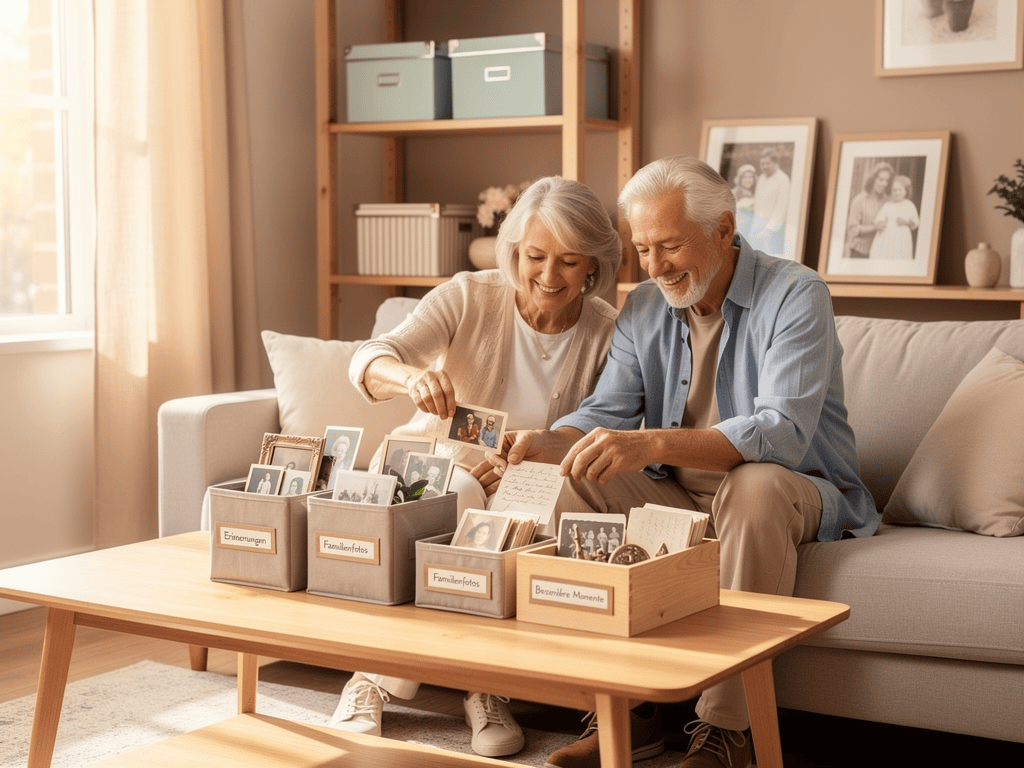
Why organizing keepsakes is important
Keepsakes are more than just objects – they are carriers of stories, emotions, and connections between generations. As grandparents, you have the opportunity to organize these valuable treasures so that your grandchildren can appreciate and understand them later. Good organization helps ensure that the stories behind the keepsakes are not lost and that your grandchildren can find access to their family history.
When you organize your keepsakes well, you create a bridge between the past and the future. Your grandchildren will be grateful later when they can understand the stories behind the photos, letters, and heirlooms. Thoughtful organization makes it easier to find, share, and pass on these treasures so that family history remains alive.
Organizing keepsakes is also a form of care for your grandchildren. It shows that family history is important to you and that you want your grandchildren to have access to these valuable memories. When you invest time now to organize your keepsakes, you give your grandchildren a valuable gift later: the opportunity to understand their roots and learn about their family history.
Preserving stories for the next generation
Every keepsake tells a story – about your childhood, about your parents, about important moments in your family's life. If you don't document and organize these stories, they may be lost. Your grandchildren will have questions later: Who is in this photo? Why is this letter important? What does this heirloom mean?
Through good organization, you can ensure that the stories behind the keepsakes are preserved. Label photos with names and dates, write notes on letters, and explain the meaning of heirlooms. This information will be invaluable to your grandchildren later when they want to understand their family history.
When you document the stories about your keepsakes, you give your grandchildren more than just objects – you give them understanding of their origins and their family. These stories help your grandchildren understand themselves better and develop their identity. As grandparents, you can make an important contribution by organizing your keepsakes so that these stories are not lost.
Creating valuable connections
Keepsakes create connections between generations. When your grandchildren later see photos of you as a child or read letters you wrote, a special connection is created. They see that you were once young too, that you had similar experiences, and that you are part of a larger family history.
Good organization makes it easier to create these connections. When keepsakes are well sorted and labeled, you can look at them together with your grandchildren and tell the stories behind them. These shared moments are valuable and help strengthen the relationship between you and your grandchildren.
When you organize your keepsakes now, you create the foundation for your grandchildren to experience these connections later. You enable them to understand their family history and see themselves as part of a larger story. These connections are a valuable gift you can give your grandchildren.
Categorizing different types of keepsakes
The first step to good organization is to categorize your keepsakes. Different types of keepsakes require different storage methods and have different meanings. When you sort your keepsakes by category, it becomes easier to find, protect, and share them.
Start by collecting all your keepsakes and sorting them roughly. Create stacks for photos, letters, documents, heirlooms, and other items. Take your time with this process – it's normal for many memories to come up. Use these moments to reflect on and document the stories behind the keepsakes.
When categorizing your keepsakes, also think about which categories might be important for your grandchildren later. Perhaps you want to create a category for "stories about the family" or one for "important moments". These categories help later to understand the keepsakes in context and tell the stories behind them.
Photos and albums
Photos are often the most valuable keepsakes because they capture moments and tell stories. Start by sorting your photos – by years, by events, or by people. Remove photos that are damaged or no longer meaningful, but keep all photos that tell stories or capture important moments.
Old photo albums can be valuable, but they are often not optimal for storage. Consider whether you want to transfer the photos to new, acid-free albums to protect them better. Label each photo with names, dates, and short notes so that your grandchildren will know later who is in them and what happened.
If you have many photos, you can also digitize them to protect them better and make them easier to share. Scan the most important photos and store them digitally, but also keep the originals. Your grandchildren will appreciate both formats later – the digital copies for easy sharing and the originals for the emotional connection.
Letters and documents
Letters and documents tell stories about relationships, important events, and the personality of the people who wrote them. Sort letters by senders, by years, or by topics. Important documents such as birth certificates, marriage certificates, or diplomas should be stored separately so they don't get lost.
Letters should be stored in acid-free envelopes or folders to protect them from damage. Label each letter with the sender, date, and a short note about the content. If letters are particularly valuable or emotionally significant, you can store them in special protective sleeves.
Also consider which letters and documents might be important for your grandchildren later. Letters that tell family history or documents that document important events should be especially protected. Your grandchildren will be grateful later when they can read these documents and understand the stories behind them.
Heirlooms and valuables
Heirlooms are often the most valuable keepsakes because they have been passed down through generations. Each heirloom has a story – about the person who owned it, about the circumstances under which it was passed down, and about its meaning for the family. Document these stories so they are not lost.
Heirlooms should be stored safely but also accessible so you can look at them together with your grandchildren. Consider which heirlooms are particularly valuable or significant and which need special protection. Valuable heirlooms should be stored in special cabinets or chests that protect against moisture, light, and pests.
When organizing heirlooms, also think about which heirlooms you want to pass on to which grandchildren later. Document these wishes so there are no ambiguities later. Your grandchildren will appreciate knowing which heirlooms are intended for them and which stories are associated with them.
Practical storage solutions
Proper storage is crucial for your keepsakes to last long. Different types of keepsakes require different storage methods. Photos need protection from light and moisture, letters need acid-free environments, and heirlooms need safe storage locations.
Invest in high-quality storage materials – acid-free albums, archive boxes, protective sleeves. These materials cost a bit more, but they protect your keepsakes long-term. Your grandchildren will be grateful later when the keepsakes are well preserved and the stories behind them are still readable.
Also consider where you want to store your keepsakes. The storage location should be dry, cool, and dark to avoid damage. Avoid basements or attics that can be too damp or too hot. A cabinet in a heated room is often the best solution.
Choosing safe storage locations
The right storage location is crucial for the long-term preservation of your keepsakes. Choose a location that is dry, cool, and dark. Moisture, heat, and light can damage keepsakes and make the stories behind them unreadable. A cabinet in a heated room is often the best solution.
Avoid storage locations that are exposed to extreme temperatures or moisture. Basements can be too damp, attics can get too hot, and garages are often not climate-controlled. If you don't have an ideal storage location, you can also use a special cabinet or archive box that protects against environmental influences.
Also consider how accessible the keepsakes should be. If you want your grandchildren to be able to look at them together with you, they shouldn't be too hard to reach. A cabinet in the living room or guest room can be a good solution so that the keepsakes remain part of family life.
Protection from damage
Keepsakes need protection from various types of damage. Photos can fade from light, letters can mold from moisture, and heirlooms can be damaged by improper handling. Invest in high-quality protective sleeves and storage materials to protect your keepsakes.
Use acid-free materials for storing photos and letters. Regular albums or folders can contain acids that damage keepsakes over time. Acid-free albums, archive boxes, and protective sleeves are a bit more expensive, but they protect your keepsakes long-term.
Also protect keepsakes from pests such as moths or silverfish. Use special pest control products or store keepsakes in tightly sealed containers. Regular checks help detect and fix damage early.
Digitizing keepsakes
Digitizing keepsakes is a modern way to protect them and make them easier to share. Digital copies cannot be damaged, they are easy to share, and they can be viewed by multiple people at the same time. When you digitize your keepsakes, you create an additional layer of security for these valuable treasures.
Start with the most important keepsakes – photos of special moments, important letters, documents that tell family history. Scan these or photograph them with a good camera. Store the digital copies in multiple formats – for example, as JPEG for easy sharing and as TIFF for archiving.
Create a clear folder structure for your digital keepsakes. Organize them by years, by events, or by people. Label each file with a meaningful name that describes what is shown. Your grandchildren will be grateful later when they can easily find and understand the digital copies.
Scanning and storing photos
Scanning photos is a good way to digitize and protect them. Use a scanner with high resolution to capture the details of the photos. Scan photos at a resolution of at least 300 DPI so they can still be printed well later.
If you have many photos, scanning can be time-consuming. Take your time and do it step by step. Perhaps you can also involve your grandchildren – they can help with scanning and hear the stories behind the photos at the same time. This shared activity can be a nice opportunity to spend time together.
Store the scanned photos in a clear format and with meaningful file names. Use a format like "year-month-day-event-person.jpg" for file names. Create backups of digital photos on multiple devices or in the cloud so they cannot be lost.
Creating digital archives
A digital archive helps organize all your digitized keepsakes in one place. Create a clear folder structure that makes it easy to find specific keepsakes. Organize folders by years, by events, or by people, depending on what makes the most sense for you.
Use meaningful file names and add metadata to files if possible. Metadata can include information such as date, people, location, or event. This information helps later to understand the keepsakes in context and find the stories behind them.
Create regular backups of your digital archives. Store copies on multiple devices or in the cloud so the keepsakes cannot be lost. Your grandchildren will be grateful later when they have access to these digital archives and can understand the stories behind them.
Documenting stories about keepsakes
The stories behind the keepsakes are just as important as the keepsakes themselves. If you don't document these stories, they may be lost, and your grandchildren won't be able to understand later why certain keepsakes are important. Take time to document the stories and link them to the keepsakes.
Label each keepsake with the most important information – who is shown, when it was created, what happened, why it is important. This information can be written directly on the keepsake or documented in a separate notebook. It's important that the information is linked to the keepsakes so it doesn't get lost.
When documenting stories, remember that your grandchildren will read this information later. Write clearly and understandably, and explain connections that are not obvious to outsiders. Your grandchildren will be grateful when they can understand the stories and find access to their family history.
Labels and notes
Labels are a simple but effective way to document stories. Label photos with names, dates, and short notes about the event or people shown. Use acid-free pens for labels so they don't damage the photos. Also label letters and documents with important information.
Notes can be more detailed than labels and provide more context. Write notes on important keepsakes that explain the story behind them. These notes can be stored in a notebook, on index cards, or in digital form. It's important that the notes are linked to the keepsakes so they don't get lost.
When creating labels and notes, remember that your grandchildren will read this information later. Write clearly and understandably, and explain connections that are not obvious to outsiders. Your grandchildren will be grateful when they can understand the stories and find access to their family history.
Creating memory books
Memory books are a beautiful way to document stories and present keepsakes. Create a memory book for important events, for specific people, or for specific time periods. Combine photos, letters, notes, and other keepsakes into a coherent story.
Memory books can be handwritten or created digitally. Handwritten books have a more personal character, while digital books are easier to share and duplicate. Consider which form is best for you and your grandchildren.
When creating memory books, remember that they will be valuable to your grandchildren later. Write the stories so they are understandable, even for people who didn't know the people or events personally. Your grandchildren will appreciate these books and see them as part of their family history.
Involving grandchildren in organization
Organizing keepsakes can be a wonderful opportunity to spend time with your grandchildren and bring them closer to family history. When you involve your grandchildren in the organization, they learn not only about the keepsakes but also about the stories behind them and about their family.
Joint sorting activities can lead to valuable conversations where you tell stories and answer questions. Your grandchildren will appreciate when you show them how you were as a child, what adventures you experienced, and which people were important to you. These shared moments strengthen the relationship between you and your grandchildren.
When you involve your grandchildren, you also give them the opportunity to organize their own keepsakes. Help them sort and label their photos, drawings, or other treasures. This activity helps your grandchildren take responsibility for their own memories and understand why organization is important.
Joint sorting activities
Joint sorting activities are a good way to involve your grandchildren in the organization. Start with a small selection of keepsakes – perhaps photos of a specific event or letters from a specific person. Sort these together and tell the stories behind them.
Make the sorting activities a positive experience. Take your time, listen to what your grandchildren have to say, and answer their questions. If your grandchildren show interest, you can also plan larger sorting activities. It's important that the activity is fun and not too overwhelming.
When sorting together, you can also consider which keepsakes are particularly important for your grandchildren. Perhaps you want to reserve certain photos or heirlooms for specific grandchildren. Document these wishes so there are no ambiguities later. Your grandchildren will appreciate knowing which keepsakes are intended for them.
Telling stories
Organizing keepsakes offers many opportunities to tell stories. When you look at photos together or read letters, tell the stories behind them. Explain who the people are, what happened, why the moment was important. Your grandchildren will appreciate these stories and remember them.
Also encourage your grandchildren to ask questions. If they are curious, answer their questions in detail. If you don't know all the details, that's okay – you can think together or research. These conversations help your grandchildren understand family history and ask their own questions.
When telling stories, remember that your grandchildren can retell these stories later. Tell the stories so they are understandable and comprehensible. Your grandchildren will see these stories as part of their own identity and can pass them on to their own children.
Long-term planning for keepsakes
Organizing keepsakes is not a one-time task but an ongoing process. Consider how you want to organize your keepsakes long-term and how you can ensure they remain well preserved in the future. Long-term planning helps ensure that your keepsakes are not lost and that your grandchildren have access to them later.
Document your wishes for the future – which keepsakes should be passed on to which grandchildren, which stories should be preserved, how should the keepsakes be stored. This documentation can be in a will, in a separate document, or in notes on the keepsakes themselves. It's important that your wishes are clearly documented.
Also consider how you can ensure that the stories behind the keepsakes are preserved. Perhaps you want to have regular conversations with your grandchildren where you tell the stories. Perhaps you also want to create memory books or digital archives that document the stories. Your grandchildren will be grateful later when they can understand these stories.
Recommended storage materials for different keepsakes
Recommended formats for digitization
Suggestions for organization categories
Practical tips for organization
- Start with a small selection of keepsakes to avoid being overwhelmed
- Take your time with the process – organization is not a rush job
- Label each keepsake with important information
- Use high-quality, acid-free storage materials
- Create regular backups of digitized keepsakes
- Document the stories behind the keepsakes
- Involve your grandchildren in the organization
Storage locations to avoid
- Basements – often too damp and risk of mold
- Attics – can get too hot and pest infestation
- Garages – often not climate-controlled and temperature fluctuations
- Direct sunlight – can fade photos
- Humid rooms – can cause mold and damage
Tips for documenting stories
- Label photos with names, dates, and short notes
- Write notes on important letters and documents
- Explain the meaning of heirlooms
- Create memory books for important events
- Tell the stories regularly to your grandchildren
- Document your wishes for the future