



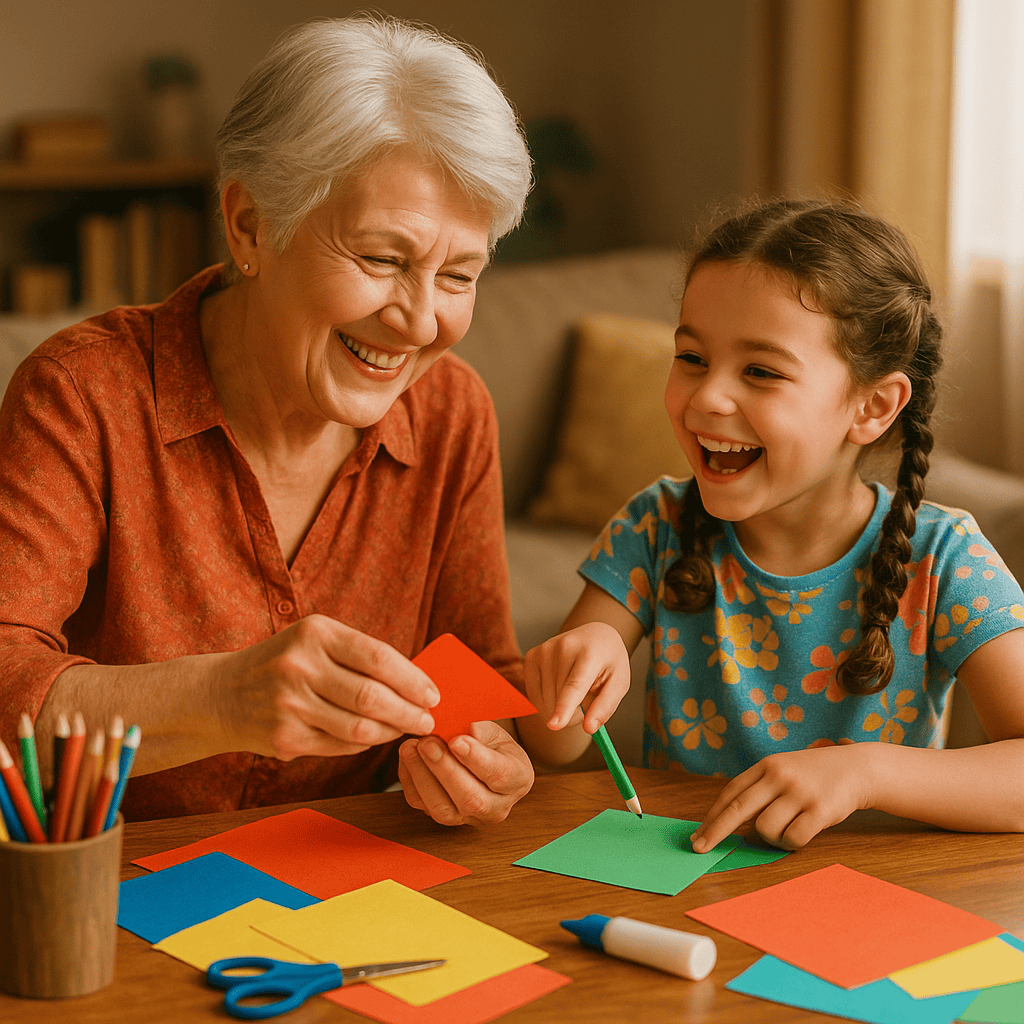
Why shared time with grandchildren is so valuable
The time you spend with your grandchildren as grandparents is invaluable. These shared moments not only strengthen the relationship between you and your grandchildren but also shape your grandchildren's development in lasting ways. When you regularly spend time with your grandchildren, you give them the feeling of being loved and valued – a gift that will accompany them throughout their lives.
Spending shared time with grandchildren means more than just being together. It means being present, listening, sharing, and learning. Your grandchildren benefit from your life experience, your stories, and your wisdom. At the same time, you can also learn from your grandchildren's energy, curiosity, and open-minded perspective. This mutual enrichment makes time with grandchildren something special.
When you regularly spend time with your grandchildren, you create a stable foundation for a long-term, trusting relationship. Your grandchildren know they can rely on you, that you are there for them, and that their thoughts and feelings matter. This security gives your grandchildren confidence and helps them develop into self-assured, empathetic people.
The importance of the grandparent-grandchild relationship
The relationship between grandparents and grandchildren is something unique. It differs from the relationship with parents, as it is often less shaped by everyday stress and parenting tasks. As grandparents, you can focus more on what really matters: shared time, sharing experiences, and creating memories. This special relationship gives your grandchildren an additional anchor point in their lives.
Grandparents can offer their grandchildren a different perspective on life. While parents are often busy with daily challenges, grandparents can have more time for conversations, stories, and shared activities. This time is valuable because it helps your grandchildren develop their own identity and understand where they come from. Your stories about the family, about your own childhood, and about important events help your grandchildren understand their roots.
The relationship with grandparents also gives grandchildren a sense of continuity and stability. In a rapidly changing world, grandparents can be a constant that grandchildren can rely on. This stability is particularly important for your grandchildren's emotional development and helps them feel safe and secure. When you regularly spend time with your grandchildren, you show them that they matter and that your relationship endures.
Long-term effects on development
The time you spend with your grandchildren has long-term effects on their development. Studies show that children who have a close relationship with their grandparents are often more confident, develop better social skills, and have a stronger sense of their own identity. These benefits accompany your grandchildren throughout their lives and help them become responsible, compassionate adults.
When you spend time with your grandchildren, you also pass on important values and life wisdom. Through your stories, your behavior, and your way of dealing with others, your grandchildren learn what matters in life. They learn respect, empathy, patience, and the importance of family. These values will shape your grandchildren and help them make good decisions and build positive relationships with others.
Shared time with grandparents also helps grandchildren develop their emotional intelligence. When you talk with your grandchildren about feelings, listen to them, and take their emotions seriously, you help them better understand and express their own feelings. This ability is important for their relationships with others and for their overall well-being. Your support and understanding give your grandchildren the confidence to show their feelings and talk about their experiences.
Shared activities for different age groups
The best activities with grandchildren depend heavily on the children's age. While toddlers enjoy simple games and stories, older children and teenagers often prefer more complex activities and conversations. When you consider your grandchildren's interests and abilities, you can find activities that are fun for both you and your grandchildren and strengthen your relationship.
It is important not to put pressure on yourself to plan perfect activities. Often, it is the simple, spontaneous moments that are most valuable: a shared walk, a conversation while baking, or simply sitting together and telling stories. Your grandchildren value your attention and your time more than elaborate activities. When you are present and focus on the moment, you are already creating valuable memories.
When you regularly try different activities with your grandchildren, you also get to know their interests and preferences better. These insights help you plan future activities that will truly bring your grandchildren joy. At the same time, you can also share your own interests and hobbies with your grandchildren and show them what matters to you. This mutual enrichment makes shared time particularly valuable.
Activities for toddlers
Toddlers love simple, repeatable activities that engage their senses. Playing together with building blocks, painting and crafting, or looking at picture books are ideal activities for this age group. When you play with toddlers, you can also sing simple songs, do finger rhymes, or dance together. These activities not only promote children's development but also create joyful, relaxed moments together.
Toddlers also enjoy routines and rituals. When you regularly do the same activities with your grandchildren – for example, having breakfast together every Saturday morning or reading a bedtime story every evening – you create something predictable and calming for the children. These rituals give your grandchildren a sense of security and show them that they matter. At the same time, you can use these routines to incorporate small surprises and adapt the activities to the children's interests.
When doing activities with toddlers, it is important to be patient and respect the children's attention span. Toddlers cannot focus on one thing for long, and that is completely normal. When you are flexible and adapt activities to the children's needs, you create a relaxed atmosphere where both you and your grandchildren can have fun. What matters is that you are present and focus on the moment, not on perfect results.
Activities for school children
School children often have more stamina and interest in more complex activities. Baking or cooking together, craft projects, board games, or trips into nature are ideal activities for this age group. School children also enjoy it when you teach them something – for example, how to fix something, how to garden, or how to practice a craft. These shared learning moments not only strengthen the relationship but also give your grandchildren the feeling of being competent and valued.
School children also love to hear and tell stories. When you read books together, tell stories from your own childhood, or invent stories together, you create a special connection. These activities promote your grandchildren's creativity and language development and give you the opportunity to pass on important values and life wisdom. At the same time, you also get to know your grandchildren's thoughts and interests better.
When doing activities with school children, you can also start shared projects that span multiple visits. Perhaps you can build a model together, start a garden project, or develop a shared hobby. These long-term projects give your grandchildren something to look forward to and create continuity in your relationship. At the same time, your grandchildren learn patience, perseverance, and the joy of creating together.
Activities for teenagers
Teenagers often have different interests than younger children, but that does not mean shared time is less valuable. Teenagers particularly appreciate it when you listen to them, take their opinions seriously, and treat them as equal conversation partners. Conversations about their interests, their goals, and their challenges are often more important to teenagers than structured activities.
Shared activities with teenagers can also look different than with younger children. Perhaps you can watch movies together and talk about them, cook together and try new recipes, or go on trips together and discover new places. What matters is that you respect your grandchildren's interests and find activities together that are fun for both. When you are open to new experiences and willing to see the world from your grandchildren's perspective, you can create a special connection.
Teenagers also appreciate it when you help them achieve their goals. Perhaps you can help them with career choices, support them with a project, or simply offer them an open ear for their concerns and dreams. Your support and understanding are particularly valuable to teenagers, as they are in a phase where they are developing their identity and making important decisions. When you are there for your grandchildren, you give them the confidence to go their own way.
Having conversations and listening
Good conversations are the heart of a strong relationship with your grandchildren. When you regularly talk with your grandchildren and truly listen to them, you show them that their thoughts and feelings matter. These conversations help your grandchildren sort through their own thoughts, understand their feelings, and make important decisions. At the same time, you also get to know your grandchildren better and understand what moves them.
It is important that conversations with grandchildren are not instructive but open and curious. Listen to what your grandchildren have to say, ask questions, and show interest in their thoughts and experiences. When you treat your grandchildren as equal conversation partners and respect their opinions, you create an atmosphere of trust where your grandchildren can open up.
Conversations with grandchildren do not always have to be profound. Often, it is the everyday conversations about school, friends, hobbies, or current events that strengthen the relationship. When you regularly talk with your grandchildren and show them that you are interested in their lives, you create a foundation for trusting conversations about important topics. This openness helps your grandchildren turn to you even with difficult topics.
Open conversations about everyday life and feelings
Open conversations about everyday life and feelings are important for your grandchildren's emotional development. When you talk with your grandchildren about their daily experiences – about school, friends, hobbies, or challenges – you show them that you are interested in their lives. These conversations also help your grandchildren reflect on their own experiences and understand what they feel and why.
When you talk with your grandchildren about feelings, it is important that you take their emotions seriously and do not dismiss them. When your grandchildren are sad, angry, or anxious, listen and show understanding. Explain that all feelings are normal and that it is important to talk about them. This support helps your grandchildren develop their emotional intelligence and find healthy ways to deal with their feelings.
Open conversations also mean that you can talk about your own feelings and experiences. When you share with your grandchildren how you feel or what challenges you have, you show them that it is normal to have feelings and talk about them. This openness creates an atmosphere of trust and helps your grandchildren turn to you even with difficult topics. At the same time, your grandchildren learn to develop empathy and understand that adults also have feelings.
Telling stories from your own childhood
Stories from your own childhood are a wonderful way to create a connection with your grandchildren and help them understand their roots. When you tell your grandchildren about your childhood – about your adventures, your friends, your hobbies, or special events – you give them insight into a different time and help them understand where they come from. These stories also create a special connection between generations.
When you tell stories, you can also pass on important values and life wisdom without being instructive. Stories about friendship, courage, helpfulness, or perseverance help your grandchildren understand what matters in life. At the same time, these stories make abstract concepts tangible and help your grandchildren learn important lessons without feeling lectured.
Stories from your childhood can also help address difficult topics. When you tell about challenges you have mastered or mistakes you have made, you show your grandchildren that it is normal to have difficulties and that you can learn from mistakes. These stories give your grandchildren courage and show them that they are not alone with their challenges. At the same time, your grandchildren learn that adults also make mistakes and that life is full of challenges that can be mastered.
Creating rituals and traditions
Rituals and traditions give your grandchildren a sense of continuity and belonging. When you regularly do certain activities with your grandchildren – for example, having breakfast together every Sunday, celebrating every birthday together, or taking a specific trip every year – you create something predictable and special that your grandchildren can look forward to. These rituals become an important part of your grandchildren's identity and create memories that last a lifetime.
Rituals do not have to be complicated or elaborate. Often, it is the simple, regular activities that are most valuable: a weekly reading hour, a monthly baking day, or an annual trip to a special place. What matters is that these rituals take place regularly and that they are something special for your grandchildren. When you maintain these rituals, you show your grandchildren that they matter and that your relationship endures.
Traditions can also help pass on important values and customs to the next generation. When you maintain annual traditions – for example, celebrating certain holidays, cooking certain dishes, or doing certain activities – you help your grandchildren understand and appreciate their cultural identity. These traditions connect generations and give your grandchildren a sense of belonging and continuity.
Weekly or monthly rituals
Weekly or monthly rituals give your grandchildren something to look forward to regularly. Perhaps you can have breakfast together every Saturday morning, take a walk every Sunday, or cook together on the first Saturday of every month. These regular rituals create continuity in your relationship and give your grandchildren the feeling that they matter and that your time together has a fixed place in their lives.
With weekly or monthly rituals, it is important that they are flexible and can be adapted to your grandchildren's needs. When your grandchildren get older or their interests change, you can adapt the rituals without losing their special character. What matters is that the rituals take place regularly and that they are something special for both sides. When you maintain these rituals, you show your grandchildren that your relationship matters and that you take time for them.
Weekly or monthly rituals can also help bridge difficult times. When your grandchildren have stress at school, problems with friends, or other challenges, the regular rituals can be a constant they can rely on. This stability gives your grandchildren security and shows them that they always have someone they can count on. At the same time, these rituals also give you the opportunity to regularly see how your grandchildren are doing and whether they need support.
Seasonal traditions
Seasonal traditions connect generations and give your grandchildren a sense of continuity and belonging. When you celebrate certain holidays every year, do certain activities, or cook certain dishes, you create something predictable and special that your grandchildren can look forward to. These traditions become an important part of your grandchildren's identity and create memories that last a lifetime.
Seasonal traditions can also help pass on important values and customs to the next generation. When you, for example, sing certain songs every year at Christmas, do certain activities at Easter, or take certain trips in the summer, you help your grandchildren understand and appreciate their cultural identity. These traditions connect generations and give your grandchildren a sense of belonging.
When you maintain seasonal traditions, you can also involve your grandchildren in planning and execution. Let your grandchildren help decide which activities you want to do, or give them specific tasks in preparation. This participation makes the traditions even more valuable for your grandchildren and gives them the feeling that they are an important part of it. At the same time, your grandchildren also learn responsibility and the joy of creating together.
Shared projects and hobbies
Shared projects and hobbies create a special connection between you and your grandchildren. When you create something together – whether it's a craft project, a garden project, or a shared hobby – you both experience the joy of creating together and the satisfaction of having achieved something together. These projects also give your grandchildren the feeling of being competent and valued and help them develop self-confidence.
Shared projects do not have to be complicated or elaborate. Often, it is the simple projects that are most valuable: solving a puzzle together, baking together, gardening together, or building a model together. What matters is that you both have fun and that you create something together. When you do these projects regularly, you create continuity in your relationship and give your grandchildren something to look forward to.
Shared projects can also help pass on important skills. When you build, repair, or create something with your grandchildren, they learn patience, perseverance, and the joy of craftsmanship. At the same time, you can also pass on important values – for example, the importance of quality, the joy of creating together, or the satisfaction of having made something yourself. These lessons accompany your grandchildren throughout their lives.
Working on creative projects together
Creative projects are a wonderful way to spend time together and create something beautiful. Whether you paint, craft, sew, or do handicrafts together – creative projects give you the opportunity to express your creativity and create something unique together. These projects not only promote your grandchildren's creativity but also create a relaxed, joyful atmosphere where both sides can have fun.
With creative projects, it is important that you promote your grandchildren's creativity without interfering too much. Let your grandchildren develop and implement their own ideas, even if they are different from your own. When you encourage your grandchildren to express their creativity and show them that their ideas are valuable, you give them confidence and help them develop their own artistic identity. At the same time, you can also share your own creative skills with your grandchildren and show them what brings you joy.
Creative projects can also help pass on important values. When you create something together, your grandchildren learn patience, perseverance, and the joy of craftsmanship. At the same time, you can also show them that it is important to take time for creative activities and that it brings joy to have made something yourself. These values accompany your grandchildren throughout their lives and help them lead a fulfilling life.
Discovering shared interests
Discovering shared interests is a wonderful way to strengthen your relationship with your grandchildren. When you develop a hobby together – for example, gardening together, reading together, making music together, or doing sports together – you create something that connects you both and that you can both look forward to. These shared interests also give you conversation topics and activities that you can do together regularly.
When you discover shared interests, it is important that you are open to your grandchildren's interests. Perhaps you can learn about one of your grandchildren's hobbies or try something new together. When you show that you are interested in your grandchildren's interests and willing to learn new things, you create a special connection and show your grandchildren that their interests matter. At the same time, you can also share your own interests with your grandchildren and show them what brings you joy.
Shared interests can also help bridge difficult times. When your grandchildren have stress or problems, shared activities can be a welcome distraction and help strengthen the relationship. At the same time, these shared interests also give you the opportunity to regularly spend time with your grandchildren and see how they are doing. When you maintain these interests, you show your grandchildren that your relationship matters and that you take time for them.
Creating and preserving memories
Memories are the most valuable gift you can give your grandchildren. When you spend time together and create special moments, you give your grandchildren something that will accompany them throughout their lives. These memories help your grandchildren feel loved and valued and give them a sense of belonging and continuity. When you also preserve these memories – for example, through photos, videos, or memory books – you can look at and enjoy them together later.
Memories do not always have to be created at special places or on special occasions. Often, it is the simple, everyday moments that are most valuable: a shared breakfast, a walk in the park, a conversation while baking, or simply sitting together and telling stories. When you are present and focus on the moment, you are already creating valuable memories that will accompany your grandchildren throughout their lives.
When you preserve memories, you can also look back on them together later and enjoy the shared time. Photos, videos, or memory books not only help preserve memories but also give you the opportunity to look at them together regularly and talk about them. These shared moments of remembering strengthen the relationship and help your grandchildren understand and appreciate their roots.
Looking at photos and videos together
Looking at photos and videos together is a wonderful way to share memories and strengthen the relationship. When you regularly look at photos or videos of shared activities together, you can talk about the experiences and relive the memories. These shared moments of remembering create a special connection and help your grandchildren understand and appreciate their roots.
When you look at photos and videos together, you can also tell stories and explain important moments. Perhaps you can show your grandchildren how they were as toddlers, or look at photos of family celebrations together. These conversations help your grandchildren understand and appreciate their own history and give them a sense of continuity and belonging. At the same time, your grandchildren also learn how important family is and how valuable shared memories are.
Photos and videos can also help bridge difficult times. When your grandchildren are sad or have problems, shared memories can provide comfort and show that they are loved. At the same time, these memories also give you the opportunity to regularly see how your grandchildren are doing and whether they need support. When you maintain these memories, you show your grandchildren that your relationship matters and that you take time for them.
Creating memory books and albums
Creating memory books and albums is a wonderful way to preserve and share shared memories. When you create a memory book or album together – for example, with photos, drawings, stories, or other mementos – you create something unique that you both can value. These books become an important part of your grandchildren's identity and create memories that last a lifetime.
When you create memory books, you can also tell stories and document important moments. Perhaps you can create a book together about your shared activities, or a book about family history. These books help your grandchildren understand and appreciate their roots and give them a sense of continuity and belonging. At the same time, your grandchildren also learn how important it is to preserve and share memories.
Memory books can also help bridge difficult times. When your grandchildren are sad or have problems, shared memories can provide comfort and show that they are loved. At the same time, these books also give you the opportunity to regularly look back on them together and enjoy the shared time. When you maintain these books, you show your grandchildren that your relationship matters and that you take time for them.
Mastering challenges and respecting boundaries
While time with grandchildren is usually wonderful, there are also challenges to master. Different needs, age differences, or personal boundaries can sometimes be difficult. When you address these challenges openly and find solutions together, you can build an even stronger relationship and show that you are there for your grandchildren even in difficult situations.
It is important that you respect and communicate your own boundaries. As grandparents, you do not have to be able to do everything or always be available. When you are honest about your boundaries and set realistic expectations together, you create a healthy foundation for your relationship. Your grandchildren will appreciate your openness and honesty and learn that it is important to respect boundaries and take care of yourself.
Challenges can also be opportunities to grow and strengthen the relationship. When you find solutions to problems together, you both learn from each other and develop a deeper understanding of each other. These shared experiences of mastering challenges create a special connection and show your grandchildren that you are there for them even in difficult times.
Dealing with different needs
Grandchildren have different needs depending on age, personality, and situation. While one grandchild may need a lot of attention and activity, another may prefer quieter moments and conversations. When you recognize and respect your grandchildren's individual needs, you can find activities that suit everyone and strengthen your relationship with each individual grandchild.
It is important that you do not try to treat all grandchildren the same, but that you see each one as an individual and consider their special needs. When you spend time with each grandchild individually, you can better get to know their individual interests and needs and find activities that truly fit. This individual attention shows your grandchildren that they matter and that you are interested in them.
When dealing with different needs, it is also important that you are flexible and can find compromises. Perhaps you can find activities that combine different interests, or alternate activities that appeal to different grandchildren. When you show that you are willing to find compromises and that you respect everyone's needs, you create a harmonious atmosphere where everyone can feel comfortable.
Respecting grandparents' boundaries
As grandparents, you also have your own boundaries that need to be respected. You do not have to be able to do everything, always be available, or fulfill all your grandchildren's wishes. When you are honest about your boundaries – for example, about your energy, your time, or your abilities – you create a healthy foundation for your relationship. Your grandchildren will appreciate your openness and honesty and learn that it is important to respect boundaries and take care of yourself.
When you communicate your boundaries, it is important that you do so respectfully and understandingly. Explain to your grandchildren why certain activities may not be possible and find alternatives together. When you show that you are there for your grandchildren despite your boundaries and that you can find solutions together, you create an atmosphere of trust and mutual respect.
Respecting boundaries also means that you take care of yourself and do not neglect your own needs. When you take care of yourself – for example, through sufficient rest, healthy nutrition, or regular exercise – you can also be better there for your grandchildren. Your grandchildren benefit when you are healthy and satisfied, and they also learn how important it is to take care of yourself. When you respect your own boundaries, you also show your grandchildren that self-care is important.
Suitable activities for different age groups
Examples of weekly and monthly rituals
Conversation topics for different age groups
Tips for valuable shared time
- Be present and focus on the moment
- Listen actively and show interest
- Respect your grandchildren's interests
- Be patient and flexible
- Create regular rituals and traditions
- Share your own stories and experiences
Signs of a strong grandparent-grandchild relationship
- Grandchildren feel comfortable and open up
- Regular conversations about everyday life and feelings
- Shared activities are fun for both
- Grandchildren actively seek closeness to grandparents
- Trust and respect on both sides
- Positive memories of shared time
Ideas for preserving memories
- Create photo albums together
- Fill memory books with stories
- Look at photos and videos regularly
- Collect shared mementos
- Document traditions and rituals
- Write down or record stories