



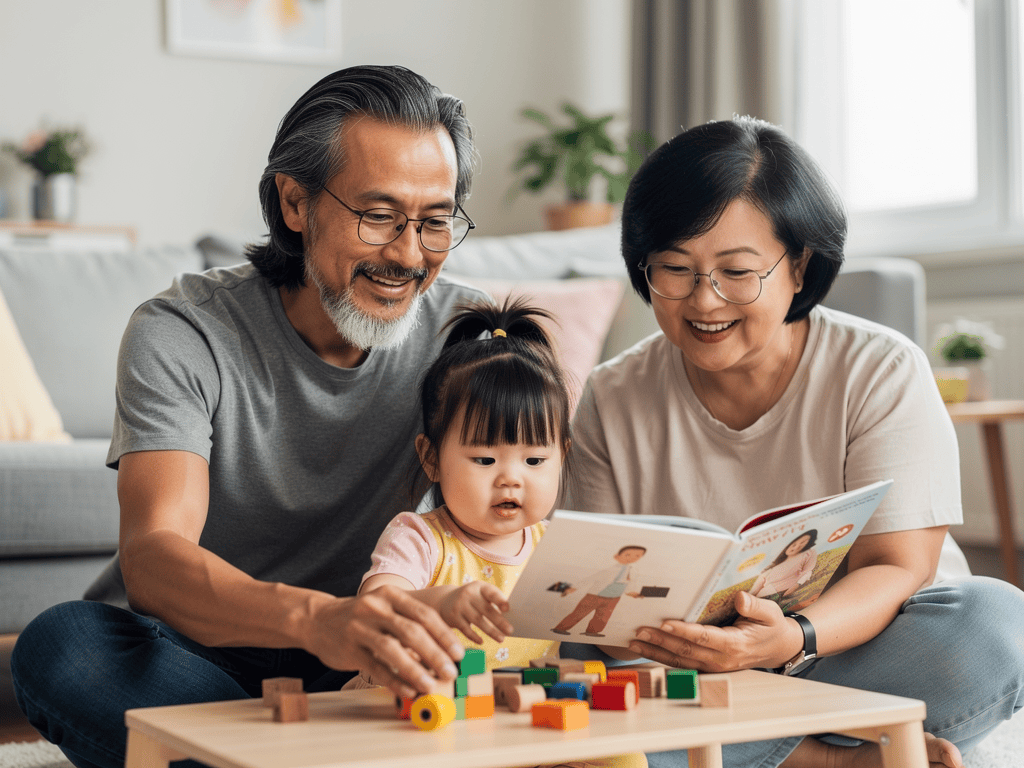
What does it mean to be an only child?
If your grandchild is an only child, this means they have no siblings. This situation brings both special opportunities and challenges. As grandparents, you can play an important role in supporting your grandchild and utilizing the advantages of this special situation. It is important to understand that only children are not automatically spoiled or lonely, but that they go through their own unique development.
Only children often have a particularly close relationship with their parents and grandparents, as they receive full attention. This intensive relationship can be a great strength when used correctly. As grandparents, you can use this special connection to pass on values, knowledge, and life experience to your grandchild that will help them throughout their life.
At the same time, it is important to recognize that only children sometimes need special support to develop social skills that children with siblings often learn automatically. As grandparents, you can be an important complement here by helping your grandchild build contacts with peers and experience various social situations.
Characteristics of only children
Only children often have a particularly pronounced ability to communicate with adults, as they spend a lot of time with adults. They can often listen very well, have complex conversations, and have a good understanding of the adult world. These skills are valuable and can help your grandchild in many areas of life.
At the same time, only children can sometimes have difficulties dealing with peers, as they have less experience in sharing, making compromises, and resolving conflicts. As grandparents, you can help your grandchild develop these skills by organizing joint activities where they can interact with other children.
Only children are often very independent and can play alone well. This independence is a great strength, but it is also important that they learn to work and cooperate with others. As grandparents, you can create an important balance here by both promoting independence and enabling joint activities.
Advantages and opportunities
Only children often have better academic performance, as they receive more time and attention from their parents. They can concentrate better and often have higher self-confidence. As grandparents, you can further promote these strengths by supporting your grandchild in their interests and showing them that you are proud of their achievements.
The intensive relationship with parents and grandparents can lead to a very strong emotional bond. Only children often have a deep understanding of their family and can build very good relationships with adults. This ability to form deep relationships will help your grandchild throughout their life.
Only children often have more opportunities to pursue their interests, as they do not have to compete with siblings for resources. They can fully focus on their hobbies and passions. As grandparents, you can use these opportunities to do activities together with your grandchild that are really important to them.
Challenges for only children
While only children have many advantages, there are also challenges to overcome. One of the biggest challenges is the development of social skills that are normally learned through interaction with siblings. As grandparents, you can play an important role here by helping your grandchild develop these skills.
Only children can sometimes have difficulties sharing or making compromises, as they are used to receiving full attention. It is important that you as grandparents are patient and help your grandchild develop these skills gradually. Show them that sharing and cooperation can be positive experiences.
Sometimes only children can also suffer from the pressure of having to meet all the expectations of their parents and grandparents. It is important that you as grandparents show that you love your grandchild regardless of their achievements. Help them understand that mistakes are normal and that it is okay not to be perfect.
Promoting social contacts
One of the most important tasks for grandparents of only children is to promote social contacts. Organize regular meetings with other children, whether through playgroups, sports clubs, or joint activities with family friends. These contacts help your grandchild develop social skills and learn how to interact with peers.
If you have several grandchildren yourself, you can also organize joint activities where your only child grandchild can interact with their cousins. These family relationships can be an important complement to sibling relationships and help your grandchild learn about various social dynamics.
Also encourage your grandchild to make and maintain friendships. Help them understand social situations and learn how to build and maintain friendships. As grandparents, you can be an important support here by showing how important friendships are and how to maintain them.
Dealing with being alone
Only children are often very good at playing alone and keeping themselves busy. This ability is valuable, but it is also important that they learn that it is okay to be alone sometimes, and that being alone is not the same as loneliness. As grandparents, you can help your grandchild find this balance.
At the same time, it is important that only children do not spend too much time alone. Make sure your grandchild has regular social contacts and can interact with other children. This balance between being alone and social contacts is important for the healthy development of your grandchild.
If your grandchild sometimes feels alone, you as grandparents can be an important source of support. Show them that you are always there for them and that they can talk to you at any time. This security can help your grandchild deal with being alone and understand that they are not alone, even if they have no siblings.
The role of grandparents
As grandparents of an only child, you have a particularly important role. You can be an important complement to the relationship between parents and child and offer your grandchild additional perspectives and experiences. Your life experience and your way of seeing the world can help your grandchild learn about different viewpoints.
Grandparents can also be an important source of relaxation. While parents sometimes feel the pressure of having to do everything right, grandparents can often be more relaxed and have more time to simply be with the grandchild. This relaxed atmosphere can help your grandchild open up and talk about things they might not want to discuss with their parents.
Your role as grandparents is also to show your grandchild that they are loved, regardless of achievements or expectations. This unconditional love can help your grandchild develop strong self-confidence and understand that they are valuable simply because they exist.
Building a special relationship
The relationship between grandparents and grandchild as an only child can be particularly intense. You have the opportunity to build a very close bond based on trust, respect, and shared experiences. This relationship can help your grandchild feel safe and loved.
Use the time with your grandchild to discover and develop shared interests. Perhaps you share a passion for music, nature, crafts, or stories. These shared interests can be the foundation for a deep, long-term relationship that helps your grandchild develop and grow.
It is also important that you as grandparents respect boundaries and do not try to take over the role of parents. Your role is to complement and support, not to replace. This clear division of roles helps your grandchild understand and appreciate different relationships.
Sibling replacement or complement?
As grandparents, you should not try to replace siblings, but rather offer a unique relationship that has its own advantages. Your relationship with your grandchild is something special and should be valued as such, not as a replacement for something else.
At the same time, you can help your grandchild have similar experiences to those they would have with siblings by organizing joint activities where they can interact with other children. These activities can help your grandchild develop social skills that are normally learned through sibling relationships.
Your role is to be a complement, not a replacement. Show your grandchild that there are different types of relationships, all of which are valuable. Your relationship as grandparents is unique and can offer your grandchild something that no other relationship can.
Practical support
As grandparents, you can provide practical support that helps your grandchild as an only child develop healthily. This support can take many forms, from organizing social contacts to promoting independence and autonomy.
An important form of support is to help your grandchild experience various social situations. Organize activities where they can interact with other children, and help them develop social skills. These experiences are valuable for the development of your grandchild.
At the same time, it is important that you also promote the independence of your grandchild. Only children are often very independent, and this ability should be supported. Help your grandchild think and act independently while also showing that it is okay to ask for help when needed.
Enabling social contacts
Organize regular meetings with other children, whether through playgroups, sports clubs, or joint activities. These contacts help your grandchild develop social skills and learn how to interact with peers. As grandparents, you can play an important role here by enabling and supporting these contacts.
If possible, also organize sleepovers or longer visits with friends or relatives where your grandchild can be with other children. These experiences can help your grandchild learn about various social dynamics and learn how to cope in different situations.
Also encourage the parents to organize social activities and offer your support when it comes to organization or supervision. Your help can enable parents to provide their child with more social contacts, even if they themselves may have less time.
Promoting independence
Only children are often very independent, and this ability should be promoted. Help your grandchild think and act independently while also showing that it is okay to ask for help when needed. This balance is important for the healthy development of your grandchild.
Encourage your grandchild to make their own decisions and take responsibility. Show them that you trust their abilities while also being there to support when help is needed. This support can help your grandchild develop self-confidence.
At the same time, it is important that you do not place too much responsibility on your grandchild. Only children can sometimes feel that they have to meet all expectations. Show your grandchild that it is okay to be a child and that they do not have to take on all responsibility.
Communication and conversations
Communication with your grandchild as an only child is particularly important. Since only children often spend a lot of time with adults, they are often very good conversation partners. Use this ability to have deep, meaningful conversations that help your grandchild understand the world.
It is important that you as grandparents have an open ear and are willing to listen when your grandchild wants to talk. Only children can sometimes have the need to share their thoughts and feelings with someone who has time and really listens. Your attention can help your grandchild feel understood and valued.
At the same time, you should also actively initiate conversations and ask questions that encourage your grandchild to think. These conversations can help your grandchild learn about different perspectives and develop their own thoughts. As grandparents, you have the time and experience to have such conversations.
Having age-appropriate conversations
It is important that you adapt your conversations to the age of your grandchild. Younger children need simpler explanations and more visual support, while older children can have more complex conversations. Adapt your communication to the developmental stage of your grandchild.
For younger children, you can use stories and examples to explain complex topics. For older children, you can discuss more abstract concepts and explore different perspectives. This age-appropriate communication helps your grandchild understand and process the information.
Also be patient and take time for questions. Only children often have many questions, as they spend a lot of time with adults and are used to complex conversations. Your patience and willingness to answer questions can help your grandchild better understand the world.
Taking feelings seriously
Only children can sometimes have more intense feelings, as they receive full attention and are often very sensitive. It is important that you as grandparents take these feelings seriously and help your grandchild understand and express them.
Show your grandchild that all feelings are okay, even negative ones. Help them understand that it is normal to be sad, angry, or frustrated, and that there are ways to deal with these feelings. Your support can help your grandchild develop emotional intelligence.
Also encourage your grandchild to talk about their feelings, and show that you really want to listen and understand. This open communication can help your grandchild feel safe and know that they can talk to you about anything.
Activities and experiences
Joint activities with your grandchild as an only child can be particularly valuable. Since you have full attention, you can do activities that might be more difficult with multiple children. Use this opportunity to create special experiences that your grandchild will remember for their entire life.
At the same time, it is important that you also organize activities where your grandchild can interact with other children. These social activities are important for the development of social skills and help your grandchild learn how to interact with peers.
As grandparents, you often have more time and flexibility than parents to organize activities. Use this opportunity to give your grandchild various experiences that help them develop and grow.
Joint projects
Joint projects can be a particularly valuable way to spend time with your grandchild. Whether it is craft projects, gardening, cooking, or creating stories, joint projects can help your grandchild develop various skills while also building a deep relationship with you.
These projects can also help your grandchild develop independence and responsibility. When you work together on a project, you can show your grandchild how to plan, organize, and persevere even when it gets difficult. These lessons are valuable for the development of your grandchild.
Joint projects can also help your grandchild learn to deal with frustration and solve problems. When something does not work, you can think together about how to do it differently. These problem-solving skills are important for the development of your grandchild.
Supporting group activities
While joint activities with you are valuable, it is also important that your grandchild regularly participates in group activities. These activities can be sports clubs, music groups, art classes, or other organized activities where your grandchild can interact with other children.
As grandparents, you can support these activities by helping with organization, driving to events, or simply showing interest. Your support can help parents provide their child with more opportunities, even if they themselves may have less time.
Also encourage your grandchild to try various activities to find out what they really enjoy. This exploration can help your grandchild develop their interests while also making social contacts.
Long-term perspective
Supporting your grandchild as an only child is a long-term task that will develop over time. As your grandchild grows and develops, their needs and interests will also change. As grandparents, it is important that you remain flexible and adapt to these changes.
At the same time, it is important that you are a consistent presence in your grandchild's life. Regular contacts and joint activities can help your grandchild feel safe and know that you are always there for them. This security can help your grandchild develop self-confidence and grow.
Your role as grandparents will develop over time, but the foundation of your relationship – love, respect, and support – remains constant. This stable relationship can help your grandchild develop and grow while also knowing that they always have someone they can rely on.
Advantages of only children
Challenges for only children
Activities for grandparents and only child
Tips for grandparents of only children
- Organize regular meetings with other children so your grandchild can make social contacts
- Promote your grandchild's independence while also offering support
- Have deep, meaningful conversations that help your grandchild understand the world
- Take time to really listen when your grandchild wants to talk
- Organize joint projects that help your grandchild develop various skills
- Show your grandchild that you love them regardless of achievements or expectations
- Encourage your grandchild to make their own decisions and take responsibility
- Be patient when your grandchild learns to share and make compromises
Conversation starters for grandparents
- "What interested you most today?"
- "How do you feel when you play alone?"
- "What would you like to do with other children?"
- "What do you enjoy most when we are together?"
- "Is there something you would like to know more about?"
- "How can I help you find new friends?"
Signs of healthy development
- Your grandchild can play alone well and keep themselves busy
- They show interest in interacting with other children
- They can express their feelings and talk about them
- They show independence and can make their own decisions
- They have healthy self-confidence and feel valued
- They can share and make compromises when necessary