



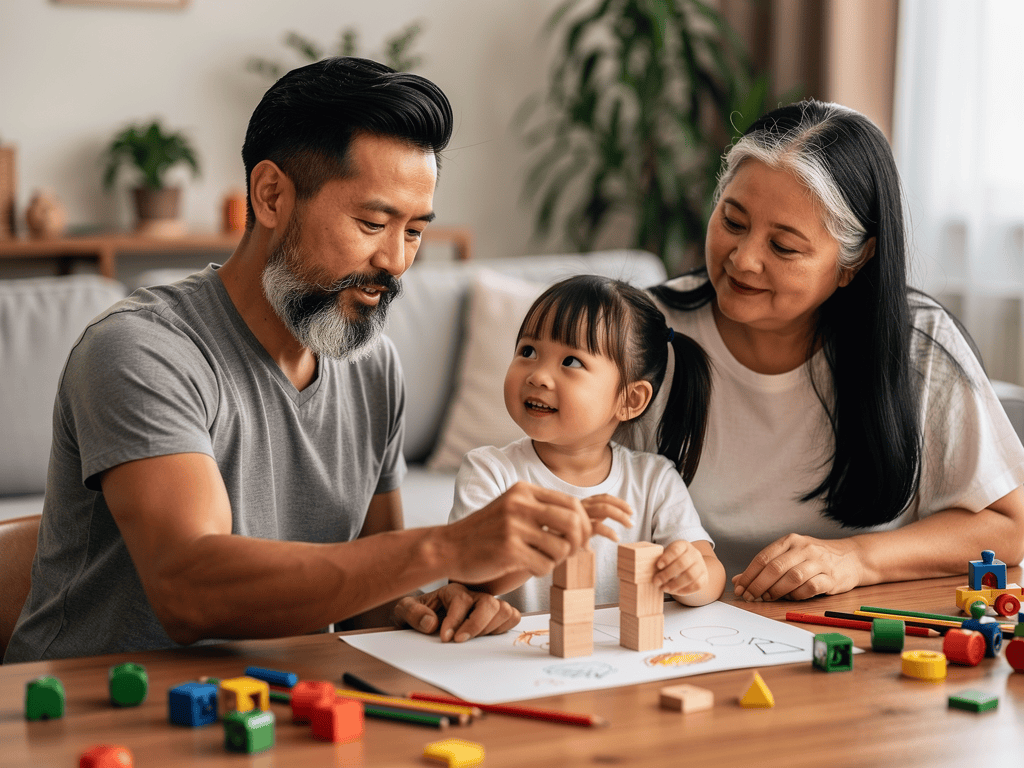
What does "special needs" mean and why is your role important?
When your grandchild has special needs, it can be both a challenge and a great enrichment for the entire family. As grandparents, you can play a unique and valuable role by giving your grandchild love, patience, and support. Special needs can take many forms: physical limitations, developmental delays, learning difficulties, autism spectrum disorders, attention deficits, or other special circumstances. Whatever the situation, your support can make an enormous difference in your grandchild's life.
Your role as grandparents is particularly valuable because you often have more time and patience than parents, who must juggle daily challenges. You can be a stable, loving constant in your grandchild's life that helps them feel safe and loved. This stability is especially important for children with special needs, as they often need more security and predictability than other children.
When you take the time to understand and accept your grandchild's special needs, you show them that they are valuable and lovable, exactly as they are. This message is invaluable to your grandchild and helps them develop self-confidence and self-esteem. Your support can help your grandchild reach their full potential and lead a happy, fulfilling life.
Definition and understanding
Special needs encompass a wide range of situations where a child needs additional support, adjustments, or resources to succeed. This can include physical challenges such as mobility limitations, sensory impairments such as hearing or vision difficulties, or cognitive and developmental differences such as autism, ADHD, or learning difficulties. It is important that every child with special needs is unique and has individual strengths and challenges.
When you inform yourself about your grandchild's specific needs, you can better understand how to support them. Talk to the parents, read trusted sources, and be open to new information. Understanding is the first step to valuable support. Remember that your grandchild is not defined by their special needs, but that these are only part of what makes them who they are.
It is normal to feel uncertain or have questions at first. The most important thing is that you are willing to learn and adapt. Your willingness to inform yourself and understand shows your grandchild that you care about them and that their needs are important. This attitude is more valuable than perfect knowledge.
Your unique role as grandparents
As grandparents, you have a special position in the family: you are not responsible for daily parenting, but you can be an important source of support, love, and stability. This position gives you the freedom to focus on the positive aspects of the relationship and give your grandchild special attention that parents may not always be able to provide.
Your role can be particularly valuable when it comes to helping your grandchild discover and develop their strengths. While parents are often busy with therapies, appointments, and daily challenges, you may have the time to nurture your grandchild's special talents and interests. This support can help your grandchild develop self-confidence and realize that they are valuable and capable.
At the same time, you can also be an important support for the parents. When you care for your grandchild, you give the parents the opportunity to rest or take care of other important tasks. This support can relieve the entire family and help everyone cope better with the challenges. Your role as grandparents is therefore valuable not only for your grandchild but for the entire family.
Building a valuable relationship
Building a strong, loving relationship with your grandchild with special needs requires patience, understanding, and a willingness to engage with their individual way. Every child is different, and children with special needs often have their own special ways of communicating, playing, and building relationships. When you take the time to understand and respect these ways, you can build a deep, meaningful relationship.
It is important that you have no expectations of how the relationship should be, but that you are open to what your grandchild shows you. Some children need more time to build trust, others communicate in unusual ways, and still others have special interests that you may not immediately understand. When you are patient and engage with your grandchild's world, you can build a connection that is enriching for both sides.
A strong relationship with your grandchild can help them feel safe and loved, which is especially important for their development. When your grandchild knows that you accept and love them exactly as they are, they can develop self-confidence and be braver about trying new things. This security is an important foundation for their growth and development.
Showing patience and understanding
Patience is perhaps the most important quality you can bring as grandparents. Children with special needs often need more time to learn, understand, or process things. When you are patient and do not push, you give your grandchild the time and space they need to grow and learn at their own pace.
Understanding means trying to see the world from your grandchild's perspective. When your grandchild reacts or behaves in certain ways, try to understand why that is, rather than judging it. They may have sensory sensitivities that make certain situations difficult, or they may need more structure and predictability to feel safe. When you understand these needs, you can better respond to them.
Patience and understanding also show in accepting that not every visit or activity will go perfectly. It is okay if things do not go as planned. What is important is that you are flexible and can adapt to your grandchild's needs. This flexibility shows your grandchild that you are there for them, no matter what happens.
Recognizing individual needs
Every child with special needs has individual needs, preferences, and dislikes. When you take the time to understand these, you can better respond to your grandchild and find activities that bring them joy and help them develop. Talk to the parents about your grandchild's specific needs and observe how they react to different situations.
Some children need more quiet and structure, others need more movement and stimulation. Some are sensitive to loud noises or bright lights, others need visual or tactile support. When you understand these individual needs, you can create environments and activities that are pleasant and beneficial for your grandchild.
At the same time, it is important that you also recognize and nurture your grandchild's strengths and interests. Every child has special talents and abilities, and when you discover and support these, you can help your grandchild develop self-confidence and take joy in their successes. This positive support is just as important as understanding the challenges.
Practical support in everyday life
Practical support can make a big difference for families with children who have special needs. As grandparents, you can help in various ways, whether through care, support with appointments, or simply through your presence and attention. This support not only relieves the parents but also gives you the opportunity to spend valuable time with your grandchild.
When you offer practical help, it is important that you communicate with the parents and understand what is really helpful. Every family has its own routines, strategies, and needs, and it is important that you respect and support these, rather than imposing your own ideas. When you are open to instructions and feedback, you can be a valuable support.
Practical support can also mean that you inform yourself about your grandchild's special needs and learn how to best help in different situations. When you know how to handle certain challenges, you feel more confident and can better help your grandchild. This willingness to learn also shows how important your grandchild is to you.
Help with care
When you care for your grandchild, you give the parents the opportunity to rest, attend important appointments, or simply take a break. This support can be very valuable for parents, as caring for a child with special needs can often be very exhausting. When you regularly spend time with your grandchild, you can also build a trusting relationship.
It is important that you understand and follow the parents' routines and strategies. If your grandchild needs certain routines or structures, it is important that you maintain these, even if you may have different ideas. Consistency is very important for many children with special needs, and when you respect the established routines, you help your grandchild feel safe.
If you are unsure how to react in certain situations, do not hesitate to ask the parents. It is better to ask questions and provide the right support than to guess and possibly do something that is not helpful. The parents will appreciate your willingness to learn and adapt.
Support with therapies and appointments
Many children with special needs have regular therapy appointments, doctor visits, or other important appointments. When you can help with these appointments, whether through transportation, accompaniment, or care of siblings, you can significantly relieve the parents. This practical support can be very valuable for the entire family.
When you accompany your grandchild to appointments, you can also learn how to support certain exercises or strategies at home. Many therapists give instructions on how parents and other caregivers can continue therapy at home, and when you understand and can apply these, you can provide additional support to your grandchild.
At the same time, it is important that you respect the boundaries of your role. You are not responsible for medical or therapeutic treatment, but for support and accompaniment. If you have questions or concerns, you should discuss these with the parents rather than making independent decisions.
Communication with parents and professionals
Open, respectful communication with the parents is crucial for successful support of your grandchild. The parents know your grandchild best and have the most experience with their special needs. When you regularly talk to them, you can better understand how to help, and you can also share your own observations and ideas.
It is important that you respect the parents' decisions, even if you may have different opinions. The parents bear the main responsibility for parenting and medical decisions, and it is important that you acknowledge and support this responsibility. If you have questions or concerns, you can address these respectfully, but ultimately the parents must make the decisions.
Good communication also means being honest about your own boundaries and abilities. If you feel uncertain in certain situations or need help, you should communicate that. It is better to ask for help than to try to do something for which you do not feel qualified. This honesty helps avoid misunderstandings and ensures that your grandchild receives the best possible support.
Open exchange with parents
Regular conversations with the parents can help you stay up to date and understand how the situation is developing. Ask for updates, share your observations, and be open to feedback. When you show that you are interested and want to learn, the parents will likely be happy to share what they know with you.
It is also important that you acknowledge the challenges the parents face. Caring for a child with special needs can be very exhausting, and when you show understanding and empathy, you can be an important emotional support. Sometimes parents simply need someone who listens and understands, without judging or giving advice.
At the same time, you can also share your own experiences and observations. Perhaps you have noticed something that could be helpful, or you have an idea that the parents have not yet considered. When you communicate respectfully and present your suggestions as possibilities rather than instructions, you can contribute a valuable perspective.
Collaboration with professionals
If you have the opportunity to speak with therapists, teachers, or other professionals who work with your grandchild, that can be very helpful. These professionals often have valuable insights and can give you tips on how to best support your grandchild. If you can use these resources, you should do so.
It is important that you respect the privacy and decisions of the parents. Not all parents want grandparents to communicate directly with professionals, and that is completely fine. If the parents allow it, you can benefit from these conversations, but if not, you should respect that and instead communicate through the parents.
When you speak with professionals, you can also learn how to apply certain strategies or exercises at home. Many therapists are happy to give instructions on how family members can support therapy, and when you understand and can apply these, you can provide additional help to your grandchild. This collaboration can be very valuable for your grandchild's development.
Shared activities and leisure time
Shared activities can be a wonderful way to spend time with your grandchild while also promoting their development. It is important that you find activities that match your grandchild's abilities and interests and bring them joy. When you focus on your grandchild's strengths and interests, you can create positive experiences that strengthen their self-confidence.
It is not about planning complicated or expensive activities, but about spending time together and creating moments of joy and connection. Sometimes the simplest activities are the most valuable: reading a book together, painting or crafting together, playing in the garden, or simply being together and talking. Whatever you do, it is important that you are present and focus on your grandchild.
When you regularly spend time with your grandchild and find activities that bring them joy, you can build a strong, positive relationship. This relationship can help your grandchild feel safe and loved, which is especially important for their development. At the same time, you can also create valuable memories that you will both remember forever.
Finding age-appropriate activities
When selecting activities, it is important that you consider both your grandchild's chronological age and their developmental age. Some children with special needs develop slower or faster in certain areas than others, and it is important that you find activities that match their actual abilities, not just their age.
Talk to the parents about your grandchild's abilities and interests, and be open to adjustments. If an activity is too difficult or too easy, you can adjust it so that it is appropriate for your grandchild. Flexibility is important, and when you are willing to adjust activities, you can create positive experiences that help your grandchild develop.
At the same time, you should also not be too cautious. Sometimes children can do more than we think, and when you give them the opportunity to try new things, they can show surprising abilities. It is important that you find a balance between challenge and overwhelm so that your grandchild can grow without becoming frustrated.
Promoting strengths and interests
Every child has special strengths and talents, and when you recognize and nurture these, you can help your grandchild develop self-confidence. Perhaps your grandchild has a special interest in music, art, nature, technology, or something else. When you support and nurture these interests, you can help them discover and develop their passions.
At the same time, you can also spark new interests by trying different activities. Perhaps you will discover something together that brings your grandchild joy and that you both enjoy. These shared discoveries can strengthen your relationship and help your grandchild develop new skills and interests.
It is important that you celebrate your grandchild's successes, even if they may seem small. For a child with special needs, every progress can be a great success, and when you acknowledge and celebrate these successes, you help your grandchild develop self-confidence and stay motivated. This positive support is just as important as practical help.
Emotional support and stability
Emotional support is perhaps one of the most valuable contributions you can make as grandparents. Children with special needs often need more security, stability, and emotional support than other children, and you can be an important source of this support. When you are there for your grandchild, listen to them, and show them that you love and accept them, you can help them feel safe and valuable.
Your role as a stable, loving constant in your grandchild's life can be particularly valuable when there are difficult times. When your grandchild struggles with challenges or is frustrated, you can be a safe haven that helps them calm down and regain strength. This emotional support can help your grandchild develop resilience and cope better with difficulties.
At the same time, you can also be an important emotional support for the parents. Caring for a child with special needs can be emotionally very exhausting, and when you offer understanding, empathy, and practical support, you can relieve the entire family. Your role as grandparents is therefore valuable not only for your grandchild but for the entire family.
Being a safe haven
Being a safe haven means that you are a stable, predictable presence in your grandchild's life that they can rely on. When your grandchild knows that you are always there for them, that you love and accept them exactly as they are, they can feel safe and develop trust. This security is especially important for children with special needs, who often need more stability and predictability.
Being a safe haven also means that you are a calm, patient presence that does not judge or push. When your grandchild struggles with challenges or is frustrated, you can be there to listen, comfort, and support, without trying to solve or change everything. Sometimes the best thing you can do is simply be there and show that you are there for your grandchild.
This stability and security can help your grandchild develop self-confidence and be braver about trying new things. When your grandchild knows they have a safe place to return to, they can feel safer taking risks and growing. This support is an important foundation for their development.
Strengthening self-confidence
Self-confidence is important for all children, but for children with special needs, it can be especially important, as they often face additional challenges. When you recognize and celebrate your grandchild's strengths and successes, you can help them develop self-confidence and realize that they are valuable and capable.
It is important that you have realistic but positive expectations. You should not overwhelm your grandchild, but also not underestimate them. When you trust that they can achieve things and give them the support they need, you can help them grow and develop. This balance between challenge and support is important for the development of self-confidence.
At the same time, you should also celebrate the small successes. For a child with special needs, every progress can be a great success, and when you acknowledge and celebrate these successes, you help your grandchild develop self-confidence and stay motivated. This positive support can make a big difference in their life.
Taking care of yourself
While it is important to support your grandchild, it is also important that you take care of yourself. Caring for a child with special needs can be physically and emotionally exhausting, and if you do not take care of yourself, you cannot provide the best support. When you are healthy and rested, you can be better there for your grandchild.
Self-care means recognizing and respecting your own boundaries. It is okay if you sometimes need a break or if you cannot do everything you might like to do. When you are honest about your abilities and boundaries, you can provide sustainable, long-term support that is more valuable for everyone than short-term overwhelm.
At the same time, you should also seek support for yourself if you need it. Perhaps there are support groups for grandparents of children with special needs, or you can talk to other family members or friends who understand what you are going through. When you take care of yourself, you can be better there for your grandchild, and that is ultimately the most important thing.
Different Forms of Support
Communication Strategies for Different Needs
Age-Appropriate Activities for Different Interests
Tips for Building a Strong Relationship
- Take time to understand your grandchild's world
- Be patient and do not push
- Respect individual needs and preferences
- Celebrate small successes and progress
- Be a stable, predictable presence
- Show unconditional love and acceptance
Practical Ways to Help
- Offer regular care so parents can have a break
- Help with therapy and doctor appointments
- Care for siblings during appointments
- Take over household tasks
- Prepare meals or do shopping
- Transport to activities or appointments
Tips for Self-Care
- Recognize your own boundaries and respect them
- Seek support from other grandparents or support groups
- Take regular time for yourself
- Stay healthy through exercise and balanced nutrition
- Talk to others about your experiences
- Celebrate your own successes as grandparents