



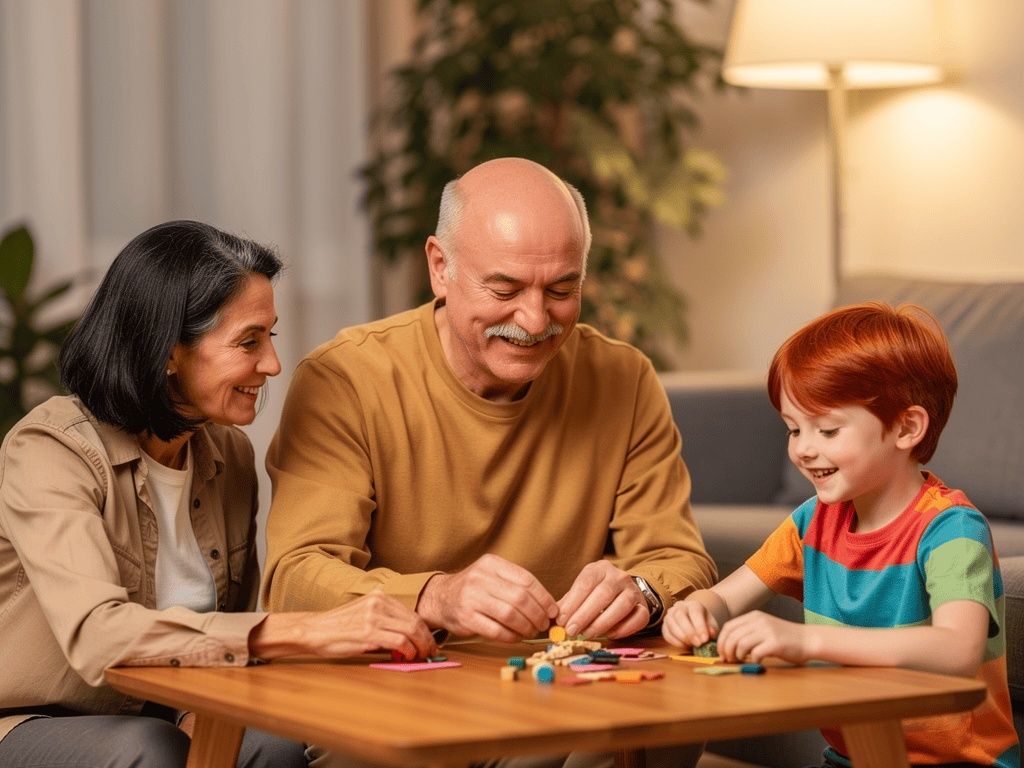
Why respectful communication is important
Respectful communication is one of the most important foundations for harmonious coexistence. As grandparents, you can help your grandchildren develop these important social skills so they become respectful and empathetic people. By showing your grandchildren how to communicate respectfully and set boundaries, you give them tools that will accompany them throughout their lives.
Your grandchildren will grow up in a world where respectful communication is becoming increasingly important. By showing them how to interact politely and respectfully with others, you help them build strong relationships and resolve conflicts constructively. These skills will help your grandchildren succeed not only in the family, but also in school, at work, and in all other areas of life.
Respectful communication is also important for your grandchildren's self-esteem. When children learn to communicate respectfully and respect boundaries, they develop healthy self-confidence and a sense of others' needs. As grandparents, you can help your grandchildren develop these important social skills so they become confident and empathetic people.
Significance for development
Respectful communication is an important part of children's social development. When your grandchildren learn to communicate respectfully and respect boundaries, they develop important social skills that will accompany them throughout their lives. These skills help them build strong relationships, resolve conflicts constructively, and feel confident in various social situations.
The development of respectful communication begins in early childhood. When you show your grandchildren from an early age how to communicate politely and respectfully, this shapes their behavior in a lasting way. As grandparents, you have the opportunity to support this important development and help your grandchildren become respectful and empathetic people.
Respectful communication is also important for your grandchildren's emotional development. When children learn to express their feelings respectfully and respect the feelings of others, they develop important emotional competencies. These competencies help them deal with stress, maintain relationships, and lead a fulfilling life.
Benefits for grandchildren
When your grandchildren learn to develop respectful communication, they benefit in many areas of life. At school, they will be able to communicate better with teachers and classmates, at work they will be able to work more successfully in teams, and in their personal relationships they will be able to build stronger and more fulfilling connections.
Respectful communication also helps your grandchildren resolve conflicts constructively. When they learn to communicate respectfully and understand others' perspectives, they can better manage disputes and find solutions that are acceptable to all involved. This ability will help your grandchildren succeed not only in the family, but also in all other areas of life.
When your grandchildren develop respectful communication, it also strengthens their self-esteem. When they see that other people appreciate their respectful manner and that they can build positive relationships through their communication, they feel more confident and valuable. As grandparents, you can help your grandchildren go through this important development.
Setting boundaries respectfully
Setting boundaries is an important part of parenting, but it must be done respectfully and lovingly. As grandparents, you can help your grandchildren understand that boundaries are not meant to restrict them, but to give them security and guidance. When you set boundaries respectfully, you show your grandchildren that you love them and care about their well-being.
It is important that boundaries are communicated clearly and understandably. Explain to your grandchildren why certain boundaries are important, and listen when they have questions or concerns. When you show that you take their perspective seriously and are willing to find solutions together, you help your grandchildren understand boundaries as something positive.
Boundaries should also be implemented consistently, but not rigidly and inflexibly. When you show that you are willing to adjust boundaries when the situation requires it and that you involve your grandchildren in decisions, you help them take responsibility and develop their own boundaries. This balance between clarity and flexibility is important for healthy development.
Clear communication
Clear communication is the key when it comes to setting boundaries respectfully. Speak with your grandchildren in a calm and respectful manner, and explain why certain boundaries are important. Use simple and understandable language that matches your grandchildren's age, and be patient when they have questions or express concerns.
It is also important that you express your own feelings respectfully. When you show that you are hurt or disappointed, but remain respectful at the same time, you help your grandchildren understand how their behavior affects other people. This type of communication helps your grandchildren develop empathy and understand that their words and actions have consequences.
Also listen actively when your grandchildren speak. Show that you take their perspective seriously and that you are willing to find solutions together. When you maintain open and respectful communication, you help your grandchildren express their own thoughts and feelings while understanding others' perspectives.
Consistent implementation
Consistency is important when it comes to enforcing boundaries, but it must be respectful and loving. When you show that you take certain boundaries seriously and that there are consequences when they are crossed, you help your grandchildren understand that boundaries are important. At the same time, you should avoid being too strict or punitive.
It is important that consequences are appropriate and proportional. When you show that you are willing to adjust consequences when the situation requires it and that you involve your grandchildren in the decision, you help them take responsibility. This type of respectful consequence helps your grandchildren learn from their mistakes without feeling shamed or punished.
Also show that you are willing to reconsider and adjust boundaries when the situation changes. When you show that you are flexible and that you involve your grandchildren in decisions, you help them take responsibility and develop their own boundaries. This balance between consistency and flexibility is important for healthy development.
Age-appropriate boundaries
Boundaries must be adapted to your grandchildren's age and developmental stage. What is appropriate for a toddler is no longer suitable for a teenager. As grandparents, you can help set age-appropriate boundaries that give your grandchildren security without restricting them too much.
It is important that you consider your grandchildren's needs and abilities when setting boundaries. Every child is different, and what works for one child may not work for another. When you show that you are willing to adjust boundaries individually and that you take your grandchildren's perspective seriously, you help them feel understood and respected.
Boundaries should also grow with your grandchildren's age. When you show that you are willing to adjust boundaries as your grandchildren get older and can take more responsibility, you help them develop independence. This development is important for your grandchildren's self-esteem and helps them become confident and responsible people.
Toddlers
With toddlers, it is primarily about teaching basic communication. Explain in simple words why certain behaviors are important, and be patient when your grandchild is still learning. Use positive reinforcement and praise your grandchild when it acts respectfully.
It is also important that you are a role model yourself. When you show how to communicate politely and respectfully, your grandchildren learn through observation. Be patient and understanding when your grandchild is still learning, and show that you are proud when it makes progress.
With toddlers, boundaries should be simple and clear. Explain in short, understandable sentences what is allowed and what is not, and be consistent but not too strict. When you show that you are loving and respectful, you help your grandchild feel safe and loved.
School children
With school children, you can already have more complex conversations about respectful communication. Explain why certain behaviors are important, and discuss together how to communicate respectfully in different situations. Involve your grandchildren in the discussion and listen to what they have to say.
School children can also already take more responsibility. When you show that you are willing to adjust boundaries as your grandchildren get older and show more responsibility, you help them develop independence. This development is important for your grandchildren's self-esteem.
It is also important that you continue to be a role model. When you show how to communicate respectfully and resolve conflicts constructively, your grandchildren learn through observation. Be patient and understanding when your grandchildren are still learning, and show that you are proud when they make progress.
Teenagers
With teenagers, it is primarily about maintaining respectful communication on equal terms. Explain why certain boundaries are important, and discuss together how to implement them. Involve your grandchildren in decisions and show that you take their perspective seriously.
Teenagers also need more freedom and responsibility. When you show that you are willing to adjust boundaries as your grandchildren take more responsibility, you help them develop independence. This development is important for your grandchildren's self-esteem and helps them become confident and responsible people.
It is also important that you continue to be a role model. When you show how to communicate respectfully and resolve conflicts constructively, your grandchildren learn through observation. Be patient and understanding when your grandchildren are still learning, and show that you are proud when they make progress.
Communication in everyday life
Respectful communication shows itself in everyday life in many small moments. As grandparents, you can help your grandchildren develop these important social skills by being a role model yourself and modeling respectful communication. When you show how to interact politely and respectfully with others, your grandchildren learn through observation.
It is important that you show respectful communication not only in special situations, but live it in everyday life. When you show how to greet politely, how to say "Please" and "Thank you", and how to communicate respectfully with others, you help your grandchildren internalize these important social skills.
Respectful communication also shows itself in how you deal with conflicts. When you show how to discuss respectfully, how to find compromises, and how to respect others' perspectives, you help your grandchildren develop these important skills. These skills will help your grandchildren succeed not only in the family, but also in all other areas of life.
Modeling politeness
The best way to teach your grandchildren respectful communication is to model it yourself. When you show how to greet politely, how to say "Please" and "Thank you", and how to communicate respectfully with others, your grandchildren learn through observation. This type of learning is particularly effective because children learn most through observation.
It is important that you show respectful communication not only in special situations, but live it in everyday life. When you show how to interact politely with salespeople, neighbors, and other people, you help your grandchildren internalize these important social skills. These skills will help your grandchildren build strong relationships and feel confident in various social situations.
Also show how to deal respectfully with mistakes. When you show that it is okay to make mistakes and that you can apologize for them, you help your grandchildren develop this important skill. This skill will help your grandchildren succeed not only in the family, but also in all other areas of life.
Respectful language
The way we speak has a great influence on how other people perceive us. As grandparents, you can help your grandchildren develop respectful language by communicating respectfully yourself and encouraging your grandchildren to do the same.
It is important that you use respectful language not only in special situations, but live it in everyday life. When you show how to communicate respectfully with others, how to express criticism constructively, and how to respect others' perspectives, you help your grandchildren develop these important skills.
Also show how to deal respectfully with conflicts. When you show how to discuss respectfully, how to find compromises, and how to respect others' perspectives, you help your grandchildren develop these important skills. These skills will help your grandchildren succeed not only in the family, but also in all other areas of life.
Resolving conflicts respectfully
Conflicts are a normal part of life, and it is important that your grandchildren learn to resolve them respectfully. As grandparents, you can help your grandchildren develop this important skill by being a role model yourself and showing how to approach conflicts constructively.
It is important that you do not avoid conflicts, but use them as opportunities to learn. When you show how to discuss respectfully, how to find compromises, and how to respect others' perspectives, you help your grandchildren develop these important skills. These skills will help your grandchildren succeed not only in the family, but also in all other areas of life.
Also show that it is okay to have different opinions as long as you remain respectful. When you show how to discuss respectfully and how to respect others' perspectives, you help your grandchildren develop this important skill. This skill will help your grandchildren build strong relationships and resolve conflicts constructively.
De-escalation
De-escalation is an important skill when it comes to resolving conflicts respectfully. As grandparents, you can help your grandchildren develop this skill by being a role model yourself and showing how to calm conflicts and approach them constructively.
It is important that you stay calm when conflicts arise. When you show how to take deep breaths, how to take a break, and how to communicate respectfully, you help your grandchildren develop these important skills. These skills will help your grandchildren succeed not only in the family, but also in all other areas of life.
Also show how to listen respectfully and understand others' perspectives. When you show how to listen actively, how to ask questions, and how to respect others' feelings, you help your grandchildren develop these important skills. These skills will help your grandchildren build strong relationships and resolve conflicts constructively.
Finding compromises
Finding compromises is an important skill when it comes to resolving conflicts respectfully. As grandparents, you can help your grandchildren develop this skill by being a role model yourself and showing how to find solutions together that are acceptable to all involved.
It is important that you show how to consider everyone's needs. When you show how to find solutions together that are acceptable to everyone, you help your grandchildren develop this important skill. This skill will help your grandchildren succeed not only in the family, but also in all other areas of life.
Also show that it is okay to make compromises as long as you remain respectful. When you show how to discuss respectfully and how to find solutions together, you help your grandchildren develop this important skill. This skill will help your grandchildren build strong relationships and resolve conflicts constructively.
Boundaries in the digital world
In the digital world, respectful communication is just as important as in real life. As grandparents, you can help your grandchildren develop these important skills online as well so they can communicate safely and respectfully on the internet.
It is important that you show your grandchildren how to communicate respectfully on social media. Explain that the same rules for respectful communication also apply online, and show how to communicate respectfully with others even when you are not physically present.
Also show how to deal respectfully with conflicts online. When you show how to discuss respectfully, how to recognize and respond to cyberbullying, and how to respect others' privacy, you help your grandchildren develop these important skills. These skills will help your grandchildren communicate safely and respectfully on the internet.
Growing together
Developing respectful communication is a process that takes time. As grandparents, you can help your grandchildren develop these important skills by being patient, being a role model, and supporting your grandchildren when they learn. When you show that you are proud when your grandchildren make progress, you help them develop self-confidence.
It is also important that you yourself are willing to learn and grow. When you show that you also sometimes make mistakes and that you are willing to learn from your mistakes, you help your grandchildren understand that learning is a lifelong process. This attitude will help your grandchildren be open to feedback and continuously grow.
Also show that you are proud of your grandchildren's progress. When you show that you appreciate their efforts and that you are proud when they develop respectful communication, you help them develop self-confidence. This support will help your grandchildren become confident and respectful people.
Age-appropriate boundaries in communication
Different forms of respectful communication
Strategies for respectful conflict resolution
Tips for setting boundaries respectfully
- Explain to your grandchildren why certain boundaries are important
- Listen when your grandchildren have questions or express concerns
- Be consistent, but not too strict
- Show that you are willing to adjust boundaries when the situation requires it
- Involve your grandchildren in decisions when possible
- Praise your grandchildren when they show respectful communication
Tips for modeling respectful communication
- Show yourself how to communicate politely and respectfully
- Use respectful language in everyday life
- Show how to deal respectfully with conflicts
- Apologize when you have made a mistake
- Show how to respect others' perspectives
- Praise your grandchildren when they show respectful communication
Conversation starters about respectful communication
- "Why is it important to be polite?"
- "How do you feel when someone speaks disrespectfully to you?"
- "What can we do to treat each other more respectfully?"
- "How can we resolve conflicts respectfully?"
- "What does respect mean to you?"
- "How can we better understand others' perspectives?"