



What is teamwork and why is it important?
Teamwork is the ability to work together with other people, pursue common goals, and balance one's own needs with those of the group. For your grandchildren, this competence is invaluable, as it helps them not only in school and later in their professional lives, but also in all social relationships they will form throughout their lives.
As grandparents, you have a special opportunity to teach your grandchildren teamwork. Through shared time, shared activities, and your example, you can show your grandchildren how valuable it is to work together with others and achieve something together. These experiences shape your grandchildren sustainably and help them become confident and cooperative people.
Definition and meaning
Teamwork encompasses various aspects: the ability to listen and understand others' perspectives, the willingness to compromise, the ability to take responsibility and distribute tasks fairly, and the competence to resolve conflicts constructively. It's not about giving up one's own personality, but about being stronger together than alone.
Children who develop teamwork skills learn that cooperation doesn't mean they are less valuable, but that they can achieve more together. They develop empathy, learn to appreciate others' strengths, and understand that everyone can make an important contribution. These skills are important not only for later professional life, but also for friendships, partnerships, and all other social relationships.
Why teamwork is important for grandchildren
In a world that is becoming increasingly interconnected, teamwork is one of the most important social skills. Your grandchildren will repeatedly find themselves in situations that require cooperation at school, in sports clubs, later in their careers, and in all other areas of life. If they learn early on how to work well in a team, they have a great advantage.
Teamwork also helps your grandchildren build healthy relationships. They learn to be considerate of others, but also to stand up for themselves. They develop a sense of when it's important to compromise and when it's important to stand by their own opinion. This balance is an important life skill that will accompany your grandchildren throughout their lives.
Demonstrating teamwork in everyday life
The best way to teach your grandchildren teamwork is to demonstrate it yourself in everyday life. Children learn most through observation and imitation. When your grandchildren see how you work together with other people, how you make compromises, and how you achieve something together with others, this shapes their own behavior sustainably.
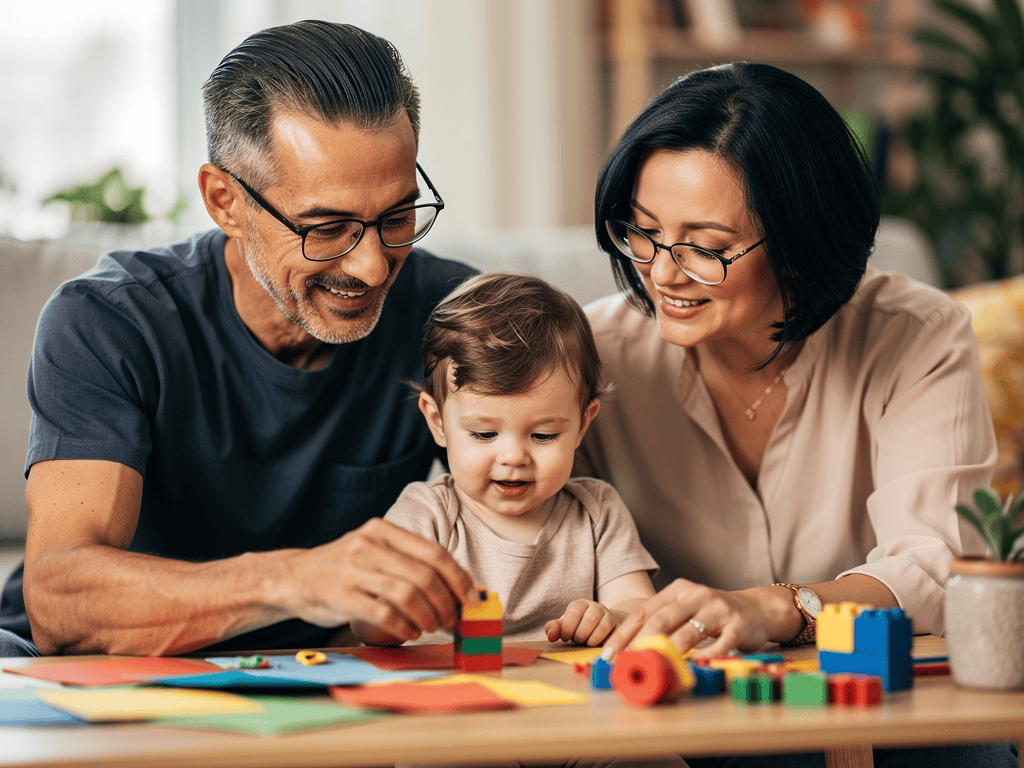
You don't have to start big projects to be a role model. Often it's the small moments that impress the most: when you set the table together with your grandchildren, when you work together in the garden, or when you solve a puzzle together. In all these situations, you show your grandchildren how cooperation works and how beautiful it can be to create something together.
Joint activities in the family
Use the time with your grandchildren to plan and carry out joint activities. Whether it's cooking together, crafting together, or working together in the garden – all these activities offer opportunities to practice teamwork. Show your grandchildren how important it is that everyone contributes and that everyone works together to achieve a common goal.
If you have several grandchildren, you can particularly well demonstrate how teamwork works. Let the grandchildren plan together how they want to carry out an activity, and support them in distributing tasks fairly. Show that it's important to be considerate of each other and that everyone can contribute their strengths. These experiences help your grandchildren work well in teams outside the family as well.
Cooperation instead of competition
In many situations, children are taught that it's about being better than others. As grandparents, you can choose a different approach and show that cooperation often brings more than competition. Show your grandchildren that it's not about being the best, but about achieving something together.
When you play games, you can choose cooperative games where everyone must work together to win. When you build or craft something together, show that everyone can contribute their own ideas and that the result becomes better when everyone works together. These experiences help your grandchildren understand that teamwork doesn't mean giving up one's own individuality, but that they are stronger together.
Games and activities for teamwork
Games and joint activities are a wonderful way to practice teamwork. There are many games and projects specifically designed to promote cooperation. Use these opportunities to show your grandchildren how much fun it can be to achieve something together.
It's important that the activities are age-appropriate and that your grandchildren can participate. Let your grandchildren help decide what you want to do together, and show that their ideas and participation are important. Through such shared experiences, your grandchildren not only learn what teamwork means, but they also experience what it feels like to be part of a team.
Cooperative games
Cooperative games are games where all players must work together to achieve a common goal. There are no winners and losers, but everyone wins or loses together. Such games are ideal for practicing teamwork because they show that cooperation is the key to success.
Examples of cooperative games include puzzles where everyone works together to solve the puzzle, or games where everyone must work together to complete a task. Board games where players must work together to achieve a common goal are also well suited. It's important that the games are fun and that your grandchildren feel they can achieve something together.
Joint projects
Joint projects offer a great opportunity to practice teamwork. Whether it's building something together, cooking together, or working together in the garden – projects show how important it is to work together and that everyone can contribute. Plan a project together with your grandchildren, and let them participate in planning and execution.
It's important that the projects are realistic and that your grandchildren can participate. Distribute tasks fairly, and show that everyone is important. When the project is completed, celebrate the success together and show your grandchildren how proud you are of the joint work. These experiences help your grandchildren understand that teamwork can be rewarding and that it's worth working together.
Communication and conflict resolution
Good communication is the foundation for successful teamwork. As grandparents, you can show your grandchildren how important it is to listen, express one's own opinion, and find compromises. Show that it's okay to have different opinions and that it's important to discuss them respectfully.
Conflicts are normal and unavoidable in teams. What matters is how you deal with them. Show your grandchildren that conflicts aren't bad, but that they can be an opportunity to find a solution together. Help your grandchildren resolve conflicts constructively by showing how to listen, find compromises, and search for solutions together.
Listening and understanding
Listening is one of the most important skills for teamwork. Show your grandchildren how important it is to listen to others and understand their perspective. When you talk with your grandchildren, take time to really listen, and show that you take their opinion seriously. Ask questions if you don't understand something, and show that it's important to respect others' viewpoints.
You can also show your grandchildren how important good listening is in conversations with other people. When you talk with friends or family members, show that you really listen and that you respect others' opinions. Your grandchildren learn that listening doesn't mean you always have to agree, but that you should understand and respect others' perspectives.
Solving conflicts together
Conflicts are normal in teams, and it's important that your grandchildren learn how to deal with them. Show your grandchildren that conflicts aren't bad, but that they can be an opportunity to find a solution together. When conflicts arise in the family or during joint activities, use them as an opportunity to show how to resolve conflicts constructively.
Help your grandchildren express their feelings, and show that it's important to respect others' feelings. Search together for solutions that are acceptable to everyone, and show that compromises don't mean you lose, but that you find a solution together that works for everyone. These skills help your grandchildren work well in teams in other situations as well.
Sharing responsibility and tasks
In a team, it's important that everyone takes responsibility and that tasks are distributed fairly. As grandparents, you can show your grandchildren how important it is to take responsibility and that everyone can contribute. Show that it's not about one person doing everything, but about everyone working together.
When you plan joint activities, let your grandchildren participate in task distribution. Show that it's important that everyone has a task that matches their abilities and that everyone is important. If someone needs help, show that it's normal to ask for help and that it's important to help others. These experiences help your grandchildren understand that teamwork means sharing responsibility and being there for each other.
Taking on joint tasks
Joint tasks offer a great opportunity to practice teamwork. Whether it's setting the table together, cleaning up together, or working together in the garden – all these activities show how important it is to work together. Distribute tasks fairly, and show that everyone is important and that everyone must work together to achieve the goal.
It's important that the tasks are age-appropriate and that your grandchildren can participate. Let your grandchildren help decide who takes on which task, and show that it's important that everyone contributes. When a task is completed, celebrate the success together and show your grandchildren how proud you are of the joint work.
Everyone contributes their part
In a team, it's important that everyone contributes. Show your grandchildren that it's not about one person doing everything, but about everyone working together. Everyone has their own strengths and abilities, and everyone can contribute something. What matters is that everyone works together and that everyone is important.
When you carry out joint activities, show that everyone is important and that everyone can contribute their part. Praise your grandchildren for their contributions, and show that you are proud of the joint work. These experiences help your grandchildren understand that teamwork means everyone is important and that everyone must work together to succeed.
Dealing with different strengths
Every person has their own strengths and abilities, and in a team it's important to recognize and use them. As grandparents, you can show your grandchildren how valuable it is to have different talents and how important it is to appreciate others' strengths. Show that it's not about being good at everything, but about contributing one's own strengths and supporting others.
If you have several grandchildren, you can particularly well show how different strengths can work together. Show that everyone has their own talents and that everyone is important. If someone needs help, show that it's normal to ask for help and that it's important to help others. These experiences help your grandchildren understand that teamwork means using everyone's strengths and being stronger together.
Appreciating different talents
Every person has their own talents and abilities, and it's important to recognize and appreciate them. Show your grandchildren that it's not about being good at everything, but about contributing one's own strengths and supporting others. When you carry out joint activities, show that everyone has their own talents and that everyone is important.
Praise your grandchildren for their individual strengths, and show that you are proud of what everyone can do. Show that it's important to appreciate others' strengths and that everyone can contribute something. These experiences help your grandchildren understand that teamwork means using everyone's strengths and being stronger together than alone.
Mutual support
In a team, it's important to support each other. Show your grandchildren that it's normal to ask for help and that it's important to help others. If someone is having difficulties, show that it's important to help and that everyone must work together to succeed.
When you carry out joint activities, show that it's important to support each other. If someone needs help, help together, and show that it's normal to ask for help. These experiences help your grandchildren understand that teamwork means being there for each other and being stronger together.
Teamwork in different age groups
Teamwork can be practiced at any age, but the way you teach it should be adapted to your grandchildren's age. For younger children, you can use simple cooperative games and joint activities where everyone must work together. For older children and teenagers, you can plan more complex projects and activities that require more planning and coordination.
It's important that the activities are age-appropriate and that your grandchildren can participate. Adjust your expectations to your grandchildren's age and abilities, and show that you are proud of their contributions, regardless of how big or small they are. These experiences help your grandchildren develop teamwork at their own pace and understand that cooperation is important at any age.
Cooperative games for different age groups
Important aspects of teamwork
Age-appropriate activities for teamwork
Tips for demonstrating teamwork
- Show cooperation in the family and with friends
- Plan joint activities with your grandchildren
- Distribute tasks fairly and show that everyone is important
- Praise your grandchildren for their contributions to joint work
- Show that compromises are important and that everyone can win
- Support your grandchildren in contributing their own ideas
Ideas for cooperative games and activities
- Solve puzzles together or carry out large building projects
- Play cooperative board games where everyone works together
- Cook or bake together and share tasks
- Work together in the garden and plan projects
- Craft together or carry out creative projects
- Invent stories together or perform plays
Signs that grandchildren are developing teamwork
- Grandchildren enjoy working with others
- They distribute tasks fairly and take responsibility
- They listen to others and respect different opinions
- They help others and ask for help when needed
- They resolve conflicts constructively and seek compromises
- They appreciate others' strengths and contribute their own