



What does tolerance and diversity mean?
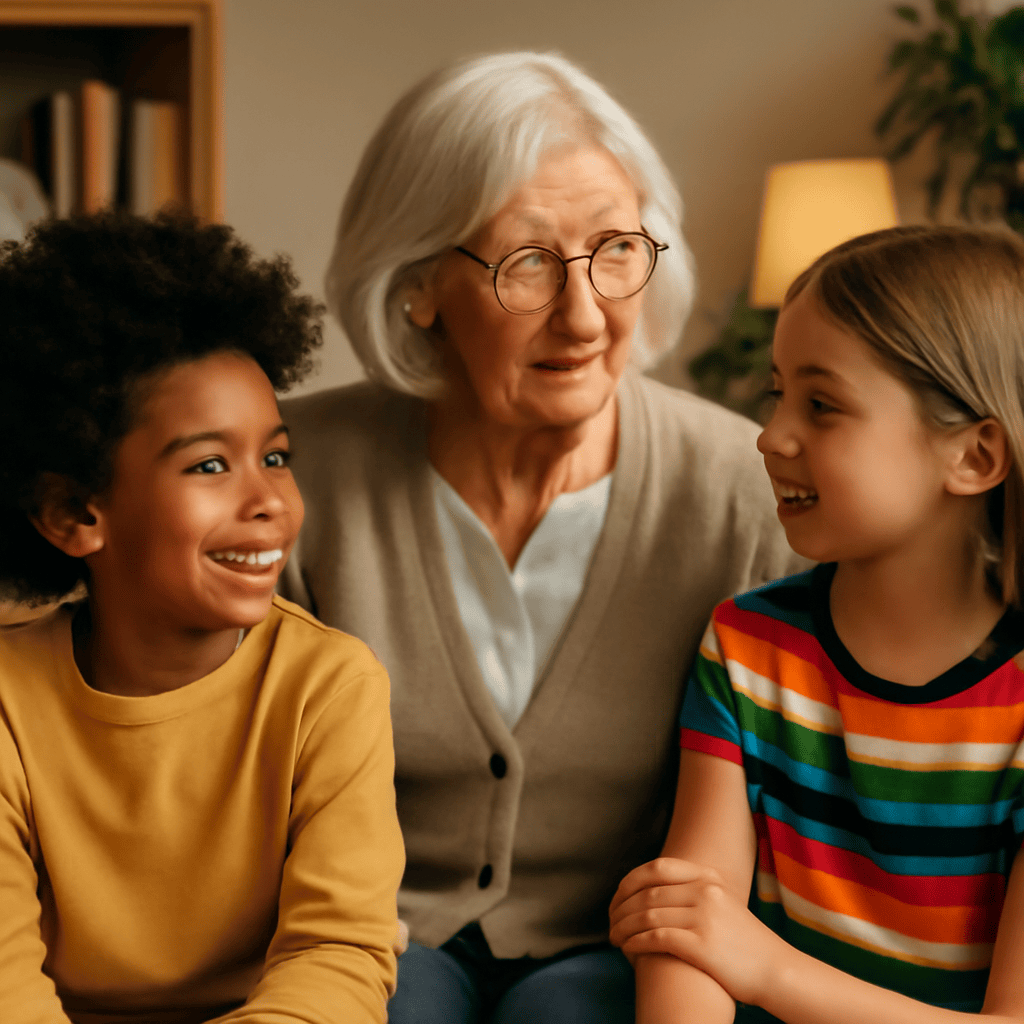
Tolerance means accepting other people as they are, even if they are different from us. Diversity is the enrichment that arises when people with different backgrounds, cultures, languages, and ways of life come together. As grandparents, you have the wonderful opportunity to teach your grandchildren these important values so they can interact with others in a diverse world with openness and respect.
Your grandchildren will grow up in a world that is more colorful and diverse than ever before. People from different countries, with different religions, languages, and cultures live together. By teaching your grandchildren tolerance and openness to diversity, you give them a gift for their entire lives: the ability to appreciate and respect other people, regardless of how they look, where they come from, or how they live.
Definition and meaning
Tolerance does not mean that you have to like everything or that you should give up your own opinion. Rather, it is about accepting that other people are allowed to think, feel, and live differently, even if we might not understand it or would see it differently. Tolerance means respect for the dignity of every person, regardless of origin, religion, gender, or other characteristics.
Diversity is the natural reality of our world. People are different – in their appearance, their abilities, their interests, and their ways of life. These differences make our society richer and more interesting. When your grandchildren learn to see diversity as enrichment, they will become more open, curious, and empathetic. They will be able to communicate and work with people from different cultures and backgrounds, which is an important skill in our globalized world.
Why tolerance is important for grandchildren
Children who learn to be tolerant and open develop stronger self-confidence and more empathy. They learn that every person is valuable, regardless of external characteristics or differences. Tolerance also helps children deal with conflicts better and find solutions that are fair for everyone involved. When your grandchildren are tolerant, they will be less susceptible to prejudices and stereotypes and instead be curious about other people and cultures.
In a world where people from different cultures live together, tolerance is an important social skill. Your grandchildren will have to deal with people who are different from them at school, at work, and in everyday life. If they have learned to be tolerant and respectful, they will make friends more easily, work better in teams, and find their way in different situations. Tolerance is therefore not only a moral virtue but also a practical skill that will help your grandchildren in life.
Living tolerance in everyday life
The best way to teach your grandchildren tolerance is to live it yourself in everyday life. Children learn most through observation and imitation. When your grandchildren see how you interact respectfully and openly with people who are different from you, this shapes their own behavior in a lasting way. You don't have to give big speeches – often it's the small gestures and the way you speak to other people that make the biggest impression.
Your grandchildren observe exactly how you react when you meet people who look different, speak differently, or live differently. If you are open and friendly, your grandchildren learn that differences are normal and okay. However, if you react dismissively or disparagingly, they learn that differences are something negative. As grandparents, you have the power to show your grandchildren that diversity is something beautiful and enriching.
Openness to different people
Show your grandchildren that you are open to encounters with different people. When you meet people in the supermarket, in the park, or at events who are different from you, be friendly and respectful. Greet other people, even if you don't know them. Show interest in other cultures and ways of life, and let your grandchildren participate. If you are curious and open yourself, your grandchildren will adopt this attitude.
You can also show openness in your own family. When family members have different opinions or live differently, show that this is okay. Respect the decisions of others, even if you might not understand them. Show your grandchildren that it is normal for people to be different and that this is not something bad, but something that enriches our family.
Respectful handling of differences
Respect means treating other people the way we want to be treated ourselves. Show your grandchildren that every person deserves respect, regardless of their appearance, origin, or abilities. When you treat others with respect, your grandchildren learn that respect is not a question of similarity but a fundamental attitude toward all people.
Avoid disparaging comments about people who are different. If you make negative statements about certain groups, your grandchildren learn that it is okay to devalue others. Instead, you can emphasize positive aspects of diversity: "It's nice that there are so many different languages" or "It's interesting how differently people can celebrate." Through such positive statements, your grandchildren learn to see diversity as something positive.
Having conversations about diversity
In addition to living tolerance, it is important to actively talk with your grandchildren about diversity and tolerance. Use situations in everyday life to address the topic and explain to your grandchildren what tolerance means and why it is important. Be patient and take time for questions and discussions. Your grandchildren will have many questions, and it is important that you take them seriously and answer them honestly.
Conversations about diversity should not be lecturing but open and curious. Listen to what your grandchildren think and feel, and try to understand their perspective. When you show that you take their opinion seriously and that there are different ways to see the world, you help your grandchildren develop their own tolerant attitude.
Age-appropriate explanations
The way you talk about tolerance and diversity should be adapted to the age of your grandchildren. For younger children, you can use simple explanations: "Tolerance means that we respect all people, even if they are different from us." For older children and teenagers, you can have more complex conversations about cultures, religions, social justice, and the importance of diversity in our society.
It is important that you don't create fear but awaken curiosity. Explain that differences are normal and interesting. For younger children, you can use examples from the animal kingdom: "Just as there are different animals, there are also different people, and that's good." For older children, you can talk about history, geography, and different cultures. Adapt your explanations to the age and maturity of your grandchildren.
Using examples from everyday life
Use situations from everyday life to talk about diversity. When you are out together and see different people, you can take this as an opportunity to explain that people are different and that this is okay. When you watch TV or read books together, you can point out different cultures and ways of life and explain that there are many different ways to live.
Stories from your own life can also be helpful. Tell about encounters with people from other cultures, trips you have taken, or experiences you have had with diversity. Share your thoughts: "I didn't know much about this culture before, but then I learned how interesting it is." Such stories make tolerance tangible and show that adults can still learn.
Using books and media
Books, films, and other media can be wonderful ways to introduce your grandchildren to diversity. Choose stories that show different cultures, people, and ways of life. Read books together that have people from different countries, with different backgrounds, or with different abilities as main characters. Such stories help your grandchildren to put themselves in other people's shoes and understand their perspective.
Films and series can also be helpful if you watch them together and talk about them. Choose films that show different cultures or that deal with topics such as tolerance, friendships across cultural boundaries, or respect for differences. After watching, talk about what you saw and ask your grandchildren what they thought. Such shared experiences can trigger deep conversations and help your grandchildren better understand diversity.
Reading diverse stories
When you read to your grandchildren, choose books that show different people and cultures. There are many wonderful children's books that tell stories from different countries, show different family models, or have people with different abilities as main characters. Such books help your grandchildren understand that the world is diverse and that all people are valuable.
Talk about the stories while reading: "Look, this family celebrates differently than we do, but that's also nice" or "This boy has a different skin color, but he likes the same things as you." Through such comments, your grandchildren learn that differences are normal and that people can have much in common despite their differences. When you regularly read diverse stories, diversity becomes normal for your grandchildren.
Watching films and series together
Films and series can be a good way to learn about different cultures and ways of life. Choose age-appropriate films that show different people and cultures. Talk during watching about what you see: "Look how this family lives in another country" or "Interesting how differently people can celebrate."
After watching, you can talk together about what you saw. Ask your grandchildren what they found interesting, what surprised them, or what they might not have understood. Explain things that might be unfamiliar and emphasize that there are many different ways to live and that all are equal. Such conversations help your grandchildren better understand and appreciate diversity.
Shared activities and encounters
Shared activities where your grandchildren can experience different people and cultures are a wonderful way to teach tolerance. Visit cultural events, festivals, or markets that show different cultures. Go to museums that have exhibitions about different countries and cultures. Such experiences make diversity tangible and show your grandchildren how enriching different cultures can be.
Encounters with people from different cultures can also be helpful. If you have the opportunity to meet people from other countries or with different backgrounds, use this opportunity together with your grandchildren. Show interest in other cultures, ask questions, and let your grandchildren participate. Such personal encounters are often much more effective than books or films because they show that people from different cultures are just as friendly, interesting, and valuable as people from your own culture.
Visiting cultural events
Cultural events such as festivals, markets, or concerts that show different cultures are a good way to experience diversity. Visit such events together with your grandchildren and show interest in what you see and experience. Try new foods together, listen to different music, or watch traditional dances. Such experiences make diversity come alive and show your grandchildren how interesting and enriching different cultures can be.
Museums or exhibitions that show different cultures can also be helpful. Go together to a museum that has exhibitions about different countries, cultures, or religions. Talk about what you see and show interest in the various exhibits. Explain to your grandchildren that there are many different ways to live, celebrate, or believe, and that all are equal. Such visits can leave deep impressions and help your grandchildren appreciate diversity.
Encounters with different people
Personal encounters with people from different cultures can be very effective in teaching tolerance. If you have the opportunity to meet people from other countries or with different backgrounds, use this opportunity together with your grandchildren. Show interest in other cultures, ask respectful questions, and let your grandchildren participate. Such encounters show your grandchildren that people from different cultures are just as friendly, interesting, and valuable as people from your own culture.
You can also promote encounters in your own neighborhood. If people from different cultures live in your neighborhood, you can be friendly and make contacts. Show your grandchildren that it is normal to talk to different people and make friendships, even if they are different. If you are open and friendly yourself, your grandchildren will adopt this attitude and learn that diversity is something positive.
Dealing with prejudices and stereotypes
Unfortunately, your grandchildren will probably encounter prejudices and stereotypes in the course of their lives. As grandparents, you can help your grandchildren recognize and question prejudices. Explain that prejudices are preconceived opinions about people that often do not correspond to the truth and that it is important to get to know people before forming a judgment.
If your grandchildren express prejudices or repeat stereotypes they may have heard, take them seriously and talk about them. Explain why such statements are problematic and show that every person is individual and should not be judged based on group affiliations. Through such conversations, your grandchildren learn to think critically and question prejudices.
Recognizing and addressing prejudices
Help your grandchildren recognize what prejudices are and how they manifest themselves. Explain that prejudices are preconceived opinions about people that are often based on stereotypes and do not correspond to individual reality. When your grandchildren understand what prejudices are, they can better recognize and question them. Also show that prejudices can be hurtful and that it is important to treat others with respect.
If your grandchildren express prejudices they may have heard, take them seriously and talk about them. Explain why such statements are problematic and show that every person is individual. Use examples: "Not all people from this country are like that, every person is different." Through such conversations, your grandchildren learn to think critically and question prejudices instead of simply adopting them.
Questioning stereotypes
Stereotypes are simplified and often false ideas about certain groups of people. Help your grandchildren understand that stereotypes do not correspond to reality and that every person is individual. When you consume media together, you can point out stereotypes and explain why they are problematic. Show that people should not be judged based on group affiliations but as individuals.
Encourage your grandchildren to question stereotypes. Ask: "Is that really true, or is that just a cliché?" or "Do we know someone who belongs to this group? Are they really like that?" Through such questions, your grandchildren learn to think critically and not believe everything they hear or see. Show that it is important to get to know people before forming a judgment and that every person deserves the chance to be seen as an individual.
Tolerance as a gift for the future
By teaching your grandchildren tolerance and openness to diversity, you give them a valuable gift for their future. Your grandchildren will grow up in a world that is becoming increasingly diverse, and the ability to interact tolerantly and respectfully with different people will help them in many areas of their lives. They will make friends more easily, work better in teams, and find their way in different situations.
Tolerance is not only a moral virtue but also a practical skill that will help your grandchildren in life. At school, at work, and in everyday life, they will have to deal with people who are different from them. If they have learned to be tolerant and respectful, they will be more open, curious, and empathetic. They will be able to understand different perspectives and find solutions that are fair for everyone involved.
As grandparents, you have the wonderful opportunity to teach your grandchildren these important values. Through your example, your conversations, and your shared activities, you can show your grandchildren that diversity is something beautiful and enriching. You can help them become tolerant, respectful, and open – qualities that will accompany them throughout their lives and help them get along in a diverse world and be happy.
Activities to promote tolerance
Conversation starters about tolerance and diversity
Signs that grandchildren are developing tolerance
Tips for living tolerance
- Be open and friendly to all people, regardless of their background
- Avoid disparaging comments about people who are different
- Show interest in other cultures and ways of life
- Respect the decisions of others, even if you don't understand them
- Use positive language when talking about diversity
- Be curious and open to new experiences yourself
Books that show diversity
- Children's books with main characters from different cultures
- Stories about friendships across cultural boundaries
- Books that show different family models
- Stories about people with different abilities
- Books that introduce different countries and cultures
- Stories about tolerance and respect
Shared activities to promote tolerance
- Visiting cultural festivals and markets
- Visiting museums with exhibitions about different cultures
- Cooking together and trying dishes from different countries
- Listening to music from different cultures
- Watching films together that show different cultures
- Playing games that introduce different countries and cultures