



Why shared memories are so valuable
Shared activities with your grandchildren create moments that last a lifetime. These memories are not only valuable for you as grandparents, but especially for your grandchildren. When you collect and preserve these special moments, you give your grandchildren a treasure that will accompany them throughout their lives. Memories help your grandchildren understand their own history and appreciate the special relationship with you as grandparents.
As grandparents, you have the opportunity to create memories that your grandchildren will still have when you are no longer there. These memories become an important part of your grandchildren's identity and help them understand their roots. When you collect memories, you do something for your grandchildren that extends beyond the present and shows them how important they are to you.
Memories of shared activities are also a way to strengthen your relationship with your grandchildren. When you look at photos together, tell stories, or look at keepsakes, you create moments of connection and closeness. These shared memory moments will deepen your relationship with your grandchildren and show them that the time you spend together is valuable and important.
The meaning for your grandchildren
For your grandchildren, memories of shared activities are particularly valuable because they show them that they are loved and that their relationship with you as grandparents is important. When your grandchildren look back on these memories later, they will remember the beautiful moments you experienced together. These memories give your grandchildren a sense of security and belonging that will accompany them throughout their lives.
Memories also help your grandchildren understand their own history. When you look at photos together or tell stories, your grandchildren learn more about themselves and their family. These stories become part of their identity and help them understand where they come from and what values are important in their family. As grandparents, you can help your grandchildren create this connection to their history.
When you collect memories, you also give your grandchildren something they can later pass on to their own children. These memories become part of the family heritage and help maintain the connection between generations. Your grandchildren will treasure these memories and consider them an important part of their family history.
The meaning for you as grandparents
For you as grandparents, memories of shared activities are also valuable. They help you preserve the beautiful moments with your grandchildren and remember them later. When you collect memories, you create something you can always look at when you miss your grandchildren or when you want to remember the good times.
Collecting memories can also be a beautiful activity you can do together with your grandchildren. When you sort photos together, tell stories, or collect keepsakes, you spend valuable time together and at the same time create something that both sides will appreciate. These shared activities strengthen your relationship with your grandchildren and create new memories you can collect.
Memories also help you track your grandchildren's development. When you collect photos and stories, you can see how your grandchildren have grown and developed. This documentation of shared time will help you appreciate the special moments with your grandchildren and remember the different phases of their development.
Collecting photos as memories
Photos are one of the simplest and most effective ways to collect memories of shared activities. A photo can capture an entire moment and help you and your grandchildren remember the details. When you regularly take photos of shared activities, you create a visual documentation of your shared time that you can always look back on.
It's important that you don't just photograph the big events, but also the small, everyday moments. A photo of breakfast together, playing in the garden, or reading together can be just as valuable as a photo from a special outing. These everyday moments show the normality of your relationship and help your grandchildren remember the regular activities that shape your relationship.
When you take photos, remember to show yourself in the photos as well. Your grandchildren will appreciate having photos where you can be seen together. These photos show the relationship between you and help your grandchildren remember the shared moments, even if they may not remember all the details later.
Creating digital photo albums
Digital photo albums are a modern and practical way to collect and organize memories. You can sort photos by date, activity, or theme and easily find them again. Digital albums have the advantage that they don't take up much space and that you can create copies for your grandchildren without losing the originals.
When you create digital photo albums, you can also add descriptions and stories to the photos. Write down what you did that day, what your grandchildren said, or what was particularly beautiful. These descriptions will be just as valuable later as the photos themselves and help your grandchildren remember the details.
You can also share digital albums with your grandchildren, even if they live far away. You can create online albums that your grandchildren can view at any time, or you can regularly add new photos and inform your grandchildren about them. This way, your grandchildren stay connected to the shared memories even if you can't get together regularly.
Designing traditional photo albums
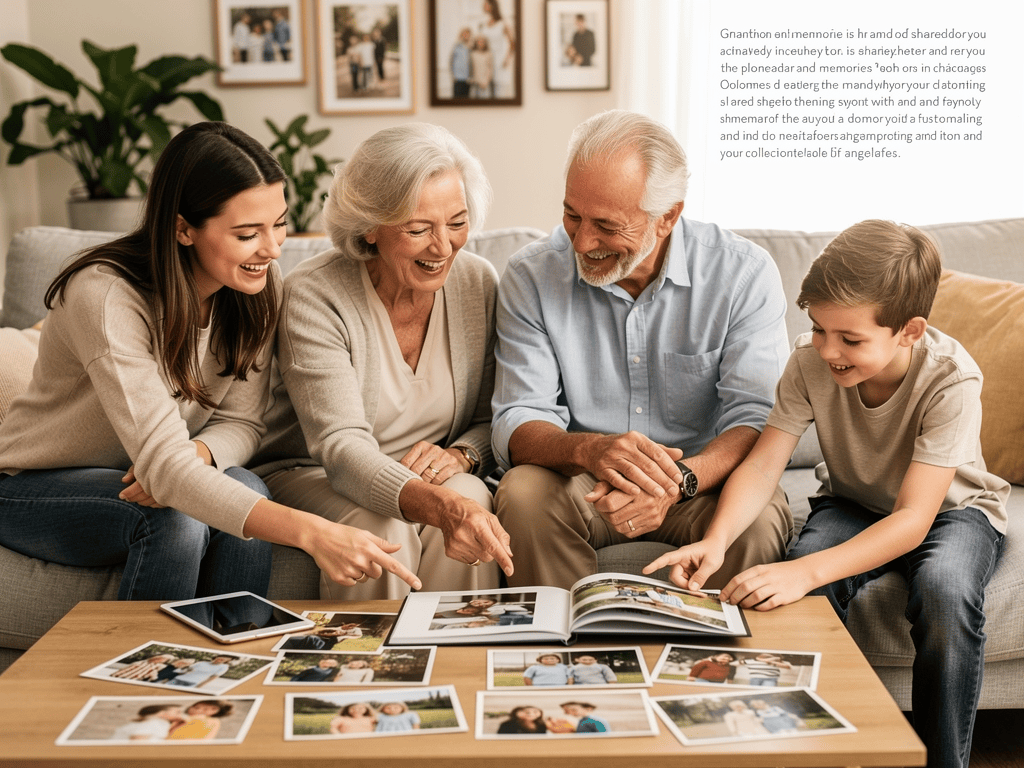
Even though digital albums are practical, traditional photo albums have a special charm. A physical album that you can browse through together with your grandchildren creates a different kind of connection than a digital album. When you browse through an album together, you can tell stories, laugh, and remember the moments you experienced together.
When you design a traditional photo album, you can make it a shared activity with your grandchildren. Let your grandchildren help choose the photos or design the pages. This way, the album becomes not only a collection of memories but also a memory of the time you spent designing together.
You can also design traditional photo albums as gifts for your grandchildren. When you create an album for each grandchild, you give them something personal and valuable that they will keep for their entire lives. These albums become an important part of their family history and help them understand and appreciate their relationship with you as grandparents.
Connecting photos with stories
Photos become even more valuable when you connect them with stories. Write a short story or description for each photo that explains what happened that day. These stories help your grandchildren remember the details and give the photos a meaning that goes beyond the image.
When you connect photos with stories, you can also involve your grandchildren. Ask them what they remember from that day, or let them tell their own version of the story. This way, the memories become a shared story that you both created together, and the photos become a starting point for conversations and shared memories.
You can also tell stories about photos orally when you look at the albums together. These oral stories become part of the tradition and help your grandchildren keep the memories alive. When you regularly look at photos together and tell stories, this becomes a cherished habit that strengthens your relationship and creates new memories.
Capturing stories and anecdotes
In addition to photos, stories and anecdotes are a wonderful way to collect memories of shared activities. Stories can capture details that photos cannot show: the feelings, the thoughts, the conversations. When you write down or record stories, you preserve these special moments for your grandchildren and create something they can read or listen to again and again.
Stories don't have to be long or literary. Even short anecdotes or descriptions of special moments can be valuable. Write down what happened, what your grandchildren said, what was particularly beautiful or funny. These small stories will be just as valuable later as the big narratives and help your grandchildren remember the details.
When you capture stories, you can also involve your grandchildren. Let them tell or write their own version of the story, or ask them what they remember. This way, the stories become a shared memory that you both created together, and the memories become more vivid and personal.
Recording oral stories
Oral stories have a special charm because they capture your voice and your way of telling. When you record stories, your grandchildren can later hear your voice and remember how you told stories. These recordings will be particularly valuable when you are no longer there and help your grandchildren remember you.
You can record stories in various ways: with a smartphone, a voice recorder, or a computer. It's important that you record regularly and that you store the recordings safely. You can also transcribe the recordings and save them as text so your grandchildren can both hear and read them.
When you record stories, you can also involve your grandchildren. Let them ask questions or tell their own stories. This way, the recordings become a shared activity that you both enjoy, and the memories become more vivid and personal. These shared recordings become an important part of your family history.
Collecting written memories
Written memories have the advantage that they are easy to read and share. You can write memories in a notebook, a diary, or a computer. It's important that you write regularly and that you capture the memories as detailed as possible. Don't just write what happened, but also how you felt and what was particularly beautiful.
When you write memories, you can also use different formats: diary entries, letters to your grandchildren, stories, or poems. Each format has its own charm and can capture different aspects of the memories. Try different formats and find out which one suits you best.
You can also share written memories with your grandchildren, even if they can't read yet. Read the stories to them or let them illustrate the stories. This way, the memories become a shared activity that you both enjoy, and the stories become more vivid and personal.
Creating shared memory books
A shared memory book is a wonderful way to collect memories of shared activities. You can create a book that you design together with your grandchildren, and in which you both enter stories, photos, and keepsakes. This way, the book becomes a shared story that you both created together.
When you create a memory book, you can include various elements: photos, stories, drawings, tickets, dried flowers, or other keepsakes. Each element tells a story and helps keep the memories alive. Let your grandchildren help with the design so the book truly becomes shared memories.
You can also design memory books as gifts for your grandchildren. When you create a book for each grandchild, you give them something personal and valuable that they will keep for their entire lives. These books become an important part of their family history and help them understand and appreciate their relationship with you as grandparents.
Collecting and preserving keepsakes
In addition to photos and stories, physical keepsakes can also be valuable memories of shared activities. A stone from the beach, a ticket from the zoo, a dried leaf from a shared walk – these small things can evoke great memories and help your grandchildren remember the shared moments.
Keepsakes don't have to be valuable or large. Even small, seemingly insignificant things can be valuable memories when connected with a story. When you collect keepsakes, remember to also write down the story so your grandchildren can later understand why this piece is important.
When you collect keepsakes, you can also involve your grandchildren. Let them choose or collect pieces themselves that remind them of shared activities. This way, the keepsakes become a shared collection that you both created together, and the memories become more personal and meaningful.
Crafts and artworks
Crafts and artworks that you created together with your grandchildren are particularly valuable keepsakes. These works show not only your grandchildren's creativity but also the time you spent together. When you preserve these works, you preserve not only the artworks themselves but also the memories of the shared creative time.
When you preserve crafts, you can also take photos of them in case the originals are not permanently durable. This way, you can preserve the memories even if the physical works may not last forever. You can also create an album or folder with photos of the artworks so your grandchildren can later see what you created together.
You can also design crafts as gifts for your grandchildren. When you create something together and then keep it as a keepsake, it becomes a symbol of your shared time. These works become an important part of your family history and help your grandchildren remember the creative moments you experienced together.
Small gifts and found items
Small gifts that you gave to your grandchildren or that your grandchildren gave to you can be valuable keepsakes. These gifts are important not because of their material value but because of the memories associated with them. When you preserve these gifts, you preserve the memories of the moments when they were given.
Found items from shared outings or activities can also be valuable memories. A stone from the beach, a shell, a leaf from a forest walk – these small things can evoke great memories. When you collect and preserve these found items, you create a physical connection to the shared moments.
When you collect gifts and found items, remember to also write down the story. Write down where the piece comes from, when you found or received it, and what was special about it. These stories make the keepsakes even more valuable and help your grandchildren remember the details.
Designing memory boxes
A memory box is a wonderful way to collect and organize various keepsakes. You can create a box for each grandchild or a shared box for all shared memories. The box can have different compartments or areas where you can store different types of keepsakes.
When you design a memory box, you can decorate and personalize it together with your grandchildren. This way, the box becomes not only a storage place for memories but also itself a memory of the time you spent designing together. Let your grandchildren help with the design so the box truly becomes shared memories.
You can regularly go through memory boxes and look at them together with your grandchildren. When you look at the keepsakes together and tell the stories about them, you create new memory moments and help your grandchildren understand the meaning of the collected pieces. These shared moments become an important part of your relationship.
Organizing digital memories
In today's world, there are many digital ways to collect and organize memories. Digital memories have the advantage that they are easy to share and that you can create copies without losing the originals. When you organize digital memories, you can ensure that your grandchildren will also have access to these memories in the future.
It's important that you regularly back up digital memories and that you store them in a format that will still be readable in the future. Use common formats for photos, videos, and documents, and store copies in different places to ensure the memories are not lost.
You can also share digital memories with your grandchildren, even if they live far away. You can create online albums, use cloud storage, or regularly share new memories via email or messaging services. This way, your grandchildren stay connected to the shared memories even if you can't get together regularly.
Creating digital archives
A digital archive is a structured way to collect and organize memories. You can create different folders for different types of memories: photos, videos, stories, documents. This way, you can easily find what you're looking for, and your grandchildren can later also easily navigate through the memories.
When you create a digital archive, you can also add metadata: date, location, people, activity. This information helps you and your grandchildren later find and understand the memories. You can also add descriptions and stories to the memories to make them even more valuable.
You can also regularly update digital archives and add new memories. This way, the archive becomes a living collection that grows over time and documents the development of your relationship with your grandchildren. This regular updating also becomes a beautiful habit that helps you appreciate the shared moments.
Videos and audio recordings
Videos and audio recordings are a wonderful way to keep memories alive. A video can not only show what happened but also capture the sounds, movements, and atmosphere. Audio recordings can capture your voice and the voices of your grandchildren and help make the memories even more personal.
When you record videos, remember to film not only the big events but also the small, everyday moments. A short video of playing together, reading together, or eating together can be just as valuable as a video from a special outing. These everyday moments show the normality of your relationship and help your grandchildren remember the regular activities.
You can also connect videos and audio recordings with stories. When you watch or listen to the recordings later, you can tell the stories about them and thus make the memories even more vivid. These shared moments of watching and telling become new memories you can collect.
Sharing online albums
Online albums are a practical way to share memories with your grandchildren, even if they live far away. You can create albums on various platforms and invite your grandchildren to view them. This way, your grandchildren stay connected to the shared memories even if you can't get together regularly.
When you create online albums, you can also regularly add new photos and memories. This way, your grandchildren stay up to date on the shared activities and can view the memories at any time. You can also add comments and stories to the photos to make the memories even more valuable.
You can also design online albums as gifts for your grandchildren. When you create an album for each grandchild or a shared album for all grandchildren, you give them something they can view at any time. These albums become an important part of their digital family history and help them understand and appreciate their relationship with you as grandparents.
Sharing memories with grandchildren
Collecting memories is not only something you do for your grandchildren, but also something you can do together with your grandchildren. When you collect and share memories together, you create new moments of connection and help your grandchildren understand the meaning of the memories. These shared activities become memories themselves that you can collect.
When you share memories, you can also involve your grandchildren. Let them help choose the photos, design the albums, or write the stories. This way, the memories become a shared story that you both created together, and the memories become more personal and meaningful.
Sharing memories can also lead to conversations that strengthen your relationship. When you look at photos together or tell stories, you can talk about the shared moments and remember the details. These conversations become new memories and help your grandchildren understand the meaning of the shared time.
Creating shared memory moments
When you collect memories, you can make this a shared activity with your grandchildren. Let your grandchildren help choose the photos, design the albums, or write the stories. This way, collecting memories itself becomes a memory that you both created together.
Shared memory moments can also arise when you regularly look at the collected memories together. When you browse through photos together, tell stories, or look at keepsakes, you create moments of connection and closeness. These shared moments become new memories you can collect.
When you create shared memory moments, you can also ask your grandchildren what they remember or what is particularly important to them. This way, the memories become a shared story that you both created together, and the memories become more personal and meaningful. These shared conversations will strengthen your relationship and create new memories.
Memories as gifts
Memories can also be a wonderful gift for your grandchildren. When you create a photo album, a memory book, or a memory box for each grandchild, you give them something personal and valuable that they will keep for their entire lives. These gifts show how important your grandchildren are to you and how much the shared time means.
When you design memories as gifts, you can give them on special occasions: birthdays, Christmas, or simply to show that you are thinking of your grandchildren. These gifts become an important part of their family history and help them understand and appreciate their relationship with you as grandparents.
You can also design memories as gifts together with your grandchildren. When you create an album or book together, the gift becomes a shared memory that you both created together. These shared activities become new memories you can collect, and the gifts become even more valuable because they are shared memories.
Long-term preservation of memories
When you collect memories, it's important to also think about long-term preservation. Memories should be stored in a way that they will still be accessible in the future, even when you are no longer there. When you preserve memories long-term, you ensure that your grandchildren will also have access to these valuable moments later.
For physical memories, this means that you should store them in a safe place that is protected from moisture, light, and other damage. Use archival materials that protect the memories, and remember to create copies in case the originals are lost. For digital memories, this means that you should regularly create backups and store the memories in formats that will still be readable in the future.
When you preserve memories long-term, you can also involve your grandchildren. Explain to them how important the memories are and how they should preserve them. This way, you help your grandchildren appreciate the memories and understand that they are an important part of their family history. This shared responsibility for the memories will strengthen your relationship and help preserve the memories for the future.
Different Types of Memories
Methods for Organizing Memories
Long-term Preservation Methods
Tips for Collecting Photos
- Regularly take photos of shared activities, including the small moments
- Photograph not only big events but also everyday moments
- Show yourself in photos together with your grandchildren
- Add descriptions and stories to photos
- Organize photos by date, activity, or theme
- Create both digital and physical albums
Tips for Capturing Stories
- Regularly write down memories, even short anecdotes
- Tell stories orally and record them
- Involve your grandchildren when telling stories
- Use different formats: diary, letters, stories
- Connect stories with photos and keepsakes
- Create shared memory books with your grandchildren
Tips for Collecting Keepsakes
- Collect small found items from shared outings
- Preserve crafts and artworks
- Create memory boxes for various keepsakes
- Write stories about the keepsakes
- Involve your grandchildren when collecting
- Take photos of keepsakes as backup