



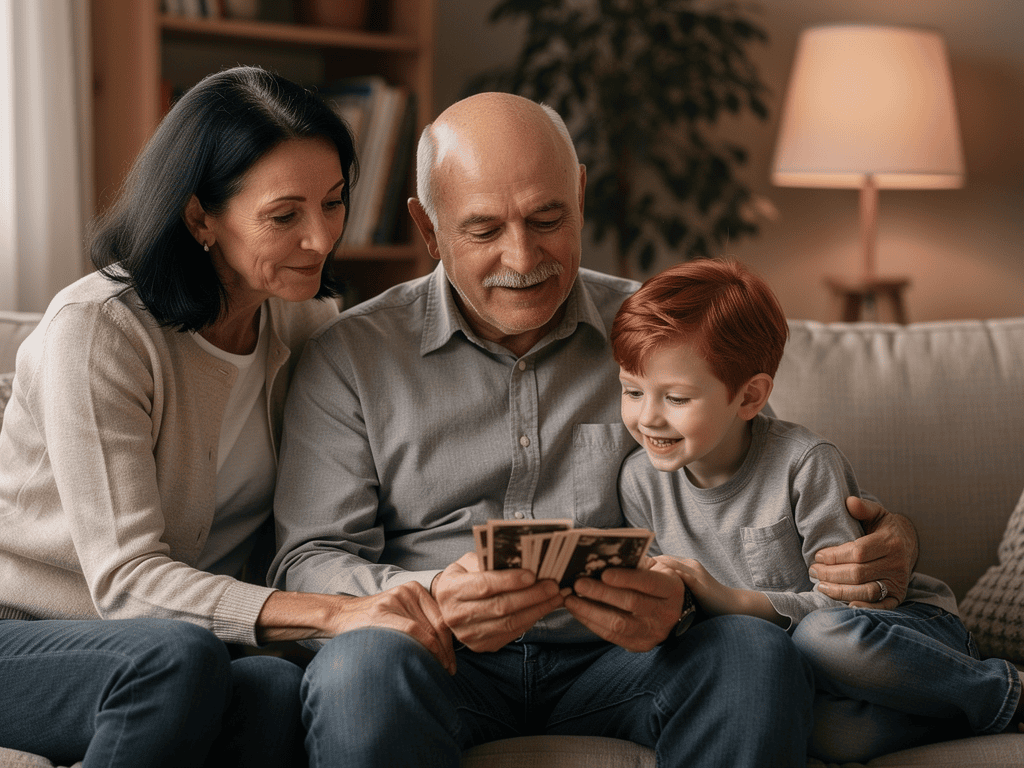
Why collecting childhood memories is important
Childhood is a special time full of formative moments that will remain valuable for your grandchildren throughout their lives. As grandparents, you can play an important role in collecting and preserving these memories. When you collect your grandchildren's childhood memories, you not only give them a valuable gift for the future, but also show them how important their childhood and development are to you.
Memories help your grandchildren understand their own history and develop their identity. When they can later look back on photos, stories, or other mementos, they see how they have developed, what special moments there were, and how much they were loved. These memories will become a treasure that your grandchildren will cherish throughout their lives.
As grandparents, you often have a special perspective on your grandchildren's development. You see things that might escape parents in everyday life, and you have the time and peace to consciously perceive special moments. When you collect and preserve these moments, you create something valuable that your grandchildren will appreciate even more later.
The importance of memories for grandchildren
For your grandchildren, memories of their childhood will be invaluable later. They help them understand who they are and where they come from. Memories give your grandchildren a sense of continuity and connection with their family and their history. When you collect these memories, you give your grandchildren something that will accompany them throughout their lives.
Especially in difficult times, memories of happy childhood moments can be an important source of strength. When your grandchildren can later look back on their childhood and see how much they were loved and cared for, it gives them strength and self-confidence. These memories show your grandchildren that they are important and that their childhood was valuable.
Memories also help strengthen the relationship between you and your grandchildren. When you look back on photos or stories together, conversations and connections arise that deepen your relationship. These shared moments of remembering become new memories that you create together.
Your role as grandparents
As grandparents, you have a unique position when it comes to collecting memories. You often have more time than parents to consciously perceive and capture special moments. You can also bring a different perspective and notice things that might get lost in parents' everyday lives.
Your role as a memory collector is important because you create the connection between generations. You can retell the stories of your own children and at the same time create new stories with your grandchildren. When you collect memories, you become an important keeper of family history.
At the same time, by collecting memories, you can also strengthen your own relationship with your grandchildren. When you take the time to capture special moments, you show your grandchildren how important they are to you. This appreciation will shape your relationship and lead to many beautiful shared memories.
Methods for collecting memories
There are many different methods for collecting your grandchildren's childhood memories. The best method is the one that suits you and your grandchildren. It is important that you regularly collect memories and that you combine different methods to create as complete a picture as possible of your grandchildren's childhood.
You don't have to be perfect or have professional equipment to collect memories. Often, it's the spontaneous, authentic moments that are most valuable. It's important that you start and regularly capture memories. Over time, you will have a beautiful collection that your grandchildren will appreciate even more later.
Let yourself be inspired by different methods and try what you like best. You can combine different methods and thus create a diverse collection of memories. It's important that you enjoy it and that collecting memories becomes a beautiful shared activity with your grandchildren.
Photos and videos
Photos and videos are one of the simplest and most effective methods for capturing memories. You can take photos of special moments with your smartphone or camera: while playing, during shared activities, at family celebrations, or simply during everyday moments. It's important that you regularly take photos and that you also capture the small, inconspicuous moments.
Videos can be particularly valuable because they capture not only the image but also the voice, movements, and atmosphere of a moment. You can make short videos of your grandchildren when they are playing, telling stories, or learning something new. These videos will later become a valuable treasure that shows how your grandchildren were and how they developed.
It's important that you regularly organize and name your photos and videos. Use meaningful file names or add notes so you know later when and where the photos were taken. You can also write small stories to the photos that explain what was happening and why this moment was special.
Stories and anecdotes
In addition to photos and videos, stories and anecdotes are a wonderful way to capture memories. You can write down what your grandchildren said, what funny or special moments there were, or what developments you observed. These stories will later become a valuable treasure that shows how your grandchildren were and how they thought.
You can keep a small notebook in which you regularly write down stories and anecdotes. Or you can make short notes after special moments that you later work into complete stories. It's important that you write down the stories as they happened and that you also capture the small details that will be particularly valuable later.
Stories can also be created together with your grandchildren. You can ask your grandchildren what they experienced or talk together about special moments. When you write down these conversations, you not only create memories but also valuable shared moments with your grandchildren.
Creative projects
Creative projects are a wonderful way to collect memories while spending time with your grandchildren. You can create drawings or pictures together that capture special moments, or you can design a memory book together. Such projects are fun and at the same time create something valuable that you can look at together later.
You can also use creative projects to document your grandchildren's development. Let your grandchildren regularly paint or draw something and collect these works. You can also make handprints or footprints that show how your grandchildren have grown. These creative memories will later become a valuable treasure that shows your grandchildren's development.
Creative projects don't have to be perfect – it's important that they are authentic and reflect your grandchildren's personality. Let your grandchildren decide what they want to create and support them in doing so. These shared creative moments will become valuable memories that you will both cherish.
Creating memory books and albums
Memory books and albums are a wonderful way to organize and present the collected memories. You can use traditional photo albums or create digital memory books – both have their advantages. It's important that you regularly add new memories and that you design the books so that they are easily accessible and understandable for your grandchildren later.
Memory books can have different formats: you can create an annual book that captures the most important moments of a year, or you can create thematic books that focus on certain topics, such as birthdays, holidays, or special activities. It's important that you design the books so that they are interesting and appealing to your grandchildren later.
When creating memory books, you can also add stories, notes, or small comments that explain what is shown in the photos and why this moment was special. This additional information makes the books even more valuable and helps your grandchildren later understand and appreciate the memories better.
Traditional photo albums
Traditional photo albums have a special charm and are something you can touch and flip through. You can buy a beautiful album and regularly paste in photos you took with your grandchildren. It's important that you label the photos and add small notes that explain what is shown in the photos.
You can organize the albums thematically – for example, an album for each year or an album for certain topics such as birthdays, holidays, or shared activities. It's important that you regularly add new photos and that you design the albums so that they are easily accessible for your grandchildren later.
Traditional photo albums can also be designed creatively. You can decorate the pages with small drawings, stickers, or other decorations. Also let your grandchildren help design – they can paint pictures or add small notes. This shared design makes the albums even more valuable and creates additional memories.
Digital memory books
Digital memory books have the advantage that they are easy to create, share, and store. You can use various online services or apps to create digital books that you can then print or share digitally. Digital books can also contain videos, audio recordings, or interactive elements.
Digital memory books can also be updated and expanded more easily. You can regularly add new content and design the books so that they are easily accessible for your grandchildren later. It's important that you regularly create backups so that the digital books don't get lost.
You can also create digital books together with your grandchildren. Let your grandchildren help choose the photos or ask them what stories they want to tell about the pictures. This shared creation makes the books even more valuable and creates additional shared moments.
Story books
Story books are a special form of memory books that focus on the stories and anecdotes you have collected about your grandchildren. You can organize the stories chronologically or group them thematically. It's important that you write the stories so that they are easily understandable and appealing to your grandchildren later.
Story books can also be illustrated – either with photos that match the stories or with drawings that you or your grandchildren made. These visual elements make the books even more appealing and help bring the stories to life.
You can also create story books as gifts for special occasions – for example, for birthdays or Christmas. These books will become a valuable gift that your grandchildren will cherish throughout their lives. It's important that you regularly add new stories so that the books grow over time.
Time capsules and memory boxes
Time capsules and memory boxes are a wonderful way to preserve memories for the future. You can fill a box or container with various mementos that can be opened later. These time capsules will become a special treasure that your grandchildren can open later to rediscover their childhood.
Time capsules can have various contents: photos, small objects, letters, drawings, or other mementos. It's important that you label the contents and explain why they are important. You can also write a letter to your grandchildren that explains what is in the time capsule and why these memories are valuable.
You can create time capsules for different periods – for example, one for each year or one for certain life stages. It's important that you store the time capsules safely and that you let your grandchildren know where they are so they can be opened later. These time capsules will become a special gift for your grandchildren's future.
What belongs in a time capsule
A time capsule can have various contents that reflect your grandchildren's childhood. You can add photos of special moments, small objects such as favorite toys or special finds, drawings or artworks by your grandchildren, letters or notes that describe what was important at that time, or other mementos that are meaningful to your grandchildren.
It's important that you label the contents and explain why they are important. You can also write small stories about the objects that explain what happened and why this moment was special. This additional information makes the time capsule even more valuable and helps your grandchildren later understand the memories better.
You can also ask your grandchildren what they want to put in the time capsule. Let them decide for themselves which mementos are important to them. This participation makes the time capsule even more valuable and creates additional shared moments. It's important that you store the time capsule safely so that the contents are still in good condition later.
Memory boxes for special moments
Memory boxes are similar to time capsules, but they can also be created for shorter periods or for certain occasions. For example, you can create a box for each birthday that contains photos, cards, small gifts, or other mementos. These boxes will become a valuable treasure that shows your grandchildren's development over the years.
Memory boxes can also be thematic – for example, a box for holidays, one for school years, or one for special activities. It's important that you label and organize the boxes so you can easily find what you're looking for later. You can also add small notes that explain what is in the boxes and why these memories are important.
You can also design memory boxes together with your grandchildren. Let them help choose the contents or ask them which mementos are important to them. This shared design makes the boxes even more valuable and creates additional memories that you will both cherish.
Joint projects with grandchildren
Collecting memories can also become a wonderful shared activity with your grandchildren. When you involve your grandchildren in the projects, you not only create memories but also valuable shared moments. Your grandchildren will appreciate it when you take the time to collect and create memories together.
Joint projects can have different formats: you can design memory books together, fill time capsules, or create creative projects. It's important that you involve your grandchildren in deciding what you want to do together and that you respect their ideas and wishes. This shared decision-making makes the projects even more valuable.
When you collect memories together, you can also have conversations about the moments you are capturing. Ask your grandchildren what is important to them, or let them tell stories about the photos or mementos. These conversations create not only memories but also valuable connections between you and your grandchildren.
Planning memory projects
When planning memory projects, you can think together with your grandchildren about what you want to collect and create. Ask your grandchildren which moments are important to them, or let them help choose the photos and mementos. This shared planning makes the projects even more valuable and creates additional shared moments.
You can also schedule regular appointments for memory projects – for example, once a month or on special occasions. It's important that you design the projects so that they are interesting and appealing to your grandchildren. Let them help with the design and respect their ideas and wishes.
Memory projects don't have to be perfect – it's important that they are authentic and reflect your grandchildren's personality. Let your grandchildren decide for themselves what they want to create and support them in doing so. These shared creative moments will become valuable memories that you will both cherish.
Involving grandchildren
When you involve your grandchildren in memory projects, you show them how important their childhood and development are to you. Let them help choose photos, ask them what stories they want to tell about the pictures, or let them help design the memory books or boxes. This participation makes the projects even more valuable.
You can also ask your grandchildren which memories are important to them. Let them decide for themselves what they want to collect and preserve. This freedom of choice shows your grandchildren that their opinion matters and that you respect their perspective. This appreciation will strengthen your relationship.
When you collect memories together, you can also have conversations about the moments you are capturing. Ask your grandchildren how they felt in certain situations, or let them tell stories about the mementos. These conversations create not only memories but also valuable connections between you and your grandchildren.
Organizing digital memories
When you collect digital memories – photos, videos, or digital documents – it's important to organize and secure them well. Good organization helps you easily find the memories you're looking for later and secures your memories against loss.
You can use various methods to organize digital memories: folder structures, tags, or metadata. It's important that you find a system that works for you and that you maintain regularly. You can also use various tools or apps that help you organize.
It's also important that you regularly create backups of your digital memories. Digital files can be lost – due to technical problems, accidental deletion, or other causes. When you regularly create backups, you ensure that your memories are safe and that you won't lose them.
Sorting photos and videos
When you collect photos and videos, it's important to regularly sort and organize them. You can create folders by years, topics, or occasions to structure your memories. It's important that you use meaningful file names that explain what is shown in the photos.
You can also use tags or metadata to categorize your photos and videos. Tags help you easily find certain memories later – for example, all photos from birthdays or all videos from shared activities. This organization makes it easier later to find the memories you're looking for.
Regular sorting also helps remove duplicate or unusable files and keep your collection organized. You can also regularly select your favorite photos and collect them in a separate folder. This organization makes your memory collection more valuable and more accessible.
Backup strategies
Backups are important to ensure that your digital memories don't get lost. You should regularly create backups of your photos, videos, and other digital memories. You can use various methods: external hard drives, cloud storage, or other backup solutions.
It's important that you keep multiple backups in different locations. If one backup is lost or damaged, you still have other backups you can fall back on. You should also regularly test whether your backups work and whether you can restore the files.
You can also regularly update your backups to ensure that all new memories are secured. It's important that you find a system that works for you and that you maintain regularly. This regular maintenance ensures that your memories are safe and that you won't lose them.
Sharing and passing on memories
Memories are something that should be shared. When you collect your grandchildren's memories, you can also share them with others – with parents, with other family members, or later with the grandchildren themselves. Sharing memories creates connections and helps preserve family history.
You can share memories in various ways: through memory books that you can give as gifts, through digital albums that you can share, or through shared projects that you can look at together. It's important that you share the memories in a way that is valuable and appealing to the recipients.
When you share memories, you also show how important your grandchildren are to you. You show that you took the time to document and preserve their childhood. This appreciation will be valued by your grandchildren and other family members and lead to stronger connections.
Overview of methods for collecting memories
Possible contents for time capsules
Tips for organizing digital memories
Practical tips for collecting memories
- Regularly take photos of everyday moments, not just special occasions
- Write small notes to photos that explain what happened
- Also collect the small, inconspicuous moments – they will be particularly valuable later
- Involve your grandchildren in the projects and let them help design
- Regularly create backups of your digital memories
- Regularly organize your memories so you can easily find what you're looking for later
Ideas for joint memory projects
- Design a memory book together for a specific year
- Fill a time capsule for a special occasion
- Sort photos together and tell stories about them
- Create a story book with anecdotes about the grandchildren
- Regularly carry out creative projects that capture memories
- Create and design digital albums together
What you can collect
- Photos of special moments and everyday situations
- Videos of shared activities and special events
- Stories and anecdotes about your grandchildren
- Drawings and artworks by your grandchildren
- Small objects such as favorite toys or special finds
- Letters or notes that describe special moments