



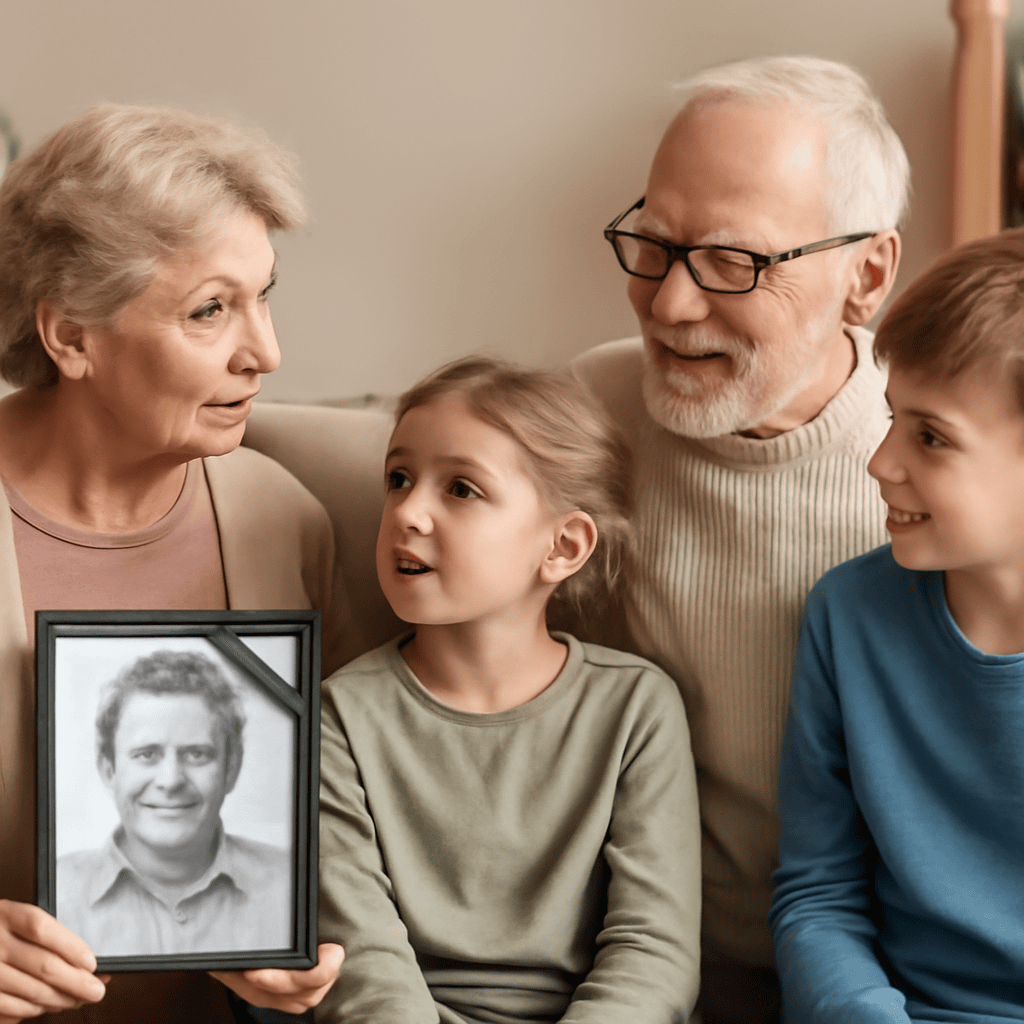
Why Preserving Memories is Important
As grandparents, you have a special responsibility to preserve memories of deceased family members for your grandchildren. These memories are not only important for family history, but also help your grandchildren understand and develop their own identity. When you preserve memories, you give your grandchildren the opportunity to get to know people they may never have met personally, but who are part of their family.
Memories of deceased family members help grandchildren understand their family history and develop a sense of their origins. When grandchildren hear stories about their ancestors, they learn not only about the past, but also about values, traditions and the people who shaped their family. This connection to family history can help grandchildren understand themselves better and develop a strong sense of belonging.
When you preserve memories, you do so not only for yourself, but especially for your grandchildren. Your grandchildren will appreciate these memories later and can pass them on to their own children. By preserving memories, you create a bridge between generations and help your grandchildren understand and appreciate their family history.
The Importance for Grandchildren
For grandchildren, memories of deceased family members are particularly important because they help them understand their own identity. When grandchildren hear stories about their grandparents, great-grandparents or other relatives, they learn not only about the past, but also about themselves. These stories help grandchildren understand where they come from and which people shaped their family.
Memories can also help grandchildren cope with loss when they have lost someone they knew. When you talk about deceased family members and tell their stories, you show your grandchildren that these people are not forgotten and that their memories live on. This can help grandchildren process grief and understand that memories are a way to stay close to people, even if they are no longer physically present.
When you preserve memories, you also give your grandchildren the opportunity to get to know people they may never have met personally. Through stories, photos and mementos, grandchildren can develop a picture of people who are part of their family, even if they never met these people. This connection to family history can help grandchildren feel part of a larger family and develop a sense of belonging.
Understanding Family History
Memories of deceased family members are an important part of family history. When you preserve these memories, you help your grandchildren understand and appreciate their family history. Family history is not just a collection of dates and facts, but a living narrative about the people who shaped your family.
By sharing memories, you can show your grandchildren how your family has developed, what challenges it has overcome and which values and traditions are important. These stories help grandchildren understand that they are part of a larger story and that their family has a rich and diverse past.
When you preserve memories, you also create a connection between generations. Your grandchildren can learn how their ancestors lived, what dreams they had and which values were important to them. This connection to the past can help grandchildren shape their own future and continue the traditions and values of their family.
Telling and Passing on Stories
One of the most important ways to preserve memories of deceased family members is to tell stories. As grandparents, you have the opportunity to tell stories that might otherwise be lost. These stories are not only important for family history, but also help your grandchildren get to know the people who shaped their family.
When telling stories, you should make sure to share both positive and difficult moments. Memories do not have to be perfect – difficult times and challenges are also part of family history. When you speak honestly about the past, you help your grandchildren develop a realistic picture of their family and understand that difficult times can also be overcome.
Stories can be told in various ways: during shared meals, while walking, while looking at photos or on special occasions. It is important that you tell stories regularly and that you encourage your grandchildren to ask questions. When you tell stories, you create not only memories, but also moments of connection between you and your grandchildren.
Sharing Personal Memories
Personal memories are particularly valuable because they show how people really were. When you tell personal stories about deceased family members, you help your grandchildren understand these people as real people, not just as names or dates. Tell about special moments, character traits, hobbies or things that made these people special.
When sharing personal memories, you should also talk about the relationship you had with these people. Tell how you felt when you spent time with them, what conversations you had or what shared activities you did. These personal stories help grandchildren develop a sense of the people who shaped their family.
Personal memories can also include difficult topics. When you speak honestly about challenges, conflicts or difficult times, you help your grandchildren develop a realistic picture of their family. It is important that you tell these stories respectfully and age-appropriately so that your grandchildren can understand them without being overwhelmed.
Age-Appropriate Conversations
When talking with your grandchildren about deceased family members, it is important to communicate age-appropriately. Younger children need simple, clear explanations, while older children and teenagers can have more complex conversations. Adapt your language and explanations to the age and maturity of your grandchildren.
For younger children, you can tell simple stories that focus on positive memories. Tell about special moments, shared activities or things that made these people special. Avoid too complex or sad details that could overwhelm younger children.
For older children and teenagers, you can have more complex conversations about the meaning of loss, about grief and about how to deal with memories. These conversations can help your grandchildren understand their own feelings and learn how to deal with the loss of loved ones. It is important that you are open to questions and that you encourage your grandchildren to share their own thoughts and feelings.
Collecting Photos and Mementos
Photos and mementos are important ways to preserve memories of deceased family members. As grandparents, you can help collect, organize and share photos so that your grandchildren can see and understand these memories. Photos show not only how people looked, but also how they lived and which moments were important.
When collecting photos, you should make sure to collect not only formal portraits, but also everyday photos. Everyday photos show how people really lived, what activities they did and which moments were important to them. These photos help grandchildren develop a vivid picture of people they may never have met personally.
Mementos such as letters, postcards, certificates or personal items can also preserve important memories. These items often have special meaning and can tell stories that photos alone cannot tell. When you collect and preserve mementos, you help your grandchildren better understand the people who shaped their family.
Creating Photo Albums
Photo albums are a wonderful way to organize and preserve memories. When you create photo albums, you can organize photos chronologically or thematically and write stories about them. Photo albums help not only preserve memories, but also share them with others and view them together.
When creating photo albums, you should make sure to label the photos and write stories about them. Explain who is in the photos, when and where the photos were taken and what meaning they have. This information helps your grandchildren understand the photos and know the stories behind them.
You can also create photo albums together with your grandchildren. Let your grandchildren help choose the photos, design the albums or write the stories. This shared activity can be a wonderful way to spend time together while preserving memories. When you create photo albums together, you create not only memories, but also new moments of connection.
Preserving Mementos
Mementos such as letters, postcards, certificates or personal items can preserve important memories. These items often have special meaning and can tell stories that photos alone cannot tell. When you collect and preserve mementos, you help your grandchildren better understand the people who shaped their family.
When preserving mementos, you should make sure to organize and label them well. Explain what the items are, who they belonged to and what meaning they have. This information helps your grandchildren understand the mementos and know the stories behind them.
You can also create a memory box or memory shelf where you keep important mementos. This box or shelf can be a special place where you and your grandchildren can view memories together. When you preserve mementos, you create not only physical memories, but also a place where you can talk about the past together.
Establishing Rituals and Traditions
Rituals and traditions can be an important way to preserve memories of deceased family members. When you establish rituals that remember deceased family members, you help your grandchildren not forget these people and keep their memories alive. Rituals can also help process grief and develop a sense of connection to deceased family members.
Rituals can take various forms: You can light candles on certain days, look at photos together, tell stories or prepare special meals that deceased family members enjoyed. It is important that the rituals are meaningful to you and your grandchildren and that they are performed regularly.
When establishing rituals, you should also involve your grandchildren. Let your grandchildren help design the rituals and ask them which activities are important to them. When grandchildren are involved in designing the rituals, they are more likely to find them meaningful and can continue them later.
Designing Memorial Days
Memorial days such as birthdays, anniversaries of death or other important dates can be a way to remember deceased family members. When you design memorial days, you can look at photos together with your grandchildren, tell stories or do special activities that remember these people.
Memorial days do not have to be sad – they can also be a way to celebrate the joy and positive memories you shared with these people. When you design memorial days, you can also create new traditions that your grandchildren can continue later.
When designing memorial days, you should also make sure to respect your grandchildren's feelings. Some grandchildren may want to talk more about deceased family members, while others may prefer to remember quietly. It is important that you create a space where everyone can express their feelings.
Family History in Rituals
Rituals can also be a way to preserve and pass on family history. When you establish rituals connected to family history, you help your grandchildren understand and appreciate this history. Rituals can also help pass on values and traditions that are important to your family.
You can establish rituals connected to certain holidays, seasons or family events. These rituals can include stories, songs, recipes or other traditions passed down from generation to generation. When you establish rituals, you create not only memories, but also a connection between generations.
When establishing rituals, you should also make sure that you can adapt them when the family changes. Rituals do not have to be rigid – they can evolve and grow as your grandchildren get older. It is important that the rituals remain meaningful to you and your grandchildren and that they help preserve memories.
Preserving Digital Memories
In today's world, digital technologies can be an important way to preserve memories. As grandparents, you can digitize photos, record stories or create digital albums so that your grandchildren can see and share these memories in the future. Digital memories can also help protect and preserve physical memories.
When creating digital memories, you should make sure to organize and label them well. Explain what the memories are, when they were created and what meaning they have. This information helps your grandchildren understand the digital memories and know the stories behind them.
Digital memories can also be a way to share memories with others. You can create digital albums that you can share with family members, or record stories that your grandchildren can listen to later. When you create digital memories, you create not only memories, but also opportunities to share and pass on these memories.
Digitizing Photos
Digitizing photos is an important way to preserve and protect memories. When you digitize photos, you can store them safely and share them with others. Digitized photos can also help protect physical photos that may fade or be damaged over time.
When digitizing photos, you should make sure to scan them in high quality and organize them well. Label the digital photos with information about the people, date and location. This information helps your grandchildren understand the photos and know the stories behind them.
You can also digitize photos together with your grandchildren. Let your grandchildren help choose the photos, with scanning or organizing the digital files. This shared activity can be a wonderful way to spend time together while preserving memories.
Recording Stories
Recording stories is an important way to preserve memories. When you record stories, you can preserve them for the future and share them with others. Recorded stories can also help your grandchildren listen to these stories later, even if you are no longer there to tell them.
When recording stories, you can use various formats: audio recordings, video recordings or written records. Choose the format that works best for you and that your grandchildren can easily use later. It is important that the recordings are well organized and labeled so that your grandchildren can understand them.
You can also record stories together with your grandchildren. Let your grandchildren ask questions or share their own thoughts and memories. These shared recordings can be a wonderful way to preserve memories while creating new moments of connection.
Involving Grandchildren in Memory Work
One of the most important ways to preserve memories is to involve your grandchildren in memory work. When grandchildren are actively involved in preserving memories, they are more likely to appreciate these memories and pass them on later. Involving grandchildren can also help them develop a sense of responsibility for family history.
You can involve your grandchildren in various ways: Let them help choose photos, design photo albums, tell stories or design rituals. When grandchildren are actively involved, they are more likely to find the memories meaningful and can continue them later.
When involving your grandchildren, you should also make sure to respect their ideas and wishes. Let your grandchildren help decide which memories are important and how they should be preserved. When grandchildren are involved in designing memory work, they are more likely to find this work meaningful and can continue it later.
Different Forms of Memories
Age-Appropriate Communication for Memories
Possible Rituals for Remembrance
Tips for Telling Stories
- Tell stories regularly, not just on special occasions
- Use simple, clear language that your grandchildren can understand
- Involve your grandchildren by asking questions and listening to their thoughts
- Share both positive and difficult memories
- Tell about special moments and character traits
- Use photos or mementos as conversation starters
Tips for Photo Albums
- Label all photos with names, dates and locations
- Write stories about the photos
- Organize photos chronologically or thematically
- Involve your grandchildren in the design
- Store photo albums in a safe place
- Create copies of important photos
Ideas for Rituals
- Light candles on memorial days
- Look at photos together on special occasions
- Prepare special meals that deceased family members enjoyed
- Tell stories on special holidays
- View mementos together
- Create new traditions that remember deceased family members