



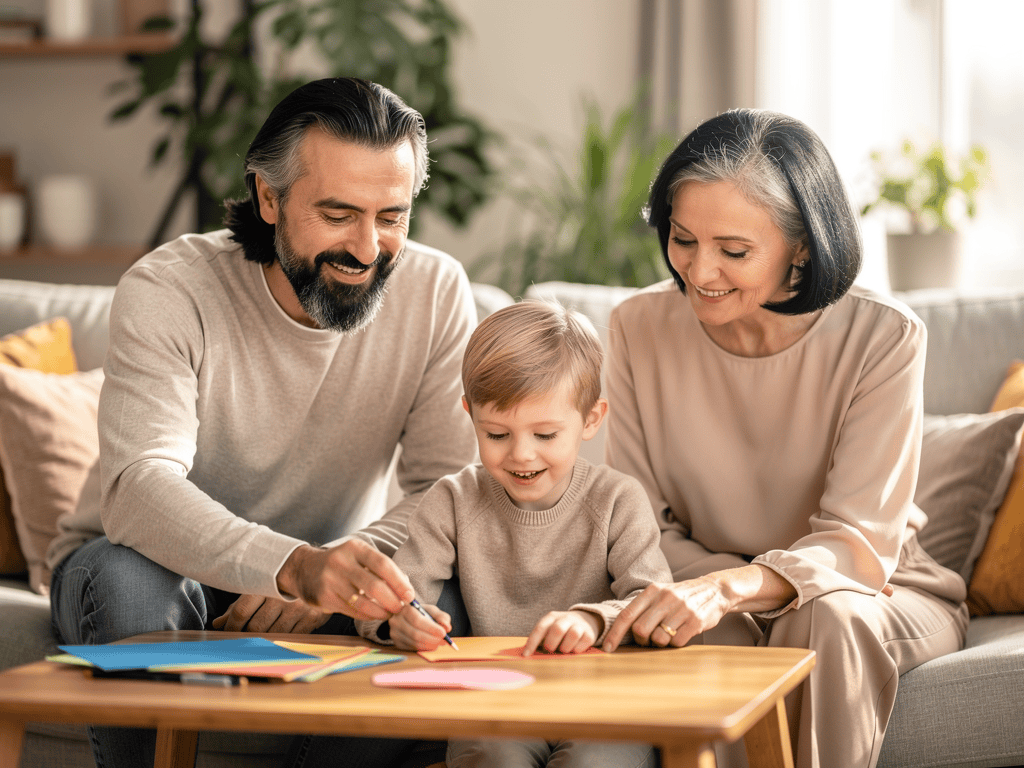
Why first aid is important for grandparents
As grandparents, you are often the first to be with your grandchildren when something happens. Whether playing, eating, or simply in everyday life – emergencies can occur at any time. If you master first aid knowledge, you can do the right thing at the crucial moment and potentially save lives. Your grandchildren rely on you being there for them, and with first aid knowledge, you can take on this responsibility with confidence.
Mastering first aid means not only knowing what to do, but also being able to stay calm when it matters. In emergencies, panic is the biggest enemy – if you know what to do, you can act calmly and thoughtfully. This calmness also transfers to your grandchild, who is often frightened in an emergency situation. If you act confidently, you give your grandchild the feeling that everything is okay and that you have the situation under control.
Your grandchildren will thank you for being there for them when it matters. First aid knowledge is a gift you can give your grandchildren – the certainty that grandma or grandpa can help in an emergency. This ability is not only important in acute emergencies, but also in daily dealing with minor injuries that can occur while playing or roughhousing.
Responsibility for grandchildren
As grandparents, you bear a special responsibility for your grandchildren. When you look after your grandchildren, you are the person who must react first in an emergency. This responsibility should not be felt as a burden, but as an opportunity to be there for your grandchildren and help them when they need you most. First aid knowledge gives you the confidence to take on this responsibility.
Your grandchildren trust that you will care for them and protect them. If you master first aid, you can justify this trust and show that you are really there for your grandchildren. This ability makes you an even more important part of your grandchildren's lives and strengthens the bond between you and your grandchildren.
The responsibility for your grandchildren also means that you should be prepared. A first aid course is an investment in your grandchildren's safety and gives you the necessary knowledge to act correctly in various situations. This preparation shows how important your grandchildren are to you and that you are willing to do everything to be there for them.
Confidence in emergencies
Confidence in emergencies is crucial to act correctly. If you have first aid knowledge, you know what to do and can act without hesitation. This confidence does not come from nowhere – it comes from knowledge and practice. A first aid course gives you both: the theoretical knowledge and the practical practice you need to be confident in an emergency.
If you act confidently, this calmness also transfers to your grandchild. Children sense very clearly when adults are uncertain or afraid. If you remain calm and thoughtful, this gives your grandchild the feeling that the situation is under control. This calmness can be just as important in an emergency situation as the medical measures themselves.
Confidence also means that you know when you need to get professional help. First aid is the first measure, but not always the only one. If you know when to call emergency services and how to stabilize the situation until rescue services arrive, you are acting responsibly and competently.
Basics of first aid
The basics of first aid are the foundation for all further measures. If you master these basics, you can act correctly in most emergencies. The most important basics are the recovery position, cardiopulmonary resuscitation, and wound care. These three measures cover most emergencies that can occur in everyday life with children.
It is important that you not only know these basics theoretically, but also practice them practically. In a first aid course, you can practice these measures under guidance and ensure that you can really apply them in an emergency. Theory alone is not enough – you must have internalized the movements and procedures so that they run automatically in a stressful situation.
The basics of first aid are the same for all age groups, but the application can be different for children than for adults. When looking after your grandchildren, you should pay special attention to how the measures are applied to children. In a first aid course, you learn the differences and can practice specifically for caring for children.
Recovery position
The recovery position is an important measure to protect unconscious people from choking. If someone is unconscious, the tongue can fall back and block the airways. The recovery position prevents this and ensures that the airways remain clear. This measure is easy to learn and can save lives in many situations.
For children, the recovery position is performed similarly to adults, but there are some special considerations. The head should be slightly more hyperextended, and you should make sure that the child does not lie on the arm, as this can impair circulation. In a first aid course, you learn the exact technique for different age groups.
The recovery position should always be applied when someone is unconscious but still breathing. If the person is no longer breathing, you must immediately begin cardiopulmonary resuscitation. The recovery position is an important first measure that buys time until professional help arrives.
Cardiopulmonary resuscitation
Cardiopulmonary resuscitation (CPR) is a life-saving measure that is applied when someone is no longer breathing or no heartbeat is detectable. This measure is demanding, but with practice you can master it. CPR consists of chest compressions and ventilation, which are performed alternately.
For children, CPR is somewhat different than for adults. Chest compressions are performed with less force, and ventilation is done more carefully. For infants, CPR is performed differently – here you press with two fingers instead of the whole hand. In a first aid course, you learn the exact techniques for different age groups.
CPR should be started immediately when someone is no longer breathing and should be continued until professional help arrives or the person begins to breathe again. It is important that you perform CPR correctly, as it is only effective then. In a course, you can learn and practice the correct technique so that you can act safely in an emergency.
Wound care
Wound care is one of the most common first aid measures you will apply to your grandchildren. Small cuts, scrapes, or lacerations happen frequently while playing. If you know how to properly care for wounds, you can prevent infections and promote healing.
The basic rule of wound care is: wounds should be cleaned, disinfected, and bandaged. First, you should rinse the wound with clean water to remove dirt and germs. Then the wound should be disinfected to prevent infections. Finally, the wound should be covered with a sterile bandage to protect it from further contamination.
For larger wounds or if bleeding cannot be stopped, you should immediately seek professional help. Wound care is important, but it does not replace a visit to the doctor if the wound is serious. If you are unsure whether a wound needs medical attention, you should be cautious and see a doctor.
Common emergencies in children
Children are curious and active, which means they are more likely to get into situations that require first aid. As grandparents, you should be prepared for the most common emergencies that can occur in children. These include falls and bruises, choking, and burns. If you know how to act in these situations, you can help your grandchildren quickly and effectively.
Every emergency is different, but there are basic measures that can be applied in most situations. It is important that you stay calm and assess the situation correctly. Not every injury is an emergency, but it is better to be cautious and seek professional help if in doubt. Your grandchildren will thank you for being there for them when they need help.
The most common emergencies in children are usually not life-threatening, but they require quick and correct action. If you are prepared and know what to do, you can quickly bring the situation under control and help your grandchild. This ability makes you an even more important part of your grandchildren's lives.
Falls and bruises
Falls are very common in children, especially when they are playing or roughhousing. Most falls are harmless and only result in minor bruises or scrapes. But sometimes falls can also lead to more serious injuries, such as broken bones or concussions. If you know how to properly assess and treat falls, you can help your grandchild quickly.
In case of a fall, you should first check if your grandchild is conscious and can move. If your grandchild is unconscious or has severe pain, you should immediately call emergency services. For minor injuries, you can care for the wound and comfort your grandchild. It is important that you stay calm and give your grandchild the feeling that everything is okay.
Bruises occur from impacts or falls and appear as blue marks. They are usually harmless and heal on their own. You can cool the affected area to reduce swelling. If the bruise is very large or causes severe pain, you should see a doctor. In children, it is especially important to watch for signs of a concussion, which can occur after a fall on the head.
Choking
Choking is a serious emergency that requires immediate action. If a child has swallowed something and can no longer breathe, you must act quickly. The most important measure is to help the child cough out the object or remove it. For small children, you can hold the child upside down and pat the back to remove the object.
If the child can still breathe but is coughing, you should encourage them to continue coughing to cough out the object themselves. If the child can no longer breathe, you must act immediately. For children over one year old, you can apply the Heimlich maneuver to remove the object. For infants, a different technique is used.
Choking can also occur when children swallow pieces that are too large while eating or when they put small objects in their mouths. To prevent choking, you should make sure that small objects are kept out of children's reach and that children are supervised while eating. If you know how to act in a choking situation, you can help your grandchild in an emergency.
Burns
Burns can occur from hot liquids, open flames, or hot objects. In children, burns are particularly dangerous because their skin is thinner than in adults. If you know how to properly treat burns, you can reduce the severity of the injury and promote healing.
The first measure for a burn is to immediately cool the affected area under running cold water. This should be done for at least 10 minutes to remove the heat from the skin. It is important that the water is not too cold, as this can further damage the skin. After cooling, the burn should be covered with a sterile bandage.
For severe burns or if the burn is extensive, you should immediately call emergency services. Burns on the face, hands, or genital area are particularly dangerous and should always receive medical attention. If you are unsure whether a burn needs medical attention, you should be cautious and see a doctor.
Attending a first aid course
A first aid course is the best way to acquire the necessary knowledge and skills. In a course, you not only learn the theory, but can also practice practically. This practical practice is crucial so that you can really act in an emergency. Theory alone is not enough – you must have internalized the movements and procedures.
First aid courses are offered by various organizations, such as the Red Cross, the Malteser Aid Service, or other aid organizations. The courses are specifically designed for caring for children and teach the most important measures for emergencies in children. In a course, you learn not only what to do, but also how to do it correctly.
A first aid course is an investment in your grandchildren's safety and gives you the confidence to act correctly in an emergency. The cost of a course is small compared to the value it has for your grandchildren's safety. If you have attended a course, you know that you can be there for your grandchildren when it matters.
Course selection
When selecting a first aid course, you should make sure that the course is specifically designed for caring for children. Courses for adults are not sufficient, as the measures must be applied differently to children. A good course should include both theory and practical exercises and be led by qualified instructors.
Various organizations offer first aid courses, and it is worth comparing the offers. Some courses are shorter and focus on the most important measures, while other courses are more comprehensive and provide more details. Choose a course that fits your needs and gives you the feeling of being well prepared.
A first aid course should not only be attended once, but should be regularly refreshed. Knowledge can fade over time, and it is important to practice regularly. Many organizations offer refresher courses that are shorter than the basic courses but repeat the most important measures. These refresher courses are a good way to keep your knowledge up to date.
Regular refresher
First aid knowledge should be regularly refreshed so that you can act safely in an emergency. The recommendation is to attend a refresher course every two to three years. In a refresher course, the most important measures are repeated and new developments are taught. This regular refresher ensures that your knowledge is current.
You can also refresh your knowledge between courses by informing yourself about new developments or doing exercises at home. Many organizations also offer online resources that you can use to refresh your knowledge. It is important that you stay active and regularly engage with first aid.
Regularly refreshing your first aid knowledge shows how important your grandchildren's safety is to you. If you keep your knowledge current, you can be sure that you can act correctly in an emergency. This preparation is a gift you can give your grandchildren – the certainty that grandma or grandpa can help in an emergency.
First aid kit for home
A well-equipped first aid kit is essential to be able to act quickly in an emergency. The kit should be stored in an easily accessible location so that you can quickly access it in an emergency. It is also important that all family members know where the kit is stored so that everyone can access it in an emergency.
A first aid kit should contain all important materials needed for caring for wounds and other injuries. This includes bandaging materials, disinfectants, plasters, scissors, and tweezers. For caring for children, child-friendly materials should also be included, such as special plasters for children or child-friendly disinfectants.
A first aid kit is only useful if it is complete and current. Regular checks ensure that all materials are present and that expired materials are replaced. If you have a well-maintained first aid kit, you can act quickly and effectively in an emergency.
Contents of the kit
A well-equipped first aid kit should contain various bandaging materials, such as gauze bandages, compresses, plasters in various sizes, and bandage scissors. Additionally, disinfectants, disposable gloves, tweezers, and an emergency blanket should be included. For caring for children, special materials can also be useful, such as child-friendly plasters or cooling gels for bruises.
The materials should be stored in a clear kit so that you can quickly find what you need in an emergency. It can be helpful to divide the kit into different areas, e.g. for wound care, for burns, and for other emergencies. A checklist in the kit can also be helpful to quickly see what is present and what is missing.
In addition to the standard materials, you can also add special materials that are important for your grandchildren. If your grandchild has allergies, for example, you should have appropriate medications in the kit. If your grandchild regularly takes medications, you should also store these in the kit so that you can quickly access them in an emergency.
Regular checks
A first aid kit should be regularly checked to ensure that all materials are present and that expired materials are replaced. The recommendation is to check the kit at least once a year, better yet every six months. During the check, you should verify that all materials are present and if anything has expired.
Expired materials should be replaced immediately, as they are no longer effective in an emergency. Especially important is checking medications that may have expired. If you are unsure whether a material is still usable, you should replace it to ensure that you have effective materials in an emergency.
Regularly checking the first aid kit shows how important your grandchildren's safety is to you. If you have a well-maintained kit, you can be sure that you have everything you need in an emergency. This preparation gives you the confidence to act correctly in an emergency.
Emergency numbers and important contacts
In an emergency, it is important to quickly get the right help. The most important emergency number is 112, which is valid throughout Europe and can be used for all emergencies. When you dial 112, you will be connected to the emergency dispatch center, which will then alert the appropriate rescue services. It is important that you stay calm and can clearly describe the situation.
In addition to 112, you should also have other important contacts readily available, such as the phone numbers of your grandchildren's parents, the family doctor, or the nearest hospital. These contacts should be stored in an easily accessible location, e.g. on the refrigerator or saved in your phone. In an emergency, it is important to be able to quickly reach the right people.
When you dial 112, you should be prepared to provide the following information: Where is the emergency? What happened? How many people are affected? What injuries are there? This information helps the rescue services prepare and be at the right location quickly. If you stay calm and clearly describe the situation, you can optimally support the rescue services.
Staying calm in emergencies
In an emergency, it is important to stay calm and act thoughtfully. Panic helps no one and can make the situation worse. If you stay calm, you can correctly assess the situation and take the right measures. This calmness also transfers to your grandchild, who is often frightened in an emergency situation.
Staying calm does not mean that you are not allowed to have emotions. It is normal to be excited or worried in an emergency situation. But it is important that you remain capable of action despite these emotions and take the necessary measures. If you have first aid knowledge, you can focus on this and act calmly.
The best way to stay calm is to be prepared. If you know what to do, you can act without hesitation. A first aid course gives you this knowledge and the practice you need to be confident in an emergency. If you are prepared, you can be there for your grandchildren when they need you most.
Important first aid measures overview
Contents of a first aid kit for home
Important information for emergency calls
Tips for emergencies
- Stay calm and take a deep breath before acting
- First check if the situation is really an emergency
- Always call emergency 112 if uncertain
- Calm your grandchild and explain what you are doing
- Keep important contacts readily available
- Regularly practice the most important first aid measures
Preparation for emergencies
- Attend a first aid course specifically for children
- Keep a well-equipped first aid kit ready
- Save important emergency numbers in your phone
- Inform yourself about the most common emergencies in children
- Regularly practice the most important measures
- Refresh your knowledge every two to three years
Important contacts for emergencies
- Emergency 112 – for all emergencies
- Grandchildren's parents – for important information
- Family doctor – for medical advice
- Nearest hospital – for serious emergencies
- Poison control center – for poisonings
- Pediatrician – for special children's emergencies