



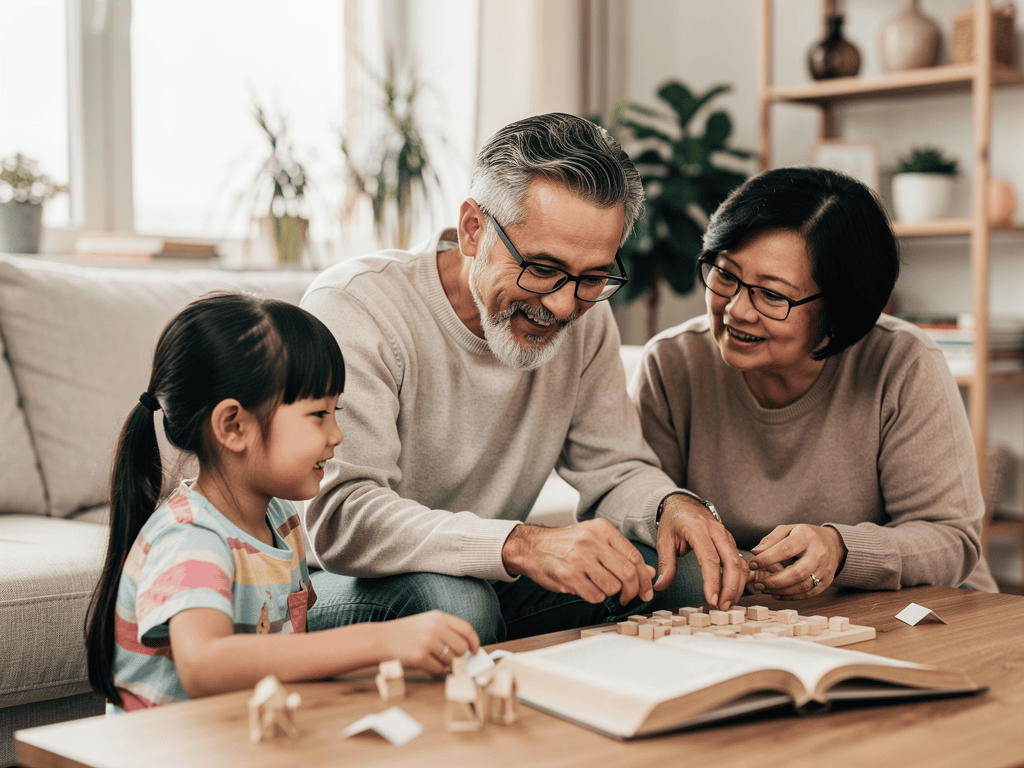
Why family history is important for grandchildren
Your family history is a valuable treasure that you can pass on to your grandchildren. When you preserve this history in a film, you create something special that will accompany your grandchildren throughout their lives. A family film is more than just a collection of pictures and stories – it is a connection between generations that shows your grandchildren where they come from and what values and traditions shape their family.
Your grandchildren will grow up in a world where many things are fast-paced and fleeting. A family film that documents your family history gives them something lasting they can rely on. It shows them their roots and helps them understand who they are and where they come from. This connection to family history can help your grandchildren develop a strong sense of identity and see themselves as part of a larger story.
When you preserve your family history in a film, you are doing something for your grandchildren that extends far beyond the present. You are creating a legacy that will be valuable for future generations as well. Your grandchildren may later share these films with their own children, and thus your family history will be passed on. This continuity is something special that you as grandparents can enable.
Identity and roots
For children and young people, it is important to know where they come from and what history their family has. A family film can establish this connection in a special way. When your grandchildren see how their grandparents, great-grandparents, or other family members lived, what challenges they overcame, and what values were important to them, this helps them develop their own identity.
Your family history also shows your grandchildren that they are part of a larger community. They learn that their family has a history that extends beyond themselves and that they can continue this history. This connection to roots can help your grandchildren feel more secure and grounded, especially in a time when many things are fast-paced and unstable.
When you document your family history, you also show your grandchildren that their family is important and that their story is worth telling. This appreciation can help your grandchildren be proud of their origins and develop a positive self-image. A family film is a way to express this appreciation in a tangible and lasting way.
Preserving valuable memories
Many stories and memories from your family could be lost if they are not documented. A family film is a way to preserve these valuable memories and ensure they are not forgotten. When you preserve your family history in a film, you create something that will still exist even when you are no longer there to tell the stories.
Your grandchildren will greatly appreciate having this documentation of their family history later. They can always refer back to it when they have questions or when they want to remember certain stories. A family film is like a window into the past that shows your grandchildren how their family lived and what experiences they had.
When you document your family history, you preserve not only facts and dates but also the emotions and feelings associated with these stories. A film can capture these emotional aspects in a way that photos or written documents cannot. Your grandchildren can see and hear how you talk about certain events and thus develop a deeper connection to their family history.
Preparation for the family film
Before you start recording your family film, it is helpful to prepare well. Think about which stories you want to tell and what materials you need for this. Good preparation makes recording easier and helps you create a structured and meaningful film.
Take time to think about the most important moments and stories of your family. Which events were formative? Which people should definitely be mentioned? What values and traditions do you want to pass on to your grandchildren? These considerations help you determine the focus of your film and ensure that the most important aspects of your family history are documented.
It is also helpful to talk to other family members before you start recording. Perhaps your children or other relatives have additional information or stories you would like to include. Together, you can decide which aspects of family history are particularly important and how best to present them.
Collecting materials
For a good family film, you need various materials. Collect old photos, documents, letters, or other memorabilia that you want to include in the film. These materials help illustrate the stories and make the film more vivid and interesting for your grandchildren.
Photos are particularly important for a family film. They show your grandchildren what their family looked like in the past and how life was back then. Collect photos from different generations, from special events such as weddings, birthdays, or family celebrations, and from places that were important to your family. These visual elements bring the film to life and help your grandchildren better imagine the stories.
Documents such as birth certificates, marriage certificates, old letters, or other written memories can also be valuable. You can scan or photograph these documents and include them in the film. These documents give your grandchildren insight into the formal history of your family and show them how certain events were documented.
Structuring stories
A good family film has a clear structure that makes it easy for your grandchildren to follow the story. Think about how you want to arrange the various stories and information. Do you want to proceed chronologically, starting with the oldest generations? Or do you want to proceed thematically and cover different aspects of your family history?
A chronological structure can be helpful if you want to show the development of your family over time. You can start with the oldest known generations and then gradually come to the present. This structure helps your grandchildren understand how your family has developed and what changes have occurred over time.
A thematic structure can make sense if you want to explore different aspects of your family history in depth. For example, you could make a section about the professions in your family, one about special traditions, or one about important events. This structure allows you to treat certain topics in more detail and give your grandchildren a deeper understanding of various aspects of your family history.
Technical implementation
The technical implementation of a family film does not have to be complicated. Nowadays, there are many simple ways to create a film, even if you do not have much experience with technology. With modern smartphones or simple video cameras, you can already make high-quality recordings, and there are many user-friendly programs that help you with editing.
It is important that you do not let yourself be intimidated by technology. A simple, honest film that tells your family stories is more valuable than a technically perfect film that conveys no emotions. Focus on telling the stories well, and let technology help you, not stand in your way.
If you are unsure how to proceed, you can also seek help from younger family members or friends. Many people, especially younger generations, have experience with video recording and editing and can help you create your family film. This collaboration can also be a nice opportunity to spend time with your grandchildren or other family members.
Simple recording techniques
For recording your family film, you do not necessarily need expensive equipment. A modern smartphone or a simple video camera is completely sufficient to make good recordings. It is important that you record in a quiet environment where you feel comfortable and where there are few background noises.
Make sure there is enough light so the recording looks good. Natural daylight is best, but good room lighting is also sufficient. Make sure that you or the person you are filming are clearly visible and that the camera is held steady. A tripod or stable base can help avoid shaky recordings.
When filming yourself, speak naturally and relaxed. You do not have to be perfect – your grandchildren will appreciate seeing you as you are. Tell the stories as if you were talking to your grandchildren, and let your personality shine through. This authenticity makes the film particularly valuable for your grandchildren.
Editing and processing
After recording, you can edit the film to structure and improve it. There are many simple programs that help you with this, even if you have no experience with video editing. Programs like iMovie on Mac or simple smartphone apps can help you cut your recordings, add music, or create transitions.
When editing, you can remove longer pauses, change the order of scenes, or combine different recordings. You can also insert photos or documents to illustrate the stories. It is important that you do not overdo it – a simple, clear film is often better than one overloaded with many effects.
If you need help with editing, you can also ask younger family members or friends for support. Many people have experience with video editing and can help you create your film. This collaboration can also be a nice opportunity to work together on a project and spend time together.
Content for the family film
The content of your family film should reflect the stories and memories you want to pass on to your grandchildren. Think about which aspects of your family history are particularly important and which stories might interest your grandchildren. A good family film tells not only facts but also the emotions and feelings associated with these stories.
Personal stories are often the most valuable content for a family film. Tell about special moments, challenges your family has overcome, or traditions that are important to you. These personal stories help your grandchildren better understand their family and develop a connection to their family history.
Photos and documents can also be important content. You can include these materials in the film to illustrate the stories and show your grandchildren what your family looked like in the past. These visual elements bring the film to life and help your grandchildren better imagine the stories.
Telling personal stories
Personal stories are the heart of a good family film. Tell about special moments in your family history, about people who were important, or about events that shaped your family. These stories help your grandchildren better understand their family and develop a connection to their family history.
When telling stories, speak naturally and authentically. You do not have to be perfect – your grandchildren will appreciate hearing you as you are. Tell the stories as if you were talking to your grandchildren, and let your personality shine through. This authenticity makes the film particularly valuable for your grandchildren.
Do not forget to also talk about the less spectacular but still important moments. The everyday life of your family, small traditions, or special habits can be just as interesting as major events. These details help your grandchildren get a complete picture of their family history and understand how their family lived.
Including photos and documents
Photos are an important part of a family film. They show your grandchildren what their family looked like in the past and how life was back then. Collect photos from different generations, from special events, or from places that were important to your family, and include them in the film.
When including photos, you can also comment on them and explain what is shown in the photos. Tell the stories associated with the photos and help your grandchildren understand why these photos are important. These comments bring the photos to life and help your grandchildren develop a connection to the people and events shown in the photos.
Documents such as birth certificates, marriage certificates, or old letters can also be valuable. You can scan or photograph these documents and include them in the film. These documents give your grandchildren insight into the formal history of your family and show them how certain events were documented.
Working together with grandchildren
A family film can also be a wonderful opportunity to work together with your grandchildren. When you involve your grandchildren in the process, they can not only learn how to create a film but also learn more about their family history. This joint work can strengthen the relationship between you and your grandchildren and create beautiful memories.
Your grandchildren can help you with various tasks, depending on their age and interests. Younger grandchildren might be able to select photos or be present during recording, while older grandchildren might be able to help with editing or contribute their own ideas. This collaboration makes the film a joint project that makes everyone involved proud.
When working together with your grandchildren, you can also include their perspective. Perhaps your grandchildren have questions or ideas you have not considered, or they want to explore certain aspects of family history in depth. This joint exploration can enrich the film and help make it particularly valuable for your grandchildren.
Involving grandchildren
There are many ways you can involve your grandchildren in the filmmaking process. Younger grandchildren might be able to select photos they find interesting or be present during recording and ask questions. Older grandchildren might be able to help with editing, contribute their own ideas, or even design their own sections of the film.
When you involve your grandchildren, you show them that their opinion and participation are important. This appreciation can help your grandchildren feel part of the project and be proud of the result. The joint work can also be a nice opportunity to spend time together and strengthen the relationship between you and your grandchildren.
Also let your grandchildren contribute their own ideas. Perhaps they want to explore certain stories in depth, include certain photos, or design the film in a certain way. This participation makes the film a joint project and helps make it particularly valuable for your grandchildren.
Joint projects
A family film can be the starting point for further joint projects. Perhaps you and your grandchildren want to create more films that explore certain aspects of your family history in depth, or you want to build a family archive together. These joint projects can strengthen the relationship between you and your grandchildren and help pass on family history.
Joint projects can also help your grandchildren become more interested in their family history. When they are actively involved in documentation, they may develop a greater interest in learning more about their family. This curiosity can lead them to continue researching and carrying on the family history later.
When you carry out joint projects, you also create beautiful memories that go beyond the film. The time you spend together, the conversations you have, and the experiences you share become part of the family history you are documenting. These shared experiences are just as valuable as the film itself.
Presenting and sharing films
When your family film is finished, you naturally want to share it with your family. There are various ways you can present the film, depending on what works best for you and your family. A screening with the whole family can be a nice opportunity to spend time together and celebrate family history.
You can also share the film digitally so your family can watch it anytime. There are many ways to share films online, whether through cloud storage, video platforms, or private family websites. This digital distribution makes it easy to share the film with all family members, even if they live far away.
It is important that you present the film in a way that makes it accessible and valuable for your family. Think about which presentation format works best for your family and make sure all family members have the opportunity to watch the film. This accessibility helps make the film an important part of your family history.
Organizing screenings
A screening of your family film with the whole family can be a wonderful opportunity to spend time together and celebrate family history. Plan a screening at a time when as many family members as possible can participate, and create a cozy atmosphere where everyone can enjoy the film.
During the screening, you can also talk about the film and answer questions. Perhaps your family members want to learn more about certain stories or have their own memories they want to share. These conversations can enrich the film and help pass on family history.
A screening can also be an opportunity to show additional materials you have collected for the film, such as photos, documents, or other memorabilia. These additional materials can help deepen the stories and give your family members a more complete picture of family history.
Digital distribution
Digital distribution makes it easy to share your family film with all family members, even if they live far away. There are many ways to share films online, whether through cloud storage, video platforms, or private family websites. This digital distribution ensures that all family members have access to the film.
When you share the film digitally, you can also ensure it remains available long-term. Store the film in multiple locations, for example on different cloud storage services or on external hard drives, to ensure it is not lost. This backup helps ensure the film remains available for future generations as well.
Also think about who should have access to the film. Do you want only your family to have access, or do you also want to share the film with friends or other people? These considerations help you choose the right platform and the right settings for distribution.
Tips for sustainable documentation
A family film is a valuable document that should be preserved for many years. To ensure your film remains available long-term, it is important to store and back it up properly. Store the film in multiple locations, for example on different cloud storage services, on external hard drives, or on DVDs, to ensure it is not lost.
It is also helpful to regularly check whether the storage media still work and whether the film is still playable. Technologies change quickly, and it may be that certain formats or storage media can no longer be used in the future. Consider whether you should store the film in different formats to ensure it remains playable in the future.
When creating your family film, also remember that this can only be the beginning. Perhaps you want to create more films later that explore certain aspects of your family history in depth, or you want to update the film when new information or stories are added. This continuous documentation helps keep family history alive and pass it on.
Materials for the family film
Simple recording techniques
Presentation options
Preparation tips
- Collect all available photos and documents
- Think about which stories are important
- Talk to other family members
- Structure stories chronologically or thematically
- Choose a quiet environment for recording
- Test the technology before recording
Ideas for film content
- Stories about ancestors and their lives
- Special events such as weddings or births
- Family traditions and customs
- Professional careers and successes
- Challenges and how they were overcome
- Family values and beliefs
Ways to work with grandchildren
- Grandchildren can select and sort photos
- Develop and tell stories together
- Grandchildren can help with editing
- Contribute own ideas and perspectives
- Organize screenings together
- Plan and implement further projects