



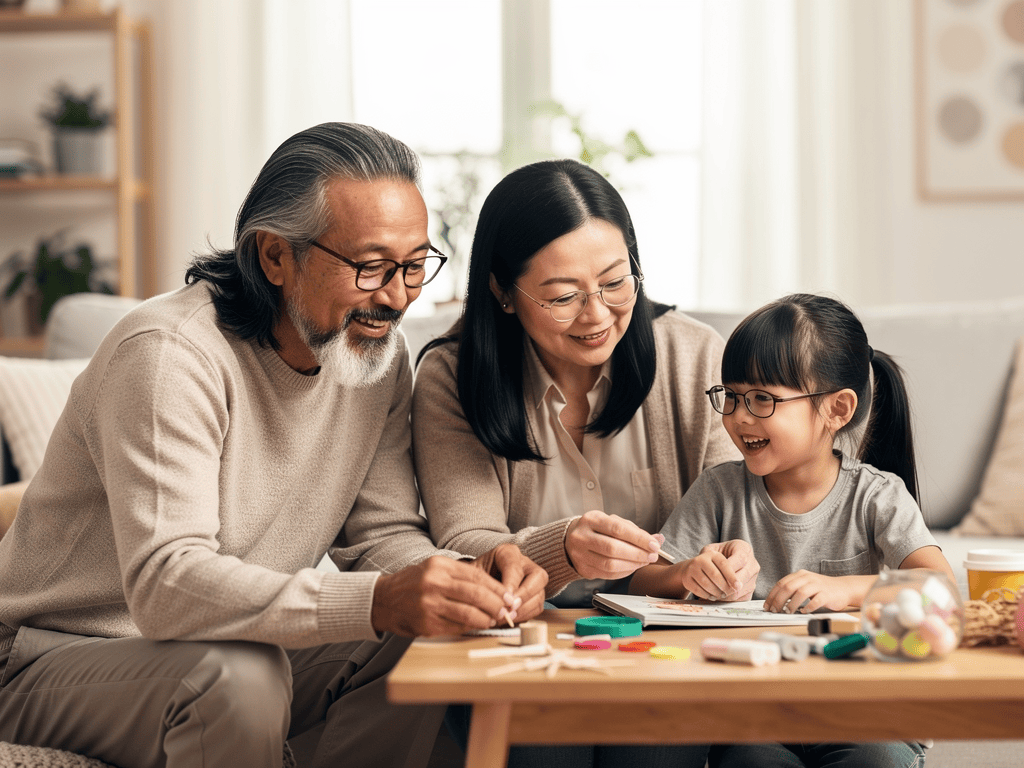
Why a family tree is important for grandchildren
A family tree is much more than just an overview of family relationships. For your grandchildren, it can be a gateway to their own identity and family history. When you create a family tree together with your grandchildren, you give them the opportunity to discover their roots and understand where they come from. This experience can be very valuable for your grandchildren and help them develop a strong sense of belonging.
The shared work on the family tree creates special moments between you and your grandchildren. As you gather information together, tell stories and create the family tree, conversations and connections emerge that strengthen your relationship. Your grandchildren learn not only about their family, but also about you and your experiences. These shared memories will accompany you and your grandchildren for a lifetime.
A family tree can also help grandchildren get to know family members they may not have met personally yet. Through photos, stories and information about distant relatives, your grandchildren can get a more comprehensive picture of their family. This can be especially valuable when family members live far away or when there are relatives your grandchildren do not yet know. The family tree becomes a bridge between generations and family branches.
Strengthening identity and belonging
For children and teenagers, it is important to know where they come from and which family they belong to. A family tree can help your grandchildren better understand their own identity. When they see how many generations lived before them and which stories shape their family, they develop a sense of continuity and connection. This can be especially helpful in times of change or when there are changes in the family.
Working on the family tree also shows your grandchildren that they are part of something bigger. They see that their family has a history that goes beyond themselves and that they are part of a long tradition. This sense of belonging can help your grandchildren become more confident and better understand their own role in the family. When you create the family tree together with your grandchildren, you show them how important they are to the family and that their story is part of the family history.
Especially for grandchildren who may have questions about their origins or who sometimes feel insecure, a family tree can be an important support. It shows them that they have firm roots and that their family has a history that carries them. This realization can help your grandchildren feel more secure and develop their own identity. When you create the family tree together with your grandchildren, you give them a gift that will accompany them throughout their lives.
Bringing family history to life
A family tree is not just a list of names and dates. It can become a living document that contains stories, memories and personalities. When you create the family tree together with your grandchildren, you have the opportunity to bring family history to life. Tell stories about your ancestors, share anecdotes and show photos that show the people behind the names. This way, the family tree becomes a journey through family history that will fascinate your grandchildren.
The shared work on the family tree can also lead to you discovering new things about your family yourself. When you talk to other family members to gather information, or when you look through old documents, you may come across stories you did not know yet. You can then share these discoveries with your grandchildren and explore family history together. This shared journey of discovery can be very enriching for you and your grandchildren.
A living family tree can also help family members who may no longer be alive to be remembered. When you tell stories about deceased relatives and show photos, you help your grandchildren get to know these people, even if they never met them personally. This way, the family tree becomes a place of remembrance and commemoration that maintains the connection between generations. This connection is important for your grandchildren so they understand that their family has a history that goes beyond the here and now.
Preparation: Gathering information
Before you can create the family tree together with your grandchildren, you first need to gather information. This is an important step that requires time and patience, but can also be very exciting. Start with what you already know: your own parents, grandparents, siblings and their families. From there, you can work your way back and gradually gather more information.
Gathering information can be a wonderful opportunity to get in touch with other family members. Talk to siblings, cousins, aunts and uncles to gather information. These conversations can not only provide valuable information, but also lead to you becoming closer again. When you have these conversations together with your grandchildren or tell them about them, you show them how important it is to maintain the family and stay in touch with each other.
In addition to conversations with family members, documents and photos can also provide important information. Search through old photo albums, certificates, letters and other documents to find names, dates and stories. These documents can also be visually very interesting for your grandchildren and help them better imagine the people behind the names. When you look through these documents together with your grandchildren, you can tell stories and bring family history to life.
Talking to family members
Conversations with other family members are one of the most important sources of information about the family tree. Start with the people closest to you: your siblings, parents if they are still alive, and other direct relatives. These people can give you not only names and dates, but also stories and anecdotes that bring the family tree to life. When you have these conversations, take your time and show genuine interest in the stories being told.
When you talk to older family members, you may come across information that might otherwise be lost. Older relatives often have memories of people and events that younger generations no longer know. These conversations can be very valuable, not only for the family tree, but also for family history in general. If possible, have these conversations together with your grandchildren so they can hear the stories directly and build a connection to their ancestors.
When talking to family members, it is important to be respectful and patient. Not everyone wants to talk about all aspects of family history, and some information can be sensitive. Respect the boundaries of your conversation partners and show understanding if someone does not want to talk about certain topics. It is important that the conversations are positive and constructive so that all participants feel comfortable and are happy to share information.
Organizing photos and documents
Photos and documents are important visual elements for a family tree. They help your grandchildren better imagine the people behind the names and make the family tree more alive. Start by looking through old photo albums and collecting photos that are relevant to the family tree. Label the photos with names and dates so you know later who is in them. If possible, digitize the photos so they do not get lost and can be shared more easily.
In addition to photos, other documents can also be valuable: birth certificates, marriage certificates, death certificates, IDs, passports or other official documents can provide important information. These documents can also be historically interesting and show how the family has developed over time. When you look through these documents together with your grandchildren, you can explain what they mean and what information they contain. This way, your grandchildren learn not only about the family, but also about history and documents.
Organizing photos and documents can be a big task, especially if you have a lot of materials. Take your time and work systematically. Perhaps you can involve your grandchildren by asking them to sort or label photos. This way, the preparation becomes a shared activity that is fun and valuable at the same time. If you organize the materials well, it will be easier later to create the family tree.
Using family tree software and online tools
Nowadays there are many digital tools and software programs that can help you create a family tree. These tools can be especially helpful if you have a lot of information or if you want to present the family tree digitally. Many of these programs also offer features for sharing with other family members, so multiple people can work on the family tree at the same time.
Online family tree platforms can also help find connections to other family members or discover information about distant relatives. Some of these platforms have large databases with genealogical information that can help you trace your family history further back. When using these tools, make sure you respect privacy settings and only share information you are comfortable with.
Digital tools can also be interesting for your grandchildren, especially if they like to work with computers or tablets. Perhaps you can try a family tree software together with your grandchildren and see what features it offers. This way, working on the family tree becomes modern and appealing for your grandchildren as well. However, it is important that you do not only rely on digital tools, but also do not neglect personal conversations and shared creative work.
Creating the family tree together
Creating the family tree is the creative part of the project where you and your grandchildren can create something beautiful together. There are many different ways to create a family tree, from simple drawings to elaborate digital presentations. It is important that the method fits you and your grandchildren and that all participants have fun.
When you create the family tree together with your grandchildren, you can learn a lot from each other. Your grandchildren may bring new ideas and creative approaches, while you contribute experience and knowledge about the family. This collaboration can be very enriching and lead to the family tree becoming a real community project that everyone can be proud of.
Creating the family tree should not be perfectionist. It is not about creating a perfect work of art, but about spending time together and creating something that is meaningful for the family. If small mistakes happen or if something does not turn out quite as planned, that is completely fine. What matters is the process and the shared experience, not the perfect result.
Choosing age-appropriate methods
The way you create the family tree should be adapted to the age of your grandchildren. For younger children, simple, creative methods may be more suitable, such as painting a tree on a large sheet of paper or creating a family tree with photos and drawings. Older children and teenagers may be able to use more complex methods, such as digital tools or detailed drawings.
For younger grandchildren, you can create the family tree playfully, for example by painting a large tree on a sheet of paper and then gluing photos or drawings of family members onto the branches. This makes the family tree visually appealing and easy to understand. Older grandchildren may be able to work more independently and contribute their own ideas on how the family tree should be designed.
It is important that the method is not too complicated or overwhelming for your grandchildren. The family tree should be fun and not become a frustrating task. If you notice that your grandchildren are overwhelmed, simplify the method or take more time. The process should be positive and enriching, not stressful or burdensome.
Creative design options
There are many creative ways to create a family tree. You can paint a large tree on a sheet of paper or canvas and then glue photos or drawings of family members onto the branches. You can also create a book where each page is dedicated to a generation or a family branch. Or you can create a collage that combines different elements: photos, drawings, texts and other materials.
If you like crafting, you can also create a three-dimensional family tree, for example from cardboard or wood. This way, the family tree becomes a real work of art that can be displayed in the house. You can also use different materials, such as fabric, beads or other decorative materials, to design the family tree individually. Let your creativity run free and find a method that fits you and your grandchildren.
Digital design options can also be very interesting, especially for grandchildren who like to work with computers or tablets. You can create a presentation together, design a website or create a digital book. Digital methods have the advantage that they can be easily shared and updated. However, it is important that you do not neglect the personal, haptic experience that working together with paper and pens offers.
Digital and analog variants
Both digital and analog methods have their advantages. Analog methods, such as painting or drawing on paper, offer a haptic experience and can be especially appealing for younger children. You can sit together at the kitchen table, spread out materials and work creatively. This shared time is valuable and creates special memories.
Digital methods have the advantage that they can be easily shared, updated and duplicated. You can share the digital family tree with other family members or print it to give as a gift. Digital tools also offer more possibilities for complex representations and can be especially helpful for larger families. Perhaps you can also combine both methods: an analog family tree for home and a digital version for sharing.
The choice between digital and analog methods depends on your preferences, your grandchildren's abilities and the purpose of the family tree. If you want a family tree for home that can be displayed visibly, an analog version may be more suitable. If you want to share the family tree with many people or if you want to update it regularly, a digital version may be more practical. It is important that the chosen method fits you and your grandchildren.
Including stories and anecdotes
A family tree becomes especially alive when you not only insert names and dates, but also stories and anecdotes about the people in the family tree. These stories help your grandchildren better imagine the people behind the names and make the family tree a real family history. When you collect stories together with your grandchildren and include them in the family tree, the project becomes a journey through family history.
Stories can be included in the family tree in various ways. You can write short texts next to the names, create a separate story book or tell orally while working together on the family tree. It is important that the stories are understandable and interesting for your grandchildren. Adapt the way you tell the stories to the age of your grandchildren.
Not all stories have to be perfect or complete. Sometimes it is precisely the small anecdotes or incomplete memories that are particularly interesting. When you tell stories that you yourself may not know exactly or that have gaps, you can also communicate this openly. This way you show your grandchildren that family history does not always have to be complete or perfect, but that it is about the people and their stories.
Telling living family history
When you tell stories about your ancestors, make them alive and vivid. Do not just describe what happened, but also how the people were, what characteristics they had and what significance they had for the family. This way, the people in the family tree become real people with personalities and stories, not just names on a sheet of paper.
Also tell stories about everyday things: how your grandparents lived, what hobbies they had, what traditions were maintained in the family. These stories help your grandchildren get a picture of the life of earlier generations and understand how the family has developed over time. When you collect and tell these stories together with your grandchildren, the family tree becomes a living family history.
If possible, also involve other family members who can tell stories. Perhaps you can visit or call relatives together with your grandchildren to hear stories. This way, your grandchildren learn not only about family history, but also how important it is to maintain the family and stay in touch with each other. These conversations can be very enriching and lead to the family tree becoming a real community project.
Integrating photos and documents
Photos are an important part of a living family tree. They help your grandchildren better imagine the people behind the names and make the family tree visually appealing. When you include photos in the family tree, choose images that show the people well and that are interesting for your grandchildren. Label the photos with names and, if possible, with the date, so it is clear later who is in them.
In addition to photos, other documents can also be interesting: old letters, postcards, certificates or other documents can tell stories and make the family tree more alive. When you include these documents in the family tree, explain to your grandchildren what they mean and what information they contain. This way, your grandchildren learn not only about the family, but also about history and documents.
When you digitize photos and documents, you can include them more easily in the family tree and share them with others. You can also make copies so the originals can be stored safely. When you look through and select photos together with your grandchildren, you can tell stories and bring family history to life. This shared time is valuable and creates special memories.
Actively involving grandchildren
For the family tree to truly become a shared project, it is important to actively involve your grandchildren. Let them participate in decisions on how the family tree should be designed and give them tasks that match their age. When your grandchildren can participate actively, they will identify more strongly with the project and develop more interest in it.
Your grandchildren's participation can take various forms. Younger children may be able to select photos, choose colors or help with painting. Older children may be able to work more independently, research information or write texts. It is important that the tasks are not too difficult or overwhelming for your grandchildren, but that they have successes and develop fun in the work.
When you involve your grandchildren, you also show them that their opinions and ideas are important. Listen when they make suggestions and let them participate in decisions on how the family tree should be designed. This way, the family tree becomes a real community project in which everyone is involved and everyone can be proud of. This shared responsibility can strengthen the relationship between you and your grandchildren.
Distributing age-appropriate tasks
When you distribute tasks to your grandchildren, make sure they are age-appropriate. Younger children may be able to select photos, help with painting or make small drawings. Older children may be able to work more independently, research information or write texts. It is important that the tasks are not too difficult or overwhelming for your grandchildren, but that they have successes.
You can also create different task areas so that each grandchild has their own area for which they are responsible. This way, your grandchildren feel important and can show what they can do. Perhaps one grandchild can be responsible for the photos, another for the stories and a third for the design. This way, each grandchild becomes an important part of the project.
When you distribute tasks, be patient and supportive. Not everything will be perfect immediately, and that is completely fine. What matters is the process and the shared experience, not the perfect result. Praise your grandchildren for their efforts and show that you are proud of their work. This way, your grandchildren develop self-confidence and joy in the shared work.
Awakening and fostering interest
To awaken your grandchildren's interest in the family tree, you can use various strategies. Start with stories that are interesting for your grandchildren, for example about relatives they know or about events they find exciting. Show photos and documents that are visually appealing and explain what they mean. This way, the family tree becomes interesting and tangible for your grandchildren.
You can also incorporate playful elements to awaken your grandchildren's interest. Perhaps you can make a quiz where your grandchildren have to guess who is in a photo, or you can go on an information treasure hunt together. Such playful elements make working on the family tree entertaining and help your grandchildren get excited about the project.
It is also important that you respect your grandchildren's interests and do not put too much pressure on them. Not all grandchildren will be equally interested in the family tree, and that is completely fine. If a grandchild shows less interest, do not try to force them, but offer them the opportunity to participate if they want. Sometimes interest also develops over time when grandchildren learn more about the family.
Presenting and sharing the family tree
When the family tree is finished, you can present and share it in various ways. A nice option is to print it and hang it in a frame so it is visible in the house. This way, you and your grandchildren can look at the family tree again and again and remember the shared work. The family tree becomes part of the home and a symbol for the family.
You can also share the family tree with other family members, for example by giving copies as gifts or sharing it digitally. This way, distant relatives can also see the family tree and be happy about the shared family history. Sharing the family tree can also lead to other family members contributing additional information or stories that make the family tree even richer.
When you present the family tree, you can also organize a small celebration or meeting where you show the finished family tree and tell stories. This way, the presentation becomes a special event that brings the family together and underlines the importance of the project. Your grandchildren can proudly show what they have created together, and the family can celebrate family history together.
Creating digital presentation
A digital presentation of the family tree has the advantage that it can be easily shared and updated. You can create a presentation that you can show on a computer or tablet, or you can create a website or digital book. Digital presentations can also contain interactive elements, such as links to photos or videos, that make the family tree more alive.
When you create a digital presentation, you can also involve your grandchildren, especially if they like to work with computers or tablets. Perhaps they can help design the presentation or add elements. This way, the digital presentation becomes another shared project in which everyone is involved. Digital presentations can also be especially interesting for younger grandchildren who like to work with technology.
Digital presentations can also be easily shared with other family members, even if they live far away. You can send the presentation by email, share it on a cloud platform or publish it on a website. This way, distant relatives can also see the family tree and be happy about the shared family history. However, it is important that you respect privacy and only share information you are comfortable with.
Making printed versions
A printed version of the family tree has the advantage that it is physically present and can be displayed in the house. You can print the family tree on high-quality paper and hang it in a beautiful frame. This way, it becomes part of the home and a symbol for the family. Printed versions can also be especially interesting for older family members who may not like to work with digital media as much.
You can also make several copies of the family tree and give them to different family members as gifts. This way, everyone can have their own version and hang the family tree at home. Printed versions can also be especially beautifully designed, for example with high-quality paper, beautiful frames or other decorative elements. This way, the family tree becomes a valuable gift that the family will appreciate.
When you make printed versions, make sure the quality is good and the family tree is easy to read. Perhaps you can also make different sizes so everyone can choose the size that fits their home. Printed versions can also be made especially for special occasions, for example for birthdays, Christmas or other family celebrations. This way, the family tree becomes a special gift that brings the family together.
Expanding and updating the family tree
A family tree is never really finished. Over time, new family members are added, new information is discovered, and new stories are told. It is important to regularly update and expand the family tree so it stays current and family history continues to grow. This continuous work can also be a nice way to regularly come together with your grandchildren and work on the project together.
When new family members are born or when new information is discovered, you can add them to the family tree. Perhaps you can also organize regular "family tree meetings" where you update the family tree together and add new stories. This way, the family tree becomes a living document that grows and develops with the family.
Regularly updating the family tree also shows your grandchildren that family history is something living that constantly evolves. They learn that they themselves are part of this history and that their own stories and experiences are important. When you update the family tree together with your grandchildren, you show them how valuable it is to maintain and pass on family history. This lesson will accompany your grandchildren throughout their lives.
Different methods for creating a family tree
Sources of information for the family tree
Age-appropriate tasks for grandchildren
Tips for preparation
- Start with what you already know: direct relatives
- Have conversations with other family members to gather information
- Search through old photo albums and documents systematically
- Label photos and documents so you know later what they mean
- Digitize important photos and documents so they do not get lost
- Use family tree software or online tools if you want
Creative ideas for design
- Paint a large tree on a sheet of paper and glue photos on the branches
- Create a family tree book where each page is dedicated to a generation
- Design a collage with photos, drawings and texts
- Create a three-dimensional family tree from cardboard or wood
- Use different materials such as fabric or beads for design
- Combine analog and digital methods for a modern result
Tips for collecting stories
- Start with stories about relatives your grandchildren know
- Tell not only big events, but also everyday stories
- Describe the personalities of the people, not just facts
- Involve other family members who can tell stories
- Use photos and documents as starting points for stories
- Write down stories or record them so they do not get lost