



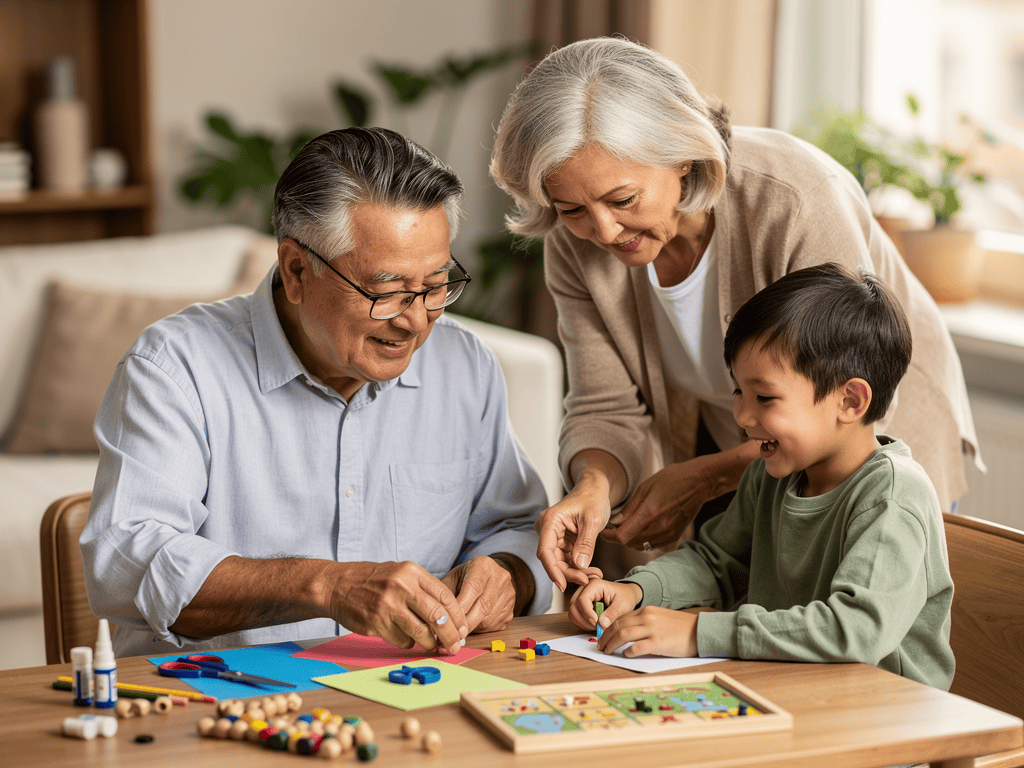
Why balance between leisure and rest is important
As grandparents, you want to be there for your grandchildren and experience beautiful shared moments. To make this possible in the long term, it is important to find a healthy balance between activity and rest. If you manage your energy well, you can spend many more years of quality time with your grandchildren.
The balance between leisure and rest is not only important for your own well-being, but also for the quality of time you spend with your grandchildren. When you are rested and energized, you can better engage with your grandchildren, be more patient, and enjoy shared activities more. Your grandchildren benefit when you are present and attentive.
Many grandparents feel they must always be available or that rest periods are selfish. But the opposite is true: when you regularly take breaks and recover, you invest in your long-term ability to be there for your grandchildren. Your grandchildren will appreciate being able to be active and present in the future.
Preserving energy for grandchildren
Your grandchildren need you not only today, but also in the coming years. If you manage your energy well and regularly take breaks, you can ensure that you will still have the strength in the future to play with your grandchildren, go on outings, or simply spend time together. Every rest period is an investment in your shared future.
Think about which activities give you particular energy and which are particularly draining. Try to alternate energy-intensive activities with recovery phases. For example, if you have been out with your grandchildren all day, plan a quieter activity or a break the next day. This way you can distribute your energy over time.
Your grandchildren will notice when you are rested and energized. They will notice that you have more patience, laugh more, and can better engage with them. If you manage your energy well, you can enjoy the shared time more and create beautiful memories that will accompany your grandchildren throughout their lives.
Promoting long-term health
Regular rest periods are not only important for your daily well-being, but also for your long-term health. When you regularly recover, you can reduce stress, strengthen your immune system, and maintain your physical and mental health. All of this contributes to being able to be active with your grandchildren for many more years.
Chronic stress and exhaustion can lead to health problems in the long term. However, if you regularly take breaks and recover, you can reduce these risks. Your grandchildren need you healthy and strong so you can be there for them for a long time. Every rest period is therefore an investment in your shared future.
Remember that your health is also important for your grandchildren. When you take care of yourself, you can also be better there for others. Your grandchildren will appreciate being able to be active in the future and not being limited by exhaustion or health problems. Self-care is therefore not a selfish act, but an investment in your relationship with your grandchildren.
Rest as an investment in grandchild time
Many grandparents feel they should spend every free minute with their grandchildren or that rest periods are wasted time. But the opposite is true: rest periods are an important investment in the quality of time you can spend with your grandchildren.
When you regularly recover, you can enjoy the shared time with your grandchildren more. You are more attentive, patient, and can better respond to your grandchildren's needs. Your grandchildren will notice when you are present and energized, and will appreciate the shared time more.
Rest does not mean neglecting your grandchildren. Rather, it means managing your energy so you can be there for your grandchildren in the long term. When you regularly take breaks, you can ensure that you will still have the strength in the future to be active with your grandchildren and create beautiful shared memories.
Planning rest periods
Just as you plan activities with your grandchildren, you should also schedule rest periods in your calendar. Plan regular breaks where you can recover. This can be a short lunch break, a quiet evening, or a whole day where you take time for yourself.
When you plan rest periods, you can ensure that you regularly have time for yourself to recover. This helps you preserve your energy and be there for your grandchildren in the long term. Your family will understand when you explain that these breaks are important so you can still be active in the future.
Try to plan rest periods at fixed times so they become a natural part of your daily routine. Perhaps you can reserve a specific time each day for yourself or plan regular breaks after particularly strenuous activities. When rest periods become part of your routine, they will be natural for you and your family.
Small breaks in everyday life
Not every rest period has to be long. Small breaks in everyday life can also help preserve your energy. For example, if you are playing with your grandchildren, you can take short breaks in between to recover. Perhaps you can do a quiet activity together, such as reading a book or solving a puzzle, which is relaxing for both you and your grandchildren.
Small breaks can also mean giving yourself short moments of rest during childcare. For example, if your grandchildren are playing independently, you can take a moment to breathe and collect yourself. These small breaks help you distribute your energy throughout the day.
Your grandchildren will understand when you explain that adults also sometimes need breaks. You can show them that rest is important and that it is okay to take time for yourself. This way, your grandchildren also learn how important self-care is and can use this lesson throughout their lives.
Designing activities with grandchildren energy-efficiently
You do not have to stop being active with your grandchildren to save energy. Instead, you can learn to design activities so they are enjoyable for both you and your grandchildren and do not consume too much energy.
Think about which activities give you particular energy and which are particularly draining. Try to alternate energy-intensive activities with quieter activities. For example, if you have been active outdoors all day, you can plan a quieter activity the next day, such as reading or crafting together.
Your grandchildren will appreciate when you are active, but they will also understand when you sometimes prefer quieter activities. What matters is that you spend time together, not that every activity has to be particularly exciting. Sometimes the quietest moments are the most beautiful.
Choosing age-appropriate activities
Choose activities that are enjoyable for both your grandchildren and you. As your grandchildren get older, you can choose activities that are less physically demanding but still fun. Perhaps you can play games together that require less movement or do activities that are relaxing for both you and your grandchildren.
Think about which activities bring you particular joy and which are less strenuous. Perhaps you can read together, craft, cook, or simply spend time together without it having to be particularly active. Your grandchildren will appreciate spending time together, regardless of how active the activity is.
When you choose activities that are enjoyable for both you and your grandchildren, you can ensure that you both enjoy the shared time. Your grandchildren will notice when you feel comfortable and have energy, and will appreciate the shared time more. At the same time, you can preserve your energy so you can still be active in the future.
Setting time limits
It is perfectly fine to set time limits for activities. For example, if you know that a particular activity is particularly strenuous, you can set a duration from the start. This way you can ensure that you do not go beyond your limits and can recover afterwards.
Time limits also help you distribute your energy throughout the day. When you know you will only spend a certain amount of time on a strenuous activity, you can prepare for it and ensure you have time for recovery afterwards. Your grandchildren will understand when you explain that adults also sometimes need breaks.
Try to communicate time limits positively. Instead of saying "I can only do one hour", you can say "Let's play for one hour and then take a break". This way, the time limit becomes a natural break, not a limitation. Your grandchildren will learn that breaks are normal and important.
Setting boundaries and communicating
It is important that you know and can communicate your boundaries. When you are tired or need a break, it is perfectly fine to say so. Your family will understand when you explain that you need to recover so you can still be there for your grandchildren in the future.
Setting boundaries does not mean you love your grandchildren less or do not want to be there for them. Rather, it means managing your energy so you can be there for your grandchildren in the long term. When you regularly take breaks, you can ensure that you can still be active in the future.
Open communication is the key. When you talk to your family about your needs, you can find solutions together that work for everyone. Your family will appreciate when you are honest about your boundaries and will support you in finding a healthy balance.
Learning to say no
Many grandparents have difficulty saying no when asked for help. But it is important to learn to say no when you are tired or need a break. When you respect your boundaries, you can be better there for your grandchildren in the long term.
Saying no does not mean you love your grandchildren less or do not want to help. Rather, it means managing your energy so you can be there for your grandchildren in the long term. When you regularly take breaks, you can ensure that you can still be active in the future.
Try to communicate no positively. Instead of saying "I cannot", you can say "I need a break today, but we can do it tomorrow". This way you show that you want to help, but also that you must respect your boundaries. Your family will understand and will support you.
Open communication with family
Open communication is the key to a healthy balance. When you talk to your family about your needs, you can find solutions together that work for everyone. Explain that rest periods are important so you can still be there for your grandchildren in the future.
Your family will appreciate when you are honest about your boundaries and will support you in finding a healthy balance. Perhaps you can develop a plan together that considers both your needs and your family's needs. When everyone pulls together, you can find a solution that works for everyone.
Remember that your family loves you and wants you to be healthy and happy. When you openly talk about your needs, you can find ways together to preserve your energy so you can still be there for your grandchildren for a long time. Your family will support you in finding a healthy balance.
Establishing rituals and routines
Rituals and routines can help find a healthy balance between activity and rest. When you have fixed times for activities and rest periods, you can ensure that you regularly have time for yourself to recover.
Rituals give both you and your grandchildren structure and security. When your grandchildren know when you have time for them and when you need a break, they can prepare for it. At the same time, rituals help you better manage your energy and regularly take breaks.
Try to develop rituals that are enjoyable for both you and your grandchildren. Perhaps you can reserve a specific time each day for quiet activities or plan regular breaks after particularly strenuous activities. When rituals become part of your routine, they will be natural for you and your family.
Fixed rest times
Fixed rest times can help find a healthy balance. For example, if you reserve a specific time each day for yourself, you can ensure that you regularly have time for recovery. Perhaps you can take an hour each afternoon for yourself or plan a quiet time each evening.
Fixed rest times give both you and your family structure. When your family knows when you need a break, they can prepare for it and give you the time you need. At the same time, fixed rest times help you better manage your energy and regularly take breaks.
Try to plan rest times at fixed times so they become a natural part of your daily routine. When rest times become part of your routine, they will be natural for you and your family. Your grandchildren will learn that rest is important and that it is okay to take time for yourself.
Predictable structures
Predictable structures give both you and your grandchildren security. When your grandchildren know when you have time for them and when you need a break, they can prepare for it. At the same time, predictable structures help you better manage your energy and regularly take breaks.
Try to develop a structure that works for both you and your grandchildren. Perhaps you can reserve certain days or times for activities and other times for rest. When your grandchildren know when you are available, they can prepare for it and enjoy the shared time more.
Predictable structures also help manage expectations. When your grandchildren know when you have time for them, they can look forward to it and appreciate the shared time more. At the same time, you can ensure that you also have time for yourself to recover and preserve your energy.
Practicing self-care
Self-care is not selfish, but an important investment in your ability to be there for your grandchildren in the long term. When you take care of yourself, you can also be better there for others. Your grandchildren will appreciate being able to be active in the future.
Self-care can take many forms: time for your own hobbies, maintaining social contacts, recovering, or simply taking time for yourself. All of this contributes to preserving your energy and being there for your grandchildren in the long term.
Your grandchildren will notice when you are happy and energized. They will notice that you have more patience, laugh more, and can better engage with them. When you take care of yourself, you can enjoy the shared time more and create beautiful memories.
Maintaining own hobbies
It is important that you also have time for your own hobbies and interests. When you do things that bring you joy, you can recharge your energy and recover. Your grandchildren will appreciate when you are happy and energized, and will enjoy the shared time more.
Your hobbies do not have to be complicated. Perhaps you like to read, go for walks, garden, or do something else that brings you joy. What matters is that you regularly have time for things that you enjoy and that help you recover.
When you maintain your own hobbies, you also show your grandchildren that it is important to take time for yourself. You can be a role model and show that self-care is important. Your grandchildren will learn that it is okay to take time for yourself and do things that bring you joy.
Maintaining social contacts
Social contacts are important for your well-being and can help preserve your energy. When you spend time with friends or other people, you can recover and recharge. Your grandchildren will appreciate when you are happy and energized.
Try to regularly find time for social contacts. Perhaps you can meet with friends, participate in activities in your community, or simply spend time with people who are important to you. These contacts help you preserve your energy and be there for your grandchildren in the long term.
Social contacts also help reduce stress and promote your well-being. When you regularly spend time with other people, you can recover and recharge. Your grandchildren will notice when you are happy and energized, and will enjoy the shared time more.
Dealing with exhaustion
Sometimes you will feel exhausted, even if you try to find a healthy balance. This is completely normal and does not mean you have done something wrong. What matters is that you recognize when you are exhausted and take the time you need to recover.
When you feel exhausted, it is important that you take time for recovery. Perhaps you need to take a break from caring for your grandchildren or reduce activities until you have recovered. Your family will understand when you explain that you need a break so you can still be there for your grandchildren in the future.
Exhaustion is a signal from your body that you need a break. When you listen to these signals and take the time you need, you can be better there for your grandchildren in the long term. Your grandchildren will appreciate being able to be active in the future because you listened to your needs.
Balance between different activity types
Recommended rest periods depending on activity
Energy management strategies
Practical tips for balance
- Schedule regular rest periods in your calendar
- Alternate strenuous activities with quieter ones
- Set time limits for particularly energy-intensive activities
- Communicate openly with your family about your needs
- Learn to say no when you need a break
- Maintain your own hobbies and interests
- Maintain social contacts
- Listen to your body's signals
Recognizing signs of exhaustion
- You feel more tired than usual
- You have less patience with your grandchildren
- You have difficulty concentrating
- You feel stressed or overwhelmed
- You have less joy in activities
- You have physical complaints such as headaches
- You sleep worse
- You have less energy for everyday tasks
Recovery activities for grandparents
- Reading a good book
- Taking a walk in nature
- Meditation or relaxation exercises
- Maintaining a hobby that brings you joy
- Spending time with friends
- Listening to music or making music yourself
- Gardening or other quiet activities
- Simply taking time for yourself