



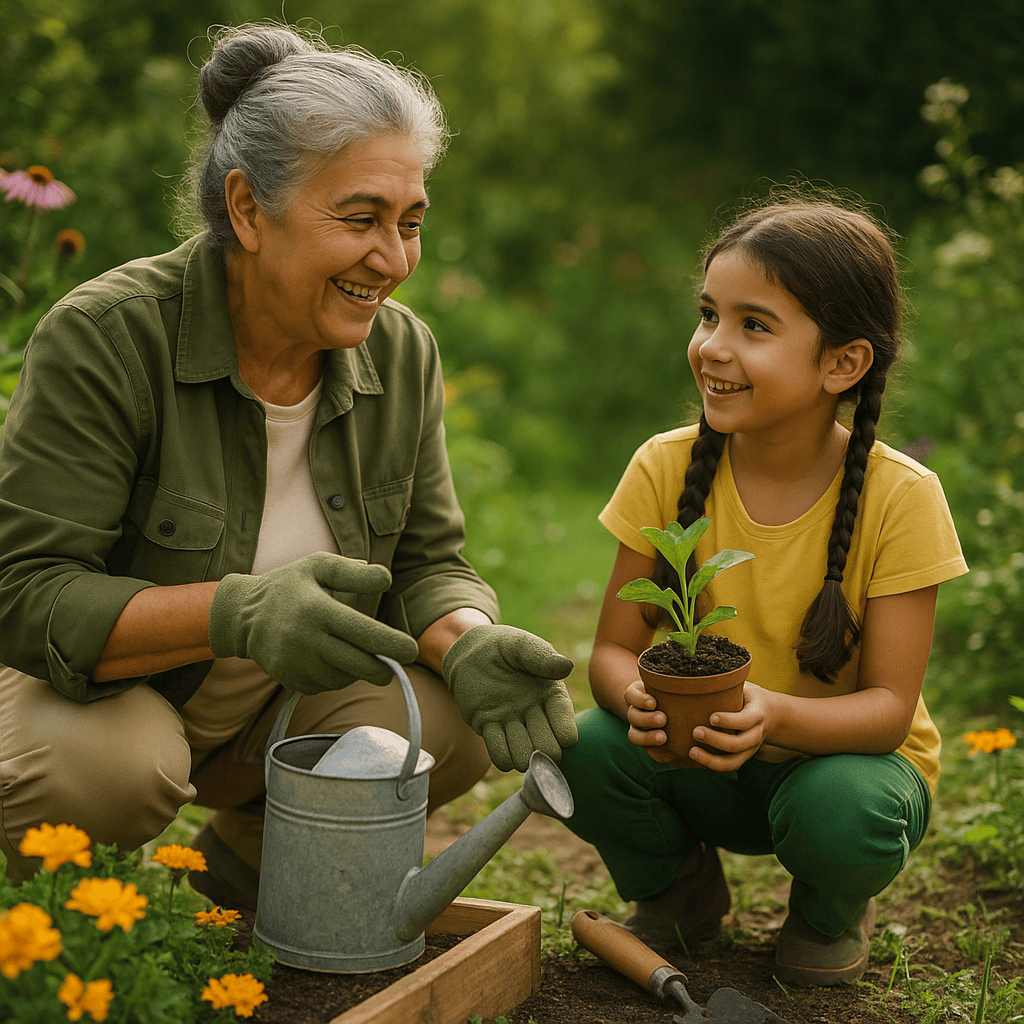
Why gardening as a hobby for grandparents is valuable
Gardening as a hobby for grandparents is a wonderful way to stay active, enjoy nature, and at the same time provide valuable experiences for your grandchildren. When you garden, you are not only doing something for yourself, but also creating a place where your grandchildren can discover and understand nature. This shared activity strengthens the bond between you and your grandchildren and creates memories that will last a long time.
As grandparents, you can show through gardening how important it is to stay active and care for something. Your grandchildren see that you are still full of energy even in old age and enjoy nature. This role model is valuable for your grandchildren and shows them that age is no limit to activity and joy of life.
Gardening also offers many opportunities to have conversations with your grandchildren. While you plant, water, and care together, you can tell stories, answer questions, and discover nature together. These conversations are important for your grandchildren's development and help them better understand the world.
Health benefits
Gardening is a wonderful way to stay physically active without overexerting yourself. The movement in the fresh air strengthens your health and helps you stay fit. When you garden regularly, you are doing something for your physical fitness and can enjoy nature at the same time. This activity helps you stay healthy and active even in old age, so you can spend a long time with your grandchildren.
Gardening is also good for your mental health. When you care for plants and see how they grow and thrive, it gives you a feeling of satisfaction and pride. This positive experience helps you feel good and gives you energy for everyday life. When you feel good, you can also have more time and energy for your grandchildren.
The fresh air and movement while gardening also help reduce stress and find peace. When you feel relaxed and balanced, you can also better interact with your grandchildren and give them your full attention. This balance is important for a good relationship with your grandchildren.
Shared time with grandchildren
Gardening offers many opportunities to spend quality time with your grandchildren. When you garden together, you can have conversations, tell stories, and laugh together. This shared time strengthens the bond between you and your grandchildren and creates a foundation for a close relationship. Your grandchildren will appreciate these shared moments and remember them fondly.
When you regularly garden together, gardening becomes a ritual that your grandchildren can look forward to. They learn that shared activities are important and that it is nice to spend time together. These regular shared moments help your grandchildren feel safe and secure and strengthen the trust between you and your grandchildren.
The shared time while gardening is also an opportunity to pass on values to your grandchildren. You can show how important it is to take responsibility for something, be patient, and enjoy the fruits of labor. These values will accompany your grandchildren throughout their lives and help them become responsible people.
Nature experience for grandchildren
In a time when many children mainly play indoors and have little contact with nature, gardening is a valuable way to introduce your grandchildren to nature. Your grandchildren can experience how a small seed becomes a plant, how flowers bloom, and how vegetables grow. These direct experiences with nature are important for your grandchildren's development and help them develop an understanding of natural processes.
When gardening, your grandchildren also learn to respect and appreciate nature. They understand that plants need time to grow, that they need care, and that nature has its own rhythms. These insights help your grandchildren develop an awareness of the environment and deal responsibly with natural resources. This environmental awareness is important for your grandchildren's future.
The nature experience in the garden is also an opportunity to sharpen your grandchildren's senses. They can smell different scents, feel different textures, and see different colors. These sensory experiences are important for your grandchildren's development and help them better understand the world around them. These experiences shape your grandchildren in a lasting way.
Designing gardening to be age-appropriate
When you garden as grandparents, it is important to design gardening so that it matches your physical capabilities. You do not have to overexert yourself, but can adapt gardening so that it brings you joy and at the same time promotes your health. With the right planning, you can garden successfully and with joy even in old age.
It is important that you listen to your body and take breaks when you need them. Gardening should bring you joy and not become a burden. When you design gardening to be age-appropriate, you can enjoy it for a long time and at the same time show your grandchildren how to responsibly deal with your own strength.
Back-friendly working heights
Raised beds are ideal for grandparents, as they offer a back-friendly working height. You do not have to bend down to plant or harvest, but can work comfortably standing. This working height protects your back and makes gardening more pleasant. When you work in a back-friendly way, you can garden longer and have more joy in it.
Container plants on tables or podiums are also a good solution. You can place the plants at a comfortable height and work comfortably without having to bend down. This solution is particularly practical if you have a small garden or only a balcony. With the right height, you can still garden successfully even in old age.
When you involve your grandchildren in gardening, you can also think together about how to optimally design the working heights. Your grandchildren can help you place the plants at the right height, and you can work comfortably together. This cooperation strengthens the bond between you and your grandchildren.
Ergonomic tools
Ergonomic tools are important for grandparents, as they make work easier and are gentler on the body. Tools with long handles allow you to work standing without having to bend down. These tools protect your back and make gardening more pleasant.
Light tools are also important, as they make work less strenuous. Modern tools made of aluminum or plastic are often lighter than traditional tools and still robust enough for gardening. With light tools, you can work longer and have more joy in gardening.
When you garden with your grandchildren, you can also think together about which tools are best suited. Your grandchildren can help you carry and use the tools, and you can garden successfully together. This cooperation makes gardening even more beautiful.
Breaks and relaxation
Breaks are important so that you do not overexert yourself and have long joy in gardening. Take regular breaks, sit down, and enjoy the nature around you. These breaks help you recover and recharge. When you feel well rested, you can also have more time and energy for your grandchildren.
A beautiful seating area in the garden is ideal so that you can rest. You can set up a bench or chair and sit there while observing nature or chatting with your grandchildren. This seating area will also be appreciated by your grandchildren, as they can sit and talk with you there.
When you take breaks, you can also use the time to talk with your grandchildren and explain nature to them. These conversations are valuable for your grandchildren and help them better understand nature. The breaks thus become valuable moments of encounter with your grandchildren.
Plant selection for grandparents
The right plant selection is important so that gardening brings joy and does not become a burden. Low-maintenance plants that do not require too much attention are ideal for grandparents. With the right selection, you can garden successfully without overexerting yourself.
Perennial perennials are particularly practical, as they come back every year and do not need to be replanted every year. These plants are low-maintenance and provide joy for many years. When you choose low-maintenance plants, you have more time to spend with your grandchildren.
Low-maintenance plants
Low-maintenance plants are ideal for grandparents, as they do not require too much attention and still look beautiful. Perennials such as daylilies, asters, or phlox are robust and come back every year. These plants are low-maintenance and provide joy for many years. When you choose low-maintenance plants, you can focus more on the beautiful moments with your grandchildren.
Herbs such as rosemary, thyme, or sage are also low-maintenance and practical. You can use them in the kitchen and do not have to water them daily. These herbs are robust and thrive even with less care. When you plant herbs, you can also cook together with your grandchildren and show them how to use fresh herbs.
When you choose low-maintenance plants, you have more time to spend with your grandchildren and discover nature together. This time with your grandchildren is more valuable than constant gardening, and your grandchildren will appreciate these shared moments.
Raised beds and container plants
Raised beds are ideal for grandparents, as they offer a back-friendly working height and are low-maintenance at the same time. You can combine various plants in a raised bed and do not have to bend down to plant or harvest. This working height protects your back and makes gardening more pleasant.
Container plants are also practical, as they can be flexibly placed and do not require much space. You can place them on tables or podiums to reach a comfortable working height. This solution is particularly practical if you have a small garden or only a balcony.
When you garden with your grandchildren, you can also think together about which plants should go into the raised beds or containers. Your grandchildren can help with the selection and contribute their own ideas. This joint planning makes gardening even more beautiful and strengthens the bond between you and your grandchildren.
Perennial perennials
Perennial perennials are particularly practical for grandparents, as they come back every year and do not need to be replanted every year. These plants are low-maintenance and provide joy for many years. When you plant perennials, you can rely on them to bloom again every year and look beautiful.
Perennials such as daylilies, asters, phlox, or delphiniums are robust and come back every year. They require little care and still offer beautiful flowers. These plants are ideal for grandparents who do not want to spend too much time gardening but still want a beautiful garden.
When you plant perennials, you can also observe together with your grandchildren how they come back and bloom every year. These observations are valuable for your grandchildren and help them understand natural cycles. Your grandchildren will be happy when they see how the plants bloom again every year.
Joint projects with grandchildren
Joint projects make gardening particularly exciting and educational for your grandchildren. When you plan and carry out a project together with your grandchildren, your grandchildren learn how to plan, work, and take responsibility. These projects also create shared memories and strengthen the bond between you and your grandchildren.
It is important that the projects are age-appropriate and that your grandchildren can actively participate. Let your grandchildren help decide what to plant and show them that their ideas are important. Through active participation, your grandchildren learn that their opinion matters and that they can make a difference.
Creating a herb garden
A herb garden is a wonderful project for grandparents and grandchildren. Herbs grow quickly, are low-maintenance, and can be harvested regularly. You can choose, plant, and care for various herbs together. Your grandchildren can smell, taste, and use the herbs in the kitchen.
For the herb garden, you can plant various herbs such as basil, mint, chives, parsley, or rosemary. Each herb has its own scent and taste, which is particularly interesting for children. You can show your grandchildren how to harvest the herbs correctly and how to use them.
A herb garden also offers many opportunities for creative activities. You can dry herbs together, make herb oil or herb vinegar, or prepare herb teas. These activities make gardening even more exciting and show your grandchildren how versatile the use of herbs is.
Designing a vegetable bed
A small vegetable bed is an exciting project for grandparents and grandchildren. You can plant, care for, and harvest various vegetables together. Your grandchildren can observe how the vegetables grow and then harvest and taste the fruits of their labor.
For the vegetable bed, lettuce, radishes, small tomatoes, peppers, or cucumbers are particularly suitable. These vegetables grow well and are very popular with children. You can show your grandchildren how to sow the seeds, how to care for the plants, and how to harvest them.
The vegetable bed also offers many learning moments. Your grandchildren can learn how plants grow, what conditions they need, and how to care for them. You can also cook together with the harvested vegetables, which makes the project even more valuable. These joint activities create beautiful memories for your grandchildren.
Planning a flower bed
A jointly planned flower bed is a beautiful project for grandparents and grandchildren. You can choose the flowers together, plant the bed, and then care for the flowers together. This flower bed becomes a joint work that you and your grandchildren can be proud of.
For the flower bed, you can combine various flowers that have different colors and shapes. Your grandchildren can help with the selection and contribute their own ideas. You can also think together about which flowers go well together and how the bed looks most beautiful.
The flower bed also offers many opportunities for creative activities. You can observe, draw, or photograph the flowers together. You can also make bouquets together or press and dry the flowers. These activities make gardening even more exciting and show your grandchildren how diverse the possibilities are.
Seasonal gardening
Gardening is a year-round activity that offers something special in every season. Each season has its own tasks and opportunities, and together with your grandchildren, you can experience and enjoy the different seasons. These seasonal activities create regular occasions to spend time with your grandchildren.
In spring, the gardening season begins with sowing and planting. In summer, you can care and harvest together. In autumn, you harvest the last fruits and prepare the garden for winter. Each season offers its own opportunities for joint activities and learning moments with your grandchildren.
Spring: Sowing and planting
Spring is the time of sowing and planting, and a particularly exciting time for children. Together you can sow seeds, plant seedlings, and observe how everything begins to grow. This time is full of anticipation and offers many opportunities for joint activities with your grandchildren.
You can choose the seeds together, prepare the pots, and sow the seeds. Your grandchildren can learn how to sow seeds correctly, how deep they go into the soil, and how much spacing they need. These practical experiences are valuable and help your grandchildren understand the basics of gardening.
After sowing, you can observe together how the first seedlings appear. These first signs of growth are particularly exciting for children. You can think together about what the plants need to grow well and how you can best support them. These observations are valuable for your grandchildren.
Summer: Care and harvest
In summer, you can care for the plants together and harvest the first fruits. This time is particularly beautiful, as you can see the fruits of your labor. Together you can water, fertilize, and observe how the plants grow and bloom. This joint care strengthens the bond between you and your grandchildren.
The harvest time in summer is particularly exciting for children. Your grandchildren can regularly look for ripe fruits and harvest them. This experience is valuable and shows your grandchildren that their effort was worth it. You can taste and use the harvested products together. These joint experiences create beautiful memories.
In summer, you can also observe together which insects visit the flowers, how the plants develop, and what changes there are. These observations are valuable and help your grandchildren better understand nature and develop an awareness of natural processes. These nature experiences shape your grandchildren in a lasting way.
Autumn: Harvest and preparation
In autumn, you can harvest the last fruits and prepare the garden for winter. This time offers many opportunities for joint activities, such as harvesting, drying, and preserving herbs and vegetables. These activities show your grandchildren how to garden sustainably and how to plan the gardening season.
Together you can think about which plants can overwinter and which need to be removed. You can also collect seeds together for next year. These activities show your grandchildren how to garden sustainably and how to plan the gardening season. This planning helps your grandchildren think long-term.
Autumn is also a good time to cook and bake together with the harvested products. Your grandchildren can see how delicious dishes are made from the harvested products, and they can be proud that they helped in the production. These joint activities create beautiful memories and show your grandchildren how valuable the work in the garden is.
Gardening as a learning place for grandchildren
Gardening offers many valuable learning moments for your grandchildren. While you work together, you can talk about nature, answer questions, and discover the world together. These conversations are important for your grandchildren's development and help them better understand the world.
Use the time while gardening to talk with your grandchildren about various topics. You can talk about plant growth, the importance of insects, or sustainable gardening. These conversations are natural and relaxed and offer many opportunities for questions and discussions.
Teaching nature understanding
Gardening is a wonderful way to introduce your grandchildren to nature. Your grandchildren can experience how a small seed becomes a plant, how flowers bloom, and how vegetables grow. These direct experiences with nature are important for your grandchildren's development and help them develop an understanding of natural processes.
When gardening, your grandchildren also learn to respect and appreciate nature. They understand that plants need time to grow, that they need care, and that nature has its own rhythms. These insights help your grandchildren develop an awareness of the environment and deal responsibly with natural resources. This environmental awareness is important for your grandchildren's future.
The nature experience in the garden is also an opportunity to sharpen your grandchildren's senses. They can smell different scents, feel different textures, and see different colors. These sensory experiences are important for your grandchildren's development and help them better understand the world around them.
Taking responsibility
Gardening offers many opportunities to teach your grandchildren responsibility. When your grandchildren learn to regularly water, observe, and care, they develop a sense of responsibility and learn to take care of something. This responsibility is important for your grandchildren's development and helps them become responsible people.
It is important that the responsibility is age-appropriate and that your grandchildren are not overwhelmed. Start with simple tasks such as watering and gradually increase the responsibility. Show your grandchildren that their help is important and that they are making an important contribution. This recognition strengthens your grandchildren's self-confidence.
When your grandchildren take responsibility, they also learn that their actions have consequences. They see that plants grow when they are well cared for and that they die when they are neglected. These experiences help your grandchildren understand the importance of responsibility.
Learning patience and perseverance
Gardening teaches your grandchildren patience and perseverance. Plants need time to grow, and your grandchildren must learn to be patient and wait. This patience is an important quality that will help your grandchildren in many areas of life. When your grandchildren are patient, they can also better deal with challenges in other situations.
When your grandchildren see how a small seed becomes a large plant, they learn that perseverance pays off. They understand that it takes time to achieve something and that it is important not to give up. This perseverance helps your grandchildren be successful in other areas of life as well.
The patience in gardening is also an opportunity to show your grandchildren that good things take time. When your grandchildren are patient and care regularly, they are rewarded with beautiful flowers and delicious vegetables. This reward shows your grandchildren that patience and perseverance pay off.
Tips for getting started
If you want to start gardening as grandparents, it is important to start small and not overexert yourself. Start with a few low-maintenance plants and gradually increase. With the right planning, you can garden successfully and with joy even in old age.
It is also important that you design gardening so that it matches your physical capabilities. Use raised beds, ergonomic tools, and take regular breaks. When you design gardening to be age-appropriate, you can enjoy it for a long time.
When you garden with your grandchildren, it is important that the projects are age-appropriate and that your grandchildren can actively participate. Let your grandchildren help decide what to plant and show them that their ideas are important. Through active participation, your grandchildren learn that their opinion matters and that they can make a difference.
Overview of low-maintenance plants for grandparents
Ergonomic tools for grandparents
Activities by season
Tips for getting started with gardening
- Start with low-maintenance plants such as perennials or herbs
- Use raised beds for a back-friendly working height
- Invest in ergonomic tools that make work easier
- Plan regular breaks so you do not overexert yourself
- Involve your grandchildren in planning from the start
- Start with a few plants and gradually increase
Health tips for gardening
- Use raised beds so you do not have to bend down
- Take regular breaks and sit down
- Use light tools that make work easier
- Work during the cooler hours of the day
- Drink enough water during gardening
- Listen to your body and do not overexert yourself
Joint activities with grandchildren
- Plan together which plants should be planted
- Let your grandchildren help with sowing and planting
- Show your grandchildren how to water and care correctly
- Observe the growth of plants together
- Harvest the fruits of labor together
- Cook together with the harvested products