



Why an inclusive birthday party is important
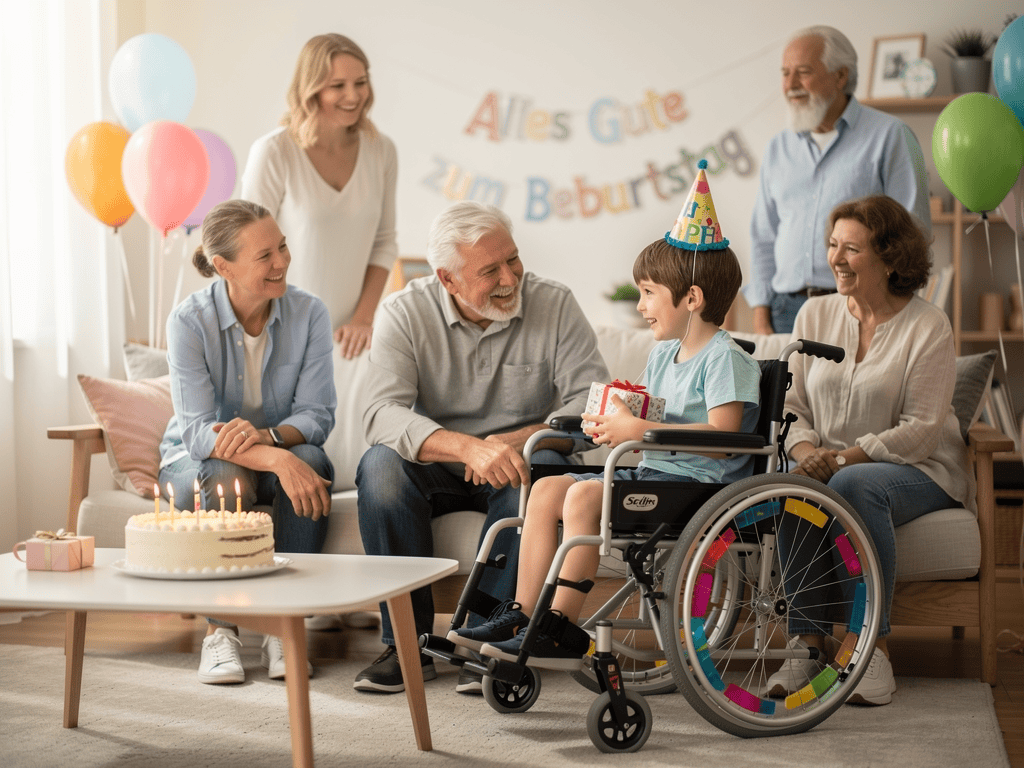
A birthday party is a special event for every child that creates memories for a lifetime. For grandchildren with disabilities, it is especially important that these celebrations address their individual needs and make them feel like they are the center of attention. As grandparents, you have the opportunity to create a celebration that not only brings joy to your grandchild but also shows all guests how valuable inclusion is.
When you plan a birthday party for your grandchild with a disability, you are doing something important: you are showing your grandchild that they are just as valuable and lovable as any other child. You are creating a space where your grandchild feels comfortable and can gather positive experiences. These experiences shape your grandchild and strengthen their self-confidence, which in turn positively influences their development.
The significance for your grandchild
For your grandchild with a disability, a well-planned birthday party is more than just a party. It is an opportunity to feel loved and valued, to be part of a community, and to gather positive memories. These memories can give your grandchild strength in difficult times and show them that there are people who are there for them.
An inclusive celebration also helps your grandchild develop social skills and make connections. When the celebration is tailored to their needs, your grandchild can relax and enjoy the time without having to worry about whether everything will work. This allows them to focus on the social aspects of the celebration and have positive interactions with others.
Creating positive experiences
Positive experiences at birthday parties can strengthen your grandchild's self-confidence and show them that it is possible to have fun and be part of a community. These experiences are especially valuable when your grandchild may face challenges in everyday life that other children do not have.
As grandparents, you can show through a well-planned celebration that you take your grandchild's needs seriously and that you are willing to do everything to give them a wonderful time. This attention and care strengthens the bond between you and your grandchild and shows them how important they are to you.
Preparation and planning
A successful birthday party for your grandchild with a disability begins with careful planning. Take time to understand your grandchild's needs and align all aspects of the celebration accordingly. The better prepared you are, the more relaxed you can enjoy the celebration and the more joy your grandchild will have.
Planning should begin early so that you have enough time to make all necessary adjustments and organize support. Talk to your grandchild's parents to ensure that you have all important information and that your plans align with their ideas.
Identifying needs
The first step in planning is to understand your grandchild's specific needs. Talk to the parents about the type of disability, possible limitations, and special requirements. Ask about sensory sensitivities, movement needs, communication aids, or other supports your grandchild needs.
Also consider your grandchild's personal preferences. What activities do they like? What topics or characters excite them? What brings them particular joy? This information helps you plan a celebration that is truly tailored to your grandchild and shows them that you take their interests seriously.
Time planning and duration
The duration of the celebration should be adapted to your grandchild's stamina and needs. Some children with disabilities may not be able to celebrate as long as others. Plan a shorter celebration or build in rest breaks so your grandchild can recover.
Also consider the time of day. Some children with disabilities have certain times when they are particularly active or tired. Plan the celebration for a time when your grandchild is usually in a good mood and energetic. This increases the chances that the celebration will be a success for everyone involved.
Compiling the guest list
When compiling the guest list, you should consider both your grandchild's wishes and their needs. Some children with disabilities feel more comfortable in smaller groups, while others like to have many guests. Talk to your grandchild and the parents to find the ideal group size.
Make sure that all invited guests understand what to expect and how they can support your grandchild. This may mean talking to the parents of other children in advance or sending a brief information to all guests. A well-informed guest list helps ensure that everyone feels comfortable and the celebration runs smoothly.
Choosing accessible venues
Choosing the right venue is crucial for the success of the celebration. The venue must not only be accessible but also provide enough space for all activities and create a pleasant atmosphere. Take time to check various options and make the best choice for your grandchild.
When visiting venues, pay attention to all aspects of accessibility. Check not only whether wheelchair users have access but also whether there is sufficient space for movement, whether the lighting is appropriate, and whether there are quiet areas where your grandchild can retreat if it becomes too much.
Home or external location
The decision of whether the celebration should take place at home or at an external location depends on various factors. At home, your grandchild has the advantage of being in a familiar environment, which can be especially important for children with autism or sensory sensitivities. At home, you also have more control over the environment and can make adjustments.
However, an external location can have advantages if you need more space or if you do not want to take responsibility for cleaning and preparation. Many external venues are now accessible and can accommodate special needs. It is important that you clarify all details in advance and ensure that the venue is truly accessible.
Checking accessibility
If you choose an external location, check all aspects of accessibility in advance. Are there ramps or elevators? Are the restrooms accessible? Is there enough space for wheelchairs or other aids? Is the area safely accessible for all guests?
Visit the venue in person in advance to get an idea. Talk to the staff about your grandchild's needs and ask what adjustments are possible. Many venues are willing to make adjustments if they are informed in advance. Good communication in advance can prevent many problems.
Planning activities and games
Activities and games should be planned so that all guests can participate regardless of their abilities. This does not mean that all activities must be the same for everyone, but that there is something for everyone to participate in. A well-planned celebration offers various activities that appeal to different abilities and interests.
Consider your grandchild's specific needs when planning activities. If your grandchild has motor limitations, for example, activities should be adapted so they can still participate. If your grandchild has sensory sensitivities, loud or overwhelming activities should be avoided.
Adaptations for different disabilities
For children with motor limitations, activities can be adapted so they can be performed while sitting or so aids can be used. Craft activities can be designed so they can be performed with various gripping techniques, and games can be modified to require less movement.
For children with visual impairments, activities can be designed to be tactile or acoustic. Use materials with various textures, sounds, or music to make activities accessible. Descriptions and instructions should be clear and detailed.
For children with hearing impairments, visual elements should be emphasized. Use picture cards, gestures, or writing to give instructions. Make sure that all activities are understandable without hearing.
Inclusive games for everyone
There are many games that can be designed so everyone can participate. Cooperative games where everyone works together instead of competing against each other are often a good choice. These games promote a sense of community and reduce the pressure that can arise with competitive games.
Craft activities can be designed so everyone can participate at their own level. Offer various materials and techniques so everyone finds something they enjoy. The results do not have to be perfect – what matters is that everyone has fun and can express themselves creatively.
Food and drinks
Food and drinks should not only be delicious but also meet your grandchild's special requirements. Many children with disabilities have special dietary requirements, allergies, or difficulties eating. A well-planned menu selection ensures that your grandchild can enjoy the celebration without having to worry about food.
Also consider the needs of other guests. Some children may also have allergies or dietary restrictions. A diverse selection of food and drinks ensures that there is something for everyone and that no one is excluded.
Dietary requirements
If your grandchild has special dietary requirements, make sure all foods meet these. This may mean that you must avoid certain ingredients or use special recipes. Talk to the parents to ensure you have all necessary information.
It can be helpful to test in advance whether the foods taste good to your grandchild. If you try new recipes, do this a few days before the celebration so you can make adjustments if needed. A familiar food can help your grandchild feel more comfortable.
Considering allergies
Allergies can be life-threatening, so it is important that you know and consider all guests' allergies. Ask all guests in advance about allergies and make sure no allergenic ingredients are contained in the foods. Clearly label all foods so everyone knows what they can eat.
If you are unsure whether an ingredient is safe, do not use it. It is better to be safe than to take a risk. If you use external catering services, inform them thoroughly about all allergies and dietary requirements.
Decorations and atmosphere
Decorations should create a cheerful and inviting atmosphere without being overwhelming. For children with sensory sensitivities, too much decoration or too bright colors can be overwhelming. A balanced decoration that reflects your grandchild's personal preferences creates the perfect atmosphere.
Also consider the lighting. Some children with disabilities are sensitive to bright light or flickering lights. Gentle, even lighting can help create a relaxed atmosphere. If you use candles, make sure they are safely placed and that your grandchild does not get too close to them.
Avoiding sensory overload
Sensory overload can be very stressful for children with certain disabilities. Avoid music that is too loud, lights that are too bright, or too many different stimuli at once. A quiet, controlled environment can help your grandchild relax and enjoy the celebration.
Also plan quiet areas where your grandchild can retreat if it becomes too much. This can be a separate room or simply a quiet corner with pillows and blankets. If your grandchild knows there is a retreat, this can help reduce anxiety and enjoy the celebration.
Incorporating personal preferences
Decorations should reflect your grandchild's personal preferences and interests. If your grandchild likes a particular theme or characters, for example, you can incorporate these into the decorations. This shows your grandchild that you take their interests seriously and that the celebration is truly for them.
Let your grandchild participate in planning the decorations if they want to. This can be a nice shared activity and gives your grandchild the feeling of being part of the planning. Even if the final decoration may not turn out exactly as your grandchild imagined, participation shows that their opinion matters.
Organizing support and help
Planning and conducting a birthday party for a child with a disability can be demanding. It is important that you do not overwhelm yourself and that you organize support. Your grandchild's parents can provide valuable help, but other family members or friends can also help with preparation and execution.
Consider which tasks can be delegated. Perhaps someone else can take over the decorations while you focus on activities. Perhaps someone can help with food or greet guests. A good division of tasks ensures that you can enjoy the celebration and that everything runs smoothly.
If your grandchild needs special support during the celebration, make sure someone is there who can provide this support. This can be a parent, a caregiver, or someone else familiar with your grandchild's needs. This person can also help if your grandchild needs a break or if unexpected situations arise.
Planning checklist for the birthday party
Examples of inclusive activities
Accessibility checklist for venues
Tips for preparation
- Start planning early to have enough time for all adjustments
- Talk extensively with parents about your grandchild's needs
- Visit venues in person in advance
- Test new recipes a few days before the celebration
- Create a detailed checklist and work through it
- Organize support and divide tasks
- Plan rest breaks for your grandchild
- Prepare a retreat area in case your grandchild needs a break
Ideas for inclusive games
- Cooperative games where everyone works together
- Craft activities with various materials and techniques
- Music and dance activities with adjustable volume
- Reading stories with visual support
- Sensory games with various textures
- Simple movement games that can be performed while sitting
- Quiet activities like painting or drawing
- Group games that appeal to various abilities
Important questions before planning
- What type of disability does my grandchild have and what specific needs result from this?
- Are there sensory sensitivities that must be considered?
- What activities does my grandchild particularly like?
- How long can my grandchild usually celebrate before getting tired?
- Are there allergies or dietary requirements that must be considered?
- What support does my grandchild need during the celebration?
- Are there certain times when my grandchild is particularly active or tired?
- What size should the guest list be?