



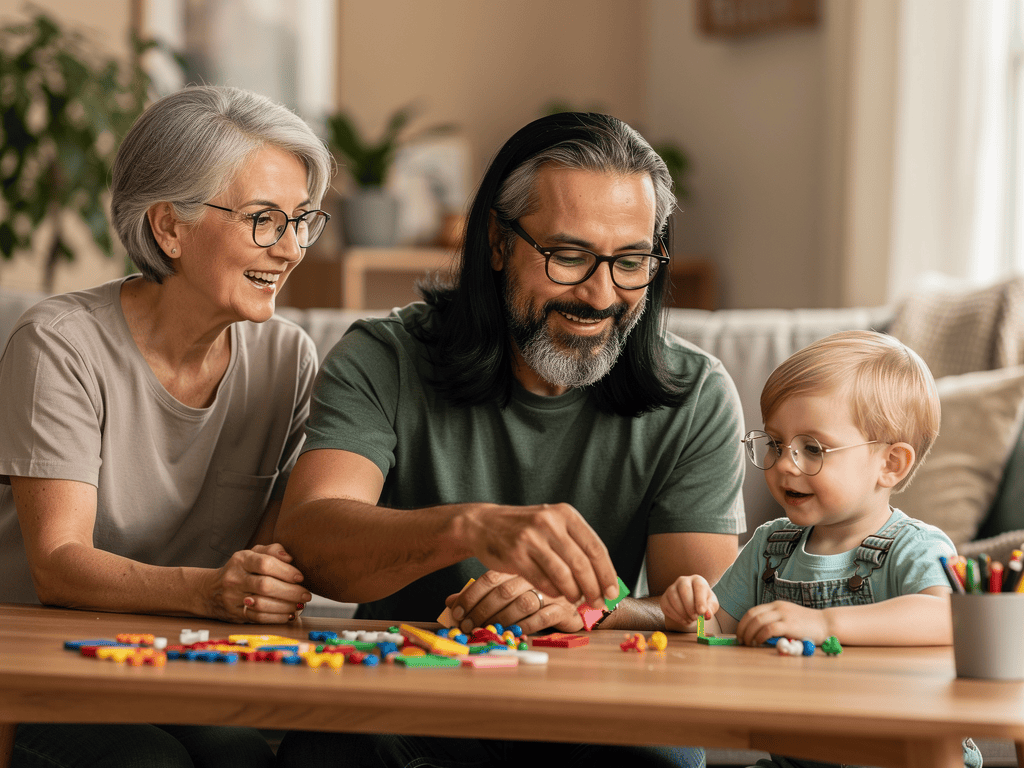
Why memory training is important
Memory training is particularly important for grandparents to stay mentally fit and fully enjoy the valuable time with your grandchildren. When you regularly train your memory, you not only stay mentally active, but you can also communicate better with your grandchildren, remember shared experiences, and learn new things that you can discover together with your grandchildren.
Your grandchildren benefit enormously when you stay mentally fit. You can better remember the stories you tell them, the games you play together, and the moments you experience together. A good memory also helps you understand your grandchildren's interests and take an interest in their hobbies, friends, and activities, which strengthens your relationship with each other.
Memory training doesn't have to be boring or exhausting. On the contrary: if you playfully integrate it into your everyday life, it's even fun and becomes a natural habit. You can combine memory training with activities you already enjoy, such as walks, shopping, cooking, or spending time with your grandchildren. This keeps your brain active without feeling like you're doing extra work.
The importance for grandparents
As grandparents, you have a special responsibility and a special opportunity: you can show your grandchildren that learning and mental activity are important throughout life. When you practice memory training yourself and stay mentally active, you are a role model for your grandchildren and show them that it's never too late to learn something new or train your memory.
A good memory also helps you preserve the many beautiful moments with your grandchildren. You can better remember the stories you tell them, the shared trips you take, and the small details that make up your relationship with your grandchildren. These memories are valuable, not only for you, but also for your grandchildren, who later enjoy hearing about the shared experiences.
Memory training can also help you stay more independent and better manage your everyday life. When you can remember things better, it's easier to keep appointments, remember important information, and organize your day. This gives you more freedom and independence, which in turn positively affects your relationship with your grandchildren, as you are less dependent on help.
Benefits for the relationship with grandchildren
When you train your memory, your grandchildren also benefit. You can better remember the stories you tell them, the games you play together, and the moments you experience together. A good memory also helps you understand your grandchildren's interests and take an interest in their hobbies, friends, and activities.
Memory training can also become a shared activity that you share with your grandchildren. Many memory games are fun when played together, and your grandchildren also learn how important it is to train the brain. This not only creates positive memories, but also teaches your grandchildren important values such as perseverance, concentration, and mental activity.
When you stay mentally fit, you can also better respond to your grandchildren's needs. You can remember their preferences, important dates like birthdays or school events, and the small details that are important to your grandchildren. This attention strengthens your relationship and shows your grandchildren that they are important to you.
Making memory training playful
Memory training doesn't have to be boring. On the contrary: if you make it playful, it's even fun and becomes a natural habit. There are many different games and exercises you can play alone or together with your grandchildren to train your memory.
Games are particularly effective because they are fun and challenge the brain at the same time. When you play memory games, you often don't even notice that you're training because you're so absorbed in the game. This makes memory training a pleasant activity that you enjoy doing regularly, rather than a tedious duty.
You can also adapt memory games to different situations. When you're on the go, you can play simple games that don't require materials. At home, you can play more complex games that require more concentration. This way, you can integrate memory training into every day without it becoming boring.
Games for on the go
When you're out with your grandchildren, you can play many simple memory games that don't require materials. A classic game is "I pack my suitcase", where you take turns naming items you would pack in a suitcase, and you have to remember all the previous items. This game trains short-term memory and is fun at the same time.
Another game for on the go is "I spy with my little eye". You describe an object you see, and your grandchildren have to guess what it is. You can also reverse the game: your grandchildren describe something, and you have to guess it. This game not only trains memory, but also attention and observation skills.
When you're traveling by car or public transport, you can also play "word chains". You name a word, and the next player has to name a word that starts with the last letter of the previous word. This game trains memory and language skills and makes the journey more interesting.
Memory games at home
At home, you can play more complex memory games that require more concentration. A popular game is "Memory", where you have to find pairs of cards. You can play this game with your grandchildren and not only train your memory, but also spend valuable time together.
Another game for home is "City, Country, River". You have to find terms for different categories such as cities, countries, or rivers that start with a certain letter. This game trains memory, general knowledge, and speed of thinking.
You can also invent your own memory games. For example, you can invent a story together with your grandchildren, where each player adds a sentence and has to remember all the previous sentences. This game is fun, trains memory, and promotes creativity.
Using everyday situations
You don't have to schedule extra time for memory training. Many everyday situations offer the opportunity to train your memory without having to do additional activities. When you consciously use these situations, memory training becomes a natural habit that you automatically integrate into your everyday life.
When shopping, for example, you can try to remember the shopping list instead of taking it with you. Or you can try to remember the prices of the items and estimate how much the purchase costs at the end. Such small exercises train your memory without having to invest additional time.
When cooking or baking, you can try to remember recipes instead of constantly looking them up. Or you can try to remember the ingredients you've already used and then estimate which ones are still missing. These exercises make cooking more interesting and train your memory at the same time.
Training while shopping
When shopping, there are many opportunities to train your memory. Try, for example, to remember the shopping list instead of taking it with you. Go through the list several times before shopping and then try to buy all items from memory. If you forget something, that's okay – it's an exercise, and practice makes perfect.
You can also try to remember the prices of the items you buy. Look at the prices before putting them in the shopping cart, and then try to estimate how much the entire purchase costs at the end. This exercise not only trains your memory, but also your ability to work with numbers.
When you go shopping with your grandchildren, you can also play together. Let your grandchildren guess, for example, how much certain items cost, or try together to remember which items you've already bought. This makes shopping a shared activity that's fun and trains memory at the same time.
While cooking and baking
When cooking or baking, you can try to remember recipes instead of constantly looking them up. Start with simple recipes you already know, and then try to remember new recipes as well. When you can recall ingredients and steps from memory, you train your memory and become more independent when cooking at the same time.
You can also try to remember the ingredients you've already used and then estimate which ones are still missing. This exercise makes cooking more interesting and trains your memory at the same time. When you cook with your grandchildren, you can also try together to remember the recipes, which makes the activity even more exciting.
When you bake together with your grandchildren, you can also incorporate memory games. Let your grandchildren guess, for example, which ingredients are still missing, or try together to remember the order of the steps. This makes baking a shared activity that not only produces delicious food, but also trains memory.
Shared activities with grandchildren
Memory training can also become a shared activity that you share with your grandchildren. Many memory games are fun when played together, and your grandchildren also learn how important it is to train the brain. This not only creates positive memories, but also teaches your grandchildren important values.
Telling stories is a wonderful way to train memory while spending time with your grandchildren. When you tell stories from your childhood or from your family's life, you have to remember many details, which trains your memory. At the same time, your grandchildren learn about family history and the past.
Learning and repeating together can also train memory. When you learn vocabulary together or memorize poems, for example, you not only train your own memory, but also help your grandchildren learn. These shared activities strengthen your relationship and make learning more interesting for both sides.
Telling and remembering stories
Telling stories is a wonderful way to train memory while spending time with your grandchildren. When you tell stories from your childhood or from your family's life, you have to remember many details, which trains your memory. At the same time, your grandchildren learn about family history and the past.
You can also invent new stories together with your grandchildren. Each player can contribute a part of the story, and everyone has to remember the previous parts. This game is fun, trains memory, and promotes creativity. Your grandchildren will love inventing stories together with you.
When you tell stories, you can also try to remember details that particularly interest your grandchildren. Ask, for example, which parts of the story your grandchildren liked best, and then try to tell these parts in more detail next time. This trains your memory and shows your grandchildren at the same time that you are interested in their interests.
Learning and repeating together
Learning and repeating together can also train memory. When you learn vocabulary together or memorize poems, for example, you not only train your own memory, but also help your grandchildren learn. These shared activities strengthen your relationship and make learning more interesting for both sides.
You can also try together to remember important information, such as birthdays, addresses, or phone numbers. When you learn and repeat this information together, you train your memory and ensure that important information is not lost at the same time.
When your grandchildren are learning for school, you can also learn together with them. Ask, for example, what they learned in school, and then try to remember this information. This trains your memory and shows your grandchildren at the same time that you are interested in their education.
Using digital tools
Nowadays, there are many digital tools that can help you with memory training. Apps for memory training are specifically designed to train different areas of memory and can be a good addition to traditional methods. Many of these apps are user-friendly and make training more interesting.
You can also use digital tools together with your grandchildren. Many apps have multiplayer modes where you can play together, or you can take turns playing and cheer each other on. This makes memory training a shared activity that's fun and strengthens your relationship.
It's important that digital tools are a supplement, but shouldn't be the only method. Combine digital exercises with traditional methods such as games, stories, or everyday exercises to achieve the best results. This keeps training varied and interesting.
Apps for memory training
There are many apps for memory training that are specifically designed for older adults. These apps offer various exercises that train different areas of memory, such as short-term memory, long-term memory, or concentration. Many of these apps are user-friendly and make training more interesting.
When you use apps for memory training, you should make sure to practice regularly, but not be overwhelmed. Start with simple exercises and gradually increase the difficulty. Many apps also have progress indicators that show you how you're improving, which can be motivating.
You can also use apps together with your grandchildren. Many apps have multiplayer modes where you can play together, or you can take turns playing and cheer each other on. This makes memory training a shared activity that's fun and strengthens your relationship.
Playing online games together
There are also many online games that you can play together with your grandchildren to train your memory. These games are often interactive and fun when played together. You can solve puzzles together, play Memory, or play quizzes that train memory, for example.
When you play online games, you should make sure not to spend too much time in front of the screen. Combine digital games with traditional methods such as games, stories, or everyday exercises to achieve the best results. This keeps training varied and interesting.
Online games can also be a good way to stay in touch with your grandchildren when you can't be together in person. You can play together via video chat, for example, and cheer each other on. This keeps your relationship strong even when you're geographically separated.
Developing routines and habits
For memory training to be effective in the long term, it's important to develop a routine and practice regularly. When you make memory training a habit, it automatically becomes part of your everyday life, and you no longer have to think about whether you should train or not.
Start with small, realistic goals. You don't have to train for hours every day – even a few minutes a day can make a difference. What's important is that you practice regularly, not that you train for a particularly long time. When you make memory training a pleasant habit, you'll enjoy doing it regularly.
Long-term motivation is important to keep going. Set realistic goals for yourself, celebrate your successes, and be patient with yourself when things don't go so well. Memory training is a process that takes time, but with perseverance and patience, you will make progress.
Establishing daily exercises
To establish daily exercises, you should choose a fixed time of day when you train. Maybe right after getting up, during breakfast, or in the evening before watching TV. It's important that the time fits your daily routine and that you can stick to it regularly.
Start with small, realistic goals. You don't have to train for hours every day – even a few minutes a day can make a difference. What's important is that you practice regularly, not that you train for a particularly long time. When you make memory training a pleasant habit, you'll enjoy doing it regularly.
You can also combine different exercises to create variety. Maybe you do a short exercise with an app in the morning, play a memory game with your grandchildren at noon, and try to remember the shopping list in the evening. This keeps training varied and interesting.
Long-term motivation
Long-term motivation is important to keep going. Set realistic goals for yourself, celebrate your successes, and be patient with yourself when things don't go so well. Memory training is a process that takes time, but with perseverance and patience, you will make progress.
You can also set small rewards for yourself when you reach your goals. Maybe treat yourself to a special trip with your grandchildren or a favorite meal after a week of regular training. These rewards can be motivating and help you keep going.
It's also important that you don't put pressure on yourself. If you skip a day, that's okay. What's important is that you get back on track and continue. Memory training should be fun and not become a tedious duty. When you approach it playfully and integrate it into your everyday life, it becomes a natural habit.
Memory training for different areas
Memory consists of different areas that can be trained differently. Short-term memory stores information for a short time, while long-term memory stores information long-term. Concentration helps you focus on important information, while memory capacity helps you remember new information.
To achieve the best results, you should train different areas of memory. Games like Memory train short-term memory, while memorizing poems or stories trains long-term memory. Concentration exercises help you focus better, while memory capacity exercises help you remember new information better.
When you train different areas, training also remains varied and interesting. You can do exercises for short-term memory in the morning, for example, concentration exercises at noon, and long-term memory exercises in the evening. This trains all areas and keeps you motivated.
Overview of memory games
Examples of daily exercises
Different areas of memory
Tips for playful memory training
- Choose games that you enjoy so you stay motivated
- Vary the games to create variety
- Play together with your grandchildren to strengthen the relationship
- Start with simple games and gradually increase the difficulty
- Celebrate your successes, even if they are small
- Be patient with yourself – memory training takes time
Everyday exercises for on the go
- Try to remember the shopping list instead of taking it with you
- Remember prices while shopping and estimate the total price
- Play "I pack my suitcase" during the journey
- Try to remember phone numbers or addresses
- Tell stories from memory
- Play word chains or other language games
Tips for long-term motivation
- Set realistic goals that you can achieve
- Celebrate your successes, even if they are small
- Be patient with yourself – progress takes time
- Combine different exercises to create variety
- Make memory training a pleasant habit
- Remember why you're training – for your grandchildren and for yourself