



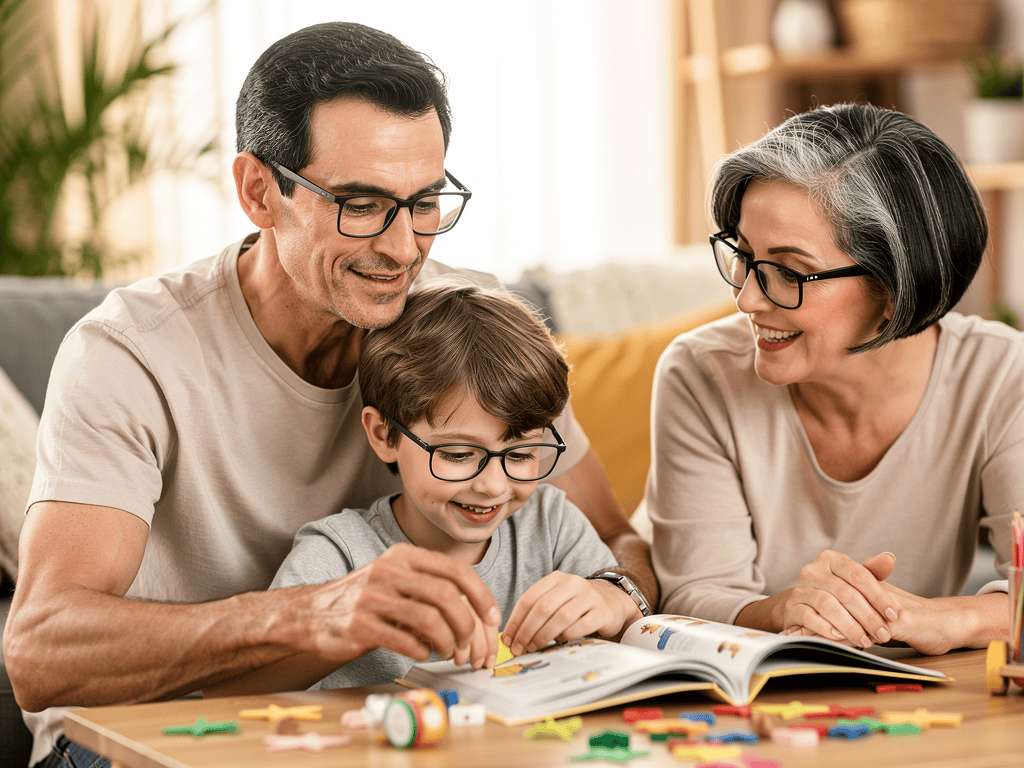
Why puzzling and brain teasers together is valuable
Puzzling and solving brain teasers together with your grandchildren is a wonderful way to spend time together while training your brain. These activities not only promote cognitive performance but also strengthen the bond between grandparents and grandchildren. When you regularly puzzle and solve brain teasers together, you are not only doing something for your own mental fitness but also giving your grandchildren valuable skills for their future.
Puzzling and solving brain teasers together offers many benefits for both generations. As grandparents, you can train your mental agility while spending valuable time with your grandchildren. Your grandchildren learn to solve problems, be patient, and think strategically. These skills will help them throughout their lives and make them successful, confident people.
When you puzzle and solve brain teasers together with your grandchildren, you show them that learning and thinking can be fun. This positive attitude toward mental challenges will motivate your grandchildren to remain curious and eager to learn in school and later in their careers. You are giving your grandchildren a valuable gift that extends far beyond the shared puzzle time.
Brain training for grandparents
Regular puzzling and solving brain teasers keeps your brain fit and active. When you solve puzzles together with your grandchildren, you train your memory, concentration, and problem-solving skills. This mental activity can help you stay mentally agile even in older age and maintain your cognitive abilities.
Solving puzzles together is particularly effective because it activates different areas of your brain. You need to concentrate, recognize patterns, think logically, and sometimes find creative solutions. This diverse mental activity is like training for your brain and helps you stay mentally fit.
When you regularly puzzle and solve brain teasers, you can also motivate your grandchildren to train their mental abilities. Show your grandchildren that mental activity is important and that it is never too late to learn something new. This attitude will accompany your grandchildren throughout their lives and help them remain curious and eager to learn.
Shared time and bonding
Puzzling and solving brain teasers together is a wonderful opportunity to spend quality time with your grandchildren. While you solve puzzles together, you can have conversations, tell stories, and laugh together. This shared time strengthens the bond between you and your grandchildren and creates a foundation for a close relationship.
When you regularly puzzle together, puzzling becomes a ritual that your grandchildren can look forward to. They learn that shared activities are important and that it is nice to spend time together. These regular shared moments help your grandchildren feel safe and secure and strengthen the trust between you and your grandchildren.
The shared time while puzzling is also an opportunity to pass on values to your grandchildren. You can show how important it is to be patient, not give up, and find solutions together. These values will accompany your grandchildren throughout their lives and help them become responsible people.
Learning moments for grandchildren
When puzzling and solving brain teasers together, your grandchildren learn many important skills that will help them in school and in life. They learn to analyze problems, try different approaches, and not give up even when it gets difficult. These skills are valuable and will make your grandchildren successful problem solvers.
Your grandchildren also learn to be patient and show perseverance. When puzzling, they sometimes have to search for a long time until they find the right piece. When solving puzzles, they need to try different approaches until they find the right solution. These experiences teach your grandchildren that success often requires patience and perseverance.
Puzzling together also offers many opportunities for conversations and learning moments. You can talk with your grandchildren about various topics while working together. These conversations are natural and relaxed and offer many opportunities for questions and discussions. Use this time to pass on knowledge to your grandchildren and help them better understand the world.
The right selection of puzzles and brain teasers
The selection of the right puzzles and brain teasers is crucial for successful puzzling and solving brain teasers together. It is important that the puzzles are age-appropriate and interesting and challenging for both you as grandparents and your grandchildren. When you make the right selection, puzzling together is more fun and more successful.
There are many different types of puzzles and brain teasers that are suitable for shared activities. From classic puzzles to crosswords to logic puzzles and Sudoku – the selection is large. It is important that you choose puzzles that appeal to both generations and can be solved together.
Age-appropriate puzzles
For younger grandchildren, puzzles with fewer pieces and simpler motifs are suitable. Puzzles with 50 to 100 pieces are ideal for elementary school children. Choose motifs that interest your grandchildren – animals, vehicles, or scenes from movies or books they like. These puzzles are manageable and offer quick success experiences.
For older grandchildren, you can choose more complex puzzles with more pieces. Puzzles with 500 to 1000 pieces are a good challenge for teenagers and adults. Choose motifs that appeal to both generations – landscapes, cities, or historical scenes. These puzzles require more patience and perseverance but also offer greater success experiences.
It is important that you gradually increase the difficulty. Start with simpler puzzles and gradually increase the challenge. This way, your grandchildren stay motivated and regularly experience successes. If a puzzle is too difficult, it can be frustrating and lower motivation. If it is too easy, it becomes boring. Find the right balance.
Brain teasers and logic games
Brain teasers and logic games are a wonderful addition to classic puzzling. Crosswords, logic puzzles, or picture puzzles offer different challenges and train different areas of the brain. These puzzles can be solved together and offer many opportunities for conversations and discussions.
Crosswords are particularly well-suited because they require knowledge from various areas. You can think together about which words might fit and share your knowledge. Your grandchildren learn new words and terms while you can refresh your knowledge. This shared knowledge work strengthens the bond and is fun.
Logic puzzles train analytical thinking and problem-solving skills. These puzzles require combining different information and drawing logical conclusions. Together, you can discuss different approaches and find the best strategy. This type of puzzle is particularly valuable because it trains skills that are important in school and in careers.
Sudoku and number puzzles
Sudoku and other number puzzles are a good way to train logical thinking. These puzzles do not require mathematical knowledge but logical thinking and systematic approach. Together, you can develop strategies and try different approaches.
Sudoku comes in various difficulty levels, from easy to very hard. Start with simpler variants and gradually increase the difficulty. This way, both generations stay motivated and regularly experience successes. Solving Sudoku puzzles together is fun and trains the brain.
Number puzzles like Kakuro or Nonograms offer further challenges and variety. These puzzles combine numbers with logic and require strategic thinking. Together, you can discuss different approaches and find the best solution. This type of puzzle is particularly valuable because it trains different areas of the brain.
Joint puzzle projects
Large puzzle projects make puzzling together particularly exciting and educational. When you plan and carry out a larger puzzle project together with your grandchildren, your grandchildren learn how to plan, work, and take responsibility. These projects also create shared memories and strengthen the bond between you and your grandchildren.
It is important that the projects are age-appropriate and that your grandchildren can actively participate. Let your grandchildren help decide which puzzle to do and show them that their ideas are important. Through active participation, your grandchildren learn that their opinion matters and that they can make a difference.
Solving large puzzles together
A large puzzle with 1000 or more pieces is an exciting project for grandparents and grandchildren. Such puzzles require patience, perseverance, and teamwork. You can proceed strategically together – first find the edge pieces, then sort by colors or patterns, and finally assemble the individual areas.
For a large puzzle project, you should set up a fixed place where the puzzle can remain for several days or weeks. A large table or a puzzle mat is ideal. This way, you can regularly work on the puzzle together without having to rebuild it each time.
A large puzzle project also offers many opportunities for conversations and learning moments. While you work together, you can talk about the motif of the puzzle, the history behind it, or different strategies. These conversations make the project even more valuable and strengthen the bond between you and your grandchildren.
3D puzzles and models
3D puzzles and models are a special challenge and offer a new dimension of puzzling. These puzzles require spatial thinking and are particularly interesting for older grandchildren. Together, you can assemble buildings, vehicles, or other objects from puzzle pieces.
3D puzzles are often more complex than normal puzzles and require more patience and perseverance. You can read the instructions together, sort the pieces, and then assemble the model step by step. This shared work strengthens the bond and offers many opportunities for conversations and learning moments.
When the 3D puzzle is finished, you have a beautiful object that you can admire together. You can display the finished model and keep it as a memory of the shared time. These visible successes are important for your grandchildren and show them that shared work leads to beautiful results.
Creating your own puzzles
A particularly creative activity is creating your own puzzles. You can develop crosswords, logic puzzles, or picture puzzles together. This activity promotes creativity and offers many opportunities for conversations and discussions.
When creating your own puzzles, you can choose topics that interest both generations. You can create puzzles about family members, shared experiences, or hobbies. These personal puzzles are particularly valuable because they reflect the shared history and the relationship between you and your grandchildren.
Creating your own puzzles is also a good way to share knowledge. You can create puzzles about topics that interest you and share your knowledge with your grandchildren. Your grandchildren can create puzzles about their interests and bring their world closer to you. This exchange strengthens the bond and is fun.
Types of puzzles and their benefits
There are many different types of puzzles that are suitable for shared activities. Each puzzle type trains different areas of the brain and offers different challenges. When you try different puzzle types, you train your brain comprehensively and provide variety.
It is important that you choose puzzles that appeal to both generations and can be solved together. Some puzzles are better suited for younger grandchildren, others for older ones. Find the right balance and try different puzzle types.
Crosswords
Crosswords are a classic puzzle form that requires knowledge from various areas. Together, you can think about which words might fit and share your knowledge. Your grandchildren learn new words and terms while you can refresh your knowledge.
Crosswords come in various difficulty levels, from easy to very hard. Start with simpler variants and gradually increase the difficulty. This way, both generations stay motivated and regularly experience successes. Solving crosswords together is fun and trains the brain.
Thematic crosswords that deal with specific topics are particularly valuable. You can choose puzzles about animals, history, geography, or other topics that interest both generations. These thematic puzzles offer many opportunities for conversations and learning moments.
Logic puzzles
Logic puzzles train analytical thinking and problem-solving skills. These puzzles require combining different information and drawing logical conclusions. Together, you can discuss different approaches and find the best strategy.
There are many different types of logic puzzles – from simple puzzles for children to complex puzzles for adults. Choose puzzles that challenge both generations but do not overwhelm them. Solving logic puzzles together is fun and trains the brain.
Logic puzzles are particularly valuable because they train skills that are important in school and in careers. Your grandchildren learn to analyze problems, try different approaches, and think logically. These skills will help them throughout their lives.
Picture puzzles
Picture puzzles are particularly well-suited for younger grandchildren because they are visually appealing and do not require reading skills. These puzzles train observation skills and visual perception. Together, you can look at the pictures and find the solutions.
Picture puzzles come in many different forms – spot-the-difference pictures, picture puzzles with hidden objects, or puzzles where you need to find differences. These different forms provide variety and train different areas of the brain.
Picture puzzles are also a good way to promote creativity. You can think together about what is shown in the pictures and discuss different interpretations. This creative engagement with pictures is fun and trains the brain in a playful way.
Tips for successful puzzling together
For puzzling and solving brain teasers together to be successful and fun, there are some important points to consider. The right environment, patience, and developing shared strategies are crucial for success. When you follow these tips, puzzling together will become an enriching experience for both generations.
It is important that you see puzzling together as a shared activity, not as a competition. It is not about who is faster or who finds more pieces, but about spending time together and experiencing successes together. This attitude makes puzzling more relaxed and pleasant for everyone involved.
Creating the right environment
A quiet, well-lit environment is important for successful puzzling. Choose a place where you can work undisturbed and that offers enough space for the puzzle. A large table is ideal so that all pieces can be spread out.
Good lighting is particularly important so that you can clearly see the details of the puzzle pieces. Natural light is ideal, but a good lamp can also help. Make sure the lighting is even and does not cast disturbing shadows.
A pleasant atmosphere makes puzzling even more enjoyable. You can play quiet music in the background or simply work in peace. It is important that everyone involved feels comfortable and can work relaxed. This pleasant atmosphere promotes concentration and makes puzzling a relaxing activity.
Patience and perseverance
Patience is one of the most important virtues when puzzling. Some pieces are hard to find, some puzzles are difficult to solve. It is important that you remain patient and do not give up. Show your grandchildren that patience is important and that sometimes you need several attempts to reach your goal.
If a puzzle or brain teaser is particularly difficult, you can take a break and continue later. Sometimes it helps to take a break and approach the task with fresh eyes. Show your grandchildren that it is okay to take breaks and that you do not have to accomplish everything at once.
Celebrate small successes together. When you have found a particularly difficult piece or solved a puzzle, rejoice together. These small successes motivate and show that shared work bears fruit. This positive attitude makes puzzling more pleasant and successful.
Developing strategies together
When puzzling together, you can develop and try different strategies. You can first find the edge pieces, then sort by colors or patterns, or assemble certain areas of the puzzle first. Try different strategies and find the one that works best for you.
Together, you can also discuss different approaches to solving puzzles. Some puzzles can be solved in different ways, and it is fun to try different approaches. These discussions promote logical thinking and make puzzle-solving more interesting.
It is important that everyone involved can contribute their ideas. Let your grandchildren suggest their strategies and try them together. This active participation makes puzzling more interesting and shows your grandchildren that their ideas are important. This appreciation strengthens your grandchildren's self-confidence.
Digital puzzles and apps
In today's world, there are also many digital opportunities for puzzling and solving brain teasers. Puzzle apps for tablets and smartphones offer a modern alternative to classic puzzles and brain teasers. These digital puzzles can be solved together and offer many advantages.
Digital puzzles are particularly practical because they are available everywhere and do not require physical pieces. You can solve puzzles together on a tablet or smartphone, even when you are on the go or do not have a large table available. This flexibility makes puzzling together easier and more accessible.
Puzzle apps for tablet and smartphone
There are many different puzzle apps that are suitable for shared activities. From puzzle apps to Sudoku apps to logic puzzle apps – the selection is large. Choose apps that appeal to both generations and can be used together.
Many puzzle apps offer different difficulty levels so that you can adjust the challenge. Start with simpler puzzles and gradually increase the difficulty. This way, both generations stay motivated and regularly experience successes.
It is important that you keep an eye on screen time. Digital puzzles should be a supplement to classic puzzles, not a replacement. Make sure you continue to use classic puzzles and that screen time remains appropriate.
Online puzzles
There are also many websites that offer online puzzles. These can be solved together on a computer or tablet and offer a large selection of different puzzles and brain teasers. Online puzzles are particularly practical because they do not require physical pieces and are available everywhere.
Online puzzles often offer additional features such as timers, hints, or the ability to save progress. These features can be helpful but also make puzzling easier. It is important that you use these features sensibly and that they support shared puzzling, not replace it.
Make sure that the online puzzles are age-appropriate and that no inappropriate content is displayed. Choose reputable websites and apps that are suitable for families. This way, you can be sure that your grandchildren are safe on the internet.
Solving puzzles together on screen
Solving puzzles together on screen can be a modern and entertaining activity. You can sit together at a tablet or computer and solve puzzles. This shared time on screen can be just as valuable as classic puzzling if you design it consciously.
It is important that you actively design screen time and that you interact with each other. Talk about the puzzles, discuss approaches, and rejoice together about successes. This way, screen time becomes a shared activity that strengthens the bond.
Make sure that screen time does not become too long and that you continue to have other activities. Digital puzzles should be a supplement, not the main component of shared time. Find the right balance between digital and classic activities.
Health benefits
Regular puzzling and solving brain teasers has many health benefits for grandparents. These activities train the brain, improve concentration, and can help you stay mentally agile even in older age. When you puzzle together with your grandchildren, you are not only doing something for your own mental fitness but also giving your grandchildren valuable skills for their future.
Puzzling together also reduces stress and promotes relaxation. When you concentrate on a task and work together, you can forget everyday life and come to rest. This relaxation is important for your health and helps you stay more balanced.
When you regularly puzzle and solve brain teasers, you can also motivate your grandchildren to train their mental abilities. Show your grandchildren that mental activity is important and that it is never too late to learn something new. This attitude will accompany your grandchildren throughout their lives and help them remain curious and eager to learn.
Overview of different puzzle types
Practical tips for successful puzzling
Health benefits of puzzling
Tips for getting started with puzzling together
- Start with simpler puzzles or brain teasers to create success experiences
- Choose puzzles or brain teasers that interest both generations
- Create a quiet, well-lit environment for puzzling
- Plan regular shared puzzle times
- Let your grandchildren help decide which puzzles to choose
- Start with smaller projects and gradually increase the challenge
- Celebrate small successes together and remain patient
How to choose the right puzzles
- Consider the age and abilities of your grandchildren
- Choose puzzles with motifs that interest your grandchildren
- Pay attention to the number of pieces – start with fewer pieces
- Try different puzzle types to provide variety
- Also consider your own interests and abilities
- Choose puzzles that can be solved together
- Pay attention to the quality of puzzles – good quality is more fun
Developing shared strategies
- Start with the edge pieces when puzzling classically
- Sort the pieces by colors or patterns
- Work from the outside inward
- Discuss different approaches to solving puzzles
- Divide the work – everyone searches for certain pieces
- Help each other when someone gets stuck
- Celebrate successes together and remain patient with difficulties