



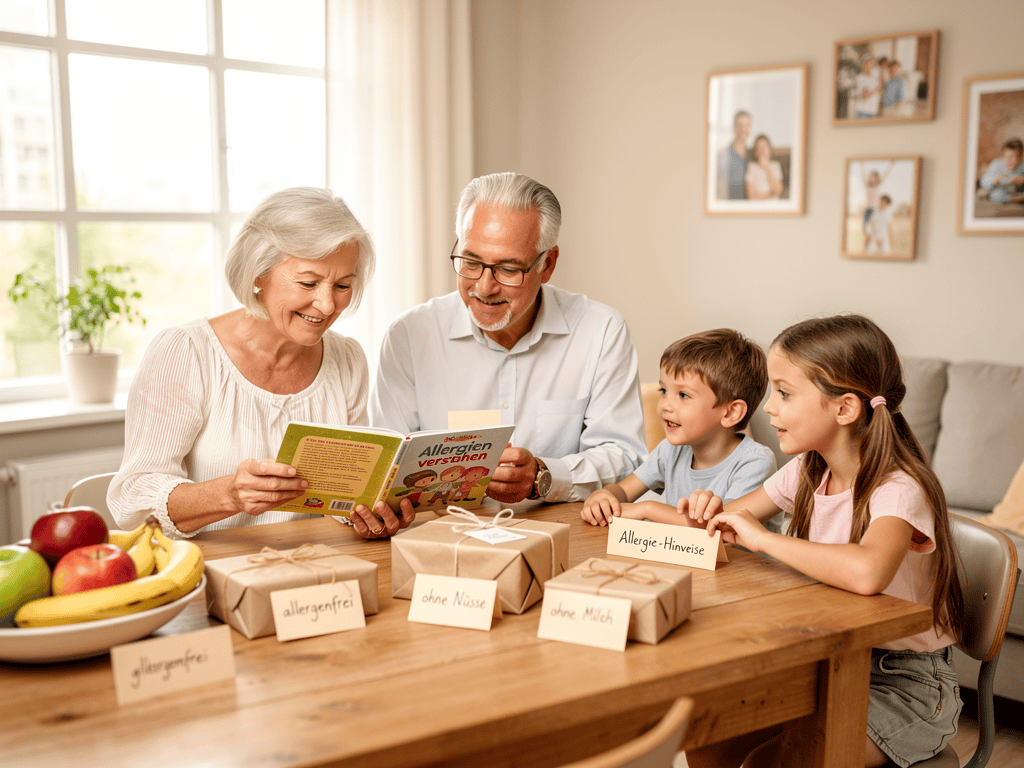
Why allergy-friendly gifts are important
As grandparents, the health and well-being of your grandchildren is particularly important to you. When your grandchildren have allergies, it is important to be especially thoughtful when choosing gifts. Allergy-friendly gifts not only show that you have put thought into it, but also ensure that your grandchildren are safe and can feel comfortable.
The right gift selection can help your grandchildren have carefree joy with your gifts without having to worry about possible allergic reactions. This not only strengthens the relationship with your grandchildren but also shows the parents that you are acting responsibly and taking the health of your grandchildren seriously.
Health and safety of grandchildren
The health of your grandchildren comes first. Allergic reactions can range from mild discomfort to serious health problems. By carefully selecting allergy-friendly gifts, you can help ensure that your grandchildren are safe and do not have to suffer unexpected allergic reactions.
Particular caution is required with food allergies. Even small amounts of an allergen can cause severe reactions in sensitive children. By choosing allergy-friendly alternatives, you show that the safety of your grandchildren is important to you and that you are willing to put in extra effort to bring them joy.
Showing trust and understanding
When you choose allergy-friendly gifts, you show your grandchildren and their parents that you understand and respect their situation. This strengthens trust and the relationship between you and your family. Your grandchildren will feel that you have put thought into it and that their health and well-being are important to you.
This understanding is particularly valuable as it shows that you as grandparents are willing to adapt and be considerate. Your grandchildren will feel safer and more comfortable knowing that you take their allergies seriously and consider them when choosing gifts.
Understanding common allergies in children
To choose the right gifts, it is helpful to understand the most common allergies in children. This helps you recognize potential risks and make safer decisions. Most allergies in children fall into three main categories: food allergies, contact allergies, and respiratory allergies.
When you understand the different types of allergies, you can better assess which gifts are safe and which should be avoided. This knowledge not only helps you with gift selection but also shows that you are interested in and informed about the health of your grandchildren.
Food allergies
Food allergies are very common in children. The most common triggers are peanuts, nuts, milk, eggs, soy, wheat, fish, and shellfish. If your grandchildren have food allergies, you should be especially careful with gifts that contain food, even if they are advertised as "allergy-free".
Even products that do not contain direct allergens can contain traces of allergens if they were manufactured in the same production facility. It is important to always check ingredient lists and ask the parents if you are unsure before buying a gift with food.
Contact allergies
Contact allergies occur when the skin comes into contact with certain materials or substances. Common triggers are nickel, latex, certain fragrances, dyes, and preservatives. With toys, clothing, or other gifts that come into contact with the skin, you should pay attention to hypoallergenic materials.
Especially with toys that children frequently put in their mouths or clothing that is worn directly on the skin, it is important to choose allergy-friendly materials. Many manufacturers offer special hypoallergenic products that are suitable for children with sensitive skin.
Dust and pollen allergies
Dust and pollen allergies can be triggered or worsened by certain materials in gifts. Stuffed animals, carpets, or other textile-based gifts can harbor dust mites, which can cause allergic reactions in sensitive children.
If your grandchildren have dust or pollen allergies, you should pay attention to easily cleanable materials when choosing gifts. Washable toys, smooth surfaces, and materials that are not dust collectors are better choices here.
Safe gift ideas for grandchildren with allergies
There are many wonderful gift ideas that are safe and appropriate for grandchildren with allergies. Choosing allergy-friendly gifts does not mean you have to give up creative or special gifts. On the contrary: with some planning and consideration, you can find gifts that are not only safe but also bring great joy.
The best gifts for grandchildren with allergies are those that contain no potential allergens and are at the same time educationally valuable, entertaining, or practical. Remember that the best gift idea is one that matches your grandchild's interests and needs while being safe.
Toys and activity materials
Toys are a popular gift for children, and there are many allergy-friendly options. Wooden toys without varnishes or with special, allergy-free varnishes are a safe choice. Plastic toys made from high-quality, phthalate-free materials can also be a good option if they contain no fragrances or other potential allergens.
Construction sets, puzzles, board games, and other games that contain no food or fragrances are also safe gift ideas. Make sure the toy contains no small parts that could be swallowed and that it is suitable for your grandchild's age.
Books and learning materials
Books are a wonderful gift that contains no allergens and at the same time promotes imagination and learning. Whether picture books for younger children, non-fiction books for older children, or interactive books with flaps and elements – books are always a safe and valuable gift idea.
Learning materials such as coloring books, pens made from natural materials, or craft sets can also be good gift ideas. Make sure that pens and colors contain no fragrances or other potential allergens. Many manufacturers offer special allergy-friendly products for children.
Experience gifts
Experience gifts are a wonderful alternative to material gifts and contain no allergens. A joint trip to the zoo, a visit to a museum, a theater visit, or a shared day at an amusement park are gifts that are not only safe but also create unforgettable memories.
Vouchers for activities such as swimming lessons, sports clubs, or creative workshops are also great gift ideas. These gifts show that you want to spend time with your grandchildren and that their interests and development are important to you. Experience gifts are particularly valuable as they create shared time and memories.
Gifts to avoid that can trigger allergies
Just as important as choosing safe gifts is avoiding gifts that can trigger allergies. When you know which gifts can be problematic, you can make better decisions and protect your grandchildren. It is better to be safe and ask the parents if you are unsure than to buy a gift that could potentially trigger an allergic reaction.
The most common problematic gifts are those that contain food, fragrances, certain materials, or other potential allergens. When you know and avoid these categories, you can ensure that your gifts are safe and appropriate.
Food and sweets
If your grandchildren have food allergies, you should be especially careful with gifts that contain food. Even "allergy-free" sweets or snacks can contain traces of allergens if they were manufactured in the same production facility. It is safest to avoid gifts with food altogether, unless the parents have explicitly recommended certain products.
Instead of sweets or snacks, you can choose other gifts that bring just as much joy. Toys, books, experience gifts, or other non-edible gifts are safer alternatives that will delight your grandchildren just as much.
Fragrances and perfumes
Fragrances and perfumes can trigger allergic reactions in sensitive children. Avoid gifts such as perfumed soaps, bath additives, scented candles, or other products with strong fragrances. Toys or other gifts that are perfumed can also be problematic.
If you want to give personal care products or similar gifts, choose unscented, hypoallergenic products that are specifically developed for sensitive skin. Many manufacturers offer such products, and they are a safe alternative to perfumed products.
Materials with allergy risk
Certain materials can be problematic for children with contact allergies. Nickel, latex, certain plastics, or treated textiles can trigger allergic reactions. When buying clothing, toys, or other gifts that come into contact with the skin, you should pay attention to hypoallergenic materials.
Especially with toys that children frequently put in their mouths or clothing that is worn directly on the skin, it is important to choose allergy-friendly materials. Ask the parents if you are unsure or choose products that are explicitly labeled as hypoallergenic or allergy-friendly.
Communication with parents
The best strategy for allergy-friendly gifts is open communication with your grandchildren's parents. The parents know their children's specific allergies best and can give you valuable hints about which gifts are safe and which should be avoided. Good communication not only helps avoid mistakes but also strengthens trust and cooperation in the family.
Do not hesitate to ask questions or ask for recommendations. The parents will appreciate that you are thinking about it and taking their children's health seriously. Open communication shows that you as grandparents are acting responsibly and that the well-being of your grandchildren is important to you.
Ask before buying
Before buying a gift, it is helpful to ask the parents if the planned gift is safe. This applies especially to gifts that could contain food, fragrances, or other potential allergens. The parents can tell you if a specific product or brand is safe or if there are alternatives.
Even if you are unsure whether a gift is allergy-friendly, you should rather ask than take a risk. The parents will appreciate that you are being cautious and that the safety of their children is important to you. A short question can prevent a gift from remaining unused or even triggering an allergic reaction.
Check ingredient lists
When buying gifts that could contain potential allergens, you should carefully check the ingredient lists or product information. Even if a product is advertised as "allergy-free", it is important to check the actual ingredients to make sure no allergens are contained.
If you are unsure, you can photograph or note the ingredient list and discuss it with the parents before buying the gift. This gives you and the parents the security that the gift is really safe and will not trigger unexpected allergic reactions.
Special occasions and holidays
Special occasions such as birthdays, Christmas, or Easter are opportunities when grandparents like to give gifts to their grandchildren. Even on these occasions, it is important to choose allergy-friendly gifts. With some planning and creativity, you can find wonderful gifts for special occasions that are safe and appropriate.
Holidays and special occasions also offer the opportunity to create allergy-friendly traditions. By consciously choosing safe gifts, you can help ensure that these occasions are positive and safe experiences for your grandchildren that they will remember fondly.
Birthdays and Christmas
Birthdays and Christmas are special occasions when children expect gifts. Even though sweets or other food items can traditionally be part of gifts, there are many allergy-friendly alternatives. Toys, books, experience gifts, or other non-edible gifts can bring just as much joy and are safer for grandchildren with allergies.
If you have multiple grandchildren, some of whom have allergies and others do not, it is important to be fair and give all grandchildren similarly valuable gifts. Allergy-friendly gifts do not have to be less valuable or less desirable than other gifts. With the right selection, you can ensure that all grandchildren receive equivalent and appropriate gifts.
Easter and other holidays
Easter and other holidays that are traditionally associated with certain foods can be a challenge for grandchildren with food allergies. Instead of traditional sweets or other foods, you can choose allergy-friendly alternatives. An Easter basket with toys, books, or other small gifts can bring just as much joy as a basket with sweets.
On other holidays as well, you can find creative, allergy-friendly gift ideas. The most important rule is to ask the parents if you are unsure and to be safe. With some creativity and planning, you can find wonderful, safe gifts for your grandchildren even on traditional holidays.
Long-term gift strategies
Choosing allergy-friendly gifts is not just a one-time task but a long-term strategy that you can develop as grandparents. By informing yourself about your grandchildren's allergies and collecting allergy-friendly gift ideas, you can build a collection of safe gift options that you can fall back on on various occasions.
A good gift strategy also includes keeping an eye on your grandchildren's interests and preferences. The best gifts are those that are not only safe but also match your grandchildren's interests, age, and needs. By regularly communicating with the parents and informing yourself about your grandchildren's development, you can find gifts that are both safe and appropriate.
Remember that allergy-friendly gifts do not have to be less valuable or less desirable. With the right selection, you can find gifts that delight your grandchildren and are safe at the same time. The effort you put into choosing allergy-friendly gifts shows your grandchildren and their parents that their health and well-being are important to you.
Common allergies in children and safe gift options
Gift Categories: Safe vs. Risky
Checklist: Communication Before Gift Purchase
Safe gift ideas for grandchildren with allergies
- Books: Picture books, non-fiction books, interactive books for all age groups
- Wooden toys: Construction sets, puzzles, building blocks made from untreated wood
- Experience gifts: Zoo visits, museum visits, theater visits, shared activities
- Craft materials: Coloring books, pens made from natural materials, paper, scissors
- Board games: Party games, puzzles, learning games without food
- Sports equipment: Balls, jump ropes, other sports equipment made from allergy-friendly materials
- Vouchers: For activities, courses, workshops, or shared experiences
Gifts that should be avoided
- Sweets and other food, unless the parents have explicitly recommended them
- Perfumed products such as soaps, bath additives, scented candles, or perfumed toys
- Toys or clothing with nickel, latex, or other known allergens
- Stuffed animals that are not washable if dust allergies are present
- Products with unclear ingredient lists or without allergen information
- Gifts manufactured in production facilities that also process allergens
Tips for communication with parents
- Ask early before buying a gift, especially if you are unsure
- Share your gift ideas with the parents and ask for feedback
- Ask for recommendations for safe brands or products
- Check ingredient lists together if you are unsure
- Be open to suggestions and alternatives from the parents
- Show understanding and respect for the family's situation