



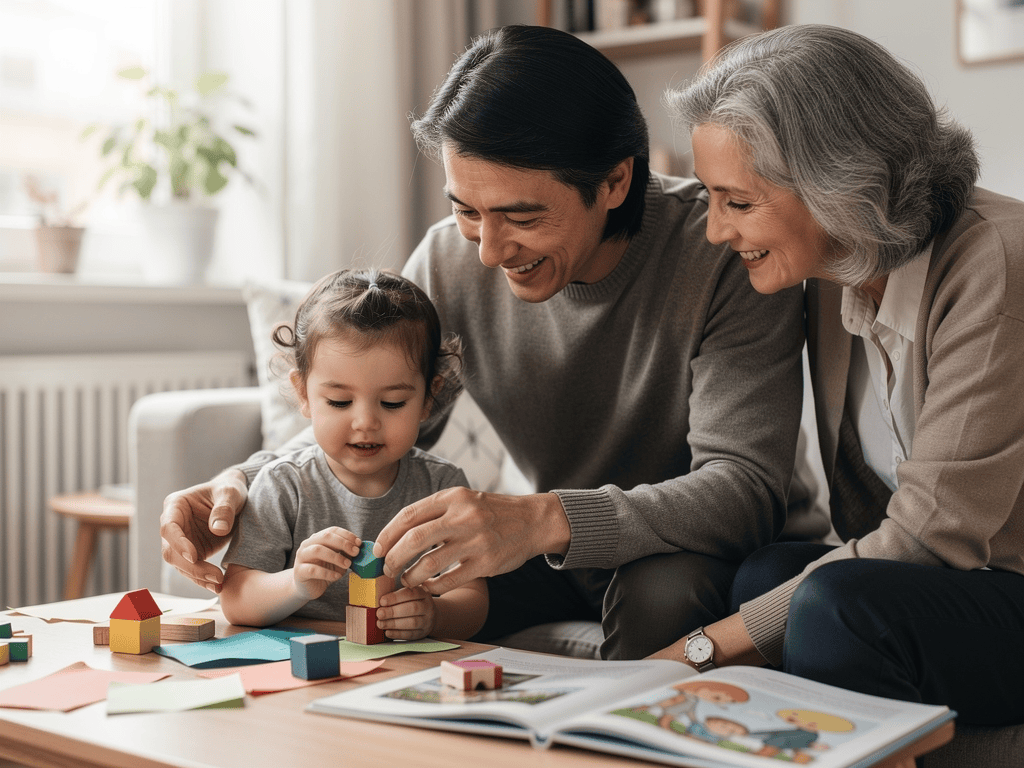
What is Empathy and Why is it Important?
Empathy is the ability to understand and feel the emotions and perspectives of other people. For grandparents, it is an important task to teach their grandchildren this fundamental social skill. Empathy means not only understanding how others feel, but also responding appropriately and being there for others when they need help.
As grandparents, you have a unique opportunity to teach your grandchildren empathy. Through your life experience, your ability to take different perspectives, and your way of dealing with other people, you can be a role model that shapes your grandchildren. Learning empathy is a process that takes time, but through your support and example, you can help your grandchildren become empathetic and compassionate people who are there for others.
Your grandchildren will grow up in a world where empathy and helpfulness are more important than ever. When you show them how to develop compassion and be there for others, you give them tools that will accompany them throughout their lives. This ability will help them not only build strong relationships but also be there for others in difficult situations and have a positive impact on their environment.
Definition and Meaning
Empathy is the ability to put oneself in the feelings, thoughts, and perspectives of other people. It is about understanding how others feel, even if one has not experienced these feelings oneself. Empathy is more than just pity – it is the ability to see the world from another's perspective and respond appropriately.
Helpfulness is the willingness to help others when they need support. It shows itself in small gestures in everyday life as well as in larger offers of help. Helpfulness means being there for others, even when it is sometimes uncomfortable or takes time. As grandparents, you can show your grandchildren that it is important to be there for each other and that each of us sometimes needs help.
Empathy and helpfulness are closely related: when we develop empathy, we better understand when others need help and are more willing to offer that help. As grandparents, you can help your grandchildren develop both skills by modeling them, talking about them, and practicing together.
Why Empathy is Important for Children
Children who develop empathy have better social relationships and can deal with conflicts better. They learn to understand the feelings of others and respond appropriately. Empathy also helps children become more self-confident, as they learn that their actions have an effect on others and that they can make a positive difference.
In a world where social skills are becoming increasingly important, empathy is a fundamental ability that helps children succeed in life. Children who develop empathy become better friends, better family members, and better members of society. As grandparents, you can help your grandchildren develop this important skill that will accompany them throughout their lives.
Empathy also helps children deal with difficult situations. When children learn to understand the perspectives of others, they can better handle conflicts and find solutions that work for everyone involved. This ability will help your grandchildren succeed not only in childhood but also as adults.
Modeling Empathy in Everyday Life
The best way to teach your grandchildren empathy is to model it yourself in everyday life. Children learn most through observation and imitation. When your grandchildren see how you show compassion and are there for others in various situations, this shapes their own behavior in a lasting way.
You don't have to make grand gestures to be a role model. Often it's the small moments that impress the most: when you listen to someone who needs support, when you show compassion when someone is sad, or when you simply are there for others. Your grandchildren observe exactly how you deal with other people and learn what empathy means.
When you model empathy, you show your grandchildren that it is normal and important to be there for others. You show them that each of us has the opportunity to make a difference, even if it's just small gestures. These lessons will accompany your grandchildren throughout their lives and help them become compassionate and helpful people.
Showing Compassion
Showing compassion means recognizing the feelings of others and responding appropriately. When you are out with your grandchildren and someone seems sad or hurt, you can use this as an opportunity to show compassion. Explain to your grandchildren what you observe: "This person looks sad. Maybe we can do something to help."
You can also show compassion in the family. When a family member is sad or stressed, show that you notice and that you are there for that person. Explain to your grandchildren why you act this way: "Grandma is sad today. Let's be there for her and support her." Such moments show your grandchildren that compassion is important and that it is normal to be there for others.
Compassion can also mean listening and showing understanding, even when one doesn't fully understand the situation. Show your grandchildren that it is important to listen to others and take their feelings seriously, even if one feels differently oneself. This ability will help your grandchildren build strong relationships and be there for others.
Demonstrating Helpfulness
Helpfulness shows itself in many small gestures in everyday life. When you are out with your grandchildren and someone needs help – whether it's an older person who needs support carrying something, or someone who is lost – show through your actions that it is normal to help others. Explain to your grandchildren why you help and make it clear that each of us sometimes needs help and that it is important to be there for each other.
You can also show helpfulness in the neighborhood or community. Perhaps you can go shopping together with your grandchildren for older neighbors or help organize a community event. Such activities show your grandchildren that helpfulness also means getting involved in the community and taking responsibility.
It is important that you respect your own boundaries and show that it is okay to say "No" when one feels overwhelmed. Helpfulness does not mean overextending oneself, but doing what one can to help others. Showing this balance helps your grandchildren develop healthy boundaries while still being helpful.
Having Conversations About Feelings
In addition to modeling, it is important to actively talk with your grandchildren about feelings and empathy. Use situations in everyday life to address the topic and explain to your grandchildren what different feelings mean and how one can respond. Be patient and take time for questions and discussions.
Conversations about feelings should not be lecturing, but open and curious. Listen to what your grandchildren think and feel, and try to understand their perspective. When you show that you take their opinion seriously and that there are different ways to respond to feelings, you help your grandchildren develop their own emotional intelligence.
Regular conversations about feelings help your grandchildren develop emotional competencies. When you keep coming back to the topic and discuss it in various contexts, it becomes a natural part of your grandchildren's thinking and actions. These conversations are an important complement to modeling and help your grandchildren truly understand empathy.
Naming and Understanding Feelings
Help your grandchildren name and understand their own feelings. When your grandchildren are sad, angry, or happy, talk about it: "I see that you are sad. Can you tell me why?" When you name feelings, you help your grandchildren better understand and express their own emotions.
You can also discuss the feelings of others together with your grandchildren. When you watch TV together or read stories, you can ask: "How do you think this person feels? Why might they feel this way?" Such conversations help your grandchildren recognize and understand the feelings of others.
It is important that you show that all feelings are okay. There are no "bad" feelings – there are only feelings that are sometimes uncomfortable. When you show that it is normal to have different feelings, you help your grandchildren accept their own emotions and understand the emotions of others.
Practicing Perspective-Taking
An important aspect of empathy is the ability to take another's perspective. Practice with your grandchildren putting themselves in others' shoes. Ask: "How would you feel if you were in this situation?" or "What do you think, how does this person feel?"
Role-playing can also be helpful. Let your grandchildren take on the role of another person and think about how that person might feel. Such exercises help your grandchildren understand different perspectives and develop empathy.
It is important that you show that there are different perspectives and that all perspectives have their validity. When you show that it is normal to see things differently, you help your grandchildren become tolerant and understanding. This ability will help your grandchildren succeed in a diverse world.
Encouraging Grandchildren to Help Others
As grandparents, you can encourage your grandchildren to help others without overwhelming them. It is important that your grandchildren feel that they can make a difference, but also that they respect their own boundaries and don't have to do more than they can or want to.
Praise your grandchildren when they help others, even if it's just small gestures. Show that you are proud of their actions and that it is important to be there for others. At the same time, you should be realistic and not expect your grandchildren to help in every situation. Helpfulness is an attitude that one develops, and no one is always helpful.
Encouragement also means that you support your grandchildren when they want to help others. When your grandchildren have ideas about how they can help, listen and support them in implementing these ideas. When they are unsure whether they acted correctly, help them reflect on their actions and understand what they did well.
Encouraging Small Acts of Help
Small acts of help in everyday life are a good start to develop helpfulness. Encourage your grandchildren to help others when they can: help set the table, help a sibling get dressed, or help a friend carry something. Such small gestures show that helpfulness begins in everyday life.
It is important that you show that even small acts of help are valuable. It's not about performing great deeds, but about being there for others when one can. When you show that small gestures are important, you help your grandchildren see helpfulness as something normal and achievable.
Praise your grandchildren for their helpfulness, even if the help seems small. Show that you are proud of their actions and that it is important to be there for others. This positive reinforcement helps your grandchildren see helpfulness as something positive and continue to develop it.
Joint Help Projects
Joint projects where you and your grandchildren help others can be a good way to experience helpfulness practically. Perhaps you can collect together for a good cause, help older people in the neighborhood, or participate in a charitable project. Such activities show your grandchildren that helpfulness also means getting involved for others and taking responsibility.
It is important that the projects are age-appropriate and that your grandchildren can participate. Let your grandchildren help decide what you want to do together, and show that their ideas and participation are important. Through such shared experiences, your grandchildren learn not only what helpfulness means but also experience what it feels like to be there for others and make a difference.
Joint projects can also help strengthen the relationship between you and your grandchildren. When you do something good together, you create positive memories and show your grandchildren that you are a team. These shared experiences will shape your grandchildren and help them see helpfulness as something positive and important.
Teaching Empathy Through Stories
Stories are a powerful tool for teaching empathy. When you read books together with your grandchildren or tell stories, you can talk about the feelings and perspectives of the characters. Ask: "How do you think this person feels? Why might they act this way?" Such conversations help your grandchildren understand different perspectives and develop empathy.
Stories from your own life can also be helpful. Tell about situations where you showed compassion or where others helped you. Also share your thoughts and feelings: "I was unsure, but I knew it was important to be there for this person." Such stories make empathy tangible and show that adults are sometimes unsure too, but still do the right thing.
When your grandchildren experience stories themselves where empathy is needed, use these as conversation starters. Ask what happened, how they felt, and what they did. Listen without judging and help them reflect on their experiences. Such conversations help your grandchildren learn from their own experiences and develop their ability for empathy.
Using Books and Stories
Books are a wonderful way to teach empathy. When you read books together with your grandchildren, you can talk about the characters and ask how they might feel. Choose books that show different perspectives and help develop empathy.
Picture books can also be helpful, especially for younger children. Talk about the pictures: "How do you think this person feels? Why might they look this way?" Such conversations help younger children recognize and understand feelings.
It is important that you don't just read the stories, but also talk about them. Ask your grandchildren what they think and feel, and listen to what they have to say. Such conversations bring the stories to life and help your grandchildren develop empathy.
Sharing Your Own Experiences
Your own experiences can help your grandchildren understand empathy. Tell about situations where you showed compassion or where others helped you. Also share your feelings and thoughts: "I was unsure, but I knew it was important to be there for this person."
Difficult experiences can also be helpful when you share them appropriately. Tell about situations where you needed help or where it was difficult to show compassion. Show that adults are sometimes unsure too, but that it is important to still be there for others.
It is important that you share your experiences in an age-appropriate way. For younger children, you can tell simpler stories; for older children, you can discuss more complex situations. Adapt your stories to the age and maturity of your grandchildren so they can understand the message.
Dealing with Difficult Situations
Empathy is especially important in difficult situations. As grandparents, you can help your grandchildren deal with grief, loss, or conflicts by showing empathy and helping them understand and express their own feelings.
It is important that you don't leave your grandchildren alone, but support them and show that they can express their feelings. Empathy doesn't mean that one can solve all problems, but that one is there for others and takes their feelings seriously. As grandparents, you can be an important ally who shows your grandchildren that they are not alone.
When your grandchildren experience difficult situations, take them seriously and listen. Show that you are there for them and that they can rely on you. Help them understand and express their feelings, and support them in dealing with difficult situations.
Accompanying Grief and Loss
Grief and loss are difficult topics that require empathy. When your grandchildren are grieving – whether for a relative, a pet, or another loss situation – show compassion and help them express their feelings. Explain that grief is normal and that it is okay to be sad.
It is important that you don't try to "talk away" the grief, but that you are there for your grandchildren and take their feelings seriously. Show that you understand how difficult it is and that you are there for them. This support helps your grandchildren deal with grief while also learning how to support others in difficult situations.
Even when you yourself are grieving, you can show how to deal with grief. Share your own feelings appropriately and show that it is normal to be sad, but that one can still be there for others. Showing this balance helps your grandchildren understand that empathy also means being there for others, even when one is going through difficult times oneself.
Resolving Conflicts Empathetically
Conflicts are an opportunity to show and develop empathy. When your grandchildren get into conflicts – whether with siblings, friends, or others – help them understand the other person's perspective. Ask: "How might the other person feel? Why might they act this way?"
It is important that you don't take sides, but help understand different perspectives. Show that it is normal to have different opinions, but that it is important to treat each other with respect. This attitude helps your grandchildren resolve conflicts empathetically while also respecting their own boundaries.
Also practice with your grandchildren how to stay calm in conflict situations and communicate clearly. Show them how to use "I-messages" and how to express their feelings without attacking others. These skills help your grandchildren not only in conflicts but also in other areas of life.
Empathy at Different Age Stages
Empathy develops differently at different age stages. As grandparents, you can adapt your support to your grandchildren's age and help them develop empathy in a way that matches their developmental stage.
For younger children (3-6 years), it's mainly about recognizing and naming feelings. Help your grandchildren understand their own feelings and recognize the feelings of others. Use simple language and concrete examples to explain empathy.
For older children (7-12 years), you can have more complex conversations about perspective-taking and the importance of empathy. Help your grandchildren put themselves in others' shoes and understand how their actions can affect others.
For teenagers (13+ years), you can talk about more complex topics such as social justice, the importance of empathy in society, and how to show empathy in various areas of life. Help your grandchildren develop their own attitude and see empathy as an important value.
Different Forms of Empathy
Age-Appropriate Promotion of Empathy
Signs that Grandchildren are Developing Empathy
Tips for Modeling Empathy
- Show compassion in everyday life, even in small gestures
- Listen when others talk about their feelings
- Be a role model in the family and in public
- Explain to your grandchildren why you do certain things
- Show that adults are sometimes unsure too, but still act
- Respect your own boundaries and show that this is important
Conversation Starters About Empathy
- "How do you think this person feels? Why might they act this way?"
- "Have you ever experienced someone being sad? What did you do?"
- "How can we help others, even when it's sometimes difficult?"
- "What does it mean to you to be there for others?"
- "Do you know stories of people who helped others?"
- "When is it important to show compassion, and when should one get help?"
Signs that Grandchildren are Developing Empathy
- Grandchildren recognize the feelings of others and respond appropriately
- They offer help when others need support
- They can put themselves in others' shoes and understand different perspectives
- They show compassion, even when it's sometimes uncomfortable
- They respect their own boundaries and get support when needed
- They show interest in stories and situations that require empathy