



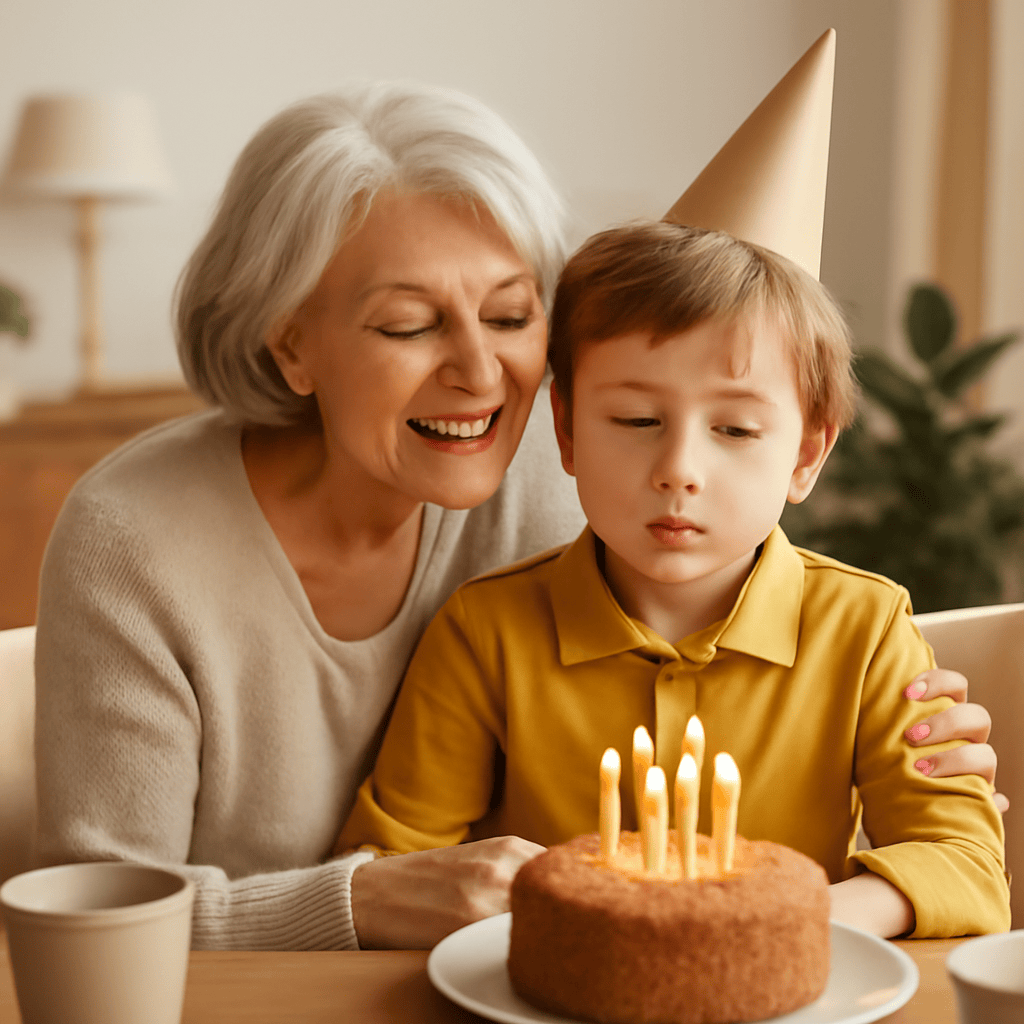
Why annual traditions are so valuable
Annual traditions around birthdays are more than just beautiful memories – they are valuable rituals that give your grandchildren a sense of consistency, belonging, and special appreciation. As grandparents, you have the unique opportunity to establish such traditions that will accompany your grandchildren throughout their lives. These rituals not only create unforgettable moments but also strengthen the bond between you and your grandchildren in a very special way.
When you establish annual traditions around birthdays, you give your grandchildren something to look forward to every year. This anticipation and the knowledge that something special awaits them makes the birthday an even more meaningful event. Your grandchildren will experience these traditions as something valuable and important in their lives, showing them how much they are loved and appreciated.
Traditions also help your grandchildren understand their own identity and family history. When you perform the same rituals every year, you create continuity and stability that are especially important in a rapidly changing world. Your grandchildren will see these traditions as part of their own history and may later pass them on to their own children.
The importance of rituals for children
Rituals give children a sense of security and predictability. When your grandchildren know that something specific happens every year on their birthday – whether it's a special breakfast, a shared activity, or a special story – this creates a sense of security and belonging. This predictability is especially important for children growing up in a world full of changes.
Rituals also help children process and understand important events. A birthday is a special day that marks growing and aging. Through rituals, you can help your grandchildren understand this meaning and experience the day as something special. The recurring elements help your grandchildren remember past birthdays and see their development over the years.
Furthermore, rituals give children a sense of control and participation. When your grandchildren know what will happen, they can look forward to it and participate actively. You can also incorporate small elements into the rituals that your grandchildren can design themselves, giving them a sense of independence and significance.
Traditions strengthen the bond between generations
Annual traditions around birthdays create special moments of connection between you and your grandchildren. These shared rituals become something that only you and your grandchildren share, strengthening the relationship between generations in a very special way. Your grandchildren will associate these traditions with you and see them as part of their special relationship with you.
When you establish traditions, you also show your grandchildren how important they are to you. The time and effort you invest in these rituals sends a clear message: your grandchildren are valuable and important, and you consciously take time for them. This appreciation strengthens your grandchildren's self-esteem and shows them that they are loved.
Traditions also create shared memories that you and your grandchildren will share for a lifetime. As your grandchildren grow older, they will remember these special moments and see them as part of their childhood and their relationship with you. These memories will become a valuable treasure that your grandchildren will carry with them throughout their lives.
Traditions for the birthday itself
The birthday itself is the perfect day to establish special traditions that are repeated every year. These rituals make the day something very special and give your grandchildren something to look forward to all year long. The traditions can be small and simple or larger and more elaborate – what matters is that they are meaningful for you and your grandchildren.
When establishing traditions for the birthday, you should consider what fits your family and your grandchildren. Not every tradition needs to be elaborate – sometimes it's the small, simple rituals that mean the most. What's important is that the traditions are performed regularly and that your grandchildren experience them as something special.
Traditions on the birthday can encompass the entire day or focus on specific moments. They can start in the morning, accompany the whole day, or reach their peak in the evening. What matters is that the traditions fit your daily routine and that you can perform them with joy.
Special birthday rituals in the morning
The morning of the birthday is a perfect time to begin special traditions. For example, you can prepare a special birthday breakfast every year that is only served on this day. Perhaps it's your grandchild's favorite breakfast, or you've developed a special birthday breakfast that is only eaten on this day. This small tradition makes the day special from the start.
Another beautiful tradition in the morning is to prepare a special surprise for the birthday child. Perhaps you can prepare something together with your grandchildren the evening before – a small letter, a homemade gift, or special decorations. When your grandchild wakes up in the morning and finds this surprise, the day begins with a smile.
You can also establish a tradition where you spend time together with your grandchild on the morning of the birthday before the day really begins. Perhaps you can have breakfast together, read a story, or simply sit together and talk about the coming year. These quiet moments in the morning create a special connection and give the day a beautiful start.
Traditional birthday activities
Traditional activities on the birthday can become something your grandchildren look forward to all year long. Perhaps you can perform a certain activity every year that only takes place on the birthday – a visit to a special place, a shared activity your grandchild particularly enjoys, or something you've developed together.
When you establish an annual activity, it should fit your grandchild and be something you both enjoy. Perhaps it's a walk to a special place, a visit to a favorite café, a shared craft activity, or something else that is meaningful for you and your grandchild. What matters is that the activity is repeated every year and remains something special.
You can also distribute several small activities throughout the day that together form a special birthday tradition. Perhaps there's a certain activity in the morning, another in the afternoon, and something special in the evening. These different moments create an entire day full of traditions that give your grandchild the feeling that the whole day is something special.
Birthday stories and memories
A beautiful tradition is to tell stories together or share memories every year on the birthday. You can tell about the day your grandchild was born, about special moments in the past year, or about stories from your own childhood. These stories create a connection between generations and help your grandchildren understand their own history.
You can also establish a tradition where you look through a photo album or memory book every year and together view your grandchild's development over the years. These moments of shared remembering are valuable and help your grandchildren see how much they've grown and how many beautiful memories there are.
Another beautiful idea is to design a new page in a birthday book every year on the birthday, where you together record memories, wishes, and special moments. This book will become a valuable treasure over the years, documenting your grandchild's development and showing how important these traditions are for both of you.
Annual rituals around the birthday
Traditions don't have to be limited to the birthday itself – you can also establish rituals that encompass the days before and after the birthday. These extended traditions make the birthday time a special phase that spans several days and shows your grandchildren how important this day is to you.
Rituals around the birthday can increase anticipation and reinforce the meaning of the day. When your grandchildren know that certain things happen in the days before the birthday, this creates excitement and anticipation. These rituals also help mark the birthday as something special that is celebrated over a longer period.
After the birthday, rituals can help preserve memories and let the day resonate. Perhaps you can unpack gifts together, look at photos, or talk about the most beautiful moments in the days after the birthday. These follow-up rituals help your grandchildren process the meaning of the day and preserve the memories.
Preparations in the days before the birthday
The days before the birthday can become a special time when you make preparations together with your grandchild. Perhaps you can establish a tradition where you decorate the house together, make birthday cards, or wrap gifts. These shared preparations make the anticipation even greater and show your grandchild how important the day is to you.
Another beautiful tradition is to bake or cook together in the days before the birthday. Perhaps you can bake the birthday cake together every year or prepare special treats that are only eaten on this day. This shared activity creates beautiful memories and makes the preparation time something special.
You can also establish a tradition where you make plans together in the days before the birthday and think about what you'd like to do on the birthday. These conversations increase anticipation and give your grandchild the feeling that their wishes and ideas are important. The shared planning makes the birthday something you both look forward to.
Follow-up rituals and memories
After the birthday, rituals can help preserve memories and let the day resonate. Perhaps you can establish a tradition where you look at photos together, talk about the most beautiful moments, or create a memory book in the days after the birthday. These follow-up activities help your grandchild process the meaning of the day.
Another beautiful tradition is to unpack or test gifts together in the week after the birthday if that wasn't possible on the birthday itself. These follow-up moments give your grandchild the opportunity to enjoy the gifts at leisure and understand the meaning of each one.
You can also establish a tradition where you think together in the days after the birthday about what should be special in the coming year or what new traditions you might want to introduce. These conversations help your grandchild understand the traditions and look forward to the coming year.
Personal and individual traditions
The best traditions are those that fit your grandchildren and your family. Each grandchild is unique, and traditions should reflect this uniqueness. When establishing traditions, you should consider what fits each individual grandchild and which rituals might be particularly meaningful for each child.
At the same time, you can also establish shared family traditions that apply to all grandchildren. These shared rituals create a sense of belonging and show that all grandchildren are equally important. The balance between individual and shared traditions is important so that each grandchild feels special while also feeling part of the family.
When establishing traditions, you should also consider your grandchildren's interests and preferences. A grandchild who loves to read might enjoy an annual tradition where you start a new book together. A grandchild who loves being outdoors might enjoy an annual tradition where you visit a special place together. The traditions should fit your grandchildren so they are truly meaningful.
Traditions for each grandchild individually
Each grandchild has their own interests, preferences, and personality, and traditions should reflect this individuality. When you establish individual traditions for each grandchild, you show that you see and value each child as a unique person. These individual rituals will be particularly meaningful for each grandchild.
Consider what each grandchild particularly likes – perhaps a grandchild has a favorite activity, favorite food, or favorite place. These preferences can form the basis for individual traditions. When you establish traditions that fit each grandchild, these rituals become something each child particularly looks forward to.
Individual traditions can also reflect each grandchild's personality. A quieter grandchild might enjoy a tradition where you spend quiet time together, while a more active grandchild might enjoy a tradition that involves movement or activity. The traditions should fit each grandchild so they are truly meaningful.
Shared family traditions
In addition to individual traditions, you can also establish shared family traditions that apply to all grandchildren. These shared rituals create a sense of belonging and show that all grandchildren are part of the same family. Shared traditions can be especially beautiful when all grandchildren are together.
Shared family traditions could be, for example, that you sing a certain song together every year on a grandchild's birthday, tell a certain story, or perform a certain activity. These rituals will become something that connects all grandchildren and that they will see as part of their family history.
If you have multiple grandchildren, shared traditions can also help avoid jealousy or competition. When all grandchildren know they will have the same traditions when their birthday comes, this creates fairness and shows that everyone is equally important. At the same time, individual elements can be added that make each grandchild special.
Traditions for different age groups
Traditions should be adapted to your grandchildren's age so they are truly meaningful and appropriate. What works for a toddler might not be right for a teenager, and vice versa. When establishing traditions, you should consider which rituals fit your grandchildren's current age and how these traditions can develop over time.
It's also important that traditions can grow with your grandchildren. A tradition you established for a small child can be adapted and expanded over the years so it remains meaningful for an older grandchild as well. This development of traditions shows your grandchildren that they are growing and changing, and that the traditions grow with them.
When establishing traditions for different age groups, you should also consider how these traditions can be continued over the years. Some traditions can work for all age groups, while others can be specific to a certain age. The best traditions are those that can be adapted and remain relevant over the years.
Traditions for toddlers
For toddlers, simple, recurring rituals are particularly valuable. Traditions for young children should be easy to understand and contain many sensory elements – perhaps there's a special song that's sung every year, a certain game that's played, or a special story that's told. These simple rituals give young children a sense of security and predictability.
Toddlers also enjoy traditions that involve physical closeness and attention. Perhaps you can establish a tradition where you cuddle together every year on the birthday, play a certain game, or simply spend time together. These moments of connection are especially important for young children and create beautiful memories.
Traditions for toddlers should also be visually appealing. Perhaps you can use the same decorations every year, wear a certain outfit, or create special table decorations. These visual elements help young children recognize the day as something special and remember it.
Traditions for school-age children
School-age children can already understand and enjoy more complex traditions. Traditions for this age group can involve more participation and activity – perhaps you can craft something together, carry out a project, or plan a special activity. School-age children enjoy actively participating in traditions and contributing their own ideas.
For school-age children, traditions can also be educational. Perhaps you can establish a tradition where you learn something new together every year, visit a special place, or try a new activity. These traditions help school-age children discover new things and expand their interests.
School-age children also appreciate traditions that give them a sense of independence. Perhaps you can establish a tradition where your grandchild can make certain decisions or is actively involved in the design. This participation makes traditions particularly meaningful for school-age children and shows them that their opinion matters.
Traditions for teenagers
Teenagers appreciate traditions that give them room for their growing independence while maintaining the connection to the family. Traditions for teenagers can be more sophisticated and have more personal meaning – perhaps you can establish a tradition where you talk together about goals, dreams, or challenges.
For teenagers, traditions can also be a way to explore and develop their own identity. Perhaps you can establish a tradition where you think together every year about what was special in the past year or what new interests have developed. These conversations help teenagers understand and appreciate their own development.
Teenagers also enjoy traditions that show they are respected as young adults. Perhaps you can establish a tradition where your grandchild takes on more responsibility or is actively involved in planning. This recognition of their growing maturity makes traditions particularly meaningful for teenagers.
Traditions with lasting impact
The best traditions are those that can be continued over the years and remain meaningful even as your grandchildren grow older. When establishing traditions, you should consider how these rituals can be continued over time and how they can develop so they remain relevant for older grandchildren as well.
Traditions that continue over the years create a special continuity in the relationship between you and your grandchildren. Your grandchildren will see these traditions as part of their childhood and youth and may later pass them on to their own children. This long-term impact makes traditions something truly valuable.
It's also important that traditions are flexible enough to adapt to changing circumstances. Perhaps you can't do exactly the same thing every year, but the core idea of the tradition can be preserved over the years. This flexibility helps keep traditions alive and continue them even when things change.
Traditions that continue over the years
When you establish traditions that can be continued over many years, you create something truly valuable for your grandchildren. These long-term traditions will become a fixed part of the relationship between you and your grandchildren and something your grandchildren can look forward to every year. The continuity of these traditions gives your grandchildren a sense of stability and consistency.
Traditions that continue over the years can also be documented to show development over time. Perhaps you can take a photo every year, write a note, or record a memory that shows how the tradition has developed. This documentation will become a valuable treasure over the years, showing the history of your traditions.
When establishing traditions that continue over the years, you should also consider how these traditions can be passed on to future generations. Perhaps you can involve your grandchildren in designing the traditions so they can continue them themselves later. This passing on makes traditions something that endures across generations.
Adapting traditions over time
Traditions don't have to be rigid – they can and should develop over time to remain relevant and meaningful. As your grandchildren grow older, you can adapt the traditions to fit their new interests, needs, and abilities. This adaptation shows your grandchildren that traditions are alive and can grow with them.
When adapting traditions, you should maintain the core idea even if the details change. Perhaps the basic activity remains the same, but the way it's performed can evolve. This balance between consistency and development helps keep traditions alive while preserving their meaning.
You can also think together with your grandchildren about how traditions can be adapted. As your grandchildren grow older, they can contribute their own ideas and suggestions for how the traditions can be developed. This participation makes traditions even more meaningful for your grandchildren and shows them that their opinion matters.
Practical implementation and tips
If you want to establish annual traditions around birthdays, it's important to start with small, simple rituals that you can perform regularly. You don't have to introduce several large traditions immediately – start with one or two simple traditions and see how they develop. What matters is that the traditions are feasible for you and that you can perform them with joy.
Plan the traditions in advance so you can prepare and ensure everything is ready. When you know what you want to do, you can make the necessary preparations and ensure the traditions run smoothly. This planning also helps avoid stress and truly enjoy the traditions.
Be flexible and adapt the traditions if necessary. Not every year will everything go perfectly, and that's okay. What matters is that you continue the traditions and that your grandchildren experience them as something special. If something doesn't work, you can adapt or change it to fit better.
Remember that traditions take time to establish. The first few times you perform a new tradition, it might not be perfect yet, but over time it will become something familiar and valuable. Give yourself and your grandchildren time to get used to the traditions and appreciate them.
It's also important that traditions are meaningful for both of you – you and your grandchildren. If a tradition doesn't work or no longer fits, it's okay to change it or replace it with something new. The best traditions are those that come from the heart and that you both enjoy.
Overview of various birthday traditions
Traditions by age group
Preparation and planning of traditions
Tips for establishing traditions
- Start with simple, feasible traditions that you can perform regularly
- Adapt traditions to your grandchildren's interests and preferences
- Plan traditions in advance so you can prepare
- Be flexible and adapt traditions if necessary
- Document traditions with photos or notes for memory
- Involve your grandchildren in designing the traditions
- Be patient – traditions take time to establish
Ideas for annual birthday traditions
- A special birthday breakfast with the grandchild's favorite foods
- An annual birthday story that is told every year
- A shared visit to a special place
- A birthday letter with memories and wishes for the coming year
- A memory book that is expanded by one page every year
- A shared activity that only takes place on the birthday
- A photo album that is looked through together every year
Benefits of annual traditions
- Traditions give children a sense of security and consistency
- They strengthen the bond between grandparents and grandchildren
- Traditions create unforgettable memories for grandchildren
- They help children understand their own identity and family history
- Traditions can be passed down across generations
- They give children something to look forward to every year
- Traditions show children how important and valuable they are