



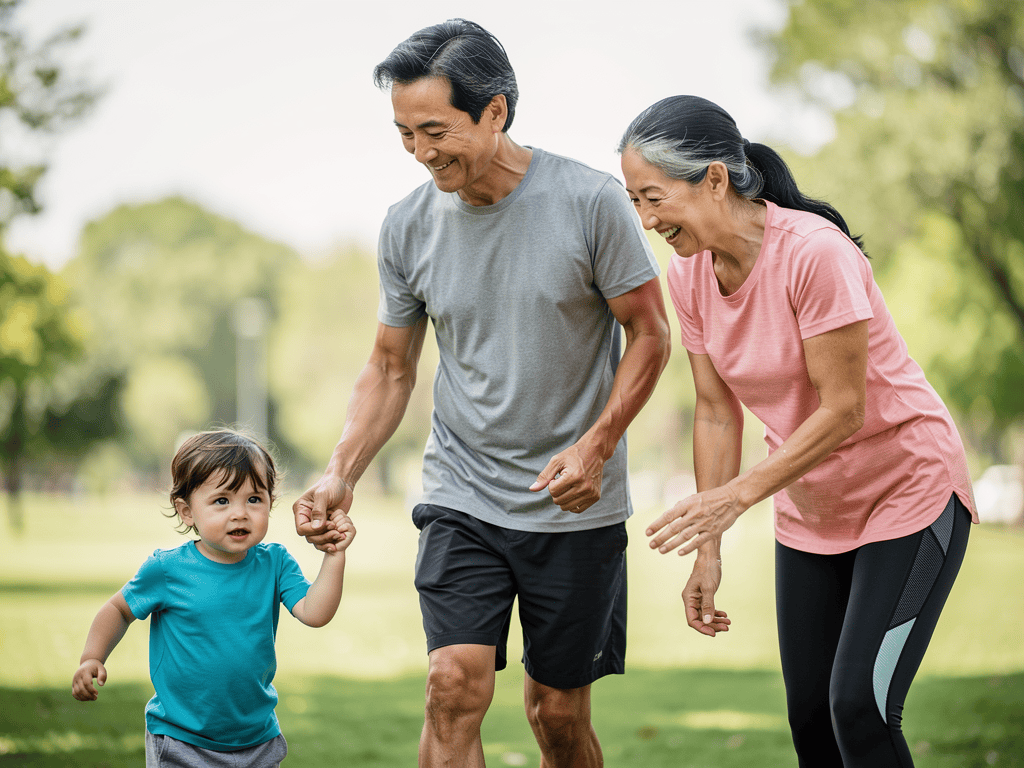
Why Bone Health is Important for Grandparents
Strong, healthy bones are the foundation for an active and fulfilling life as grandparents. When you maintain your bone health, you can stay active with your grandchildren for many years, playing together, going on outings, and creating shared memories. Your bones carry you through every day you spend with your grandchildren – whether walking in the park, playing in the garden, or dancing together in the living room.
Bone health is not only important for your own mobility and quality of life, but also a gift for your grandchildren. When you stay fit and mobile, you can be there for important moments in their lives: at sports events, school performances, birthday parties, and many other special occasions. Your grandchildren will remember these shared experiences and carry these memories in their hearts for a lifetime.
As we age, bone metabolism changes: bones become less dense and can become more brittle. This is a natural process, but you can do a lot to maintain and strengthen your bone health. Through proper nutrition, regular exercise, and a healthy lifestyle, you can strengthen your bones and reduce the risk of fractures.
Strong Bones for Active Time with Grandchildren
Strong bones allow you to actively participate in your grandchildren's lives. When you maintain your bone health, you can play with your grandchildren without worrying about injuries. You can hike together, ride bikes, work in the garden, or simply romp around – all these activities not only strengthen your bones but also create valuable shared memories.
Your grandchildren benefit when you stay active and mobile. You can show them how important exercise is and encourage them to be active themselves. When you exercise or play together, your grandchildren learn not only how important physical activity is, but they also experience how much fun exercise can be. Your health is therefore not only a gift for yourself, but also for your grandchildren, who can benefit from your presence and engagement for a long time.
Preventing Osteoporosis
Osteoporosis, also known as bone loss, is a condition where bones lose density and become more brittle. This can increase the risk of fractures, especially from falls. The good news is that you can do a lot to prevent osteoporosis or slow its progression.
Through proper nutrition, regular exercise, and a healthy lifestyle, you can strengthen your bones and reduce the risk of osteoporosis. It's important to start taking care of your bone health early, but it's never too late to make positive changes. Every step you take today to strengthen your bones is a step toward a more active and fulfilling life with your grandchildren.
Calcium and Vitamin D for Strong Bones
Calcium is the most important building block for strong bones. Your body needs calcium to maintain and repair bone structure. If you don't get enough calcium, your body can take calcium from your bones, which weakens them. That's why it's important to get enough calcium daily through your diet.
Vitamin D is also crucial for bone health, as it helps your body absorb calcium. Without enough vitamin D, your body cannot properly utilize calcium from food, even if you consume enough of it. Vitamin D is mainly produced in the skin through sunlight, but you can also get it through certain foods or supplements.
The combination of calcium and vitamin D is the key to strong bones. When you ensure you get both nutrients in sufficient amounts, you give your bones the best foundation for health and strength. This allows you to stay active with your grandchildren for many years and experience shared adventures.
Calcium-Rich Diet
Dairy products like milk, yogurt, and cheese are excellent sources of calcium. If you don't tolerate lactose, you can use lactose-free products or plant-based alternatives like calcium-fortified soy milk. Green leafy vegetables like broccoli, kale, and spinach also contain a lot of calcium and are a good addition to your diet.
Sardines and salmon with bones are also rich in calcium and contain valuable omega-3. Nuts and seeds, especially almonds and sesame, are good sources of calcium for snacks. When you cook together with your grandchildren, you can turn these calcium-rich foods into delicious meals while showing how important healthy nutrition is.
Vitamin D for Bone Building
Vitamin D is mainly produced in the skin through sunlight. When you spend regular time outdoors – perhaps on a walk with your grandchildren or playing in the garden – your body can produce vitamin D. Just 15 to 30 minutes of sunlight per day on your face, arms, and hands can be enough to meet your vitamin D needs.
In the winter months, when sunlight is less intense, it can be more difficult to produce enough vitamin D. In this case, fatty fish like salmon, mackerel, or herring can help, as they are rich in vitamin D. Eggs and vitamin D-fortified foods like milk or margarine are also good sources. If you're unsure whether you're getting enough vitamin D, talk to your doctor about possible supplementation.
Exercise for Bone Strength
Regular exercise is one of the most important factors for strong bones. When you put stress on your bones – for example, through walking, climbing stairs, or weight training – you send signals to your body to strengthen the bones. This is especially important in old age, when bone density naturally decreases.
Exercise not only helps strengthen your bones but also improves your balance, coordination, and muscle strength. This reduces the risk of falls, which can lead to fractures. When you stay regularly active, you not only stay physically fit but can also play actively with your grandchildren and experience shared adventures for many years.
The best type of exercise for bone health is a combination of weight-bearing exercises and resistance training. Weight-bearing exercises are activities where you stand on your feet and carry your body weight, like walking, dancing, or climbing stairs. Resistance training, like lifting weights or using resistance bands, helps strengthen the muscles that in turn support the bones.
Weight Training and Resistance
Resistance training doesn't have to be complicated. You can do simple exercises at home, like lifting light dumbbells, using resistance bands, or even carrying shopping bags. Start slowly and gradually increase the intensity to strengthen your bones and muscles.
When you're active together with your grandchildren, you can make these exercises playful. Perhaps you can play "weight lifting" together by lifting light objects, or you can dance together, which is a great weight-bearing exercise. Your grandchildren will love spending time with you, and you'll strengthen your bones at the same time.
Joint Activities with Grandchildren
Joint activities with your grandchildren are not only a great way to spend time together but also an excellent way to strengthen your bones. Walks in the park, bike rides, dancing together, or playing in the garden are all weight-bearing activities that strengthen your bones while being fun.
When you're active together, you also show your grandchildren how important exercise is. You become a role model that will accompany your grandchildren throughout their lives. Your grandchildren learn not only how important physical activity is, but they also experience how much joy exercise can bring. These shared activities create valuable memories while strengthening your bone health.
Lifestyle Factors for Healthy Bones
In addition to nutrition and exercise, other lifestyle factors also play an important role in bone health. Smoking and excessive alcohol consumption can negatively affect bone health and increase the risk of osteoporosis. If you smoke or regularly drink alcohol, it can be helpful to reduce or quit these habits to protect your bone health.
Adequate sleep and recovery are also important for bone health. During sleep, your body repairs and regenerates, including your bones. If you don't get enough sleep, this can affect bone metabolism and negatively impact bone health. Try to sleep seven to nine hours each night to give your body the time it needs to recover.
Stress can also affect bone health. Chronic stress can lead to increased cortisol levels, which can negatively affect bone metabolism. Relaxation techniques like meditation, deep breathing, or gentle yoga can help reduce stress while improving your overall health and well-being.
Avoiding Smoking and Alcohol
Smoking can significantly affect bone health. It reduces blood flow to the bones, which impairs the body's ability to form new bone cells. Smokers have a higher risk of osteoporosis and fractures. If you smoke, quitting this habit can be one of the most important steps you can take for your bone health.
Excessive alcohol consumption can also negatively affect bone health. Alcohol can impair calcium absorption and reduce the body's ability to form new bone cells. If you drink alcohol, do so in moderation – no more than one drink per day for women and two drinks per day for men. When you maintain your bone health, you can stay active with your grandchildren for many years.
Adequate Sleep and Recovery
Sleep is an important time for the body's regeneration and repair, including the bones. During deep sleep, your body produces growth hormones that are important for bone repair and regeneration. If you don't get enough sleep, this can impair your body's ability to repair and strengthen bones.
Try to establish a regular sleep routine where you go to bed at the same time every evening and wake up at the same time every morning. Create a relaxing sleep environment that helps you sleep well. When you get enough sleep, you not only feel better but also give your body the time it needs to keep your bones healthy and strong.
Preventive Examinations and Early Detection
Regular preventive examinations are important to monitor your bone health and detect potential problems early. A bone density measurement can show how strong your bones are and whether you have an increased risk of osteoporosis. This examination is especially important for women after menopause and for men over 70 years of age.
If you are found to have an increased risk of osteoporosis, your doctor can help you develop a plan to improve your bone health. This may include changes in diet, exercise, or medications. Through early detection and treatment, you can reduce the risk of fractures and maintain your mobility and quality of life.
Regular health checks include not only bone density measurement but also blood tests to ensure you have sufficient calcium and vitamin D. Your doctor can also give you recommendations on how to improve your bone health based on your individual health status and risk factors.
Bone Density Measurement
A bone density measurement, also called a DXA scan, is a painless examination that measures the density of your bones. This examination can show whether you have normal bone density, whether your bone density is low (osteopenia), or whether you have osteoporosis. The results help your doctor determine the best course of action for your bone health.
Bone density measurement is usually performed on the hip and spine, as these are the areas most commonly affected by osteoporosis. The examination takes only a few minutes and is completely painless. When you regularly have your bone density measured, you can detect changes early and take appropriate action to maintain your bone health.
Regular Health Checks
In addition to bone density measurement, regular health checks are important to monitor your overall health and well-being. Your doctor can perform blood tests to ensure you have sufficient calcium, vitamin D, and other important nutrients that are important for bone health.
When you regularly go for preventive examinations, you can detect and treat potential problems early before they become larger health problems. This allows you to stay active with your grandchildren for many years and create shared memories. Your health is a gift for yourself and for your grandchildren, who can benefit from your presence for a long time.
Fall Prevention and Safety
Falls are one of the most common causes of fractures in older people. Through proper fall prevention, you can reduce the risk of falls and protect your bones. This is especially important if you want to stay active with your grandchildren, as falls can not only lead to injuries but also impair your ability to spend time with your grandchildren.
Balance exercises are an excellent way to improve your balance and reduce the risk of falls. Simple exercises like standing on one leg, walking on a line, or lifting one leg can help improve your balance. You can do these exercises at home, perhaps even together with your grandchildren, who will love doing these exercises with you.
Safety in daily life is also important for fall prevention. Make sure your home is well-lit, remove tripping hazards like loose rugs or cables, and use handrails on stairs. When you know your environment is safe, you can focus on spending time with your grandchildren without worrying about falls.
Safety in Daily Life
A safe living environment is important to avoid falls. Make sure all areas of your home are well-lit, especially stairs, hallways, and bathrooms. Use night lights to navigate safely at night. Remove tripping hazards like loose rugs, cables, or other objects that might be in the way.
Handrails on stairs and in bathrooms can provide additional stability and reduce the risk of falls. When you use non-slip mats in the shower and bathtub, you can also avoid falls. When you know your environment is safe, you can focus on spending time with your grandchildren without worrying about injuries.
Balance Exercises
Balance exercises are a simple and effective way to improve your balance and reduce the risk of falls. Start with simple exercises like standing on one leg for 10 to 30 seconds. You can hold onto a chair or wall for additional stability. Gradually increase the duration and try to perform the exercise without support.
Other balance exercises include walking on a line, lifting one leg to the side or back, or standing on tiptoes. You can do these exercises at home, perhaps even together with your grandchildren, who will love doing these exercises with you. When you regularly perform balance exercises, you not only improve your balance but also strengthen your bones and muscles.
Nutrition Plan for Strong Bones
A balanced nutrition plan rich in calcium and vitamin D is the key to strong bones. Try to consume three servings of calcium-rich foods daily, such as dairy products, green leafy vegetables, or calcium-fortified foods. Combine this with sufficient vitamin D through sunlight, fatty fish, or fortified foods.
When you cook together with your grandchildren, you can turn these healthy foods into delicious meals while showing how important healthy nutrition is. Your grandchildren will not only learn how to cook healthily, but they will also see how important it is to take care of your health. These shared activities create valuable memories while strengthening your bone health.
Remember that it's never too late to make positive changes in your diet. Every step you take today to improve your bone health is a step toward a more active and fulfilling life with your grandchildren. Your health is a gift for yourself and for your grandchildren, who can benefit from your presence and engagement for a long time.
Calcium-Rich Foods for Strong Bones
Vitamin D Sources for Bone Building
Exercise Recommendations for Bone Strength
Practical Tips for Strong Bones
- Consume three servings of calcium-rich foods daily
- Spend 15-30 minutes outdoors daily for vitamin D
- Integrate weight-bearing exercises into your daily routine
- Perform balance exercises regularly
- Avoid smoking and excessive alcohol consumption
- Go for regular preventive examinations
- Create a safe living environment without tripping hazards
- Ensure adequate sleep and recovery
Joint Activities with Grandchildren for Strong Bones
- Joint walks in the park or forest
- Bike rides on flat routes
- Dancing together to favorite songs
- Gardening together with grandchildren
- Games in the garden like tag or hide and seek
- Cooking together with calcium-rich ingredients
- Playfully performing balance exercises together
Warning Signs for Bone Problems
- Frequent fractures without major injuries
- Back pain or loss of height
- Hunched posture or rounded back
- Pain in hips, spine, or wrists
- Reduced mobility or difficulty walking