



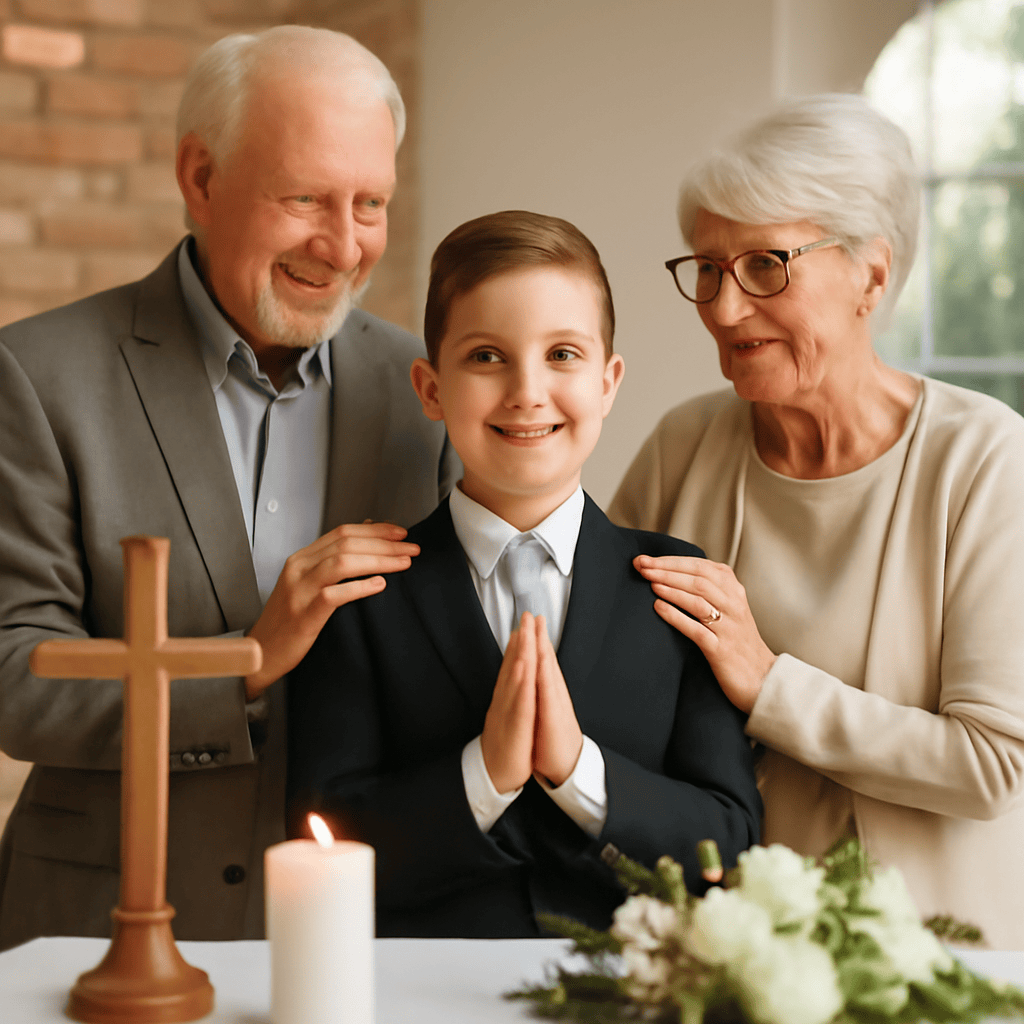
The Importance of Special Occasions for Grandchildren
Special occasions such as confirmation, communion, or school graduations are important milestones in your grandchildren's lives. These celebrations mark transitions, confirm personal development, and create memories that last a lifetime. As grandparents, you can play an important role in these special moments and show your grandchildren how valuable they are to you.
When you actively participate in preparing and conducting these celebrations, you show your grandchildren that their achievements and development are important to you. Your presence, your support, and your attention give your grandchildren the feeling of being loved and valued. This confirmation is invaluable for your grandchild's development and strengthens the bond between you.
Special occasions are also an opportunity to pass on traditions and convey family values. When you celebrate these moments together with your grandchildren, you create connections between generations and help your grandchildren understand their own identity and roots. These shared experiences will become valuable memories that will accompany your grandchildren throughout their lives.
Why These Celebrations Are Important
Celebrations such as confirmation, communion, or school graduations are more than just social events. They mark important transitions in your grandchildren's lives and confirm their personal development. These occasions give your grandchildren the opportunity to reflect on their own values, reconsider their goals, and strengthen their identity. As grandparents, you can show through your participation and support that you see and value this development.
These celebrations are also important social events that help your grandchildren understand their role in the family and community. When you celebrate these moments together with your family, you show your grandchildren that they are part of something bigger and that their achievements and development are important to the entire family. This experience strengthens your grandchildren's self-confidence and helps them see themselves as a valuable part of the family.
Special occasions also create memories that last a lifetime. When you experience these moments together with your grandchildren, you create positive associations and strengthen the bond between you. These memories will help your grandchildren draw on positive experiences even in difficult times and remember the support and love of their family.
The Role of Grandparents
As grandparents, you have a unique role in your grandchildren's special occasions. You bring a different perspective, have life experience, and can help your grandchildren understand the meaning of these moments. Your presence shows your grandchildren that their development and achievements are important to you and gives them the feeling of being loved and valued.
Your role as grandparents goes beyond mere presence. You can offer practical support, help with preparation, and provide valuable advice through your experience and knowledge. At the same time, you can also provide emotional support by being there for your grandchildren, listening, and taking their feelings and thoughts seriously. This support is invaluable for your grandchildren.
As grandparents, you can also be a bridge between generations. You can tell family stories, pass on traditions, and help your grandchildren understand their roots. This connection between past and present helps your grandchildren develop their own identity and understand where they come from and where they want to go.
Understanding Confirmation and Communion
Confirmation and communion are important religious celebrations that have great significance in many families. As grandparents, it is important to understand and respect these celebrations, even if you yourself may have a different faith or are not religious. When you inform yourself about these celebrations and understand their meaning for your grandchildren, you can better support and participate.
These celebrations are not only religious rituals but also important social and family events. They mark a transition in your grandchildren's lives and confirm their development into young adults. When you understand and respect this meaning, you can help your grandchildren fully enjoy these moments and appreciate the memories of them.
As grandparents, you can also play an important role in preparing for these celebrations. You can talk with your grandchildren about the meaning, answer questions, and show through your support that you respect their decision. These conversations and your support help your grandchildren prepare for these important moments and experience them consciously.
What is Confirmation?
Confirmation is an important celebration in the Protestant church where young people confirm their baptism and profess their faith. It usually takes place at the age of 14 and marks an important transition from child to young adult. Confirmation is a conscious decision by the young person to accept and actively live the Christian faith.
As grandparents, you can support your grandchild in preparing for confirmation by having conversations about faith, answering questions, and showing through your presence at the celebration that you respect and support this important decision. Your support helps your grandchild consciously experience this important phase and understand the meaning of this celebration.
Confirmation is also an opportunity to pass on traditions and convey family values. When you celebrate this celebration together with your family, you create connections between generations and help your grandchild understand their roots and identity. These shared experiences will become valuable memories that your grandchild will carry with them throughout their life.
What is Communion?
Communion, also called First Communion, is an important celebration in the Catholic church where children receive communion for the first time. It usually takes place at the age of 8 to 10 and is an important step in the child's religious life. Communion marks the beginning of more conscious participation in church life.
As grandparents, you can support your grandchild in preparing for communion by having conversations about faith, explaining the meaning of the celebration, and showing through your presence at the celebration that you respect and support this important development. Your support helps your grandchild consciously experience this important phase and understand the meaning of this celebration.
Communion is also an opportunity to bring the family together and celebrate shared values. When you celebrate this celebration together with your family, you create positive memories and strengthen the bond between generations. These shared experiences help your grandchild see themselves as part of a larger community and understand their role in the family.
Differences and Similarities
Although confirmation and communion are different religious celebrations, they have many similarities. Both mark important transitions in your grandchildren's lives, confirm their personal development, and create memories that last a lifetime. Both celebrations are also important social and family events that bring the family together and celebrate shared values.
As grandparents, it is important to respect and understand both celebrations, even if you yourself may have a different faith. When you inform yourself about the meaning of these celebrations and support your grandchildren in preparation, you show that you respect their decision and that their development is important to you. This support is invaluable for your grandchildren.
At the same time, you can also emphasize the similarities and show that both celebrations are about values that are important to everyone: respect, responsibility, community, and the importance of family. When you emphasize these values and celebrate together with your family, you create connections between generations and help your grandchildren understand their own identity and roots.
Preparing for the Celebration
Preparation for a special celebration begins long before the actual day. As grandparents, you can play an important role already in the preparation phase and help your grandchildren prepare for this important moment. Your support, your conversations, and your practical help can make the difference between a stressful and a consciously experienced celebration.
It is important that you stay in conversation with your grandchild's parents and understand what role you should play in the celebration. Every family has its own traditions and ideas, and it is important to respect these. At the same time, you can also contribute your own ideas and suggestions, as long as you respect the parents' wishes.
Preparation is also an opportunity to spend time with your grandchild and have conversations about the meaning of the celebration. When you think together about what is important, which traditions should be passed on, and how the celebration can be designed, you create connections and help your grandchild understand the meaning of these moments.
Talking with the Parents
Before you actively participate in preparation, it is important to talk with your grandchild's parents and understand what role you should play in the celebration. Every family has its own traditions, ideas, and expectations, and it is important to respect these. Ask how you can help, what tasks you should take on, and what boundaries exist.
At the same time, you can also contribute your own ideas and suggestions, as long as you respect the parents' wishes. Perhaps you have experiences from your own family or traditions that you would like to pass on. When you suggest these respectfully and discuss them together with the parents, you can make valuable contributions without undermining the parents' authority.
It is also important that you have realistic expectations and understand that not all of your suggestions can be implemented. The celebration primarily belongs to the grandchild and their parents, and your role is to support and enrich, not to dominate. When you find this balance, you can be a valuable support while respecting the family's autonomy.
Talking with Your Grandchild About the Meaning
Conversations with your grandchild about the meaning of the celebration are an important way to support them in preparation. Ask what the celebration means to them, what expectations they have, and how they are looking forward to it. Listen to what your grandchild has to say and take their feelings and thoughts seriously.
You can also share your own experiences if you have experienced similar celebrations, or talk about the meaning of such occasions in the family. These conversations help your grandchild understand the meaning of the celebration and prepare consciously. At the same time, these conversations also strengthen the bond between you and create positive memories.
It is important that you are not lecturing but curious and supportive. Show interest in your grandchild's thoughts and feelings, and help them find their own answers instead of prescribing what they should think or feel. This respectful attitude helps your grandchild go through this important phase confidently and consciously.
Offering Practical Support
Practical support can take many forms: you can help with organization, support in preparing food, help with decoration, or simply be there when help is needed. Ask the parents how you can help and offer concrete support that fits your abilities and situation.
Your practical support relieves the parents and shows your grandchild that you want to actively participate in the celebration. At the same time, you can also spend time with your family through your help and create positive memories. These shared activities strengthen the bond between you and help make the celebration a special experience for everyone.
It is important that you have realistic expectations and do not take on more than you can handle. The celebration should be a positive experience for everyone, including you. When you respect your limits and ask for help when you need it, you can be a valuable support without overburdening yourself.
Gifts and Memories
Gifts are an important part of special celebrations, but they do not always have to be material. As grandparents, you can give gifts that go beyond material value and create memories that last a lifetime. Your gifts can pass on traditions, convey values, and strengthen the bond between you and your grandchild.
It is important that you choose gifts that fit your grandchild and reflect the meaning of the celebration. A gift that has been chosen thoughtfully and takes into account your grandchild's personality and interests is more valuable than an expensive gift that has no personal meaning. Your attention and understanding for your grandchild are shown in the selection of the gift.
Gifts can also create memories that go beyond the day of the celebration. A photo album, a shared experience, or a personal letter can help your grandchild remember this special moment and understand the meaning of this celebration. These memories will accompany your grandchild throughout their life and help them understand their roots and identity.
Choosing Meaningful Gifts
When choosing a gift, it is important to consider your grandchild's personality, interests, and development. A gift that fits your grandchild and reflects their interests is more valuable than an expensive gift that has no personal meaning. Think about what your grandchild really needs or wants, and choose something that meets these needs.
Gifts do not always have to be material. A shared experience, a trip, or an activity that you do together can be a more valuable gift than a material object. These experiences create memories that last a lifetime and strengthen the bond between you and your grandchild. Think about what kind of gift would be most valuable for your grandchild.
You can also give gifts that pass on traditions or convey values. A book that has been passed down in your family, a piece of jewelry with personal meaning, or a letter in which you share your thoughts and wishes for your grandchild can be valuable gifts that go beyond material value. These gifts show your grandchild that you see and value their development.
Creating Memories
Memories are one of the most valuable gifts you can give your grandchild. When you experience these special moments together with your grandchild and document them, you create positive associations and strengthen the bond between you. These memories will accompany your grandchild throughout their life and help them draw on positive experiences even in difficult times.
You can create memories in various ways: through photos, through shared activities, through conversations, or through passing on family stories. Think about what kind of memories would be most valuable for your grandchild and create them consciously. A photo album that you create together or a shared activity that you do regularly can create valuable memories.
It is also important that you document and preserve the memories so that your grandchild can refer to them later. A photo album, a diary, or a collection of mementos can help your grandchild remember these special moments and understand the meaning of these celebrations. This documentation will become increasingly valuable for your grandchild over the years.
Passing on Traditions
Special occasions are an opportunity to pass on traditions and convey family values. When you celebrate these celebrations together with your family and maintain traditions, you create connections between generations and help your grandchild understand their roots and identity. These traditions will become increasingly valuable for your grandchild over the years.
Traditions can take many forms: certain rituals, certain dishes, certain activities, or certain gifts. Think about which traditions are important in your family and find ways to pass them on to your grandchild. These traditions help your grandchild see themselves as part of a larger community and understand their role in the family.
At the same time, you can also create new traditions that are specifically for your grandchild and this celebration. Perhaps you can introduce an annual activity, develop a special ritual, or begin a shared tradition that you maintain regularly. These new traditions create positive memories and strengthen the bond between you and your grandchild.
Other Special Occasions
In addition to confirmation and communion, there are many other special occasions that are important in your grandchildren's lives. School graduations, youth dedication, personal achievements, or other rites of passage mark important developments and create memories that last a lifetime. As grandparents, you can play an important role in all these occasions and show your grandchildren that their development and achievements are important to you.
Each of these occasions has its own meaning and should be appreciated accordingly. When you inform yourself about the meaning of these celebrations and support your grandchildren in preparation, you show that you see and value their development. Your support, your presence, and your attention give your grandchildren the feeling of being loved and valued.
Special occasions are also an opportunity to bring the family together and celebrate shared values. When you experience these moments together with your family, you create positive memories and strengthen the bond between generations. These shared experiences help your grandchildren see themselves as part of a larger community and understand their role in the family.
School Graduations and Ceremonies
School graduations are important milestones in your grandchildren's lives and mark the transition from one phase of life to the next. Whether elementary school graduation, middle school diploma, high school diploma, or vocational training – each graduation is an achievement that should be appreciated. As grandparents, you can show through your presence, your support, and your attention that you see and value these achievements.
Graduation ceremonies are also an opportunity to reflect on your grandchild's development and talk together about the future. When you experience these moments together with your family, you create positive memories and strengthen the bond between generations. Your support helps your grandchild confidently enter the next phase of life and pursue their goals.
You can also offer practical support by helping with preparation, giving gifts, or simply being there when help is needed. Your practical support relieves the parents and shows your grandchild that you want to actively participate in the celebration. These shared activities strengthen the bond between you and help make the celebration a special experience for everyone.
Youth Dedication and Other Rites of Passage
Youth dedication is a non-religious celebration that marks the transition from child to young adult. It usually takes place at the age of 14 and is an important opportunity to appreciate your grandchild's development and talk together about the future. As grandparents, you can show through your presence and support that you see and value this important development.
Other rites of passage can vary depending on culture, religion, or family. It is important that you inform yourself about the meaning of these celebrations and support your grandchildren in preparation. When you experience these moments together with your family, you create positive memories and strengthen the bond between generations. Your support helps your grandchild confidently go through this important phase.
These celebrations are also an opportunity to convey values and pass on traditions. When you celebrate these moments together with your family and talk about important topics, you create connections between generations and help your grandchild understand their own identity and roots. These shared experiences will become valuable memories that your grandchild will carry with them throughout their life.
Celebrating Personal Achievements
Not all special occasions are large, public celebrations. Personal achievements such as a special hobby, a sports success, an artistic breakthrough, or a personal development also deserve recognition and celebration. As grandparents, you can show through your attention, your support, and your recognition that you see and value these achievements.
These personal achievements are often just as important as large celebrations because they reflect your grandchild's individual development. When you celebrate these moments together with your grandchild, you create positive memories and strengthen the bond between you. Your support helps your grandchild confidently pursue their interests and develop their talents.
You can celebrate these achievements in various ways: through a shared meal, through a special gift, through a shared activity, or simply through your presence and attention. It is important that you show that you see and value your grandchild's development, even if it is smaller achievements. This recognition is invaluable for your grandchild's development.
Shared Activities and Rituals
Shared activities and rituals are an important way to strengthen the bond between you and your grandchild and create positive memories. When you regularly spend time together and do activities that both of you enjoy, you create connections that go beyond special occasions. These shared experiences will become valuable memories that your grandchild will carry with them throughout their life.
Rituals can take many forms: a regular visit, a shared activity, a special meal, or a tradition that you maintain together. These rituals give your grandchild security and show that you take time for them. At the same time, these rituals also create positive associations and strengthen the bond between you.
It is important that the activities and rituals fit your grandchild and your situation. Think about which activities your grandchild likes, what interests they have, and how you can spend time together. When you choose activities that both of you enjoy, you create positive memories and strengthen the bond between you.
Telling Family Stories
Family stories are a valuable way to pass on traditions and help your grandchild understand their roots and identity. When you tell stories from your own family, you create connections between generations and help your grandchild see themselves as part of a larger community. These stories will become increasingly valuable for your grandchild over the years.
You can tell stories about your own childhood, about important events in the family, about traditions, or about people who were important to the family. These stories help your grandchild understand their roots and develop their own identity. At the same time, these stories also create positive memories and strengthen the bond between you.
It is important that you tell stories that are relevant and interesting for your grandchild. Adapt your stories to your grandchild's age and interests, and be open to questions and discussions. When you talk together about family history, you create connections and help your grandchild understand their roots.
Shared Outings and Experiences
Shared outings and experiences are an important way to spend time together and create positive memories. Whether a visit to a museum, a walk in nature, a shared meal, or another activity – these shared experiences strengthen the bond between you and create memories that last a lifetime.
It is important that the outings and experiences fit your grandchild and your situation. Think about which activities your grandchild likes, what interests they have, and how you can spend time together. When you choose activities that both of you enjoy, you create positive memories and strengthen the bond between you.
You can also plan outings that are related to the celebration or reflect the meaning of the celebration. Perhaps you can visit a special place together, do an activity related to the celebration, or simply spend time together to talk about the meaning of the celebration. These shared experiences help your grandchild understand the meaning of the celebration and experience it consciously.
Maintaining Rituals and Traditions
Rituals and traditions are an important way to create connections between generations and help your grandchild understand their roots and identity. When you maintain rituals and pass on traditions together with your family, you create positive memories and strengthen the bond between generations. These rituals will become increasingly valuable for your grandchild over the years.
Rituals can take many forms: a regular visit, a shared activity, a special meal, or a tradition that you maintain together. These rituals give your grandchild security and show that you take time for them. At the same time, these rituals also create positive associations and strengthen the bond between you.
You can also create new rituals that are specifically for your grandchild and this celebration. Perhaps you can introduce an annual activity, develop a special ritual, or begin a shared tradition that you maintain regularly. These new rituals create positive memories and strengthen the bond between you and your grandchild.
Dealing with Different Faiths
In many families, there are different faiths or different attitudes toward faith. As grandparents, it is important to respect these differences and still maintain a positive relationship with your grandchildren. When you deal with these differences respectfully and emphasize shared values, you can play an important role in your grandchildren's development.
It is important that you respect the decisions of your grandchildren and their parents, even if you yourself may have a different faith or are not religious. When you inform yourself about the meaning of the celebrations and support your grandchildren in preparation, you show that you respect their decision and that their development is important to you. This support is invaluable for your grandchildren.
At the same time, you can also emphasize shared values that go beyond faiths: respect, responsibility, community, and the importance of family. When you emphasize these values and celebrate together with your family, you create connections between generations and help your grandchildren understand their own identity and roots.
Respecting Differences
Respect is the key to dealing with different faiths. When you respect the decisions of your grandchildren and their parents, even if you yourself may have a different faith, you show that you value their autonomy and development. This respect is the foundation for a positive relationship and helps your grandchildren confidently make their own decisions.
At the same time, you can also share your own beliefs, as long as you are respectful and do not criticize or devalue your grandchildren's decisions. When you speak openly about your own experiences and beliefs, you can help your grandchildren understand different perspectives and make their own decisions. This open communication strengthens the bond between you and helps your grandchildren confidently go through life.
It is also important that you do not try to convince or convert your grandchildren. The decision about faith belongs to your grandchild and their parents, and your role is to support and respect, not to influence or dominate. When you find this balance, you can be a valuable support while respecting your grandchildren's autonomy.
Finding Common Values
Despite different faiths, there are many shared values that are important to everyone: respect, responsibility, community, and the importance of family. When you emphasize these values and celebrate together with your family, you create connections between generations and help your grandchildren understand their own identity and roots. These shared values are the foundation for a positive relationship and help your grandchildren confidently go through life.
You can convey these values in various ways: through your own behavior, through conversations, through shared activities, or through passing on traditions. When you emphasize these values and live them together with your family, you create positive memories and strengthen the bond between generations. These shared values will become increasingly valuable for your grandchildren over the years.
At the same time, you can also show that different faiths do not have to mean that you do not understand each other or cannot celebrate together. When you deal with differences respectfully and emphasize shared values, you create an atmosphere of tolerance and understanding that is invaluable for your grandchildren.
Gift Ideas for Special Occasions
Preparation Checklist
Ideas for Shared Activities
Tips for Meaningful Gifts
- Choose gifts that fit your grandchild's personality
- Consider your grandchild's interests and hobbies
- Gifts do not have to be expensive – attention matters more
- Experiences can be more valuable than material gifts
- Personal letters or cards show your appreciation
- Pass on traditions through gifts with personal meaning
Tips for Preparation
- Have conversations with parents early on
- Clarify your role in the celebration
- Offer practical support
- Respect the parents' wishes
- Be flexible and adaptable
- Plan enough time for preparation
How You Can Support Your Grandchild
- Show interest in the meaning of the celebration
- Have conversations about expectations and feelings
- Offer emotional support
- Be present and attentive
- Respect your grandchild's decisions
- Create positive memories through shared activities