



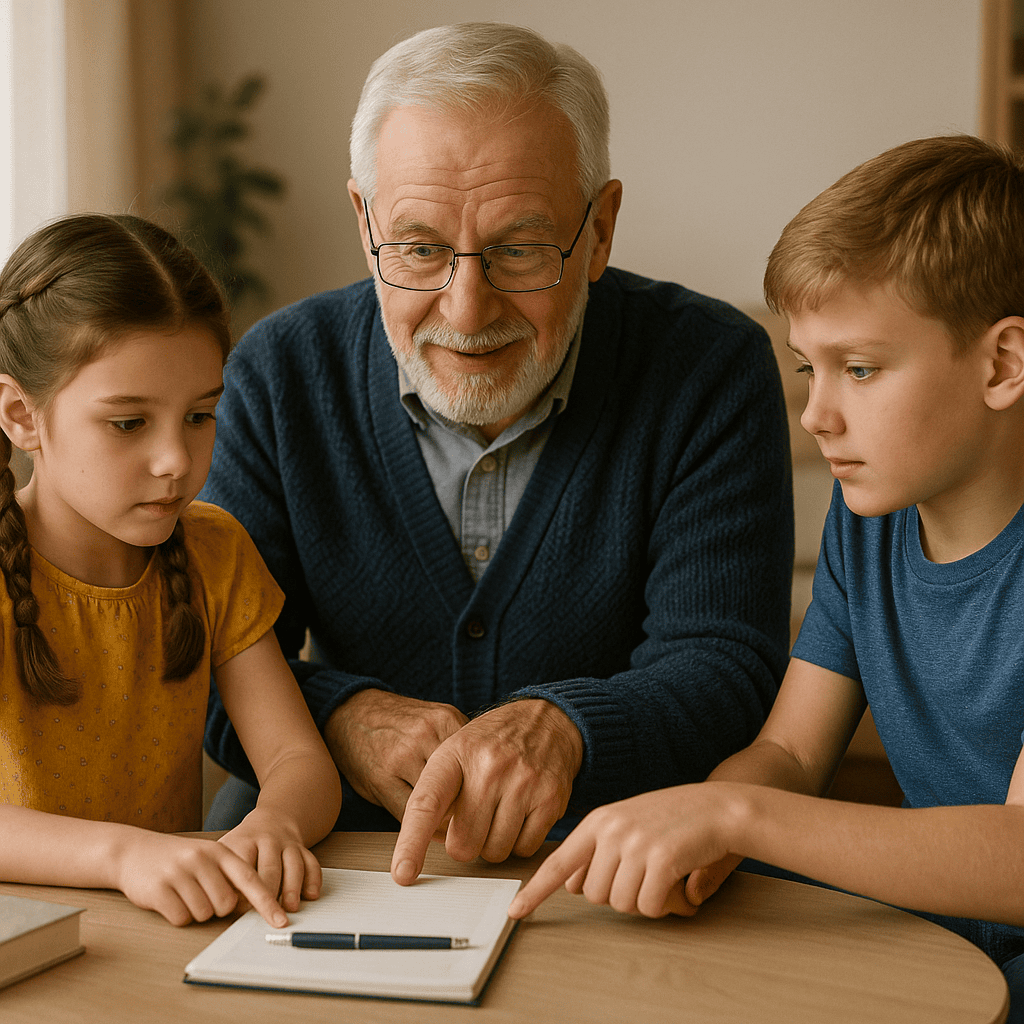
Why conflicts between grandchildren are normal
Conflicts between grandchildren are a natural part of family life and are part of normal development. As grandparents, you can understand that disputes between siblings do not mean that your grandchildren do not like each other, but that they are learning to deal with different opinions, needs, and personalities. These conflicts provide important learning opportunities for your grandchildren to develop social skills and learn how to find compromises.
When you see conflicts between your grandchildren as normal development, you can deal with them more calmly and help your grandchildren cope with these situations constructively. Your grandchildren learn important lessons about communication, empathy, and problem-solving that will help them throughout their lives. As grandparents, you can play an important role in showing your grandchildren that conflicts are not the end of the world, but opportunities to grow and learn.
Your grandchildren will experience different types of conflicts at different stages of life. While toddlers often fight over toys or attention, older children and teenagers can have more complex conflicts related to identity, independence, or social relationships. When you understand these different types of conflicts, you can better respond to your grandchildren's needs and provide appropriate support.
Development-related conflicts
Many conflicts between grandchildren arise from development-related differences. Younger children do not yet have the same social skills as older siblings and can become frustrated when they cannot keep up. Older children can feel overwhelmed when they constantly have to consider their younger siblings. As grandparents, you can help your grandchildren understand that these differences are normal and that everyone learns at their own pace.
Development-related conflicts often show up in situations where the grandchildren's abilities differ. An older child may want to play more complex games, while the younger child is not yet ready. Or a younger child wants the same privileges as the older one but is not yet mature enough. When you recognize and address these situations, you can help your grandchildren develop understanding for each other.
As grandparents, you can also help minimize development-related conflicts by suggesting activities that are suitable for all age groups or by organizing separate activities for different age groups. It is important that you show that each grandchild is valuable, regardless of their age or abilities. This appreciation helps your grandchildren feel more secure and experience less competition with each other.
Rivalry and competition
Rivalry and competition between siblings are normal and can even be healthy when they occur in moderation. Your grandchildren may want attention from their parents or grandparents, want to be seen as equal, or want to show their own strengths. This competition can lead to conflicts, but it can also be motivating and help your grandchildren develop their abilities.
As grandparents, you can help distinguish healthy competition from harmful rivalry. Healthy competition means that your grandchildren challenge and motivate each other without one of the grandchildren feeling inferior. Harmful rivalry occurs when a grandchild is constantly compared to the other or when competition leads to negative feelings. When you recognize these differences, you can better intervene and help your grandchildren build a healthy relationship with each other.
It is important that you give each grandchild individual attention and appreciate their unique strengths and talents. When you show that each grandchild is special in their own way, you can help reduce harmful competition. Your grandchildren learn that they do not have to be better or worse than their siblings, but that everyone has their own value.
The role of grandparents in conflicts
As grandparents, you have a unique position in the family: you are close enough to understand the situation, but often distant enough to have a neutral perspective. This position makes you ideal mediators in conflicts between your grandchildren. Your grandchildren often see you as a wise and experienced person who can help them understand and resolve difficult situations.
Your role as grandparents does not mean that you have to solve all conflicts or that you should always intervene. Sometimes it is better to let your grandchildren find their own solutions while you are available as a supporter and advisor. It is important that you find a balance between support and independence so that your grandchildren learn to manage their own conflicts but know they have help when they need it.
As grandparents, you can also be an important connection between generations. You can help your grandchildren understand that conflicts are normal and that their parents or you yourself had conflicts with siblings as children. This perspective can help your grandchildren normalize their situation and understand that they are not alone with their challenges.
Mediator and supporter
As a mediator, you can help improve communication between your grandchildren. When your grandchildren argue, you can help understand and articulate each grandchild's feelings and needs. You can ask questions that help your grandchildren recognize their own feelings and understand the other's perspective. This mediation helps your grandchildren develop better communication skills.
As a supporter, you can show each grandchild that their feelings are important and that they are heard. You can help find solutions that work for both grandchildren, and you can show that it is possible to find compromises without one of the grandchildren losing. This support gives your grandchildren the feeling that they are not alone and that there are people who want to help them.
It is important that as a mediator you do not take sides, but that you help both grandchildren understand their perspective and find solutions together. When you remain neutral and respect both perspectives, you can help your grandchildren learn how to resolve conflicts constructively. This skill will help your grandchildren deal with conflicts outside the family as well.
Taking a neutral position
Taking a neutral position does not mean that you are indifferent or that you do not care about the situation. Rather, it means that you try to understand both sides and do not jump to conclusions. When you remain neutral, you can help better because your grandchildren trust you and know that you are fair. This neutrality also helps both grandchildren feel heard and understood.
To remain neutral, it is important that you do not automatically assume that one grandchild is right and the other is wrong. Conflicts are rarely black and white, and usually both sides have their own perspectives and feelings that are valid. When you respect both perspectives, you can better help find solutions that work for both grandchildren.
Neutrality also means that you should not take on the role of a judge who decides who is right and who is wrong. Instead, you should help understand the situation and find solutions together. When you show that it is not about having a winner and a loser, but about finding a solution that works for everyone, you can help your grandchildren deal with conflicts more constructively.
Recognizing conflicts early
The earlier you recognize conflicts between your grandchildren, the better you can intervene and help before the situation escalates. When you know the warning signs and observe the communication between your grandchildren, you can recognize early when something is wrong and act proactively. This early recognition can help avoid larger conflicts and show your grandchildren that you are attentive and care.
Conflicts often show up in subtle signs before they become open disputes. When you recognize these signs, you can help defuse the situation before it gets out of control. Your grandchildren will appreciate that you are attentive and that you are interested in their relationship with each other. This attention shows your grandchildren that their relationship is important and that you want to help strengthen it.
When you recognize conflicts early, you can also help identify underlying problems before they become larger conflicts. Perhaps it is about attention, resources such as toys or time, or different needs and expectations. When you understand these underlying problems, you can better help find solutions that address the cause of the conflict, not just the symptoms.
Paying attention to warning signs
There are various warning signs that can indicate that a conflict between your grandchildren is developing or already exists. These signs can be physical, such as tense body posture, avoidant behavior, or aggressive gestures. They can also be verbal, such as derogatory comments, sarcasm, or constant interruptions. When you recognize these signs, you can intervene early and help.
Emotional warning signs can show up in mood swings, withdrawal, or increased irritability. A grandchild who is normally cheerful and sociable can suddenly become withdrawn or irritable when there are conflicts. Another grandchild can become more aggressive or cry more often. When you notice these emotional changes, you can ask questions and help identify the underlying problems.
Behavioral changes can also be warning signs. If your grandchildren normally like to play together but suddenly prefer separate activities, this can indicate a conflict. If a grandchild suddenly no longer wants to talk to the other or if shared activities are avoided, this can be a sign of a deeper conflict. When you notice these changes, you can help clarify the situation and find solutions.
Observing communication
The way your grandchildren communicate with each other can reveal a lot about their relationship and possible conflicts. When you observe the communication between your grandchildren, you can recognize whether there is respect, empathy, and understanding or whether there are tensions, misunderstandings, or negative communication patterns. This observation helps you recognize early when something is wrong.
Healthy communication between siblings shows itself in respectful interaction, active listening, and constructive feedback. When your grandchildren show these communication patterns, their relationship is probably healthy. However, if you notice that communication becomes disrespectful, that your grandchildren no longer listen properly, or that communication is mainly negative, this can indicate conflicts.
As grandparents, you can also help improve communication between your grandchildren by serving as a role model and showing how to communicate respectfully and constructively. You can help establish communication rules, such as that everyone can finish speaking, that you speak respectfully with each other, and that you try to understand the other's perspective. These rules can help avoid conflicts and strengthen the relationship between your grandchildren.
Conflict resolution strategies
There are various strategies you can use as grandparents to help your grandchildren resolve conflicts. The best strategy depends on the type of conflict, the age of your grandchildren, and the specific situation. It is important that you are flexible and try different approaches to find out what works best for your grandchildren.
One of the most important strategies is that you do not automatically take sides or try to end the conflict quickly by dictating a solution. Instead, you should help your grandchildren find their own solutions while being available as a supporter and advisor. This approach helps your grandchildren develop problem-solving skills that will help them throughout their lives.
When you use various conflict resolution strategies, you can also show your grandchildren that there are different ways to solve problems. Some conflicts can be resolved through conversations, others require compromises, and still others may require both sides to give something. When you show these different approaches, you help your grandchildren be flexible and find the best solution for each situation.
Active listening
Active listening is one of the most important skills you can use as grandparents to help your grandchildren with conflicts. Active listening means that you not only hear what your grandchildren say, but that you also try to understand their feelings, needs, and perspectives. When you listen actively, you show your grandchildren that their feelings are important and that you are interested in them.
To listen actively, you should maintain eye contact, nod, and give confirming comments that show you understand. You should also ask questions that help your grandchildren articulate their feelings and explain their perspective. It is important that you do not interrupt or jump to conclusions, but that you give your grandchildren time to express their thoughts and feelings.
Active listening also helps your grandchildren feel heard and understood. When your grandchildren feel that their perspective is important and that someone is really listening, they can open up and speak more honestly about their feelings. This openness can help identify underlying problems and find solutions that really work.
Taking feelings seriously
Feelings are an important part of every conflict, and it is important that you take your grandchildren's feelings seriously, even if they may seem exaggerated or unfounded to you. For your grandchildren, their feelings are real and important, and when you respect these feelings, you can better help find solutions. When you ignore or minimize your grandchildren's feelings, you can make the situation worse and lose your grandchildren's trust.
When you take your grandchildren's feelings seriously, it does not mean that you have to accept everything they do or say. Rather, it means that you acknowledge that their feelings are valid and that you try to understand why they feel that way. When you show that you understand and respect your grandchildren's feelings, you can better help find solutions that take these feelings into account.
As grandparents, you can also help teach your grandchildren how to express feelings without hurting others. You can show that it is okay to be angry, sad, or frustrated, but that it is important to express these feelings in a constructive way. This lesson helps your grandchildren not only with conflicts with siblings but also in other areas of life.
Finding solutions together
The best solutions to conflicts are often those that your grandchildren find themselves, with your support and guidance. When you help your grandchildren develop their own solutions, they learn important problem-solving skills and feel empowered that they can manage their own conflicts. This independence helps your grandchildren develop self-confidence and learn how to deal constructively with conflicts.
To find solutions together, you can ask questions that help your grandchildren explore different options. You can ask: "What could be a solution that works for both?" or "How can you both get what you need?" These questions help your grandchildren think creatively and find solutions that work for both sides.
It is important that you do not dictate the solution, but that you help your grandchildren find their own solutions. When your grandchildren develop their own solutions, they are more willing to implement them, and they learn important skills that will help them resolve conflicts in the future as well. As grandparents, you can be proud when you see how your grandchildren learn to solve their own problems.
Age-appropriate conflict resolution
The way you help with conflicts between your grandchildren should be adapted to the age and developmental stage of your grandchildren. Toddlers have different needs and abilities than school-age children or teenagers, and conflict resolution strategies should be adapted accordingly. When you use age-appropriate approaches, you can help better and your grandchildren can learn more from the situation.
For younger children, simple, clear strategies are often best. You can help establish rules, such as sharing or taking turns playing. For older children, you can have more complex conversations and help find compromises. Teenagers can often develop their own solutions while you are available as a supporter.
It is important that you respect your grandchildren's abilities and do not expect them to do things they cannot yet do. When you have realistic expectations and adapt your support to your grandchildren's age, you can help better and your grandchildren can be more successful in conflict resolution.
Toddlers and preschoolers
With toddlers and preschoolers, conflicts are often simple and direct: they fight over toys, attention, or because they are tired or hungry. These conflicts can escalate quickly, but they can also be resolved quickly when you recognize the underlying needs. As grandparents, you can help by recognizing your grandchildren's needs and helping them meet these needs in a constructive way.
For this age group, simple, clear rules and routines are often helpful. You can help establish rules, such as sharing, taking turns playing, or asking for help when needed. These rules help your grandchildren understand what is expected and give them structure that helps them avoid conflicts.
It is also important that you intervene quickly with this age group when conflicts become physical. Toddlers do not yet have the verbal skills to express their feelings and may resort to physical altercations. When you intervene early and help defuse the situation, you can help avoid injuries and show your grandchildren that there are better ways to resolve conflicts.
School-age children
School-age children already have better verbal skills and can have more complex conflicts related to fairness, rules, or social relationships. You can help by having conversations that help your grandchildren articulate their feelings and understand the other's perspective. These conversations help your grandchildren develop empathy and learn how to find compromises.
For school-age children, you can also help develop problem-solving skills. You can ask questions that help your grandchildren explore different solutions, and you can help find compromises that work for both sides. These skills help your grandchildren not only with conflicts with siblings but also in other areas of life such as school or friendships.
It is also important that you help school-age children find long-term solutions, not just short-term solutions. When you help identify underlying problems and find solutions that address these problems, you can help avoid similar conflicts in the future. This long-term perspective helps your grandchildren develop sustainable problem-solving skills.
Teenagers
Teenagers often have more complex conflicts related to identity, independence, or social relationships. These conflicts can be more intense and can last longer than with younger children. As grandparents, you can help by being available as a supporter and advisor while your grandchildren develop their own solutions.
For teenagers, it is important that you respect that they want more independence and that you give them space to find their own solutions. You can help by asking questions that help your grandchildren clarify their own thoughts and by being available as a supporter when they need help. This balance between support and independence helps your grandchildren develop self-confidence.
It is also important that you help teenagers develop communication skills that help them express their needs and feelings. Teenagers can sometimes be difficult to understand, especially when dealing with intense emotions. When you help improve communication, you can help conflicts be resolved more constructively and strengthen the relationship between your grandchildren.
Preventing conflicts
While it is important to know how to resolve conflicts, it is also important to know how to prevent conflicts. As grandparents, you can help avoid conflicts by creating a positive environment that promotes cooperation and understanding. When you act proactively and prevent conflicts, you can help your grandchildren have a more harmonious relationship.
One of the best ways to prevent conflicts is to promote shared activities that bring your grandchildren together and help them create positive memories. When your grandchildren have positive experiences with each other, they can develop a stronger bond and are less likely to get into conflicts. These positive experiences also help your grandchildren remember that they like each other and that they are a team.
It is also important that you respect and acknowledge your grandchildren's individual needs. When each grandchild feels that their needs are important and that they are individually valued, they are less likely to compete for attention or resources. This appreciation helps your grandchildren feel more secure and experience less competition with each other.
Promoting shared activities
Shared activities are one of the best ways to strengthen the relationship between your grandchildren and avoid conflicts. When your grandchildren have positive experiences with each other, they can develop a stronger bond and are less likely to get into conflicts. As grandparents, you can help by suggesting or organizing activities that are suitable for all age groups and promote cooperation.
Suitable activities can be games that require teamwork, shared projects such as crafting or cooking, or outings that are interesting for everyone. It is important that the activities are suitable for all age groups and that each grandchild can participate. When you choose activities that utilize both grandchildren's strengths, you can help both feel valued.
When you promote shared activities, you can also help create positive memories that connect your grandchildren with each other. These memories help your grandchildren remember that they like each other and that they are a team, even when there are conflicts. These positive memories can also help conflicts be resolved faster because your grandchildren know that their relationship is important.
Respecting individual needs
Each grandchild has individual needs, interests, and personalities, and it is important that you respect and acknowledge these. When each grandchild feels that their needs are important and that they are individually valued, they are less likely to compete for attention or resources. This appreciation helps your grandchildren feel more secure and experience less competition with each other.
To respect individual needs, you can give each grandchild individual attention and appreciate their unique strengths and talents. You can also help ensure that each grandchild has time and space for their own interests without having to compare themselves to their siblings. This individual appreciation helps your grandchildren feel more secure and experience less competition.
It is also important that you are fair but not necessarily equal. Fairness does not mean that each grandchild gets exactly the same thing, but that each grandchild gets what they need. When you show that you understand and respect your grandchildren's individual needs, you can help avoid conflicts and promote a more harmonious relationship between your grandchildren.
Dealing with difficult situations
Sometimes conflicts between your grandchildren can be particularly difficult and require special attention and strategies. Physical altercations, emotional injuries, or long-lasting conflicts can be particularly challenging. As grandparents, you can help by recognizing these difficult situations and responding appropriately.
When dealing with difficult situations, it is important that you remain calm and do not overreact. Your grandchildren need you as a stable, supportive person who helps them cope with the situation. When you remain calm and act constructively, you can help your grandchildren learn how to remain constructive even in difficult situations.
It is also important that you know when you need additional help. If conflicts are particularly serious or if you feel that you are not making progress, it can be helpful to consult your grandchildren's parents or professional help. As grandparents, you can play an important role, but sometimes it is important to seek additional support.
Physical altercations
Physical altercations between grandchildren can be frightening and require immediate intervention. When your grandchildren physically hurt each other, you must intervene immediately to prevent injuries. It is important that you remain calm and that you separate both grandchildren before trying to resolve the situation.
After you have calmed the situation, it is important that you speak with both grandchildren and try to understand what happened. You should not automatically assume that one grandchild is the "perpetrator" and the other is the "victim". Usually both grandchildren have contributed to the situation, and it is important to understand both perspectives.
If physical altercations become more frequent, it may be important to inform your grandchildren's parents and possibly seek professional help. Physical violence between siblings should not be ignored, and it is important that you seek help when the situation gets out of control. As grandparents, you can play an important role, but sometimes professional support is necessary.
Emotional injuries
Emotional injuries can be just as painful as physical injuries and also require attention and support. When your grandchildren feel emotionally hurt, it is important that you take these feelings seriously and help resolve the situation. Emotional injuries can be caused by words, exclusion, or other forms of emotional bullying.
When you recognize emotional injuries, it is important that you speak with both grandchildren and try to understand what happened. You should help articulate feelings and understand why the injury occurred. It is also important that you help make and accept apologies so that the relationship can be restored.
As grandparents, you can also help prevent emotional injuries by showing how to communicate respectfully and how to respect others' feelings. When you serve as a role model and show how to communicate constructively, you can help your grandchildren develop better communication skills and avoid emotional injuries.
Strengthening long-term relationships
While it is important to help with acute conflicts, it is also important to strengthen the relationship between your grandchildren in the long term. When you help build a strong, positive relationship between your grandchildren, you can help conflicts occur less frequently and be resolved faster when they do occur. This long-term perspective helps your grandchildren develop a lifelong bond.
A strong relationship between siblings is built through positive experiences, shared memories, and mutual appreciation. As grandparents, you can help by promoting these positive experiences and helping create memories that connect your grandchildren with each other. These memories help your grandchildren remember that they like each other and that they are a team.
It is also important that you show that the relationship between your grandchildren is important and that you want to support it. When you show that you are interested in your grandchildren's relationship and that you want to help strengthen it, you can help your grandchildren understand that their relationship is valuable. This appreciation helps your grandchildren make an effort to nurture their relationship and resolve conflicts constructively.
Common types of conflicts between grandchildren
Age-appropriate conflict resolution strategies
Warning signs for conflicts between grandchildren
Tips for successful mediation
- Stay neutral and do not take sides
- Listen attentively to both grandchildren
- Take both grandchildren's feelings seriously
- Help find solutions, do not dictate solutions
- Promote communication and understanding
- Show that both grandchildren are important
Tips for conflict prevention
- Promote shared positive activities
- Give each grandchild individual attention
- Respect individual needs and personalities
- Establish clear, fair rules
- Create positive memories together
- Show appreciation for both grandchildren
Communication rules for grandchildren
- Everyone can finish speaking without interruption
- Respectful tone is important
- Feelings can be expressed, but respectfully
- Try to understand the other's perspective
- Find solutions together, do not dictate
- Apologies are important for the relationship