



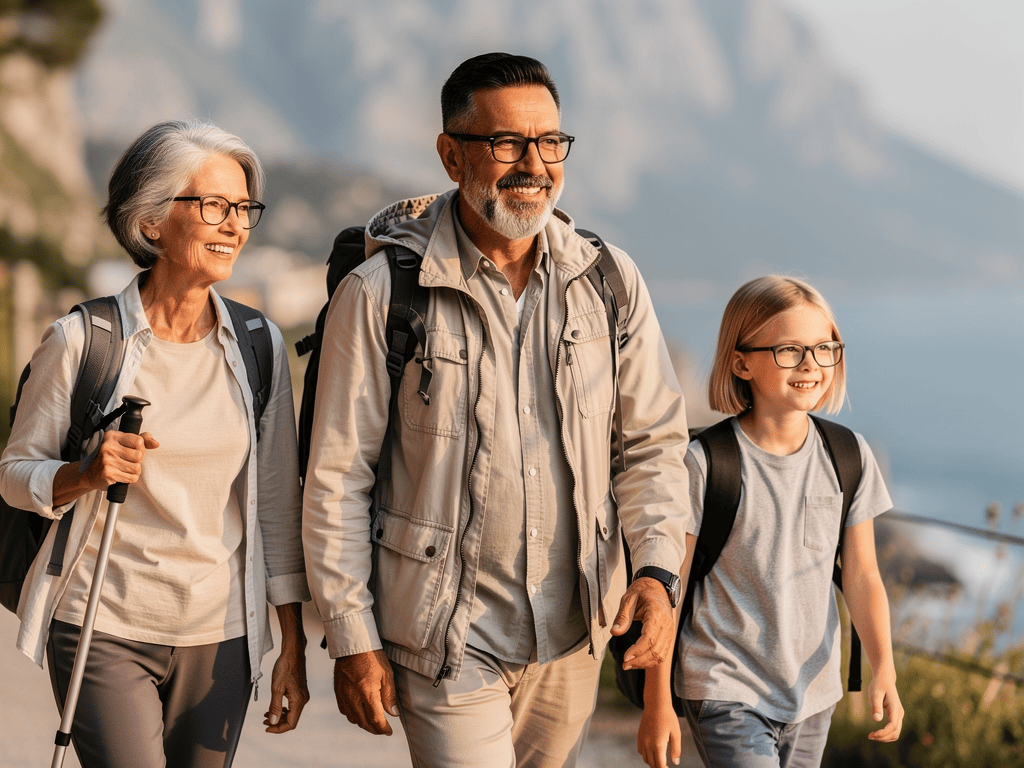
Why Cultural Trips Are Important for Grandchildren
Cultural trips with grandchildren are more than just a nice vacation – they are an investment in your grandchildren's education and development. When you discover new places, cultures, and traditions together, you give your grandchildren the opportunity to expand their world and gain valuable experiences that will accompany them throughout their lives.
As grandparents, you have the unique opportunity to provide cultural education to your grandchildren in a special way. While parents are often caught up in everyday stress, you can take the time to travel and discover together. These shared experiences not only create unforgettable memories but also strengthen the bond between you and your grandchildren.
Cultural trips help your grandchildren understand the world better. When they visit historical sites, learn in museums, or experience different cultures, they develop empathy, tolerance, and a broader understanding of the diversity of our world. These qualities will help your grandchildren become open-minded and understanding people who treat others with respect.
Education and Broadening Horizons
Cultural trips offer your grandchildren the opportunity to learn outside the classroom. When they visit historical sites, explore museums, or experience different cultures, they learn in a vivid and tangible way that is much more lasting than reading in books. These practical experiences help your grandchildren better understand and retain what they have learned.
When you travel with your grandchildren, you can show them how history, art, and culture are interconnected. You can discover together how different cultures have developed, how people lived in different times, and how art and architecture have shaped our world. Understanding these connections helps your grandchildren develop a more comprehensive picture of the world.
Cultural trips also help your grandchildren develop their curiosity and thirst for knowledge. When they discover new places and learn new things, they become motivated to learn and understand more. This curiosity will help them remain eager to learn in other areas of their lives and continue to educate themselves.
Creating Shared Memories
Cultural trips create unforgettable memories that will accompany you and your grandchildren for a lifetime. When you discover new places together, laugh and learn together, special moments arise that strengthen your relationship and become valuable family memories. These memories will help your grandchildren remember the beautiful times with you even later.
Shared trips also strengthen the bond between you and your grandchildren. When you spend time together without the distractions of everyday life, you can get to know each other better and deepen your relationship. This intensive time together helps build trust and create a deeper connection that lasts beyond the trip.
The memories of shared cultural trips will also be valuable for your grandchildren as they grow older. They will remember the special moments you experienced together, and these memories will help them understand their own identity and their connection to the family. These memories are a gift you can give your grandchildren for their entire lives.
Planning the Right Trip
A successful cultural trip begins with careful planning. When you prepare the trip well, you can ensure that both you and your grandchildren have a wonderful time and gain valuable experiences. The planning should take into account the age of your grandchildren, their interests, and their needs.
When planning a cultural trip, it is important to have realistic expectations. Not every activity will be equally interesting for all age groups, and it is normal for some things to be more popular than others. If you stay flexible and offer various activities, you can ensure that everyone finds something they enjoy.
The planning should also consider the needs of all participants. If you have health limitations, you should take these into account when choosing destinations and activities. At the same time, you should also keep an eye on your grandchildren's needs – they need sufficient breaks, variety, and the opportunity to move and play.
Choosing Age-Appropriate Destinations
The choice of the right travel destination depends heavily on the age of your grandchildren. For younger children, interactive museums, zoos, or theme parks are often more suitable than long tours through historical buildings. Older children and teenagers, on the other hand, can enjoy more complex cultural offerings and be interested in history, art, or architecture.
If you are traveling with children of different ages, you should try to find a balance. Plan activities that are interesting for all age groups and also offer specific activities for different age groups. Perhaps you can also split up so that everyone can enjoy the activities they like most.
When choosing the travel destination, you should also consider your grandchildren's interests. If your grandchildren are interested in certain topics – whether history, nature, art, or technology – you can choose travel destinations that promote these interests. When you involve your grandchildren's interests, they will be more motivated and have more fun on the trip.
Trip Duration and Schedule
The duration of the trip should be adapted to the age of your grandchildren and your own resilience. For younger children, shorter trips are often more suitable – perhaps a weekend or a few days. Older children can also enjoy longer trips, as long as sufficient variety and breaks are planned.
When planning the schedule, you should make sure not to pack too much into too short a time. Cultural trips should be relaxed and leave enough time for discoveries, breaks, and spontaneous activities. If you plan too much, you risk both you and your grandchildren becoming overwhelmed and the trip becoming too stressful.
It is also important to plan sufficient breaks. Children need time to play, rest, and process what they have experienced. When you plan regular breaks, you can ensure that your grandchildren can enjoy the trip without becoming overtired or overwhelmed.
Cultural Activities for Different Age Groups
Cultural trips offer a variety of activities suitable for different age groups. When you choose the right activities, you can ensure that both you and your grandchildren have a wonderful time and gain valuable cultural experiences.
Interactive museums and exhibitions are often a good choice for families with children. Many museums offer special programs for children that make learning playful and entertaining. When you use such offerings, you can ensure that your grandchildren not only learn but also have fun.
Historical sites can be interesting for children of all ages when presented in an age-appropriate manner. Many historical sites offer tours or programs specifically for families that convey history in a vivid and tangible way. When you use such offerings, you can help your grandchildren understand and appreciate history.
Museums and Exhibitions
Museums are a wonderful place to gather cultural experiences with grandchildren. Many museums offer interactive exhibitions, workshops, or special programs for families that make learning entertaining and playful. When you visit museums that have such offerings, you can ensure that your grandchildren not only learn but also have fun.
When choosing museums, you should consider the age of your grandchildren. For younger children, interactive museums are often more suitable than traditional art museums. Older children, on the other hand, can also enjoy more complex exhibitions, as long as they are presented interestingly and offer sufficient variety.
Many museums also offer special family tours or workshops that are suitable for grandparents and grandchildren. These offerings are often designed to be interesting for different age groups and provide the opportunity to learn and discover together. When you use such offerings, you can create a particularly enriching experience for yourself and your grandchildren.
Historical Sites
Historical sites can be fascinating for grandchildren of all ages when presented in an age-appropriate manner. When you visit castles, palaces, ruins, or other historical places, you can help your grandchildren experience history vividly and understand how people lived in different times.
Many historical sites offer special programs for families that convey history in a vivid and tangible way. Perhaps there are costume tours, interactive exhibitions, or workshops where your grandchildren can become active themselves. When you use such offerings, you can ensure that your grandchildren not only learn but also have fun.
When planning visits to historical sites, you should also consider the physical requirements. Some sites require a lot of walking or climbing stairs, which can be strenuous for younger children or older grandparents. When you check the physical requirements in advance, you can ensure that all participants can enjoy the visits.
Practical Tips for the Trip
A successful cultural trip requires not only good planning but also practical preparations. When you prepare well, you can ensure that the trip runs smoothly and that both you and your grandchildren have a wonderful time.
The preparation begins long before the trip. You should inform yourself about the travel destination, obtain the necessary documents, and ensure that all health precautions have been taken. When you take care of these things early, you can avoid stress and focus on the beautiful aspects of the trip.
During the trip, it is important to stay flexible and pay attention to the needs of all participants. Sometimes plans need to be changed, and that is completely fine. When you stay flexible and pay attention to your grandchildren's signals, you can ensure that everyone has a good time.
Preparation and Packing List
Good preparation is the key to a successful cultural trip. Start planning early and create a checklist with all the important things you need to do. This includes booking accommodations and transportation, obtaining necessary documents, and planning activities.
Also create a packing list that takes into account both your needs and those of your grandchildren. Think about comfortable clothing for different weather conditions, important medications, snacks for the journey, and entertainment options for the trip. When you prepare everything well, you can ensure that you have everything you need during the trip.
Also inform yourself about the travel destination – about the weather, culture, language, and the most important sights. When you are well informed, you can plan better and prepare your grandchildren for the trip. Perhaps you can also watch books or films about the travel destination together with your grandchildren to increase anticipation.
Traveling with Grandchildren
When traveling with grandchildren, it is important to be patient and pay attention to their needs. Children have a different pace than adults and need more breaks and variety. When you take this into account, you can ensure that the trip is pleasant for everyone.
Plan regular breaks, especially on longer trips. Children need time to play, rest, and process what they have experienced. When you plan regular breaks, you can ensure that your grandchildren can enjoy the trip without becoming overtired or overwhelmed.
Also be flexible with your plans. Sometimes you discover something interesting along the way that was not on the original plan, or your grandchildren want to spend more time at a particular place. When you stay flexible and can be spontaneous, you can make the trip even more enriching.
Cost Planning and Budget
Cultural trips do not have to be expensive to be valuable. With good planning and some tips, you can organize a wonderful trip that becomes unforgettable for both you and your grandchildren without breaking the budget.
When planning costs, you should consider all aspects of the trip – transportation, accommodation, meals, admission fees, and additional activities. When you create a realistic budget and plan early, you can save costs and ensure that you can afford the trip.
There are many ways to save money without sacrificing quality. Perhaps you can travel outside the main season, book early, or use special offers for families. When you are creative and compare different options, you can organize a wonderful trip at a fair price.
Calculating Travel Costs
When calculating travel costs, you should consider all aspects. This includes transportation costs (flight, train, car, public transportation), accommodation costs, meals, admission fees for museums and sights, as well as additional activities and emergency reserves. When you calculate all costs in advance, you can create a realistic budget.
Compare different options to find the best prices. Perhaps you can save by booking early, or there are special offers for families or seniors. When you compare different providers and are flexible with travel dates, you can often achieve significant savings.
Also think about hidden costs such as parking fees, tips, or additional snacks and drinks. These small amounts can quickly add up and should be included in your budget. When you create a realistic budget that also takes these hidden costs into account, you can avoid unpleasant surprises.
Saving Money Without Losing Quality
There are many ways to save money without sacrificing quality or experiences. Perhaps you can travel outside the main season when prices are lower, or you use special offers for families or seniors. Many museums and sights also offer reduced admission prices for children or families.
Also consider whether you can cook yourself instead of always eating out. Many accommodations offer kitchens or kitchenettes that allow you to prepare some meals yourself. This can not only save money but also be a nice shared activity with your grandchildren.
Also use free or inexpensive activities. Many cities offer free tours, public parks, or free museums. When you use such offerings, you can experience an enriching trip without spending much money. The most valuable experiences are often those that cost nothing or little.
Safety and Health
The safety and health of all participants should be the top priority on every trip. When you prepare well and take the necessary precautions, you can ensure that the trip runs safely and pleasantly.
Health precautions begin long before the trip. You should ensure that all necessary vaccinations are up to date, that important medications are taken along, and that you are informed about healthcare at the travel destination. When you take care of these things early, you can ensure that you are well prepared in case of emergency.
During the trip, it is important to pay attention to everyone's health. Pay attention to sufficient rest, healthy nutrition, and sufficient fluids. When you pay attention to the signals of your body and those of your grandchildren, you can ensure that everyone stays healthy and can enjoy the trip.
Health Precautions
Before the trip, you should ensure that all health precautions have been taken. This includes current vaccinations, taking along important medications, and information about healthcare at the travel destination. When you take care of these things early, you can ensure that you are well prepared in case of emergency.
Also pack a well-equipped travel pharmacy that is suitable for both you and your grandchildren. This includes painkillers, bandages, disinfectants, and other important medications. When you have a well-equipped travel pharmacy, you can treat minor health problems yourself.
Also inform yourself about healthcare at the travel destination. Know where you can get help in case of emergency and have important contact information with you. When you are well informed, you can act quickly in case of emergency and receive the necessary help.
Safety During the Trip
During the trip, it is important to pay attention to everyone's safety. Always keep an eye on your grandchildren, especially in crowded places or unfamiliar environments. Also explain to your grandchildren what to do if they get lost and make sure they have important contact information with them.
Also be careful with valuables and important documents. Keep these safe and avoid carrying too much cash or valuable items. When you are careful and pay attention to your surroundings, you can minimize the risk of theft or loss.
Also inform yourself about the security situation at the travel destination. When you are informed about potential risks, you can avoid them and ensure that the trip runs safely. When you are careful and pay attention to your surroundings, you can experience a safe and pleasant trip.
After the Trip: Preserving Memories
After the trip, it is important to preserve the memories and reflect on the experiences. When you talk about the trip together, look at photos, or collect souvenirs, you can capture the valuable moments and strengthen the bond between you and your grandchildren.
Create a travel diary or photo album together with your grandchildren that documents the most beautiful moments of the trip. This can be a nice shared activity and helps your grandchildren remember the trip. When you preserve the memories in this way, you can also look at them together later and remember the beautiful times.
The memories of shared cultural trips will also be valuable for your grandchildren as they grow older. They will remember the special moments you experienced together, and these memories will help them understand their own identity and their connection to the family. These memories are a gift you can give your grandchildren for their entire lives.
Recommended Destinations by Age Groups
Cost Overview for a 3-Day Cultural Trip
Important Things for the Trip
Checklist for Trip Planning
- Choose travel destination and activities together with grandchildren
- Book accommodation and transportation early
- Obtain necessary documents and make copies
- Take health precautions
- Create packing list and pack in time
- Inform about travel destination and prepare together
- Note emergency contacts and important information
Tips for Traveling
- Plan regular breaks, especially for younger children
- Take sufficient snacks and drinks
- Stay flexible and respond spontaneously to discoveries
- Pay attention to everyone's needs and don't overwhelm
- Talk about experiences together and reflect
- Take photos and capture memories
Ideas for Preserving Memories
- Create a travel diary or photo album together
- Collect postcards or small souvenirs
- Talk about the trip together and share experiences
- Print photos and hang them at home
- Create a collage with souvenirs
- Write down or tell stories about the trip