



Why learning musical instruments in old age makes sense
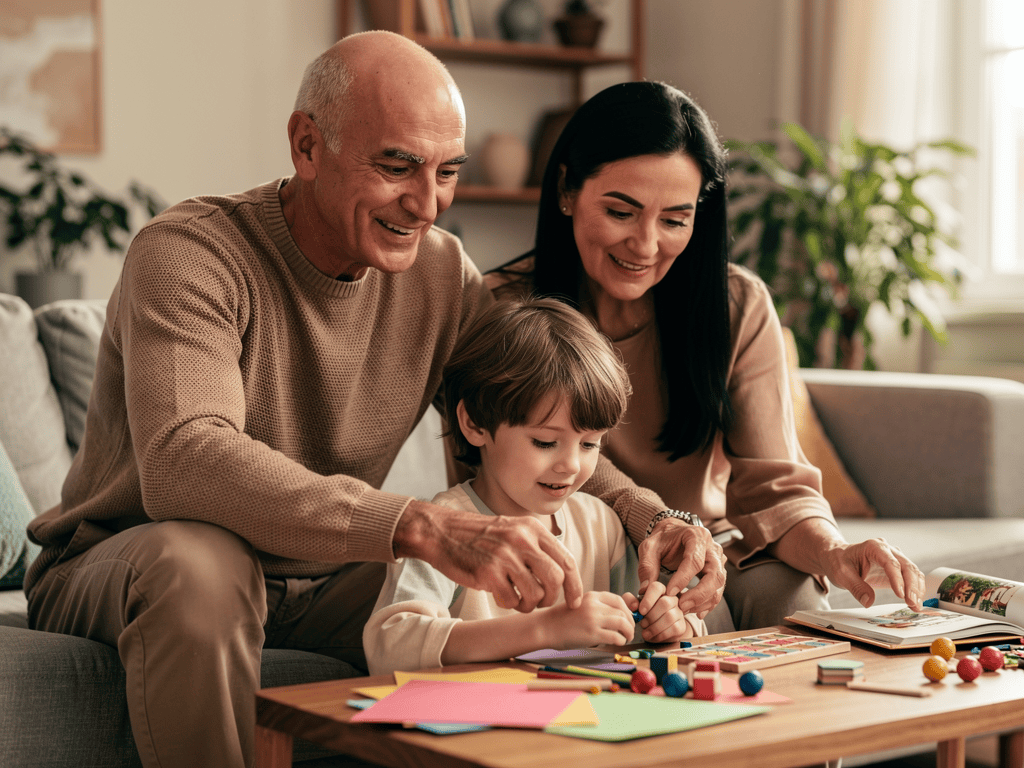
As grandparents, you can learn a musical instrument in old age and not only do something good for yourself, but also create a wonderful opportunity to make music together with your grandchildren. Music connects generations and creates special moments that your grandchildren will remember for the rest of their lives. When you learn an instrument, you show your grandchildren that learning never stops and that it is never too late to discover new things.
Learning a musical instrument in old age has many benefits for you. It keeps your brain active, improves coordination, and can even help reduce stress. At the same time, you create a shared activity with your grandchildren that enriches both generations. Your grandchildren will love making music together with you and seeing how you can get excited about something new.
Music is a universal language that connects people regardless of age. When you make music together with your grandchildren, you create a special connection and share moments of joy and creativity. These shared musical experiences become valuable memories that shape your grandchildren and show them how important it is to be open to new things and spend time together.
Cognitive benefits for grandparents
Learning a musical instrument in old age keeps your brain active and promotes cognitive health. Studies have shown that making music stimulates brain activity and can help maintain mental fitness. When you practice regularly, you not only train your finger dexterity, but also your memory, concentration, and ability to coordinate complex movement sequences.
Making music can also help reduce stress and find relaxation. When you focus on playing an instrument, you can forget everyday life for a while and devote yourself entirely to music. This relaxation is not only good for you, but also makes you a more balanced person who has more energy for time with your grandchildren.
At the same time, you show your grandchildren through your own learning that it is never too late to develop new skills. Your grandchildren see that learning is a lifelong process and that it is joyful to face new challenges. This lesson is more valuable to your grandchildren than any theoretical explanation about the importance of learning.
Quality time with grandchildren
When you learn a musical instrument, you create a wonderful opportunity to spend time together with your grandchildren. You can practice together, play songs together, or simply make music together. These shared musical activities create a special connection between you and your grandchildren that goes beyond normal togetherness.
Making music together is not only fun, but also promotes communication and understanding between generations. When you make music together, you must listen to each other, work together, and coordinate. These skills are not only important for making music, but also for your relationship with your grandchildren in general.
Your grandchildren will love seeing how you get excited about something new and how you learn together with them. These shared learning experiences create positive memories and show your grandchildren that learning is something you can do together and that brings joy. These memories will accompany your grandchildren throughout their lives and help them develop a positive attitude toward learning.
Suitable instruments for getting started
Not every instrument is equally suitable for getting started in old age. Some instruments are more physically demanding, others require more coordination or are more difficult to learn. As grandparents, you should choose an instrument that matches your physical abilities and motivates you to practice regularly.
It is also important that the instrument suits you and that you enjoy playing it. If you choose an instrument that you really like, you will be more motivated to practice regularly and make progress. At the same time, you should also consider whether the instrument is well suited for making music together with your grandchildren.
There are many instruments that are particularly well suited for getting started in old age. Some are easier to learn, others are particularly well suited for making music together. It is important that you choose an instrument that suits you and brings joy to you and your grandchildren.
Easy instruments for beginners
For getting started, instruments that are relatively easy to learn and do not place too high physical demands are particularly suitable. The recorder, for example, is a very good starter instrument because it is easy to learn and does not require much strength. You can quickly achieve first successes and play together with your grandchildren.
The ukulele is also a popular instrument for beginners. It is smaller and lighter than a guitar, has fewer strings, and is therefore easier to learn. The ukulele is also very well suited for making music together, as it makes cheerful, light music that children particularly like.
The piano or keyboard is also a good instrument for getting started, especially if you already have basic knowledge or if your grandchildren also play piano. The piano has the advantage that you can immediately produce a beautiful sound, even if you are still a beginner. At the same time, you and your grandchildren can play together at the piano, which is particularly nice.
Instruments for making music together
If you want to make music together with your grandchildren, you should choose an instrument that is well suited for playing together. Rhythm instruments such as drums, tambourines, or claves are ideal because they are easy to play and younger grandchildren can quickly join in. You can clap rhythms together or play on simple instruments.
The recorder is also very well suited for making music together, as several recorders can sound harmoniously together. You can play simple songs together that your grandchildren know and have a lot of fun. The recorder is also an instrument that many grandchildren learn at school, so you can practice together.
The piano or keyboard is also ideal for making music together. You can sit at the piano together and play together, or you can accompany while your grandchildren sing or play another instrument. The piano offers many opportunities for shared musical activities that bring joy to both you and your grandchildren.
Getting started with music
Getting started with music can initially seem overwhelming, especially if you have never played an instrument before. It is important that you are patient with yourself and set realistic goals. You do not have to be able to play perfectly immediately – the journey is the goal, and every small progress is a success.
Start with simple exercises and simple songs that you already know. If you start with something familiar, it will be easier for you to get started and you will have first successes more quickly. These first successes motivate you to continue and face new challenges.
It is also important that you take your time and do not want to learn too much at once. Learn step by step, and give yourself the time you need. If you practice regularly, even if it is only for a short time, you will make continuous progress. This patience and perseverance show your grandchildren that learning is a process that takes time, but can also bring joy.
First steps and exercises
Start with the basics: First learn how to hold the instrument correctly and how to produce the first sounds. Take your time for these first steps and practice regularly, even if it is only for a few minutes a day. Regularity is more important than long practice sessions.
When you have mastered the basics, you can start with simple songs. Choose songs that you already know and that bring you joy. If you practice together with your grandchildren, you can also choose songs that your grandchildren know and like. This makes making music together even more beautiful and motivates both sides.
Also use the many learning resources that are available today. There are online tutorials, apps, and books that can help you learn. Perhaps you can also learn together with your grandchildren and support each other. These shared learning experiences create special moments and show your grandchildren that learning is something you can do together.
Patience and realistic expectations
It is important that you set realistic expectations and are patient with yourself. You will not become a master musician overnight, and that is not the goal either. The goal is to have joy in making music and to experience beautiful moments together with your grandchildren.
Everyone learns at their own pace, and that is perfectly fine. Do not compare yourself with others, but be happy about your own progress, no matter how small it may be. If you practice regularly, you will continuously get better, even if the progress sometimes seems slow.
Your patience and perseverance show your grandchildren that learning is a process that takes time, but can also bring joy. When your grandchildren see how you patiently practice and are happy about small progress, they learn that perseverance and patience are important qualities that will also help them in life.
Making music together with grandchildren
Making music together with your grandchildren is a wonderful way to spend time together and create special moments. When you make music together, you must listen to each other, work together, and coordinate. These skills are not only important for making music, but also strengthen your relationship with your grandchildren.
Start with simple songs that both know and like. You can sing together while you play the instrument, or you can play a song together if your grandchildren also play an instrument. It is important that you have fun and that no one is under pressure to be perfect.
Making music together creates positive memories that will accompany your grandchildren throughout their lives. These musical moments show your grandchildren how important it is to spend time together and get excited about things that bring joy. These memories will shape your grandchildren and help them develop a positive attitude toward life.
Musical activities with grandchildren
There are many ways to become musically active together with your grandchildren. You can sing songs together while you play the instrument, or you can play simple songs together on different instruments. Clapping rhythms together or playing on simple rhythm instruments is also a lot of fun.
Perhaps you can also learn new songs together or play familiar songs in a new way. Let your grandchildren help decide which songs you want to play together, and show that their ideas and participation are important. These shared decisions strengthen your relationship with your grandchildren and make making music even more beautiful.
You can also organize small "concerts" for the family where you and your grandchildren make music together. These small performances create special moments and show your grandchildren that their musical efforts are appreciated. At the same time, these shared activities strengthen your grandchildren's self-confidence and show them that they can create something special.
Shaping the learning process together
When you learn an instrument together with your grandchildren, you can support and motivate each other. Perhaps you can practice together, show each other what you have learned, or discover new songs together. These shared learning experiences create a special connection and show your grandchildren that learning is something you can do together.
Also let your grandchildren see your own progress and show that you are still learning. When your grandchildren see how you are happy about small progress and how you patiently practice, they learn that learning is a lifelong process and that it is joyful to face new challenges.
Learning together also means that you can learn from each other. Perhaps your grandchildren can show you something they learned at school, or you can discover new things together. This mutual support and shared discovery creates positive learning experiences that bring joy to both you and your grandchildren.
Practical tips for everyday life
To successfully learn a musical instrument, it is important to practice regularly and set realistic goals. You do not have to practice for hours – short, regular practice sessions are often more effective than long, irregular sessions. It is important that you enjoy practicing and that it fits into your everyday life.
Motivation is an important factor when learning an instrument. If you look forward to making music together with your grandchildren, that can be a strong motivation to practice regularly. Remember why you want to learn the instrument – to experience beautiful moments together with your grandchildren – and let this motivation drive you.
It is also important that you are patient with yourself and do not put yourself under pressure. Learning takes time, and every small progress is a success. If you practice regularly and are happy about your progress, you will continuously get better and have more joy in making music.
Regular practice
Regularity is more important than the duration of practice sessions. It is better to practice 10-15 minutes daily than one hour once a week. Short, regular practice sessions help you consolidate what you have learned and make continuous progress. If you practice regularly, making music will become a natural part of your everyday life.
Try to find a fixed time for practicing that fits into your everyday life. Perhaps you can practice in the morning after getting up or in the evening before going to bed. If you develop a fixed routine, it will be easier for you to practice regularly and make making music a habit.
If you practice together with your grandchildren, that can increase motivation for both sides. You can remind each other to practice and make progress together. These shared practice sessions create special moments and show your grandchildren that learning is something you can do together and that brings joy.
Motivation and perseverance
Motivation is an important factor when learning an instrument. If you look forward to making music together with your grandchildren, that can be a strong motivation to practice regularly. Remember why you want to learn the instrument – to experience beautiful moments together with your grandchildren – and let this motivation drive you.
It is normal that it is sometimes more difficult to stay motivated, especially when progress seems slow. In such moments, it can help to remember your goals and imagine how nice it will be to make music together with your grandchildren. You should also celebrate small successes and be happy about them.
Your perseverance and endurance show your grandchildren that it is important to stick with things, even when it is sometimes difficult. When your grandchildren see how you patiently practice and do not give up, they learn that perseverance is an important quality that will also help them in life. This lesson is more valuable to your grandchildren than any theoretical explanation about the importance of perseverance.
Music as a bridge between generations
Music is a universal language that connects people regardless of age. When you make music together with your grandchildren, you create a special connection between generations. Music overcomes age differences and creates shared experiences that enrich both generations.
Making music together shows your grandchildren that you are interested in their interests and that you are willing to learn new things to spend time together. This willingness to engage with your grandchildren's world strengthens the relationship and creates trust. Your grandchildren will appreciate that you take the trouble to learn something that brings them joy.
The musical moments you experience together with your grandchildren will become valuable memories that will accompany both generations throughout their lives. These memories show your grandchildren how important it is to spend time together and get excited about things that bring joy. These shared experiences will shape your grandchildren and help them develop a positive attitude toward life.
Comparison of suitable instruments for grandparents
Recommended practice plan for getting started
Benefits of making music for grandparents and grandchildren
Tips for getting started with music
- Choose an instrument that suits you and brings you joy
- Start with simple exercises and simple songs
- Practice regularly, even if it is only for a short time
- Set realistic goals and be patient with yourself
- Use learning resources such as online tutorials or apps
- Practice together with your grandchildren if possible
Suitable songs for making music together
- Children's songs that your grandchildren know and like
- Simple folk songs that both generations know
- Christmas songs for the Advent season
- Songs from your own childhood that you can teach your grandchildren
- Modern children's songs that you can discover together
- Simple melodies that are well suited for beginners
Tips for motivation and perseverance
- Remember why you want to learn the instrument
- Celebrate small successes and be happy about progress
- Practice together with your grandchildren if possible
- Listen to music that motivates and inspires you
- Exchange ideas with other music enthusiasts
- Be patient and give yourself time to learn