



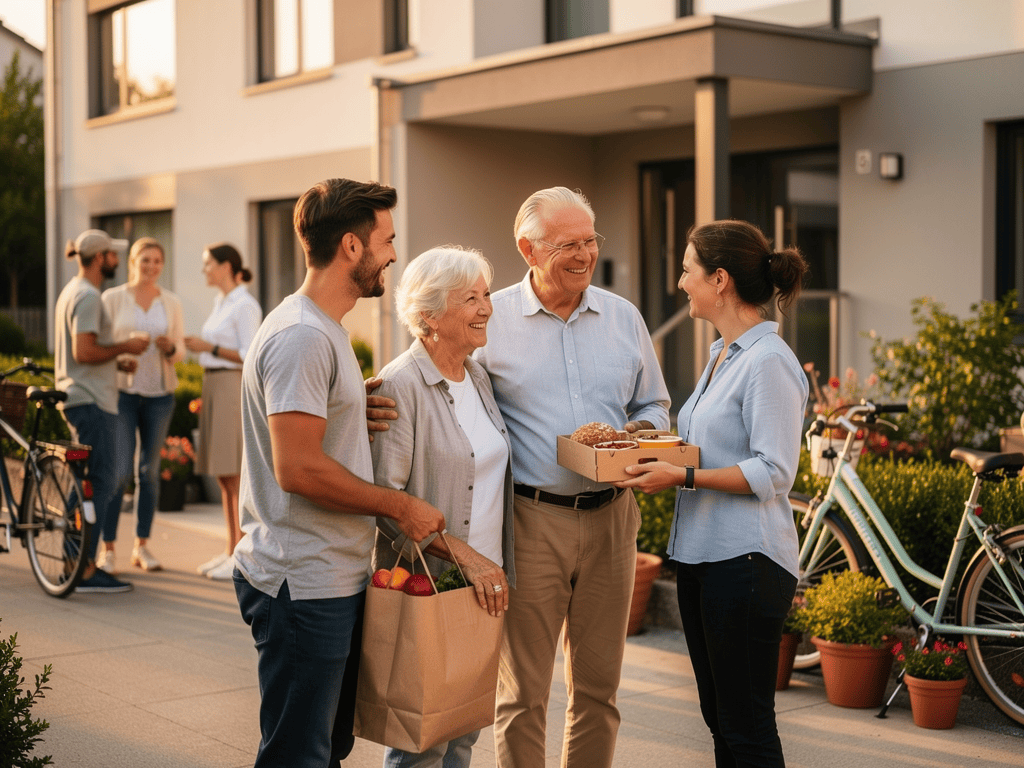
Why Neighborhood Help and Volunteer Work Are Important
As grandparents, you have a unique opportunity to pass on important values to your grandchildren. When you get involved in your neighborhood or volunteer, you show your grandchildren that it is important to be there for others and take responsibility. These lessons will accompany your grandchildren throughout their lives and help them become responsible and compassionate people.
Your grandchildren observe closely what you do and how you interact with others. When you support your neighbors, shop for elderly people, or help with community events, you show your grandchildren that each of us has the opportunity to make a difference. These experiences shape your grandchildren and help them understand that community and solidarity are important.
Neighborhood help and volunteer work are not only good for the community, but also for you. When you get involved, you stay active, make new contacts, and feel needed. At the same time, you give your grandchildren an important role model that will accompany them throughout their lives. Your grandchildren will see how valuable it is to be there for others and will adopt these values in their own lives.
Role Model for Grandchildren
Children learn most through observation and imitation. When your grandchildren see how you support others, this shapes their own behavior in a lasting way. You don't have to perform great heroic deeds – often it's the small gestures that make the biggest impression. When you shop for a neighbor, help with a community event, or simply be there for others, you show your grandchildren what it means to be part of a community.
Your role as a role model is particularly valuable because as grandparents you have a special relationship with your grandchildren. Your grandchildren look up to you and respect your opinion. When you show that engagement and helpfulness are important, your grandchildren will adopt these values. These lessons will accompany them throughout their lives and help them become responsible adults.
It's important that you are authentic. Your grandchildren notice if you do something just to be a role model, or if you really believe in it. When you engage out of conviction and enjoy helping others, this will rub off on your grandchildren. Show your grandchildren that engagement is not just a duty, but something that brings joy and fulfillment.
Teaching Values Through Actions
Values are not only taught through words, but above all through actions. When you get involved in your neighborhood, you show your grandchildren that helpfulness, responsibility, and community spirit are important. These values become tangible and understandable for your grandchildren through your actions.
When you shop for elderly neighbors together with your grandchildren or help with a community event, your grandchildren directly experience what it feels like to be there for others. These practical experiences are more valuable than any theoretical explanation. Your grandchildren learn not only what engagement means, but also what it feels like to help others and be part of a community.
Through your engagement, you also show your grandchildren that each of us has the opportunity to make a difference. It's not about making big changes, but about being there for others within your own scope. This message is important for your grandchildren, because it shows them that they too can make a difference when they get involved.
Forms of Neighborhood Help
Neighborhood help can take many different forms. You don't have to invest a lot of time or energy to make a difference. Often it's the small, regular gestures that have the most impact. When you shop for an elderly neighbor, collect mail from the mailbox, or simply have an open ear, you show that you are there for others.
Joint activities in the neighborhood can also be a good way to get involved. Perhaps you can start a neighborhood initiative where people meet regularly, or you can help organize community events. Such activities not only strengthen the community but also give you the opportunity to involve your grandchildren and show them how important community is.
It's important that you don't overextend yourself. Neighborhood help should be something that brings you joy and that you can maintain long-term. If you take on too much, there's a risk that you'll burn out and give up the engagement. Start with small steps and slowly increase your engagement when you notice that it's good for you and you have the time and energy for it.
Practical Support in Daily Life
Practical support in daily life is one of the simplest and most effective forms of neighborhood help. When you shop for an elderly or sick neighbor, collect mail from the mailbox, or help with minor repairs, you make a big difference in that person's life. At the same time, you show your grandchildren that it's normal and important to be there for others.
Even small gestures can make a big difference. When you bake a cake and bring it to a neighbor, regularly ask if someone needs help, or simply have an open ear, you show that you are there for others. These gestures don't cost much time or energy, but they can significantly improve another person's life.
When you involve your grandchildren in these activities, they learn directly how important it is to be there for others. Perhaps you can shop for a neighbor together or bake a cake together that you then bring over. Such joint activities not only strengthen the relationship with your grandchildren but also show them how valuable engagement is.
Organizing Joint Activities
Joint activities in the neighborhood can be a good way to strengthen the community and get involved at the same time. Perhaps you can organize a regular coffee meeting where neighbors can meet and exchange, or you can help organize community festivals or other events.
Such activities don't have to be elaborate. A simple meeting in the park, a joint walk, or a small celebration in the garden can already make a big difference. What's important is that people come together and can exchange. When you organize such activities, you show your grandchildren how important community is and how to strengthen it.
When you involve your grandchildren in the organization, they learn not only how to plan events but also how important it is to bring people together. Perhaps your grandchildren can help with the preparation, design invitations, or support during the event. Such experiences shape your grandchildren and help them become confident and responsible.
Finding Volunteer Opportunities
Volunteer work can take many different forms. There are countless opportunities to get involved, from working in an association to supporting nonprofit organizations to participating in the community. It's important that you find something that suits you and brings you joy.
When you decide to volunteer, you should consider what's important to you and where your strengths lie. Perhaps you have experience in a particular area that you can contribute, or you simply want to learn something new. It's important that you don't overextend yourself and that the engagement fits your life.
Your grandchildren will benefit from your engagement, even if they're not directly involved. When you show that you support others and take responsibility, you give your grandchildren an important role model. At the same time, you can also involve your grandchildren in your engagement if it's age-appropriate and fun for them.
Identifying Suitable Opportunities
There are many different opportunities to volunteer. Perhaps you can work in an association, help with a nonprofit organization, or get involved in your community. It's important that you find something that suits you and brings you joy.
Consider what's important to you and where your strengths lie. Perhaps you have experience in a particular area that you can contribute, or you simply want to learn something new. When you choose something that you really care about, you'll stay motivated long-term and enjoy your engagement.
If you want to involve your grandchildren in your engagement, you should also consider which activities are suitable for them. Not all volunteer activities are suitable for children, but there are many opportunities where grandchildren can participate. Perhaps you can help with a community event together or collect for a good cause together.
Realistically Assessing Time and Energy
Before you decide to volunteer, you should realistically assess how much time and energy you can invest. It's important that you don't overextend yourself and that the engagement fits your life. If you take on too much at once, there's a risk that you'll burn out and give up the engagement.
Start with small steps and slowly increase your engagement when you notice that it's good for you and you have the time and energy for it. It's better to participate long-term with smaller engagement than to do a lot short-term and then give up. Your grandchildren will benefit more from sustainable engagement than from a short, intensive commitment.
It's also important that you respect your own boundaries. You don't have to help in every situation or be there at every opportunity. It's perfectly fine to say "No" if you feel overwhelmed or if you simply need time for yourself. Your grandchildren will benefit more from healthy engagement than from one that overwhelms you.
Involving Grandchildren in Your Engagement
One of the most beautiful ways to pass on values to your grandchildren is to involve them in your engagement. When your grandchildren directly experience how you support others, this shapes their own behavior in a lasting way. At the same time, joint activities strengthen the relationship between you and your grandchildren and create positive memories.
It's important that participation is age-appropriate and that your grandchildren enjoy it. Not all activities are suitable for all age groups, but there are many opportunities where grandchildren can participate. Perhaps you can collect for a good cause together, help with a community event, or develop a project together that helps other people.
When you involve your grandchildren, you should also make sure they don't get overwhelmed. Engagement should be something positive that brings joy, not a burden. When your grandchildren notice that engagement is fun and fulfilling, they will adopt this positive attitude and become active themselves later.
Age-Appropriate Participation
The way you involve your grandchildren should be adapted to the children's age. For younger children, you can choose simple activities where they can help directly, such as shopping for neighbors or baking cakes for others. For older children and teenagers, you can develop more complex projects where they can take on more responsibility.
It's important that the activities are understandable and comprehensible for the children. Explain to your grandchildren why you are engaged and what the engagement achieves. When children understand why something is important, they are more motivated to participate. At the same time, you should make sure that the activities are fun and not perceived as a duty.
Also let your grandchildren help decide which activities you want to do together. When children feel that their opinion matters and that they can have a say, they are more motivated to participate. At the same time, they learn to take responsibility and make decisions.
Developing Joint Projects
Joint projects can be a particularly beautiful way to involve your grandchildren in your engagement. Perhaps you can develop a project together that helps other people, such as a fundraising campaign, a neighborhood initiative, or a community event. Such projects give your grandchildren the opportunity to take responsibility and experience what it feels like to make a difference.
When you develop a project together, your grandchildren learn not only how to plan and organize but also how important it is to be there for others. They directly experience how engagement works and what impact it can have. These experiences shape your grandchildren and help them become confident and responsible.
Joint projects also strengthen the relationship between you and your grandchildren. When you work on something together, you create positive memories and show your grandchildren that you are a team. These shared experiences will accompany your grandchildren throughout their lives and help them see engagement as something positive and important.
Creating Sustainable Engagement
Sustainable engagement is more important than short-term, intensive commitments. When you engage long-term, you show your grandchildren that engagement is something that lasts and is part of life. At the same time, you can achieve more long-term and have more joy in your engagement.
It's important that you don't overextend yourself. Sustainable engagement means that you engage regularly, but within a framework that you can maintain long-term. If you take on too much at once, there's a risk that you'll burn out and give up the engagement. Start with small steps and slowly increase your engagement.
Your grandchildren will benefit more from sustainable engagement than from a short, intensive commitment. When you show that engagement is something that lasts long-term, your grandchildren learn that engagement is not just a one-time thing, but something that can be part of life. This lesson will accompany them throughout their lives.
Planning Long-Term Projects
Long-term projects can be particularly effective because they can bring about sustainable changes. Perhaps you can organize a regular activity, such as a weekly coffee meeting or a monthly community event. Such regular activities strengthen the community long-term and give you the opportunity to continuously make a difference.
When you plan long-term projects, you should also consider how you can involve your grandchildren. Perhaps they can help with the regular implementation or participate in the planning. Long-term projects give your grandchildren the opportunity to continuously take responsibility and experience how engagement works.
It's important that long-term projects remain flexible. If your situation changes or if you notice that a project no longer fits, you should have the opportunity to adapt it or end it. Sustainable engagement doesn't mean you have to commit to something forever, but that you think and plan long-term.
Setting and Respecting Boundaries
An important aspect of sustainable engagement is that you know and respect your own boundaries. You don't have to help in every situation or be there at every opportunity. It's perfectly fine to say "No" if you feel overwhelmed or if you simply need time for yourself.
When you respect your boundaries, you also show your grandchildren that it's important to take care of yourself. Engagement should be something positive that brings joy, not a burden. When your grandchildren see that you respect your boundaries and are still engaged, they learn that engagement and self-care go together.
At the same time, you should also respect your grandchildren's boundaries. Not all children want to engage to the same extent, and that's perfectly fine. It's important that you don't pressure your grandchildren, but that you give them the opportunity to participate if they want to. When engagement is voluntary and fun, your grandchildren will experience it as something positive.
Impact on Grandchildren and Community
Your engagement has an impact not only on the people you help, but also on your grandchildren and the entire community. When you get involved, you show your grandchildren that it's important to be there for others and take responsibility. These lessons will accompany your grandchildren throughout their lives and help them become responsible and compassionate people.
At the same time, your engagement strengthens the community. When people support each other and work together, a sense of connection and solidarity emerges. This community is important for everyone, but especially for children who grow up in a supportive environment. Your grandchildren will benefit from a strong community that shows them that people are there for each other.
Your engagement can also inspire other people to get involved as well. When others see how you support your neighbors or volunteer, they may also be motivated to do something. In this way, you can start a positive cycle that strengthens the entire community. Your grandchildren will see how valuable engagement is and how it can inspire other people.
Different Forms of Neighborhood Help and Volunteer Work
Age-Appropriate Participation of Grandchildren
Impact of Engagement on Grandchildren
Practical Tips for Neighborhood Help
- Start with small, regular gestures like shopping help or collecting mail
- Regularly ask if someone needs support
- Organize joint activities like coffee meetings or walks
- Involve your grandchildren age-appropriately in your activities
- Respect your own boundaries and don't overextend yourself
- Show your grandchildren why engagement is important and what impact it has
Opportunities for Volunteer Work
- Working in an association or nonprofit organization
- Supporting community events and festivals
- Helping organize neighborhood initiatives
- Engagement in senior work or childcare
- Supporting local projects and initiatives
- Working in the church community or other religious communities
Joint Activities with Grandchildren
- Shopping for neighbors together and talking about helpfulness
- Baking cakes together and distributing them to neighbors or people in need
- Helping together at community events and taking responsibility
- Developing own small projects that help other people
- Collecting together for a good cause or organizing fundraising campaigns
- Planning regular activities where grandchildren can continuously take responsibility