



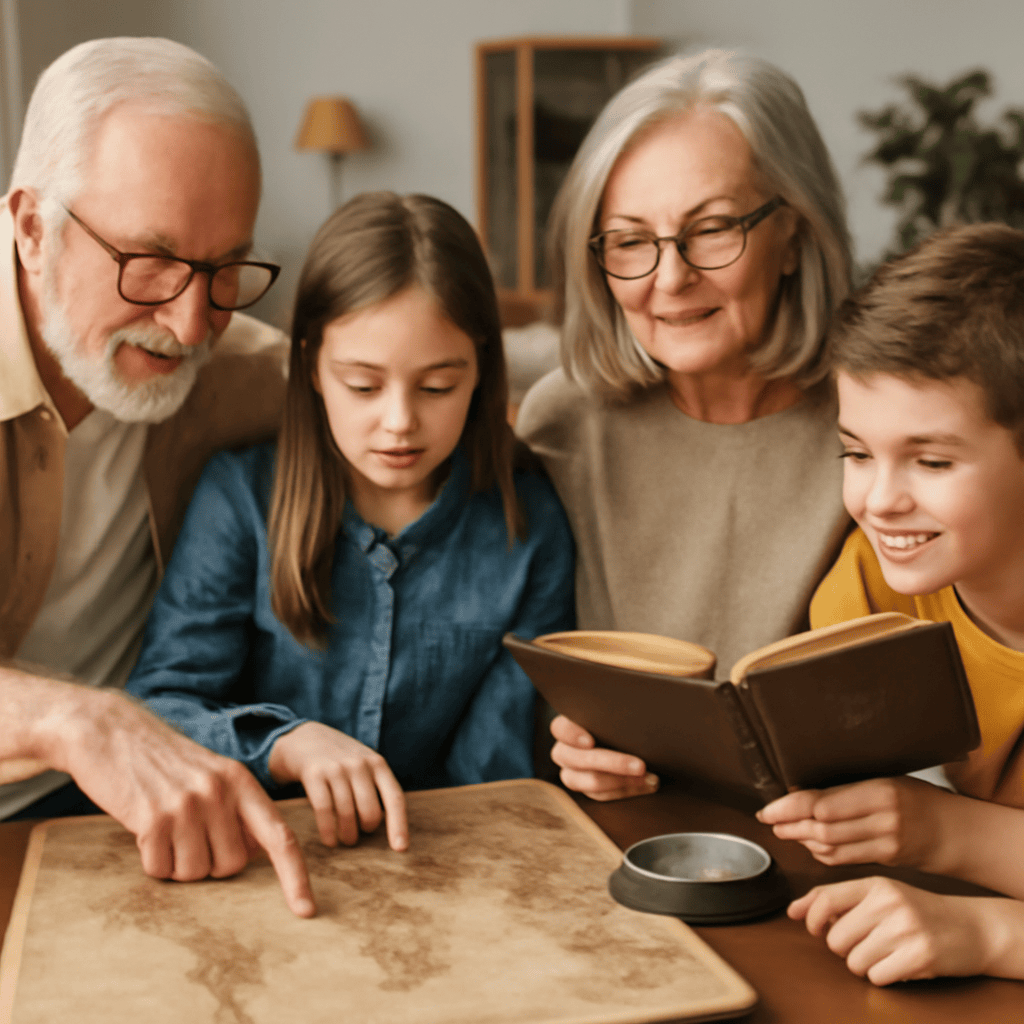
Why Family History Matters for Grandchildren
Researching family history is a gift you can give to your grandchildren. When you explore your family history together with your grandchildren, you not only give them knowledge about their origins, but also a sense of identity and belonging. For grandchildren whose ancestors emigrated, researching family history can be particularly valuable, as it helps them understand where they come from and what stories have shaped their family.
As grandparents, you often still have access to information, documents, and stories that could be lost to your grandchildren if not passed on. The time you spend with your grandchildren researching family history is not only a valuable shared activity, but also an opportunity to preserve important memories and knowledge for the next generation. Your grandchildren will cherish this time with you, and the stories you discover together will accompany them throughout their lives.
Researching family history can also help your grandchildren better understand their own identity. When they know where their family comes from, what challenges their ancestors overcame, and what values and traditions have been passed down through generations, they can integrate these insights into their own lives. As grandparents, you can help your grandchildren make this connection to the past and show them that they are part of a larger story.
Identity and Roots
For grandchildren whose ancestors emigrated, researching family history can be particularly important for understanding their own identity. When you find out together with your grandchildren where your family originally came from, what reasons led to emigration, and how the family developed in the new homeland, you give your grandchildren a deeper understanding of their own roots. These insights can help your grandchildren better understand themselves and develop their own identity.
Researching family history can also help your grandchildren develop pride in their heritage. When they learn about the challenges their ancestors overcame, what dreams they had, and what sacrifices they made, they can use these stories as a source of inspiration. As grandparents, you can help your grandchildren discover these stories and understand that they are part of a family that has shown strength and perseverance across generations.
At the same time, researching family history can help your grandchildren understand their connection to different cultures and countries. If your family comes from different countries or if ancestors emigrated to different countries, you can explore these diverse roots together with your grandchildren. These insights can help your grandchildren become more open and tolerant and appreciate the diversity of their own family.
Connection to the Past
Researching family history creates a connection between the past and the present. When you explore your family history together with your grandchildren, you show them that they are part of a larger story that spans generations. This connection to the past can help your grandchildren better understand their own role in the family and appreciate what their ancestors made possible for them.
As grandparents, you can help your grandchildren make this connection to the past by telling stories, showing documents, and researching together. When your grandchildren see how important family history is to you and how much time and effort you invest in researching it, they will learn to appreciate this connection to the past as well. This shared engagement with family history can also strengthen the relationship between you and your grandchildren and help you understand each other better.
The connection to the past can also help your grandchildren better shape their own future. When they understand what values and traditions have been passed down through generations, they can use these insights to make their own decisions and develop their own values. As grandparents, you can help your grandchildren make this connection between past, present, and future and show them that they are part of a larger story.
First Steps in Genealogy Research
If you want to research family history together with your grandchildren, it is important to proceed systematically. Start with what you already know: names, birth dates, birthplaces, and other information about your family. Collect all documents, photos, and memorabilia you have and organize them so you can access them together with your grandchildren. These first steps can help you get an overview of your family history and identify what information is still missing.
As grandparents, you often still have access to information and documents that could be lost to your grandchildren. Use this opportunity to research family history together with your grandchildren and preserve important information. The time you spend with your grandchildren researching family history is not only a valuable shared activity, but also an opportunity to preserve important memories and knowledge for the next generation.
When you research family history together with your grandchildren, you can also use various methods and resources. From conversations with family members to searching online databases to visiting archives, there are many ways to find information about family history. As grandparents, you can help your grandchildren learn about these different methods and understand how to research systematically.
Collecting Family Documents
The first step in researching family history is collecting all available documents. Search through your own documents, those of your parents and grandparents, and those of other family members for documents such as birth certificates, marriage certificates, death certificates, passports, emigration documents, letters, photos, and other memorabilia. These documents can contain valuable information that helps you reconstruct your family history.
Organize the collected documents systematically so you can access them together with your grandchildren. You can create folders, digitize documents, or create a family history book where all information is collected. When you organize documents well, you and your grandchildren can access them more easily and use the information to conduct further research.
When collecting documents, you should also make sure to store them safely. Important documents should be copied so the originals are protected. Digital copies can also help share documents and access them together with your grandchildren. As grandparents, you can help your grandchildren understand how important it is to preserve these documents and how they can be used to research family history.
Talking to Family Members
Conversations with family members are one of the most valuable sources of information about family history. Older family members often still have memories of ancestors you yourself never met and can tell stories that are not documented anywhere else. When you have conversations with family members together with your grandchildren, you can not only collect information but also strengthen relationships within the family.
When having conversations with family members, you should be prepared. Think about questions in advance that you want to ask and take time to listen. Ask about stories, memories, and details that can help you better understand family history. When you have these conversations together with your grandchildren, you can also show them how important it is to preserve the stories of older family members.
It can also be helpful to record the conversations or take notes so you can look up the information later. When you have these conversations together with your grandchildren, you can also show them how to ask questions and how to listen. These skills will help your grandchildren not only in researching family history but also be useful in other areas of life.
Online Resources for Genealogy Research
Today there are many online resources that can help you research family history. From genealogy portals to archive databases to social networks for genealogists, there are many ways to find information about your family. As grandparents, you can use these online resources together with your grandchildren and show them how to research systematically.
When using online resources, it is important to be critical and verify the information. Not all information on the internet is correct, and it is important to check sources and verify information. As grandparents, you can help your grandchildren develop this critical thinking and understand how to find reliable information.
Using online resources can also be a good opportunity to learn together with your grandchildren. When you search through databases together, review documents, and collect information, you can show your grandchildren how to research systematically and how to handle different types of information. This shared learning activity can strengthen the relationship between you and your grandchildren and help you understand each other better.
Using Genealogy Portals
Genealogy portals like Ancestry, MyHeritage, or FamilySearch provide access to millions of historical documents and records. These portals can help you find birth certificates, marriage certificates, death certificates, census data, immigration documents, and other important information about your family. When you use these portals together with your grandchildren, you can systematically search for information and reconstruct family history piece by piece.
When using genealogy portals, it is important to proceed systematically. Start with what you already know and work your way back step by step into the past. Use the search functions of the portals to search for names, dates, and places, and carefully review the results. When you use these portals together with your grandchildren, you can show them how to research systematically and how to evaluate the information found.
Many genealogy portals also offer the ability to create and share family trees. When you create a family tree together with your grandchildren, you can visually represent the information found and better understand family history. This shared activity can also help strengthen the relationship between you and your grandchildren and help you explore family history together.
Searching Archive Databases
Many archives and libraries have digitized their holdings and made them available online. These databases can give you access to historical documents, newspapers, photos, and other sources that can help you research family history. When you search these databases together with your grandchildren, you can find valuable information that helps you better understand family history.
When searching archive databases, it is important to be patient and proceed systematically. The search can be time-consuming, and you may find many irrelevant results before finding the information you are looking for. As grandparents, you can help your grandchildren stay patient and understand that researching family history takes time.
Many archives also offer personal consultation if you need help with your search. When you visit an archive together with your grandchildren, you can not only find information but also learn how archives work and how to read historical documents. This shared experience can help your grandchildren develop a deeper understanding of family history.
Finding Documents and Sources
Documents are one of the most important sources for researching family history. From birth and marriage certificates to emigration documents to letters and photos, documents can contain valuable information about your family. As grandparents, you can search for these documents together with your grandchildren and show them how important they are for researching family history.
When you find documents, it is important to analyze them carefully and understand the information. Documents can contain not only names and dates but also information about occupations, places of residence, family relationships, and other important details. When you analyze these documents together with your grandchildren, you can help them better understand family history and recognize the significance of the various information.
It is also important to store and protect documents safely. Important documents should be copied so the originals are protected, and digital copies can help share documents and access them together. As grandparents, you can help your grandchildren understand how important it is to preserve these documents and how they can be used to research family history.
Birth and Marriage Certificates
Birth and marriage certificates are important documents for researching family history. These certificates contain not only names and dates but also information about parents, witnesses, occupations, and places of residence. When you search for these certificates together with your grandchildren, you can find valuable information that helps you reconstruct family history.
Birth certificates can help you find the names of parents, birth date, and birthplace. Marriage certificates can contain information about spouses, witnesses, occupations, and places of residence. This information can help you trace family history step by step back and understand the connections between different family members.
When searching for certificates, you can inquire at registry offices, church archives, or online databases. Many certificates are now digitized and available online, which makes searching easier. When you search for these certificates together with your grandchildren, you can show them how to research systematically and how to use the information found.
Emigration Documents
For families whose ancestors emigrated, emigration documents can be particularly valuable. These documents can contain information about the time of emigration, the destination country, the reason for emigration, and other important details. When you search for these documents together with your grandchildren, you can find valuable information that helps you better understand family history.
Emigration documents can be found in various archives and databases. Ports, immigration authorities, and other institutions often have records about emigrants that can help you find information about your ancestors. When you search for these documents together with your grandchildren, you can show them how important these documents are for researching family history.
Emigration documents can also tell stories that are not documented anywhere else. When you analyze these documents together with your grandchildren, you can not only find information but also better understand the stories of your ancestors. These insights can help your grandchildren better understand their own identity and appreciate the connection to their ancestors.
Researching Together with Grandchildren
Researching family history can be a wonderful shared activity for grandparents and grandchildren. When you research together with your grandchildren, you can not only find information but also spend time together and strengthen the relationship between you. The shared engagement with family history can also help your grandchildren develop a deeper understanding of their origins.
As grandparents, you can give your grandchildren age-appropriate tasks so they can actively participate in researching family history. Younger grandchildren can, for example, help sort photos or listen to stories, while older grandchildren can help with research in online databases or creating family trees. This age-appropriate participation can help your grandchildren feel engaged and experience researching family history as something positive.
The shared research of family history can also be an opportunity to tell stories and share memories. When you explore family history together with your grandchildren, you can tell stories about your ancestors that are important to you and help your grandchildren understand and appreciate these stories. These shared conversations can strengthen the relationship between you and your grandchildren and help you understand each other better.
Age-Appropriate Tasks
When you research family history together with your grandchildren, it is important to give age-appropriate tasks. Younger grandchildren can, for example, help sort photos, listen to stories, or draw simple family trees. Older grandchildren can help with research in online databases, analyze documents, or create more complex family trees. This age-appropriate participation can help your grandchildren feel engaged and experience researching family history as something positive.
It is also important to be patient and respect your grandchildren's interests. Not all grandchildren will be interested in all aspects of genealogy research, and that is completely fine. Focus on the aspects that interest your grandchildren and let them learn at their own pace. When you are patient and respect your grandchildren's interests, they will experience researching family history as something positive.
The shared research of family history can also be an opportunity to develop various skills. When you research together with your grandchildren, you can help them develop their research skills, think critically, and analyze information. These skills will help your grandchildren not only in researching family history but also be useful in other areas of life.
Telling Stories
Stories are one of the most important ways to pass on family history. When you explore family history together with your grandchildren, you can tell stories about your ancestors that are important to you and help your grandchildren understand and appreciate these stories. These stories can help your grandchildren make a connection to their ancestors and bring family history to life.
When telling stories, it is important to make them interesting and understandable. Use details that might interest your grandchildren and explain the context so they can better understand the stories. When you tell stories together with your grandchildren, you can also ask questions and discuss so your grandchildren are actively involved and better understand the stories.
Stories can also help document family history. When you write down or record stories together with your grandchildren, you can preserve these stories for future generations. This shared documentation can help your grandchildren understand how important it is to preserve stories and how they can be used to research family history.
Documenting Family History
Documenting family history is important so the information is preserved for future generations. When you document family history together with your grandchildren, you can not only preserve the information but also help your grandchildren understand how important it is to document family history. The shared documentation can also be a valuable activity that strengthens the relationship between you and your grandchildren.
There are many ways to document family history. You can create family trees, write down family histories, collect and organize photos, or create digital archives. When you document family history together with your grandchildren, you can choose the method that best suits you and your grandchildren.
Documenting family history can also be an opportunity to be creative. When you create family trees together with your grandchildren, write stories, or organize photos, you can find creative ways to represent family history. This creative engagement can help your grandchildren feel engaged and experience researching family history as something positive.
Creating a Family Tree
A family tree is a visual representation of family history that can help you understand the connections between different family members. When you create a family tree together with your grandchildren, you can visually represent the information found and better understand family history. This shared activity can also help strengthen the relationship between you and your grandchildren.
There are many ways to create a family tree. You can draw it by hand, create it with software, or use online tools. When you create a family tree together with your grandchildren, you can choose the method that best suits you and your grandchildren. Younger grandchildren can, for example, help enter names, while older grandchildren can help with research.
A family tree can also be an opportunity to be creative. When you create a family tree together with your grandchildren, you can add photos, insert stories, or use other creative elements to bring family history to life. This creative engagement can help your grandchildren feel engaged and experience researching family history as something positive.
Writing Down Family History
Writing down family history is an important way to preserve information for future generations. When you write down family history together with your grandchildren, you can not only document the information but also help your grandchildren understand how important it is to preserve stories. The shared engagement with writing can also be a valuable activity that strengthens the relationship between you and your grandchildren.
When writing down family history, you can choose different formats. You can write a chronological history, tell individual stories about different family members, or create a family history book. When you write down family history together with your grandchildren, you can choose the format that best suits you and your grandchildren.
Writing down family history can also be an opportunity to be creative. When you write stories together with your grandchildren, you can add details that make the stories more interesting and try different writing styles. This creative engagement can help your grandchildren feel engaged and experience researching family history as something positive.
Challenges and Obstacles
Researching family history can sometimes be difficult, especially when information is missing or hard to find. As grandparents, you can help your grandchildren stay patient and understand that researching family history takes time. When you encounter challenges together with your grandchildren, you can use them as an opportunity to learn together and find creative solutions.
It can also happen that you come across information that is difficult or unexpected. When you research family history together with your grandchildren, it is important to be open and honest while communicating age-appropriately. As grandparents, you can help your grandchildren understand and process this information and show them that family history can have both positive and difficult aspects.
Despite the challenges, researching family history can be a very enriching experience. When you explore family history together with your grandchildren, you can not only find information but also spend time together and strengthen the relationship between you. The shared engagement with family history can also help your grandchildren develop a deeper understanding of their origins and appreciate the connection to their ancestors.
Important Documents for Genealogy Research
Useful Online Portals for Genealogy Research
Age-Appropriate Tasks for Grandchildren
Checklist for First Steps
- Collect and organize all available family documents
- Have conversations with older family members and record them
- Create a family tree with known information
- Explore and test online genealogy portals
- Digitize and safely store important documents
- Set research goals together with grandchildren
Questions for Conversations with Family Members
- Where were our ancestors born?
- Why did our ancestors emigrate?
- What stories do you know about our ancestors?
- Are there still documents or photos of our ancestors?
- What traditions have been passed down in our family?
- Are there still relatives we could contact?
Tips for Successful Genealogy Research
- Start with what you already know
- Be patient and systematic
- Carefully verify all information
- Use various sources and methods
- Document all information found
- Share your discoveries with the family