



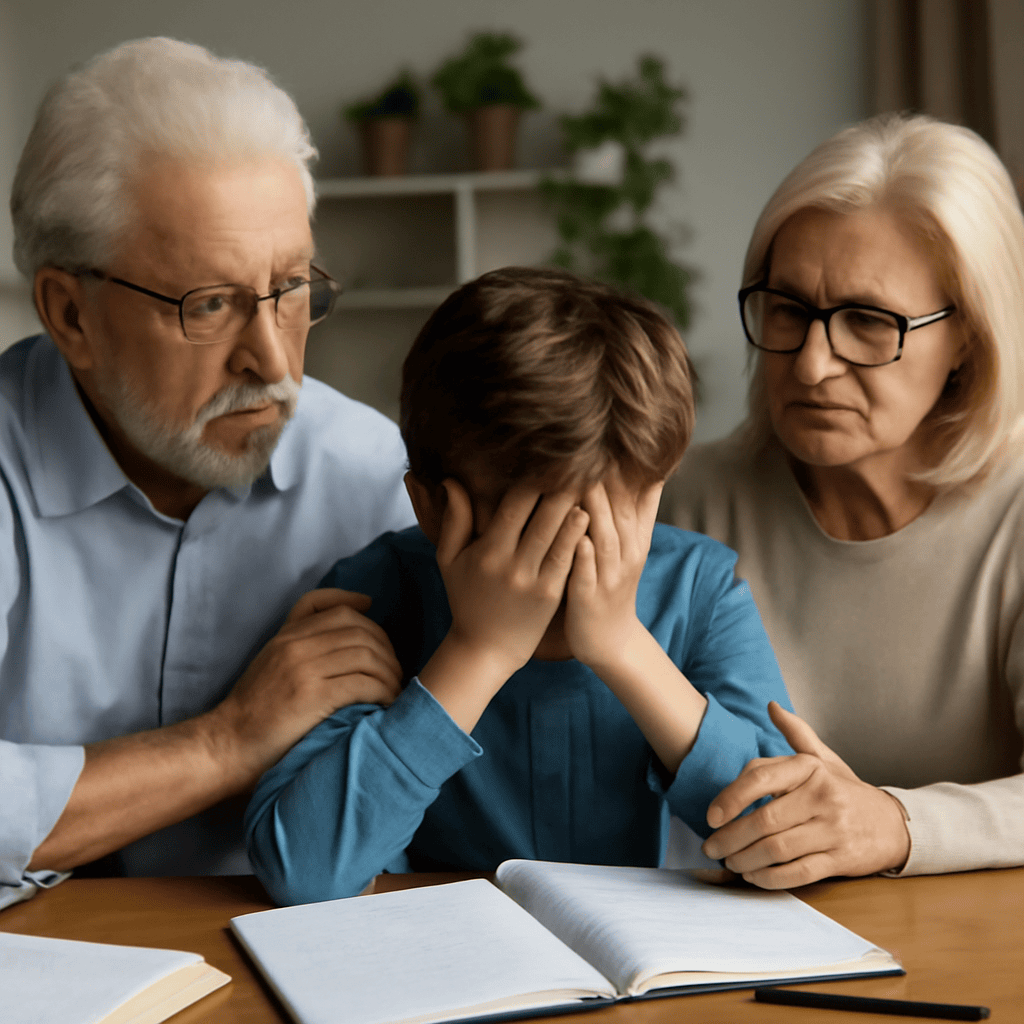
What is School Frustration and Performance Pressure?
School frustration and performance pressure are two phenomena that many children and adolescents experience during their school years. As grandparents, you can play an important role in recognizing these problems early and supporting your grandchildren. School frustration occurs when children feel that school makes no sense, that they are overwhelmed, or that they cannot achieve success. Performance pressure, on the other hand, occurs when children feel they must meet certain expectations that may be too high or that they cannot fulfill.
It is important to understand that school frustration and performance pressure are not the same, even though they often occur together. School frustration can arise when children feel misunderstood, when lessons are boring, or when they cannot connect with what they are learning. Performance pressure, on the other hand, often arises from external expectations – from parents, teachers, or society – or from children's own high standards.
As grandparents, you have a unique perspective on your grandchildren. You often see them in a different context than parents or teachers, and you can notice when something changes. Your grandchildren may also confide in you about things they would not tell their parents. This special relationship makes you an important ally when it comes to recognizing and addressing school frustration and performance pressure early.
Definitions and Differences
School frustration is a feeling of disappointment, overwhelm, or disinterest related to school. Children experiencing school frustration may feel that school makes no sense, that they are not good enough, or that they have no control over their school situation. School frustration can manifest in various forms: as disinterest in lessons, resistance to homework, or a generally negative attitude toward school.
Performance pressure, on the other hand, is the feeling that one must meet certain expectations that may be too high or cannot be met. Performance pressure can come from outside – from parents, teachers, or society – or from within – from one's own high standards. Children suffering from performance pressure may feel they must be perfect, that mistakes are not allowed, or that their worth depends on their academic performance.
It is important to understand that both phenomena should be taken seriously and that they can reinforce each other. A child experiencing school frustration may also suffer from performance pressure if they feel they must meet certain expectations despite the frustration. Conversely, performance pressure can lead to school frustration if children feel they cannot meet expectations.
Why is Early Recognition Important?
Early recognition of school frustration and performance pressure is crucial so your grandchildren can develop a positive relationship with school. If these problems are not addressed, they can worsen and have long-term effects on your grandchildren's academic performance, self-confidence, and overall life satisfaction. As grandparents, you can help ensure your grandchildren get the support they need before problems become too big.
Early recognition also allows preventive measures to be taken. If you notice your grandchildren showing signs of school frustration or performance pressure, you can intervene early and offer support. This can help prevent problems from becoming chronic and help your grandchildren learn to develop healthy strategies for dealing with academic challenges.
Your grandchildren will thank you for being attentive and helping them when they need it. Through your support, you can help your grandchildren develop a positive attitude toward school and learn to master challenges without suffering from excessive pressure. This support will accompany your grandchildren throughout their lives and help them succeed in other areas of life as well.
Recognizing Warning Signs
As grandparents, you can recognize important warning signs that indicate your grandchildren are experiencing school frustration or performance pressure. It is important to be attentive and notice changes in your grandchildren's behavior, emotions, or physical condition. These warning signs can be subtle, but if you recognize them early, you can help your grandchildren before problems become too big.
It is important that not every warning sign automatically means a serious problem exists. Children can also be temporarily frustrated or stressed without this becoming a bigger problem. But if you notice multiple warning signs or if they persist over a longer period, it is important to be attentive and offer support.
Your observations are valuable, even if you are not with your grandchildren every day. When you spend time with your grandchildren, you may notice things that others miss. Share your observations with your grandchildren's parents so you can decide together what support is needed.
Emotional Signs
Emotional signs of school frustration and performance pressure can manifest in various ways. Your grandchildren may be sad, anxious, or irritable, especially when it comes to school. They may feel they are failing or not good enough. These emotional signs can be subtle, but if you are attentive, you can notice them.
Pay attention to how your grandchildren talk about school. If they always talk negatively about school, if they say they hate school or that they are not good enough, this can be a sign of school frustration or performance pressure. Also, if your grandchildren suddenly no longer want to talk about school or avoid the topic, this can be a warning sign.
Emotional signs can also manifest in how your grandchildren react to successes or failures. If they are excessively disappointed about bad grades or cannot enjoy successes because they are afraid of the next test, this can indicate performance pressure. If you notice these emotional signs, it is important to be empathetic and offer support.
Behavioral Changes
Behavioral changes can be an important warning sign. If your grandchildren suddenly want to spend less time on homework, show resistance to school, or withdraw, this can indicate school frustration or performance pressure. Also, if your grandchildren suddenly spend a lot of time on homework because they are afraid of not being good enough, this can be a sign of performance pressure.
Also pay attention to changes in your grandchildren's social relationships. If they withdraw from friends, want to spend less time with others, or are suddenly very isolated, this can be a warning sign. School frustration and performance pressure can cause children to withdraw socially because they feel they cannot keep up or have no time for social activities.
Changes in your grandchildren's hobbies or interests can also be a warning sign. If they suddenly no longer enjoy activities they used to enjoy, or if they feel they have no time for hobbies because they must do too much for school, this can indicate performance pressure. It is important that children have time for relaxation and balance, and if this time is missing, it can lead to problems.
Physical Symptoms
Physical symptoms can be an important warning sign, especially if they occur regularly or are related to school situations. Headaches, stomachaches, sleep problems, or loss of appetite can be signs that your grandchildren are suffering from stress related to school. These symptoms should be taken seriously, even if they are sometimes subtle.
If your grandchildren regularly complain about physical ailments, especially before exams, before school, or when it comes to homework, this can be a sign of performance pressure or school frustration. It is important not to ignore these symptoms but to see them as a possible warning sign and offer support. Sometimes physical symptoms can also be an expression of emotional stress that is not directly addressed.
Changes in sleep behavior can also be a warning sign. If your grandchildren have trouble falling asleep, wake up very early, or are overtired, this can indicate stress. Sleep is important for cognitive development and academic performance, and if sleep is disturbed, it can lead to a vicious cycle where poor sleep leads to poorer performance, which in turn leads to more stress.
Having Conversations with Grandchildren
Open and empathetic conversations are an important part of supporting your grandchildren. As grandparents, you often have a special relationship with your grandchildren that allows you to have conversations that might be more difficult with parents or teachers. Use this special relationship to support your grandchildren and help them express their feelings and thoughts.
Conversations about school should not be instructive or judgmental, but open and supportive. Show interest in what your grandchildren are experiencing, and listen without immediately offering solutions or giving advice. Sometimes children simply need someone who listens and understands without something having to be changed immediately.
Regular conversations also help create a foundation of trust where your grandchildren feel safe talking about their problems. If you regularly talk with your grandchildren, not just about school but also about other topics, you create an atmosphere where it is normal to talk about difficulties. This openness will help your grandchildren seek support in the future when they need it.
Promoting Open Communication
Open communication means your grandchildren feel they can talk about anything without being judged or criticized. Create an atmosphere where it is okay to talk about difficulties, fears, or frustrations. Show that you understand that school can sometimes be difficult and that it is normal to need help.
Open communication also means you are open about your own experiences. Share stories from your own school days, even if they were not always positive. Show that you also had challenges and that it is normal to struggle sometimes. This openness will help your grandchildren understand they are not alone and that it is normal to have difficulties.
It is also important that you do not only talk about problems but also about positive experiences. Ask your grandchildren what they enjoy at school, which subjects they like, or what successes they have had. These positive conversations help develop a balanced view of school and show that school does not only consist of challenges.
Asking the Right Questions
The way you ask questions can make a big difference. Open questions that cannot be answered with just "Yes" or "No" encourage your grandchildren to tell more. Do not just ask "How was school?" but more specific questions like "What was the best thing about school today?" or "Was there something difficult today?". These questions show you are really interested and want to hear both positive and negative experiences.
Avoid questions that sound like interrogations or create pressure. Questions like "Did you do your homework?" or "Why didn't you get a better grade?" can make your grandchildren feel attacked and withdraw. Instead, you can ask: "How are your homework going?" or "How do you feel about your grades?". These questions are supportive and show you care about your grandchildren's well-being, not just their performance.
Questions that show empathy can also be helpful. Ask: "How do you feel when you think about school?" or "What worries you most about school?". These questions help your grandchildren identify and express their feelings, which is an important first step in dealing with school frustration or performance pressure.
Listening Without Judging
Listening is perhaps the most important part of a supportive conversation. When your grandchildren talk about their problems, it is important that you really listen without immediately offering solutions or judging. Sometimes children simply need someone who understands and validates their feelings without something having to be changed immediately.
Active listening means you not only hear the words but also understand the emotions and meaning behind them. Show you are listening through eye contact, nodding, or short confirmations like "I understand" or "That sounds difficult". These small gestures show your grandchildren you are really interested and that their feelings are important.
Avoid immediately giving advice or saying "You should..." or "You must...". Instead, you can ask: "What do you think could help?" or "How could we approach this together?". These questions encourage your grandchildren to find solutions themselves and show you see them as competent. When your grandchildren feel they can find solutions themselves, they will also develop more self-confidence.
Offering Support
As grandparents, you can offer various forms of support that can help your grandchildren deal with school frustration and performance pressure. This support can be practical – such as help with homework – or emotional – such as listening and showing understanding. It is important that you offer the support that fits your relationship with your grandchildren and meets your grandchildren's needs.
Your support should not create additional pressure but provide relief. If you offer help with homework, it should be supportive and encouraging, not controlling or critical. Show that you are on your grandchildren's side and want to help them, not that you have additional expectations.
It is also important that you have realistic expectations. Not every problem can be solved immediately, and sometimes it takes time for things to improve. Be patient and show that you are there for your grandchildren long-term, even if problems do not disappear immediately. This long-term support will help your grandchildren develop trust and know they are not alone.
Providing Learning Support
Learning support can be an important form of help, especially if your grandchildren feel they cannot meet requirements. But it is important that this support does not create additional pressure but helps your grandchildren develop confidence and experience success. When you help with homework, you should be patient and encourage your grandchildren, not criticize or control.
Learning support does not mean you should do the homework for your grandchildren. Instead, you can help by asking questions that encourage your grandchildren to think, or by developing strategies together for how to remember things or approach tasks. This type of support helps your grandchildren become more independent and develop confidence in their own abilities.
If you are not sure how to help with certain subjects, you can also use other resources. Perhaps there is tutoring, learning apps, or other tools that can support your grandchildren. It is important that you decide together with your grandchildren and their parents which type of support is best.
Creating Relaxation and Balance
Relaxation and balance are just as important as academic performance. If your grandchildren are suffering from performance pressure, they may feel they have no time for relaxation or must always study. As grandparents, you can help ensure your grandchildren have time for relaxation and balance, which is important for their mental health and well-being.
Plan activities with your grandchildren that have nothing to do with school. Go for walks, play games, do something creative, or simply spend time together without it being about performance. These activities help your grandchildren relax and show that life is not only about school.
Even if your grandchildren feel they have no time for hobbies or leisure activities, you can encourage them to find time for things they enjoy. Show that relaxation and balance are not only allowed but important for mental health and academic performance. When children are relaxed and balanced, they can also learn better and perform better.
Finding Solutions Together
When your grandchildren have problems with school, it is important to find solutions together rather than prescribing solutions. Ask your grandchildren what they think could help, and listen to what they have to say. When children feel they are involved in the solution, they will also have more motivation to implement the solutions.
Finding solutions together also means having realistic expectations. Not every problem can be solved immediately, and sometimes it takes several attempts until a solution works. Be patient and show you are willing to try different approaches until something works.
It is also important that you recognize the limits of your own support. Sometimes professional help is needed, and it is important that you can recognize and facilitate this. If problems become too big or if your support is not enough, you should consider together with your grandchildren's parents what additional help is needed.
Collaboration with Parents and School
As grandparents, you are part of a larger support system for your grandchildren. Collaboration with your grandchildren's parents and with the school is important so your grandchildren get the best possible support. Your observations and your perspective are valuable, and when you share these with others, you can help ensure your grandchildren are comprehensively supported.
It is important that you respect the role of parents and do not try to undermine their authority. Instead, you can function as additional support and share your observations and perspective. If you have concerns, you should discuss them with the parents so you can decide together what steps are needed.
Contact with the school can also be important, especially if you regularly spend time with your grandchildren and notice there are problems. Many schools appreciate it when grandparents get involved and show interest. When you build contact with the school, you can also better understand what is happening at school and how you can support your grandchildren.
Staying in Touch with Parents
Regular conversations with your grandchildren's parents are important so everyone is on the same page and can decide together what support is needed. Share your observations with the parents, but avoid judging or criticizing. Instead, you can offer your perspective as additional information that can help get a more complete picture.
If you have concerns, you should address them respectfully and constructively. Show that you want to support the parents and that you want to work together to find the best possible support for your grandchildren. Avoid criticizing the parents or telling them what they should do differently, but offer your support.
It is also important that you respect the parents' decisions, even if you disagree. As grandparents, you can offer your perspective, but the final decisions about upbringing and school support lie with the parents. If you are respectful and supportive, parents will also be more willing to hear your perspective and accept your support.
Building Contact with School
Contact with the school can be important, especially if you regularly spend time with your grandchildren and notice there are problems. Many schools have programs or opportunities for grandparents to get involved, and many teachers appreciate it when grandparents show interest and get involved.
When you contact the school, you should be respectful and constructive. Show interest in what is happening at school, and offer your support without criticizing or making demands. Many schools are open to support from grandparents, especially if it is respectful and constructive.
Even if you cannot or do not want to communicate directly with the school, you can support your grandchildren's parents in maintaining contact with the school. Share your observations with the parents so they can pass this information on to the school. In this way, you can indirectly help ensure your grandchildren get the support they need.
Facilitating Professional Help
Sometimes the support of family and school is not enough, and professional help is needed. As grandparents, you can help recognize when professional help is needed, and you can support your grandchildren's parents in finding this help. It is important that you recognize that professional help is not a weakness but an important resource that can help your grandchildren.
Signs that professional help might be needed include, for example, if problems persist over a longer period, if they worsen, or if they significantly affect your grandchildren's daily lives. Also, if your grandchildren show signs of depression, anxiety disorders, or other serious problems, professional help is important.
If you think professional help is needed, you should discuss this respectfully with your grandchildren's parents. Avoid criticizing the parents or saying they have failed, but show that professional help is a positive resource that can help your grandchildren. Together, you can then consider what type of professional help is best and how it can be organized.
Prevention and Positive Attitude
Prevention is just as important as treating problems. As grandparents, you can help your grandchildren develop a positive attitude toward school and prevent school frustration and performance pressure from arising in the first place. Through your support, your attitude, and your way of dealing with your grandchildren, you can help your grandchildren develop a healthy relationship with school.
A positive attitude toward school does not mean school must always be easy or fun. It means your grandchildren understand that school is important, that learning is valuable, and that it is okay to have challenges and need help. This positive attitude will help your grandchildren stay motivated even in difficult times and seek support when they need it.
Your role as grandparents is particularly valuable here. You can offer a different perspective than parents or teachers, and you can support your grandchildren in a way that fits your special relationship. Use this special role to help your grandchildren develop a positive and healthy attitude toward school.
Promoting Joy of Learning
Joy of learning is an important factor for a positive attitude toward school. As grandparents, you can help your grandchildren develop joy in learning by showing that learning is not only something that happens at school but something that is important and valuable throughout life. Share your own enthusiasm for learning and show that it can be fun to discover new things.
You can also do learning activities with your grandchildren that have nothing to do with school but show that learning can be fun. Go to museums, read books together, explore nature, or do something creative. These activities show your grandchildren that learning does not only consist of homework and tests but that there are many different ways to learn and discover.
It is also important that you support your grandchildren's interests, even if they do not directly relate to school. If your grandchildren are interested in something, you can support them in learning more about it and show that their interests are valuable. This support helps your grandchildren develop self-confidence and understand that learning is something positive.
Setting Realistic Expectations
Realistic expectations are important so your grandchildren do not suffer from excessive pressure. As grandparents, you can help set realistic expectations by showing that not everyone must be perfect and that mistakes are a normal part of the learning process. Show that it is more important to learn and grow than to be perfect.
Avoid setting expectations too high or exerting too much pressure. Instead, you can encourage your grandchildren to do their best without them feeling they must be perfect. Show that you are proud of your grandchildren regardless of their grades, and that their effort and commitment are more important than their performance.
It is also important that you recognize and emphasize your grandchildren's strengths, not just their weaknesses. Every child has strengths, and when you emphasize these, you help your grandchildren develop self-confidence and a positive attitude toward themselves. This positive attitude will help your grandchildren stay motivated even in difficult situations.
Emphasizing Strengths
Every child has strengths, and it is important to recognize and emphasize them. As grandparents, you can play an important role in recognizing and promoting your grandchildren's strengths. When your grandchildren feel their strengths are valued, they will also develop more self-confidence and a positive attitude toward themselves.
Strengths can lie in various areas – academic, social, creative, athletic, or in other areas. It is important that you recognize and emphasize your grandchildren's strengths, regardless of whether they directly relate to school or not. When your grandchildren feel their strengths are valued, they will also have more motivation to grow in other areas.
Even if your grandchildren have difficulties in one area, you can emphasize strengths in other areas. Show that no one must be good at everything and that it is normal to be stronger in some areas than in others. This balanced view will help your grandchildren develop a realistic and positive attitude toward themselves.
Long-term Support
Supporting your grandchildren with school frustration and performance pressure is not a one-time thing but a long-term process. As grandparents, you can be a constant source of support that helps your grandchildren grow and learn even beyond school years. Your long-term support will help your grandchildren develop trust and know they always have someone they can rely on.
Long-term support also means you are patient and understand that problems cannot always be solved immediately. Sometimes it takes time for things to improve, and sometimes there are setbacks. It is important that you continue to be there for your grandchildren, even if problems do not disappear immediately, and that you show you are on their side long-term.
Your long-term support will also help your grandchildren develop healthy strategies for dealing with challenges. When your grandchildren know you are always there for them, they will also have more confidence to take on new challenges and grow. This support will accompany your grandchildren throughout their lives and help them succeed in other areas of life as well.
Warning Signs for School Frustration and Performance Pressure
Forms of Support for Grandchildren
Prevention Measures for Healthy School Experience
Tips for Supportive Conversations
- Ask open questions that invite storytelling
- Listen actively without immediately offering solutions
- Show empathy and understanding for your grandchildren's feelings
- Avoid judgments or criticism
- Share your own experiences to create connection
- Emphasize positive aspects, not just problems
Signs that Professional Help May Be Needed
- Problems persist over a longer period
- Problems worsen despite support
- Daily life is significantly affected
- Signs of depression or anxiety disorders
- Self-harming behavior or suicidal thoughts
- Strong social withdrawal over a longer period
Activities for Relaxation and Balance
- Joint walks in nature
- Playing games that have nothing to do with performance
- Creative activities like painting or crafting
- Reading books together
- Simply spending time together without expectations
- Supporting grandchildren's hobbies and interests