



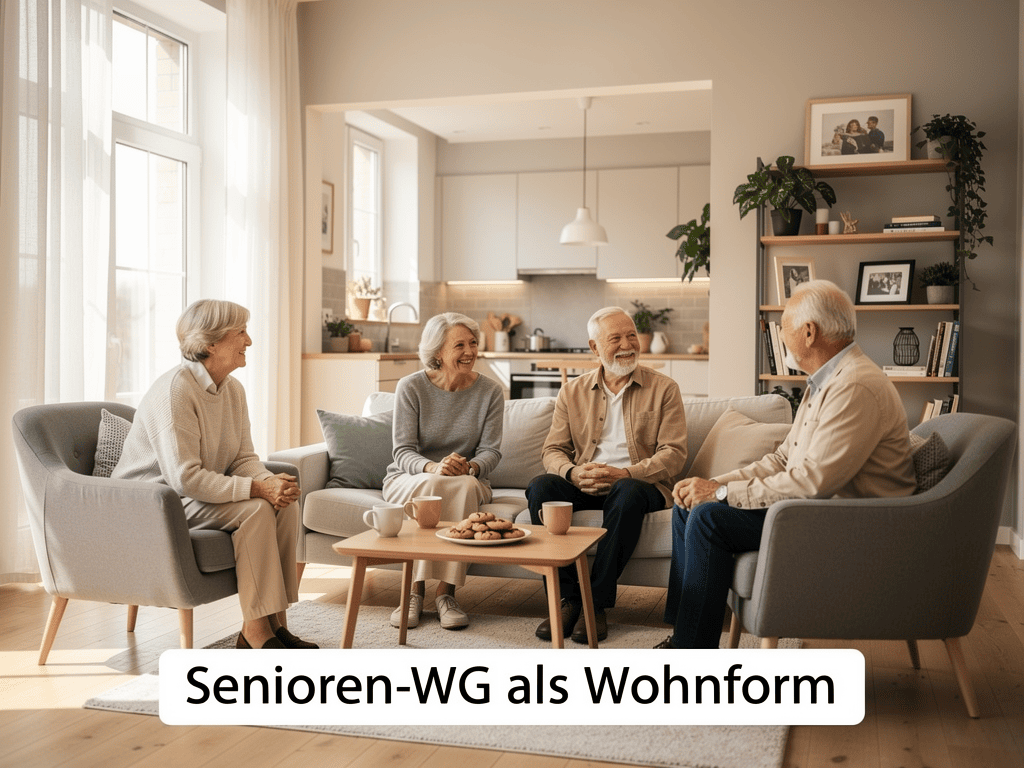
What is a senior shared home - and who is it for?
A senior shared home is a living arrangement where several older adults live together under one roof. The key feature: you keep your own private space while sharing common rooms such as the kitchen, living room, or garden. This creates a balance of independence and reliable closeness - without the structure of a traditional care facility.
Many grandparents notice at some point that living alone can be familiar, yet exhausting: managing the household, organizing everything, and carrying the sense of doing it all alone. A senior shared home can ease this burden. You still decide how your day looks, but you benefit from having someone nearby - and that often brings calm, also to your family.
A senior shared home is not one-size-fits-all. It works best if you value community, still need time to yourself, and like shaping your daily life. If your goal is to stay active for as long as possible so your grandchildren can keep enjoying time with you, this living option can be a very practical form of support.
Core idea: private space, shared living
The core idea is simple: everyone has a private room or area that is respected. At the same time there are shared spaces. This allows for spontaneous chats, shared meals, or simply the feeling of not being alone - without giving up privacy.
For grandparents, this balance can be especially valuable. You can rest when you need to, while staying engaged because life is not only about maintaining your own household. That helps you protect your energy - and use that energy for what truly matters: time, attention, and patience for your grandchildren.
Many senior shared homes shape community intentionally: a weekly plan, a shared cooking evening, or a regular morning walk. None of this has to be strict. The goal is to make daily life easier - so your life becomes clearer and freer, not smaller.
Common types: private, assisted, intergenerational
There are privately organized senior shared homes that are fully self-managed. This offers a lot of freedom, but it also means chores, billing, cleaning, and planning must be shared fairly. Many people like this because it makes self-determination tangible.
There are also assisted shared homes where a provider or outpatient service coordinates certain support. This can be helpful if assistance is already needed or likely in the future. The level of support varies widely - from occasional help to defined care elements.
Some shared homes are intergenerational. This can be socially enriching, but it needs clear agreements so daily rhythms fit. For grandparents it can be a bridge into active community life - while shared routines and support help conserve energy for your grandchildren.
When senior shared housing is especially helpful
Senior shared housing can be especially helpful if you want more everyday security but do not want to move into a nursing home. Sometimes it is about small things: not being alone in the evening, knowing someone will notice if you feel unwell, or not carrying every task by yourself.
It can also ease pressure if your family lives far away or is heavily occupied. Your children and grandchildren do not have to constantly worry whether everything is fine. That can make visits lighter: instead of organizing and worrying, you get real time together.
It is also a strong option if you plan proactively while you are still fit. Early decisions allow calmer planning, finding compatible roommates, and moving without stress. That calm is felt by your grandchildren: they see you taking good care of yourself so you can stay present in their lives.
Why this choice also supports your grandchildren
When grandparents live well, the impact reaches beyond daily routines. For grandchildren it is reassuring to know that grandma and grandpa are well supported, have people around them, and stay active. That reassurance reduces pressure in the family - and creates more space for genuine connection.
A senior shared home can help prevent loneliness. Loneliness is not only a feeling; it can influence sleep, mood, and motivation. When you feel connected, you often stay more active and curious. That makes it easier to stay in close contact with your grandchildren - patiently, attentively, and with joy.
It is also a powerful message: you choose quality of life deliberately. You are not fighting aging, you are investing in what matters to you - and very often, that is your grandchildren. When you feel stable and supported, you can play longer, listen longer, and be there longer.
More stability in everyday life - less worry
Stability does not mean perfection. It means there is a safety net when something wobbles. In shared living, others notice if you seem unusually tired, if you need help carrying something, or if something in the household stops working. This is not control - it is everyday companionship, and it often reassures your family.
For grandchildren, this matters more than people think. Children and teenagers often sense when adults are under stress. When your living situation is stable, meetings can be lighter and more joyful. You do not have to organize and explain constantly - you can simply be there.
Many grandparents find that a good shared home reduces everyday hiccups: missed appointments, overbearing chores, or the feeling of falling behind at home. When you feel supported, you keep more patience - and patience is one of the most valuable resources in relationships with grandchildren.
More energy for quality time together
Energy often grows out of small reliefs: someone cooks with you, someone reminds you of shopping, someone takes care of a shared area. These small things add up. The result is not just less work, but often a sense of lightness.
That lightness benefits your grandchildren directly. When you are not exhausted, you feel more like doing things together: a walk, a park visit, a board game, a calm talk at the kitchen table. You can be present instead of mentally chasing chores.
Many grandchildren love the reliable, calm time with grandparents. Senior shared housing can help you keep this role for longer - not as a duty, but as joy. You invest in your own strength so your grandchildren can enjoy you for a long time.
A role model: staying self-determined and brave
Grandchildren learn through decisions as much as through words. Choosing a new living option shows: change is possible, even later in life. That can be a powerful example in a world where many people fear change.
It also shows that community can be shaped intentionally: sharing responsibility, respecting boundaries, resolving conflicts, and still staying true to oneself. These social skills are valuable, and your grandchildren can witness them when they visit you.
Self-determination also means choosing the kind of closeness you want. You pick an environment that supports your relationships. This is what makes grandparents so important to grandchildren: reliability, warmth, and presence over many years.
What to look for in location, home features, and accessibility
A senior shared home only truly helps if the surroundings work for you. This starts with location: good access, short routes, and a neighborhood where you feel safe. For many grandparents it also matters how easily grandchildren can visit - without every visit becoming a logistical challenge.
The home itself does not have to be perfect, but it should make life easier. Accessible does not always mean major renovations. Often it is practical details: few thresholds, good lighting, and a bathroom that will still work well years from now. Thinking ahead buys security and reduces future stress.
Also consider privacy: a clear retreat space, a door that can be closed, and enough room for your personal belongings. When retreat is possible, community becomes more relaxed. And when your daily life feels good, you can show up for your grandchildren with more calm and warmth.
Staying connected to family and daily routes
Think about your regular routes: groceries, doctor, pharmacy, walking paths, public transport. A shared home that simplifies these routes saves energy. And energy is a treasure as we age - the better you protect it, the more you can use it for time with your grandchildren.
For visits, it is not only about distance but also about ease: parking options, stroller-friendly access, and a cozy corner where you can read or play together. These small details can be the difference between visits feeling stressful or joyful.
If your grandchildren live further away, location can still work if the connection is good. What matters is that you do not feel isolated and your children do not have to constantly organize your daily life. The more independent your routines are, the lighter family time becomes.
Reducing barriers without rebuilding everything
Accessible living means fewer tripping hazards, less strain, and more safety. Look for step-free access where possible, good lighting, non-slip floors, and easily reachable switches. An elevator is a big advantage, but a ground-floor option can also work depending on the setting.
In the bathroom, grab bars and a low-threshold shower help a lot. In the kitchen, clear organization and reachable storage matter. Many shared homes keep it simple with labeled shelves and fixed places for important items.
These details can have a big effect: feeling safe in your movement makes you calmer. And calm is contagious. Children often enjoy places where adults do not seem constantly stressed, but relaxed and present. A well-designed home supports that.
Combining safety and privacy in a smart way
Safety in shared living often grows naturally: it is noticed if something is unusual or if someone needs help. At the same time, everyone needs privacy that is respected. Clear rules like knocking before entering are not strict; they are relieving.
Organizational safety is just as important: where are emergency contacts, who holds which keys, and what happens if someone falls? These agreements are not panic; they are care. They prevent improvisation under stress and reassure your family.
For your grandchildren, this means they experience you as stable and present. When your living situation gives you safety, you can offer your grandchildren a sense of safety too - through calm, attention, and reliable relationships.
Finding roommates: values, routines, and visits from grandchildren
Roommates are the heart of a senior shared home. A place can be beautiful, but if values and routines do not match, daily life becomes difficult. That is why it helps to look beyond sympathy and talk about habits: sleeping rhythms, tidiness, noise, and handling visitors.
For grandparents, visitors are a key topic: grandchildren can be spontaneous, lively, and sometimes stay overnight. That is wonderful - and it needs agreements so nobody feels overwhelmed. A good shared home is not one where everyone is the same, but where differences are managed respectfully.
Take your time. A few meetings, trial stays, or a simple everyday test can prevent later conflict. The better the match, the less energy is lost to friction - and the more energy remains for your grandchildren.
Questions that make getting to know each other easier
Questions create clarity without judging. For example: how important is cleanliness, how do you cook, are there regular meal times, what about pets, which quiet hours matter, how do you deal with illness, and how do you handle shared purchases? This does not look strict; it looks responsible.
Family and visits can be discussed openly: how often do guests come, what is the attitude toward children in the home, when are visits welcome, and what should be announced in advance? A shared home can be child-friendly and still protect personal space if this is discussed early.
Keep your goal in mind: you want visits with your grandchildren to feel joyful, not exhausting. Clear agreements protect your energy - and your energy is what allows you to be patient, warm, and present.
Handling visits, quiet hours, and personal space
Visits are part of quality of life, but they can burden others if they are unpredictable. Many shared homes keep it simple: announce visits briefly, respect certain times, and use shared rooms by agreement. That keeps the home comfortable for everyone.
Quiet hours are not old-fashioned; they support health. Many older adults need reliable rest. Agreements like quiet evenings after 10 pm, optional midday rest, or time windows for loud appliances can reduce tension.
For grandchildren, structure can even be helpful. Clear, kind rules make them feel safe. When they know when it is quiet and where play is welcome, visits become smoother - and you can host with a relaxed heart.
Preventing conflict: clarifying expectations in writing
Many conflicts are not caused by bad intentions but by unclear expectations. Words like tidy, quiet, or shared can mean different things. A short written agreement can help turn vague ideas into practical rules.
A shared home agreement can cover chores, cost handling, visits, kitchen and bathroom use, food rules, smoking, pets, quiet hours, and how to communicate problems. It does not have to be complicated. It simply needs to be clear and accessible.
This clarity is a gift to your family as well. Less conflict means less stress. Less stress means more good days. And more good days mean more meaningful time with your grandchildren - time focused on life, not on problems.
Costs, contracts, and support: keeping the overview
Finances matter because peace of mind starts with clarity. Senior shared housing can be cheaper than living alone, but it does not have to be. What matters is understanding the structure: what is fixed monthly, what varies, and what is shared.
Contracts and liability are equally important. Who is the main tenant, are there subleases, what happens when someone moves out, and how are disagreements handled? Clear rules protect relationships - and prevent your children from having to step in later.
When your finances are stable, you can show up with more calm. That calm is what grandchildren feel: you can plan an outing, buy ice cream, or simply give your time without constant financial worry in the background.
Cost structure: rent, utilities, shared expenses
Most shared homes include rent (often linked to room size), utilities (electricity, heating, water, internet), and shared expenses (cleaning supplies, basic household items). Some shared homes run a shared budget, others settle monthly. Transparency is the key.
Plan conservatively and keep a buffer. A shared home should not be calculated too tightly. Financial calm often supports emotional calm, and emotional calm is a foundation for patient, loving relationships with grandchildren.
A simple overview helps: fixed costs, variable costs, shared costs. When everyone understands where the money goes, trust grows and tension decreases. This protects your living environment and your well-being.
Clear contracts and liability rules
There are different contract models. Some share one contract together, others use a main tenant with subleases. Both can work. The key is clarity about notice periods, deposits, damages, and replacement tenants.
Insurance questions can also matter: liability, household contents (shared or individual), and in assisted models the distinction between support and care services. It does not have to be complex, but it should not be left vague.
Clarity also helps your children. They do not have to search for documents or manage details. And when your grandchildren visit, you want to talk about their day - not about paperwork.
Support and subsidies: where asking can help
Depending on your region, there may be counseling services, housing projects, municipal programs, or support for community living. Some cities support accessible home adaptations or provide guidance on finding shared housing. Welfare organizations can also help.
If support needs exist, outpatient services may become relevant. It helps to gather information early. Early planning is a form of care - for you and your family.
Fewer bureaucratic surprises mean a calmer daily life. And calm is what allows you to give your grandchildren a feeling of home: you are not just an address, but a stable, warm anchor.
Making shared living work: rules, chores, communication
A senior shared home does not depend on perfect people, but on fair structures. Rules are not distrust; they are respect. They protect boundaries, prevent misunderstandings, and make life easier. Less friction means more calm.
Many shared homes benefit from a simple rhythm: a short weekly chat, a monthly cost review, and a rotating chores plan. It does not have to feel strict. Friendly, practical solutions work best.
For grandparents, this is a real advantage: when daily life is organized, your mind feels freer. You can plan time with your grandchildren more spontaneously because you are not constantly catching up at home.
House rules that reduce stress
Good rules are short, clear, and practical. They often cover quiet hours, cleanliness, guests, shared devices, food handling, and what to do when someone is away. The best rules are made together.
Rules should make life easier. For example, cleaning the counter after cooking prevents frustration later. Announcing guests prevents surprises. Small sentences can have a big impact.
For visits from grandchildren, rules also help: where can they play, which rooms are private, and how does overnight staying work? When this is clear, you can host more calmly and your grandchildren sense joy rather than tension.
Sharing household tasks fairly - without tension
Fair does not always mean equal. Fair can mean everyone contributes what they can. One person enjoys cooking, another organizes appointments, another handles groceries. What matters is that nobody feels permanently overburdened.
A chores plan can be simple: trash, bathroom, kitchen, hallway, rotating weekly. Or it can be based on preferences. The important part is visibility and regular review so agreements stay workable.
This reliability also reassures your family. When your children see your daily life is well organized, they worry less. And then visits with grandchildren happen for joy, not out of obligation.
Resolving conflicts without damaging relationships
Conflicts are normal. What matters is how you handle them. Many shared homes follow a simple rule: speak up early, stay specific, and search for solutions instead of blame. A weekly short check-in can be enough.
Using I-statements helps. Saying, I need more quiet in the evening is easier than accusing someone of being loud. It sounds basic, but it changes the tone dramatically.
When you resolve conflicts constructively, you protect your energy. And your energy protects your relationship with your grandchildren. Nothing is more valuable than visits filled with lightness, humor, and a truly open ear.
Starting your own senior shared home: step by step
If you cannot find the right senior shared home, you can create one. This may sound big, but it becomes manageable when you break it into clear steps. The key is not only finding a home, but also shaping a shared idea: how do you want to live, what matters most, and which support should be possible?
Creating your own shared home takes time, but it offers real freedom. You choose roommates, define agreements, and decide on location and setup. For many grandparents, this feels like a new chapter - and new chapters often keep people surprisingly alive.
For grandchildren, this can be inspiring. They see you shaping your life actively. And they benefit because you create an environment where you can stay stable, healthy, and present for longer.
Planning: needs, budget, roles
Start with an honest picture: how much community do you want, how much quiet time do you need, and which health topics should be considered? The clearer you are, the easier it is to find compatible partners.
Then the budget: what is realistic monthly, what reserves exist, and what are typical costs in your region? A clear budget prevents later conflict and gives security.
Finally, roles: who looks for apartments, who handles contracts, who keeps cost lists? Roles can rotate later, but clear responsibilities at the start make the process calmer.
Organization: home search, contracts, moving in
Clear criteria help in the search: room sizes, number of bathrooms, accessibility, location, and daily routes. During viewings, look at details that later matter: storage, lighting, noise, and the way the home feels.
Contracts should be understandable. In doubt, get advice so nobody faces surprises. Moving in also needs planning: which furniture remains private, what is shared, and what is bought together? A shared list prevents misunderstandings.
A well-organized move saves energy. That energy is what you want for your new daily life - and for showing your grandchildren that joy and stability can grow in every life stage.
Getting started: routines, agreements, welcoming grandchildren
The first weeks matter. Habits form quickly. Small routines such as a morning greeting, a weekly check-in, or a shared tea can build trust without pressure.
Agreements should be reviewed early: what works, what feels too strict, and what is unclear? This is normal. Good shared homes evolve.
When grandchildren visit, a small welcoming routine helps: a place for jackets, a box with games, and a clear rule about private rooms. This keeps visits relaxed - and your grandchildren experience the shared home as a warm place where you are happy.
Practical checklists and everyday examples
To close, let us get practical. Checklists help because they turn many thoughts into a clear order. This reduces stress, especially when several people decide together. Use the lists as a guide and adapt them to your situation.
Keep the goal in mind: you want to live well so you can live well - and so your grandchildren can enjoy you for a long time. A stable living situation is not just administration. It is a foundation for health, joy, and family time.
If you take it step by step, senior shared housing is not overwhelming. It becomes a project with clear stages. And the outcome is often a lighter daily life: less alone, more connected, and more energy for what matters most.
Cost overview for a senior shared home (orientation examples)
Senior shared housing types (compact comparison)
Getting-to-know questions (for a harmonious daily life)
Checklist for viewing and deciding
- Is the location practical (groceries, doctor, public transport)?
- Are there few steps and tripping hazards?
- Does your room feel truly private and safe?
- Are kitchen and bathroom set up for easy daily routines?
- Do routines and expectations of roommates fit yours?
- Are visits from grandchildren realistic and easy to manage?
- Are costs and billing transparent and understandable?
Practical house rules that reduce stress
- Guests are announced briefly so nobody is surprised
- Quiet evenings in shared rooms support better sleep
- Shared areas are left tidy after use
- A shared budget uses a simple list for billing
- Knocking before entering private rooms is standard
- A short weekly check-in for open topics
Making the home grandchild-friendly - without stress for others
- A dedicated games or books box keeps things easy
- A clear place for shoes and jackets supports smooth arrivals
- Agreements on noise and rest times create safety
- A small snack drawer supports shared moments
- Shared rooms are used for larger visits only by agreement
- Roommates’ retreat spaces are respected - also with kids