



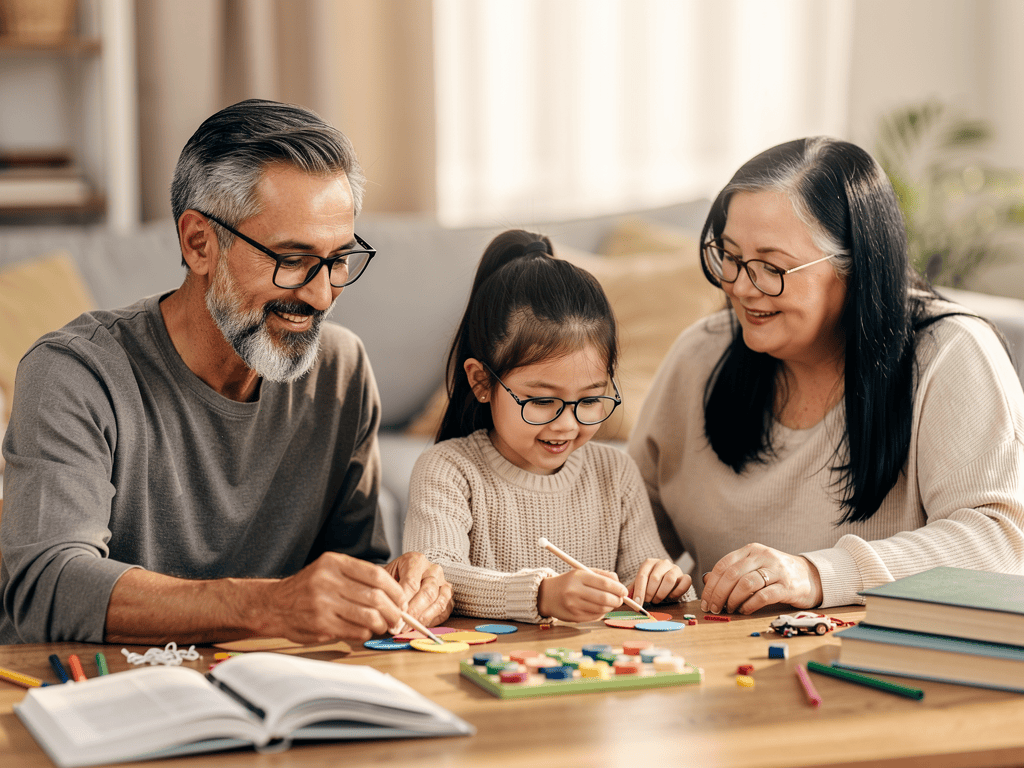
Why safe mobility matters for your grandchildren
Being safe on the go is more than convenience. It means you can reliably manage your routes – to daycare, the playground, a school performance or simply the ice cream shop around the corner. Children quickly sense whether you feel comfortable while walking. If you move calmly, they tend to stay calmer too. That is how shared time feels light and enjoyable.
Mobility aids like a walker or a cane are not a “weakness” – they are smart tools. They show your grandchildren that challenges can be solved pragmatically. It is a strong message: “I take good care of myself so we can do things together.” This mindset turns mobility into a gift for your family.
Many grandparents wait too long because they worry a mobility aid will look “old”. In practice, the opposite is often true: The right cane or walker reduces insecurity, stabilizes your steps and brings confidence back. When you walk safely, your attention returns to what truly matters: talking with your grandchildren, watching their discoveries and sharing laughter.
Confidence and being a role model
Children learn a lot by watching. If you use a walker or cane openly and simply say, “This keeps me safer,” your grandchildren experience self-care as normal. That can help them later to respect their own limits – in sports, at school and in everyday life.
Being a role model does not mean doing everything without help. It means accepting the right support to reach your goals. You show that asking for help is part of strength. For grandchildren, that is a real-life lesson in courage and responsibility.
Assess risks realistically – without fear
Safety comes from realistic decisions, not constant worry. The goal is not to avoid every route but to shape it so it fits you. A slightly longer path with smooth pavement can be better than a risky shortcut over uneven cobblestones.
When you assess risks calmly, you stay capable of action. That is especially important with grandchildren: You do not need to be perfect, but you want to be reliable. Good preparation and the right aids support exactly that.
Walker or cane: which aid fits which situation?
Whether a walker or a cane is better depends mainly on stability, distance and surroundings. A cane can help with mild insecurity, short distances and a good surface. A walker offers more steadiness, allows breaks and can carry small items – very helpful when you are out with grandchildren and bring a small bag, water bottle or jacket.
The key is that the aid must match your daily life. A walker that you barely use indoors but that helps a lot outdoors can still be a great choice. Likewise, a cane can be a helpful addition for short routes at home or when stairs are involved.
Many people use both: walker for longer distances, cane for short routes. What matters is that you feel safe with your choice and that you know the technique. Safety is not only the device – it is the combination of correct setup, good habits and realistic planning.
Quick check: stability, distance, environment
Before you leave, ask yourself: How stable do I feel today? How far is the route? Are there curbs, cobblestones or slopes? And: Do I need to be able to stop and rest without searching for a bench?
If you are unsure, choose the more stable aid. That is not a step back – it is a decision for your energy reserves and your calmness with the grandchildren.
When switching makes sense
Switching is worth considering when you notice you often “leave the aid at home” because it feels impractical or unsafe. If you need frequent stops due to fatigue, a walker may give you better support.
On the other hand, a cane can make sense when a walker feels bulky and you mainly need a little extra stability. Professional adjustment – for example at a medical supply store or with physiotherapy guidance – pays off. Small changes in height or grips can significantly improve safety.
Core technique: how to use cane and walker safely
Technique is an underrated safety factor. A cane that is too high or too low stresses the shoulder and wrist – and can even worsen balance. A walker with unreliable brakes or incorrect grip height steals confidence. That is why a quick technique check is worth it before you head out.
At the beginning, take time to practice the movements: walking, stopping, turning, handling small edges. The more familiar it becomes, the less you need to “think” – and the more attention you have for the environment and your grandchildren.
This matters even more with grandchildren. Children move spontaneously, stop suddenly and start again. Solid technique helps you respond calmly and safely without becoming hectic.
Correct height and grip
As a basic guideline: When you stand upright, the grips should be at a height where your elbows are slightly bent. That allows you to support weight without lifting your shoulders. For a cane, correct height is especially important because otherwise you may start walking unevenly.
Aim for a relaxed hand position – no tight squeezing. A quick check before you go helps: shoulders loose, eyes forward, steps calm. That keeps you in control and feels reassuring for your grandchildren.
Walking, turning, stopping – the key rules
With a walker, try to walk inside the frame – not far behind it and not too far in front. That keeps it stable and lets you brake immediately if needed. When turning, take small steps and guide the walker in a wide arc rather than twisting quickly.
With a cane, a common pattern is to move the cane forward together with the opposite leg. This creates a steady rhythm. If you are unsure, ask someone to show you the technique once – a short appointment can create lasting confidence.
Stopping should always be deliberate: brake the walker, check your stance, and only then reach down or grab something. Many falls happen when people bend “just quickly” or turn suddenly. Make it a clear routine – it protects you and helps your grandchildren feel safe.
Avoid trip hazards: at home, outdoors, in bad weather
Trip hazards are often small: a carpet edge, a cable, an unclear threshold or a poorly lit corner. When you are with grandchildren, distraction is normal. That is why it helps to systematically reduce typical risks – so your energy goes into the enjoyable moments.
Many improvements are simple: better lighting, stable shoes, a clear hallway. Outdoors, you can choose routes that match your day. Safety does not mean never stepping on cobblestones – it means knowing when it is worth it and how to handle it calmly.
In rain, snow or darkness, demands increase. Then a conservative plan is often the best option: more time, more breaks, safer surfaces, and sometimes a meeting point where you take over the grandchildren instead of walking the entire route.
Home: small changes with a big effect
Create clear walking paths. A wide passage without stools or decorative items helps you guide a walker smoothly. Fix loose rugs or remove them from main walkways. Cables belong along walls or behind furniture.
Pay attention to good lighting, especially on the way to the bathroom. Even lighting is often more helpful than a single bright spot. At night, motion lights or a small night lamp can improve safety – so you stay well for the next day with your grandchildren.
Outdoors: curbs, cobblestones, gravel
Curbs are a classic. Use lowered sections even if it takes a little longer. A few extra meters are often better than trying to “hop” a high edge. Children usually understand when you explain it calmly: “We cross here, it’s safer.”
On cobblestones, a slower pace and steady steps help. Make sure the walker’s wheels do not get caught in grooves. For a cane, a non-slip rubber tip can be crucial.
Gravel and forest paths are possible but more demanding. For outings with grandchildren, choose routes that a walker can handle well – so the mood stays relaxed and you still have energy for the experience.
Rain, snow, darkness
In rain, non-slip shoes are essential. Plan less: one destination, a calm route, one break. If your hands get cold, braking a walker can feel harder. Gloves with good grip can help.
With snow and ice, it is often best to postpone rather than risk it. Maybe you meet the grandchildren at a safe place instead of walking the whole way. That is not a limitation – it is a smart decision. Your grandchildren benefit when you stay healthy and mobile in the long run.
In darkness, visibility matters. Reflectors on a walker or bright details on jacket and bag help you be seen early. Choose well-lit routes and avoid unclear, crowded areas.
Out and about with grandchildren: planning, pace, routines
Being out with grandchildren is special – and more dynamic than walking alone. Children change pace, stop to explore and then move again. That is wonderful, and with good routines it can also be safe.
The most important factor is time. When you avoid time pressure, you walk more calmly, brake more deliberately and make better decisions. A generous buffer is not “too much” – it is a safety and calmness tool.
Agree on simple rules that are child-friendly and help you: “We stop at the corner until Grandma/Grandpa is here,” or “We use the wide path so we have space.” Children usually accept that well when you explain it kindly and clearly.
Arrive without stress: time buffers and breaks
Plan more time for routes with grandchildren. Not only because of your pace, but because children naturally create pauses: tying shoes, adjusting a jacket, collecting stones, asking questions. That is not a problem when you expect it.
Breaks are not weakness. They are a strategy to stay stable. If you pause early – before your legs feel tired – your walking pattern stays safer. That leaves energy at the destination for playing or talking together.
Playground, zoo, museum: how to keep it easy
Choose destinations that fit you: short distances between points, plenty of seating, accessible entrances. Many places offer good infrastructure – which makes outings with a walker much easier.
Do not try to manage everything at once. If you are alone with several grandchildren, a clear plan helps: arrive first, then one activity, then a break. That keeps you calm. Your grandchildren benefit because they feel your attention and security.
If other adults join you, that is not “handing it off” – it is teamwork. You can say, “I walk calmly in front, you make sure the kids don’t run.” That keeps the situation relaxed for everyone.
Exercises for more confidence: balance, strength and reaction
Mobility aids are one part – your physical foundation is the other. A little training can make a big difference, especially for balance and leg strength. The goal is not athletic performance but everyday stability: standing up safely, standing steadily and catching a small stumble.
Even short sessions help when done regularly. Keep your motivation in mind: You are not doing this “only” for yourself, but also so you can accompany your grandchildren safely. Feeling stable makes you more spontaneous and independent – and that creates many opportunities for shared moments.
Choose exercises that feel good. Safety grows through small progress. If you are unsure, physiotherapy or group exercise can be helpful. It is an investment in shared time.
A mini routine for every day
A practical mini routine can include just a few exercises: controlled sit-to-stand from a chair, toe and heel stands while holding a stable counter, gentle balance shifts with support, and a few calm breaths to reduce tension.
Create a safe setting: stable stance, reliable handhold, no time pressure. With daily repetition, it becomes a habit – and you will notice you can react more steadily in everyday situations.
When dizziness or insecurity shows up
Dizziness can have many causes – from dehydration to blood pressure issues. If you feel unsteady more often, medical clarification is worthwhile. That is not alarmism; it is responsible.
For daily life, it can help to stand up slowly, stabilize briefly and then start walking. Plan routes with places to sit down if needed. With grandchildren, early action keeps the situation calm and controllable.
Emergency plan: what to do if something happens
Even with good preparation, something can happen. An emergency plan is not pessimistic; it is reassuring. When you know what to do, you stay calmer – and calmness is your most important resource in stressful moments.
With grandchildren, having simple steps in mind is especially helpful. Children react strongly to your tone. If you stay calm and take clear steps, they feel safer, even if the moment is difficult.
A plan can be very practical: key phone numbers saved, a small note in your wallet, and a clear family agreement about who to call. This reduces the chance that a situation becomes bigger than necessary.
Immediate steps and getting help
If you stumble or fall: breathe first, then assess. Do you feel pain? Can you move arms and legs? If you are unsure, call for help. Getting support once too often is better than missing something.
If grandchildren are with you, give them a simple task: “Please get help,” or “Call mom/dad,” depending on age. Children feel better when they can do something. Speak calmly in short sentences.
Talking to grandchildren – calming and clear
Children need simple explanations. There is no need to dramatize. A sentence like, “Grandma/Grandpa stumbled, now we get help,” is enough. Afterwards you can emphasize that you acted carefully and that mobility aids exist to make things safer.
This teaches children to stay calm, solve problems step by step and accept support. It is a valuable life skill – and a way to turn an unpleasant moment into something constructive.
Conclusion: stay safely mobile – for shared time
A walker or cane can be a practical companion that gives you freedom back. With good adjustment, solid technique and calm planning, you gain safety – and quality of life. Most importantly, you gain reliability for the routes that matter to you.
When you protect your mobility, you also protect shared time with your grandchildren. You can plan outings more easily, manage routes without stress and stay present in everyday moments. That is valuable – for you, for your family and for the memories you build together.
Give yourself permission to choose the aid that fits today. Safety is not rigid; it is flexible. With that mindset, you stay safe not only on the road but also in life.
Quick guide: cane or walker (short and practical)
Surfaces and weather: what to watch for
Mini plan for outings with grandchildren (less stress, more safety)
Two-minute checklist before you leave (small effort, big impact)
- Are your shoes non-slip and properly closed, with no loose laces?
- Is your aid checked (walker brakes, cane rubber tip, nothing wobbly)?
- Are essentials within easy reach (phone, keys) so you do not rummage while walking?
- Is the route realistic today (energy level, weather, surface)?
- Do you have a small time buffer to avoid rushing?
- Does the child know one simple rule: pause at corners, no running, ask first?
Safe routines with grandchildren (kind, clear, practical)
- “We use the wide path so we have space.”
- “At the street we stop for a moment until we are together.”
- “If you notice something, tell me – I will come to you.”
- “We get in and out one at a time – that’s safer.”
- “Breaks are part of the plan – then we have more energy for play.”
Mini training (5–8 minutes) for everyday stability
- Sit-to-stand from a chair: slow and controlled, 5 repetitions.
- Heel stand while holding a counter: hold 10 seconds, 2 rounds.
- Toe stand while holding a counter: hold 10 seconds, 2 rounds.
- Weight shifts in standing: left/right, 10 calm shifts.
- Calm breathing: 5 deep breaths, shoulders consciously relaxed.