



Why language courses in old age are a wonderful idea
Learning languages is one of the most enriching activities you can undertake as grandparents. It is never too late to learn a new language, and the benefits go far beyond learning vocabulary. When you attend language courses in old age, you are not only doing something for your mental fitness, but also creating a deeper connection with your grandchildren, who may speak other languages or live in other countries.
Your grandchildren will appreciate it if you make the effort to learn their language or a language that interests them. It shows that you are interested in their world and willing to learn new things, even though you have already lived a rich life. This gesture of appreciation and interest will strengthen your relationship with your grandchildren and show them how important they are to you.
Language courses in old age are also a wonderful way to promote your mental fitness. Studies show that learning a new language keeps the brain active and can even reduce the risk of dementia. So when you regularly attend language courses, you are not only doing something for your relationship with your grandchildren, but also for your own health and well-being.
Mental fitness and mental health
Learning a new language is like a workout for your brain. When you learn a new language in old age, you activate different areas of your brain and create new connections between nerve cells. This can help maintain and even improve your mental fitness, even if you are already older.
Language courses in old age can also help strengthen your memory. When you learn new vocabulary, understand grammar rules, and get used to new pronunciations, you train your brain in many ways. This mental activity can help you stay mentally fit in other areas of your life as well.
Many people who attend language courses in old age also report increased self-confidence and a sense of fulfillment. When you see how you are making progress and developing new skills, it can be very motivating. This positive experience can also affect other areas of your life and help you take on new challenges.
Strengthening connection with grandchildren
When you learn your grandchildren's language or a language that interests them, you create a common ground for conversations and activities. Your grandchildren will appreciate that you make the effort to understand their world, and it will show them how important they are to you. This shared language can also help you get closer and spend more time together.
Language courses can also be a wonderful opportunity to learn together with your grandchildren. If you both learn the same language, you can support each other, practice together, and share your progress. This shared experience can strengthen your relationship and help you build a deeper connection.
If your grandchildren live in other countries or speak other languages, learning their language can also help you communicate better. Even if you may not become perfect, your willingness to learn shows that you are interested in their world and willing to adapt. This gesture of appreciation will strengthen your relationship with your grandchildren and show them how important they are to you.
Which language suits you?
Choosing the right language is an important step on your language learning journey. There are many factors you can consider in your decision, but the most important factor should be which language is most meaningful to you personally. If you learn a language that has to do with your grandchildren or your family, it will increase your motivation and help you stay on track.
Consider which languages are spoken in your family or which languages interest your grandchildren. Perhaps you have grandchildren who live in other countries, or grandchildren who are learning a particular language at school. If you learn the same language, you can support each other and make progress together. This shared experience can strengthen your relationship and help you build a deeper connection.
It is also important that you choose a language that really interests you. If you learn a language that does not interest you, it will be harder to stay motivated. Choose a language that makes you curious, that you would like to speak, or that you associate with beautiful memories. This personal connection will help you stay motivated even in difficult moments.
Languages of your grandchildren
If your grandchildren speak other languages or live in other countries, learning their language can be a wonderful way to get closer. Your grandchildren will appreciate that you make the effort to learn their language, and it will show them how important they are to you. This shared language can also help you communicate better and spend more time together.
If your grandchildren are learning a particular language at school, you can also learn that language and support each other. You can practice together, learn vocabulary, and share your progress. This shared experience can strengthen your relationship and help you build a deeper connection. Your grandchildren will enjoy helping you and seeing how you make progress.
Even if you may not become perfect, your willingness to learn shows that you are interested in your grandchildren's world. This gesture of appreciation will strengthen your relationship with your grandchildren and show them how important they are to you. Your grandchildren will be proud to be able to help you, and it will show them that learning is a lifelong process.
Travel languages and vacation languages
If you like to travel or plan to travel with your grandchildren, learning a travel language can be a wonderful motivation. When you learn the language of the country you want to visit, you can find your way around better, communicate with locals, and understand the culture better. These skills can also help make your travels with your grandchildren unforgettable.
Travel languages can also be a good choice if you want to learn a language that is relatively easy to learn. Many travel languages such as Spanish, Italian, or French have similar structures to German, which can make learning easier. If you learn one of these languages, you can make relatively quick progress and be able to communicate in simple situations.
If you plan to travel with your grandchildren, learning the travel language can also be a wonderful opportunity to learn together. You can learn vocabulary together, prepare for the trip, and share your progress. This shared experience can strengthen your relationship and help you build a deeper connection before you even travel.
Different types of language courses
There are many different types of language courses you can attend in old age. Each type of course has its own advantages, and the best choice depends on your personal preferences, your schedule, and your learning goals. It is important that you choose a course type that suits you and motivates you to learn regularly.
In-person courses locally offer the opportunity to learn in a group and have direct contact with other learners and the teacher. Online courses offer flexibility and can be attended from home. Self-study courses and apps offer the greatest flexibility and can be used anytime and anywhere. Consider which type of course best suits your lifestyle and needs.
It is also possible to combine different course types. Perhaps you attend an in-person course for structure and social contact, but also use an app for additional practice at home. This combination can be very effective and help you make faster progress. It is important that you find a solution that suits you and motivates you to learn regularly.
In-person courses locally
In-person courses locally offer the opportunity to learn in a group and have direct contact with other learners and the teacher. These courses usually take place at a language school, adult education center, or community center and offer a structured learning environment with regular appointments. For many older people, this structure is very helpful as it provides a fixed framework and helps maintain motivation.
In in-person courses, you have the opportunity to speak directly with others and practice your pronunciation. The teacher can give you immediate feedback, and you can ask questions if you don't understand something. This direct interaction can be very valuable and help you make faster progress. You can also meet new people and make friends, which makes learning even more enjoyable.
In-person courses also offer the opportunity to learn together with others and support each other. When you learn in a group, you can learn from each other, motivate each other, and make progress together. This social component can be very motivating and help you stay on track. Many older people also appreciate the structure and fixed framework that in-person courses provide.
Online language courses
Online language courses offer flexibility and can be attended from home. These courses usually take place via video conferences and offer the opportunity to interact with a teacher and other learners without having to leave the house. For many older people, this flexibility is very valuable, especially if mobility is an issue or if you prefer to learn from home.
Online courses also offer the opportunity to attend courses that are not offered in your area. You can attend courses from language schools around the world and learn from the best teachers, regardless of where you live. This variety can be very valuable and help you find the perfect course for your needs.
Many online courses also offer recordings of the lessons, so you can watch them again later if you didn't understand something. This flexibility can be very helpful and help you learn at your own pace. You can also often choose between different course times, making it easier to find a course that fits your schedule.
Self-study courses and apps
Self-study courses and apps offer the greatest flexibility and can be used anytime and anywhere. These courses are usually designed so that you can learn at your own pace and offer interactive exercises, vocabulary trainers, and grammar exercises. For many older people, this flexibility is very valuable, especially if you prefer to learn alone or if you have an irregular schedule.
Language learning apps such as Duolingo, Babbel, or Rosetta Stone offer structured courses that guide you step by step through a new language. These apps are usually user-friendly and offer immediate feedback, which makes learning more enjoyable. Many apps also offer gamification elements that make learning more fun and motivate you to practice regularly.
Self-study courses can also be a good complement to other course types. Perhaps you attend an in-person course for structure and social contact, but also use an app for additional practice at home. This combination can be very effective and help you make faster progress. It is important that you find a solution that suits you and motivates you to learn regularly.
Attending language courses together with grandchildren
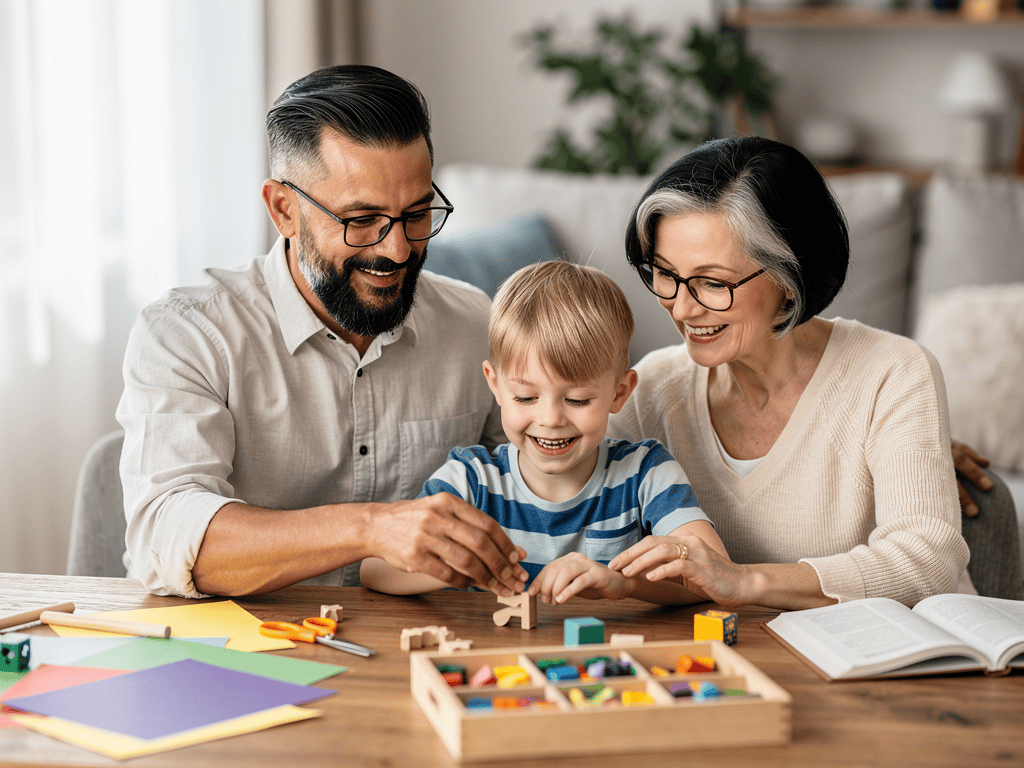
One of the most beautiful ways to use language courses in old age is to attend them together with your grandchildren. Intergenerational learning can be a wonderful experience that strengthens your relationship and helps both of you make progress. When you learn together, you can support each other, motivate each other, and share your progress.
Your grandchildren will enjoy helping you and seeing how you make progress. This shared experience can strengthen your relationship and help you build a deeper connection. At the same time, you can show your grandchildren that learning is a lifelong process and that it is never too late to learn new things. This lesson will help them throughout their lives.
Learning together can also be very motivating. When you see how your grandchildren are making progress, it will motivate you to keep going. At the same time, you can help your grandchildren stay motivated and show them that learning can be fun. This mutual support can be very valuable and help both of you succeed.
Intergenerational learning
Intergenerational learning is a wonderful way to strengthen your relationship with your grandchildren. When you learn a new language together, you create a shared experience that connects you both. Your grandchildren will appreciate that you make the effort to learn with them, and it will show them how important they are to you.
When you learn together, you can also learn from each other. Your grandchildren can help you use new technologies or understand modern learning methods. At the same time, you can help your grandchildren develop patience and perseverance and show them that learning takes time. This mutual support can be very valuable and help both of you succeed.
Intergenerational learning can also help both of you stay motivated. When you see how your grandchildren are making progress, it will motivate you to keep going. At the same time, you can help your grandchildren stay motivated and show them that learning can be fun. This shared experience can strengthen your relationship and help you build a deeper connection.
Joint activities and exercises
When you learn a language together with your grandchildren, you can also do joint activities and exercises. Perhaps you can watch movies in the target language together, read books, or play games. These activities make learning more fun and help both of you learn the language naturally.
Joint activities can also help both of you stay motivated. When you see how much fun your grandchildren are having, it will motivate you to keep going. At the same time, you can help your grandchildren stay motivated and show them that learning can be fun. This shared experience can strengthen your relationship and help you build a deeper connection.
You can also learn vocabulary together, quiz each other, or do exercises together. These joint activities make learning more fun and help both of you understand the language better. Your grandchildren will enjoy helping you and seeing how you make progress, and it will show them that learning is a lifelong process.
Tips for successful language learning in old age
Language learning in old age requires patience, perseverance, and the right attitude. It is important that you set realistic goals and understand that progress takes time. If you practice regularly and stay patient, you will make progress, even if it sometimes goes slowly.
Regularity is the key to successful language learning. It is better to learn a little every day than to learn a lot once a week. When you practice regularly, what you have learned stays better in memory, and you will make faster progress. Try to develop a routine that fits your lifestyle and stick to it.
It is also important that you don't put yourself under pressure. Language learning should be fun and not become a burden. If you feel overwhelmed, take a break and come back to it later. It is important that you stay on track and practice regularly, even if it's only a few minutes a day.
Setting realistic goals
It is important that you set realistic goals when learning a new language in old age. You may not learn as quickly as a young person, but that is completely fine. It is important that you make progress and that learning brings you joy. Set small, achievable goals that motivate you to keep going.
Realistic goals could be: learning five new vocabulary words every day, being able to have a simple conversation, or being able to read a short book in the target language. These goals are achievable and give you a sense of fulfillment when you reach them. If you set goals that are too big, you may feel overwhelmed and lose motivation.
It is also important that you celebrate your progress, even if it is small. If you have learned a new vocabulary word or pronounced a sentence correctly, be proud of it. These small successes will motivate you to keep going and help you stay on track. Your grandchildren will also be proud of you when they see how you make progress.
Regularity and patience
Regularity is the key to successful language learning. It is better to learn 15 minutes every day than to learn two hours once a week. When you practice regularly, what you have learned stays better in memory, and you will make faster progress. Try to develop a routine that fits your lifestyle and stick to it.
Patience is also very important in language learning. You may not learn as quickly as a young person, but that is completely fine. It is important that you make progress and that learning brings you joy. If you stay patient and practice regularly, you will make progress, even if it sometimes goes slowly.
It is also important that you don't get discouraged if you make mistakes. Mistakes are a natural part of the learning process, and everyone makes them. It is important that you learn from your mistakes and keep practicing. Your grandchildren will help you if you have questions, and they will be proud of you when they see how you make progress.
Overcoming hurdles and fears
Many older people have concerns when it comes to learning a new language. You may be afraid of making mistakes, or you may think that you are too old to learn something new. These concerns are completely normal, but they should not stop you from attending language courses.
It is important to understand that mistakes are a natural part of the learning process. Everyone makes mistakes when learning a new language, and that is completely fine. It is important that you learn from your mistakes and keep practicing. Your grandchildren will help you if you have questions, and they will be proud of you when they see how you make progress.
It is also important that you don't put yourself under pressure. Language learning should be fun and not become a burden. If you feel overwhelmed, take a break and come back to it later. It is important that you stay on track and practice regularly, even if it's only a few minutes a day.
Overcoming fear of mistakes
Many older people are afraid of making mistakes when learning a new language. This fear is completely normal, but it should not stop you from attending language courses. Mistakes are a natural part of the learning process, and everyone makes them. It is important that you learn from your mistakes and keep practicing.
It is also important to understand that no one is perfect. Even native speakers make mistakes, and that is completely fine. When you learn a new language, you will make mistakes, and that is a sign that you are learning. Your grandchildren will help you if you have questions, and they will be proud of you when they see how you make progress.
Try to develop a positive attitude toward mistakes. See mistakes as learning opportunities, not as failures. If you make a mistake, learn from it and try to do better next time. This attitude will help you stay motivated and keep going, even when it is sometimes difficult.
Age-appropriate learning methods
It is important that you find learning methods that suit you. In old age, you may learn differently than young people, and that is completely fine. It is important that you find methods that help you learn the language and that you enjoy. Perhaps you learn better by listening, by reading, or through practical exercises.
Many older people learn better when they use the language in a context that is relevant to them. Perhaps you learn better when you talk about topics that interest you, or when you use the language in situations that are important to you. This personal relevance can be very motivating and help you make faster progress.
It is also important that you don't put yourself under pressure. Language learning should be fun and not become a burden. If you feel overwhelmed, take a break and come back to it later. It is important that you stay on track and practice regularly, even if it's only a few minutes a day. Your grandchildren will help you if you have questions, and they will be proud of you when they see how you make progress.
Language courses as a gift for your grandchildren
When you attend language courses in old age, you are not only doing something for yourself, but also for your grandchildren. Your grandchildren will appreciate that you make the effort to learn their language or a language that interests them. It shows that you are interested in their world and willing to learn new things, even though you have already lived a rich life.
This gesture of appreciation and interest will strengthen your relationship with your grandchildren and show them how important they are to you. Your grandchildren will be proud of you when they see how you make progress, and they will be happy to help you if you have questions. This shared experience can strengthen your relationship and help you build a deeper connection.
Language courses can also be a wonderful opportunity to learn together with your grandchildren. If you both learn the same language, you can support each other, practice together, and share your progress. This shared experience can strengthen your relationship and help you build a deeper connection. Your grandchildren will enjoy helping you and seeing how you make progress, and it will show them that learning is a lifelong process.
Comparison of different language course types
Realistic learning goals for different age groups
Difficulty level of different languages for German speakers
Tips for motivation in language learning
- Set small, achievable goals that motivate you
- Celebrate your progress, even if it is small
- Learn together with your grandchildren for additional motivation
- Use the language in situations that are relevant to you
- Be patient with yourself and don't give up
- Remember why you want to learn the language
Joint activities for language learning with grandchildren
- Watch movies in the target language together
- Read books in the target language and talk about them
- Play games in the target language
- Learn vocabulary together and quiz each other
- Have simple conversations in the target language
- Cook recipes in the target language and practice the language while doing so
Strategies for overcoming hurdles
- Understand that mistakes are a natural part of the learning process
- Don't put yourself under pressure and take your time
- Find learning methods that suit you
- Use the support of your grandchildren and family
- Be patient with yourself and don't give up
- Remember your motivation and your goals