



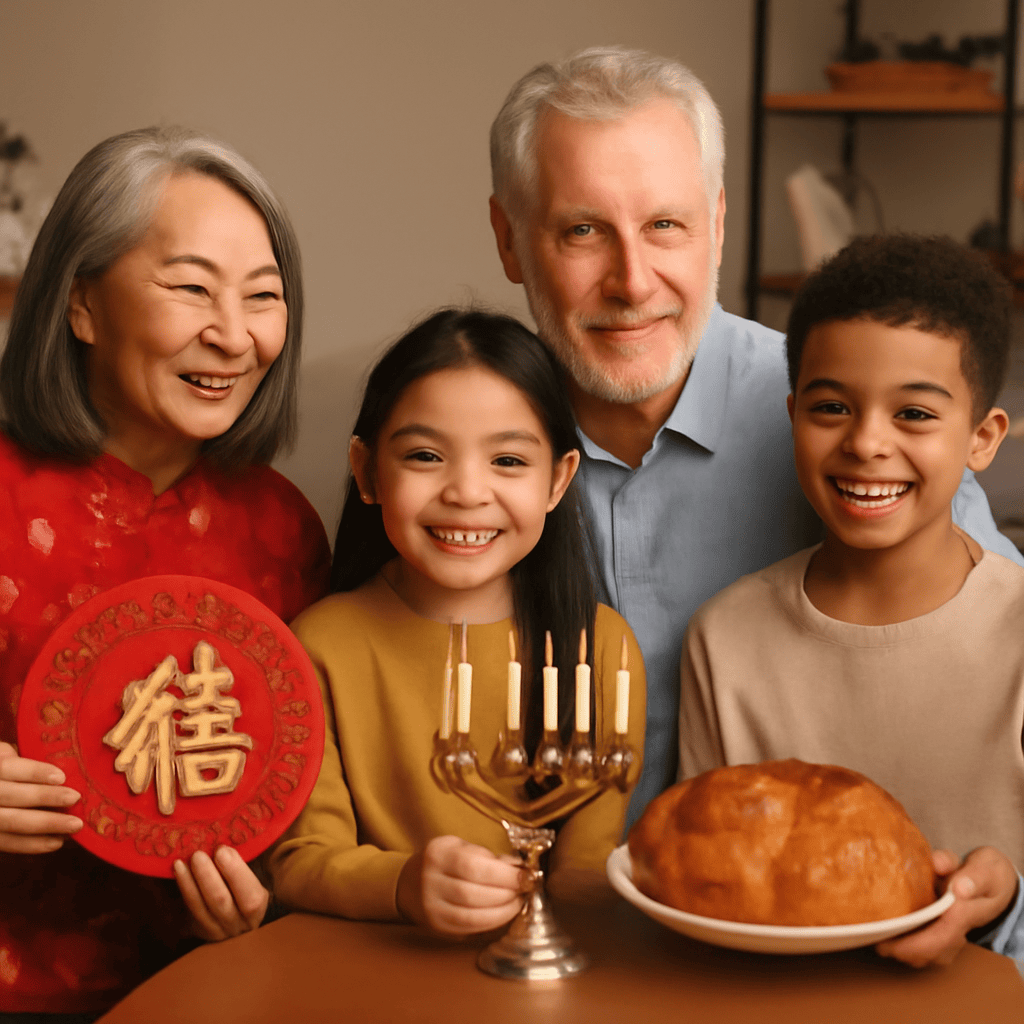
Why cultural diversity is important for grandchildren
In an increasingly globalized world, it is more important than ever for children to learn about and understand different cultures. As grandparents, you have the opportunity to show your grandchildren how enriching cultural diversity is and how traditions from different countries and cultures can be connected. These experiences help your grandchildren grow up open, tolerant, and worldly.
When you introduce your grandchildren to different cultures, you give them tools that will accompany them throughout their lives. They learn that there are many different ways to live, celebrate, and think, and that all of these ways are valuable. This openness will help your grandchildren navigate a diverse world and interact respectfully with people from different cultures.
Experiencing cultural diversity also means developing empathy and understanding for others. When your grandchildren learn about different traditions, they also learn to understand and respect the perspectives of other people. This ability will help your grandchildren build strong relationships and succeed in a globalized world. As grandparents, you can help your grandchildren develop these important social skills.
Enrichment through diversity
Each culture has its own traditions, customs, and values that are valuable and enriching. When you show your grandchildren different cultures, you expand their horizons and help them see the world from different perspectives. This diversity makes life more interesting and enriching for your grandchildren.
Traditions from different cultures can also bring new ideas and inspirations. Perhaps you will discover together new festivals you want to celebrate, new dishes you want to cook, or new stories you want to tell. These discoveries can become wonderful shared experiences that will shape your grandchildren.
When your grandchildren learn about different cultures, they also develop a sense of the beauty and uniqueness of each culture. They learn that there is not just one "right" way to live, but that there are many different paths, all of which have their justification. This realization will help your grandchildren remain tolerant and open, even when they meet people who live differently than they do.
Promoting tolerance and openness
When you show your grandchildren different cultures, you also promote tolerance and openness. Your grandchildren learn that people are different and that is okay. They learn to respect others, even if they live differently, think differently, or have different traditions. This tolerance will help your grandchildren navigate a diverse society.
Openness to different cultures also means staying curious and always learning something new. When you explore different cultures together with your grandchildren, you show them that learning is fun and that there is always something new to discover. This curiosity will help your grandchildren remain open to new experiences throughout their lives.
Tolerance and openness are important values that your grandchildren will need in a globalized world. When you live and promote these values, you give your grandchildren an important foundation on which they can build. Your grandchildren will learn that diversity is a strength and that it is enriching to learn about and respect different cultures.
Discovering traditions from your own family
Before exploring new cultures, it can be helpful to first discover and understand the traditions of your own family. Perhaps you yourself have roots in different cultures, or your family has maintained traditions over generations that are worth passing on. These own traditions are an important starting point for understanding what traditions mean and why they are important.
When you explore your family history together with your grandchildren, you can also discover which traditions from different cultures are already present in your family. Perhaps there are recipes that have been passed down from generation to generation, or festivals that go back to various cultural influences. These discoveries can lead to interesting conversations and show how cultures can mix and enrich each other.
Knowing and appreciating your own traditions is also important for understanding new cultures. When your grandchildren know where they come from and what traditions their family has, they can better understand why traditions are important to other people. This foundation helps your grandchildren approach other cultures respectfully and with interest.
Exploring family history
Together with your grandchildren, you can explore your family history and discover which traditions and cultural influences are present in your family. Perhaps you have old photos, letters, or documents that tell stories about your ancestors. These stories can lead to interesting conversations and show how cultures have mixed over generations.
When you explore your family history, you can also discover which countries, regions, or cultures have played a role in your family. Perhaps there are recipes that come from different countries, or customs that go back to various cultural influences. These discoveries can become exciting projects where you can learn more about these cultures together.
Exploring family history is also a wonderful way to spend time with your grandchildren and show them how important their roots are. When you tell stories together, look at photos, or read old documents, you create valuable shared memories and show your grandchildren that their history is important.
Passing on traditions
If you have traditions from your own family, it is important to pass them on to your grandchildren. These traditions are part of your family's identity and help your grandchildren understand where they come from. When you maintain and pass on these traditions, you also give your grandchildren something valuable that will accompany them throughout their lives.
Passing on traditions means not only explaining them but also living them. Celebrate together the festivals of your family, cook together the recipes that have been passed down from generation to generation, and tell the stories that belong to your family. When your grandchildren experience these traditions, they will learn to understand and appreciate them.
When you pass on traditions, you can also explain why these traditions are important and what they mean. Tell the stories behind the traditions and show your grandchildren how these traditions have shaped your family. These explanations help your grandchildren understand and appreciate the meaning of traditions.
Exploring new cultures together
After discovering your own traditions, you can explore new cultures together with your grandchildren. There are many ways to learn about different cultures without having to travel far. You can attend cultural events, read books, watch movies, or cook together. It is important to stay curious and open to new experiences.
When exploring new cultures, you should proceed respectfully and with interest. Show your grandchildren that it is important to respect other cultures and not to judge. Explain that each culture has its own values and traditions that are valuable, even if they are different from your own. This attitude will help your grandchildren approach other cultures respectfully and openly.
Exploring new cultures can also lead to interesting conversations. When you discover something new together, you can talk about what you find interesting, what surprised you, or what you would like to try. These conversations help your grandchildren organize their thoughts and reflect on their experiences.
Attending cultural events
Cultural events are a wonderful way to learn about different cultures. Perhaps there are festivals, markets, or events in your city that present different cultures. Visit such events together with your grandchildren and experience the music, food, art, and traditions of different cultures.
At cultural events, you can also talk to people from different cultures. Show your grandchildren how to ask questions respectfully and with interest and how to listen to other people. These encounters can become valuable experiences and show your grandchildren how enriching it is to meet people from different cultures.
When you attend cultural events, you can also take notes together or take photos to capture the experiences. Later, you can talk together about what you experienced and perhaps even collect ideas on how to integrate certain traditions into your own lives. This follow-up helps your grandchildren process and understand what they experienced.
Cuisine from different countries
Cuisine is a wonderful way to learn about different cultures. Together with your grandchildren, you can cook dishes from different countries and learn more about the culture, history, and traditions of these countries. Cooking is also a practical activity that is fun and where you can spend time together.
When you cook dishes from different countries together, you can also talk about the ingredients, preparation, and meaning of the dishes. Perhaps there are stories or traditions associated with certain dishes. These conversations make cooking an enriching experience and help your grandchildren better understand different cultures.
Cooking can also become a regular tradition. Perhaps you can cook a dish from another country together once a month and learn more about that country and its culture. This regular activity gives your grandchildren something to look forward to and helps them continuously learn about different cultures.
Creatively connecting traditions
A particularly beautiful way to connect different cultures is to creatively combine traditions. You don't have to choose between different traditions – you can connect them and create something new and unique. This creative connection shows your grandchildren how cultures can enrich each other and how traditions can evolve.
When you connect traditions, you can also show that there is not just one "right" way to maintain traditions. You can take elements from different cultures and combine them into something new that fits your family. This flexibility shows your grandchildren that traditions are alive and can adapt while maintaining their meaning.
Connecting traditions can also lead to interesting conversations. When you think together about how to connect different traditions, you can talk about what is important to you, what you want to preserve, and what you want to redesign. These conversations help your grandchildren develop their own values and understand how traditions emerge and evolve.
Designing festivals and celebrations
Festivals and celebrations are a wonderful way to connect traditions from different cultures. Perhaps you can design a festival that contains elements from different cultures. You can serve dishes from different countries, play music from different cultures, or combine customs from different traditions.
When you design festivals, you can also involve your grandchildren and ask them which elements they would like to include. Let your grandchildren help decide which dishes should be cooked, which music should be played, or which activities should take place. This participation makes the festival something special and shows your grandchildren that their ideas are important.
Festivals can also become a regular tradition. Perhaps you can celebrate a "Cultural Festival" once a year, where you present different cultures and connect traditions from different countries. This regular celebration gives your grandchildren something to look forward to and helps them continuously learn about different cultures.
Stories and fairy tales
Stories and fairy tales from different cultures are a wonderful way to learn about different traditions. Together with your grandchildren, you can read or tell stories from different countries and learn more about the culture, values, and traditions of these countries. Stories make cultures tangible and help your grandchildren understand different perspectives.
When you tell stories from different cultures, you can also talk about the differences and similarities. Perhaps there are similar motifs in stories from different cultures, or perhaps there are differences that show how different cultures emphasize different values. These conversations help your grandchildren understand and appreciate different cultures.
Stories can also become creative projects. Perhaps you can write a story together with your grandchildren that contains elements from different cultures, or perhaps you can perform a play based on stories from different cultures. These creative projects make learning about different cultures a playful and enriching experience.
Crafts and art from different cultures
Crafts and art are a wonderful way to learn about and experience different cultures. Together with your grandchildren, you can learn craft techniques from different countries, view artworks from different cultures, or do creative projects together that are inspired by different cultures.
When you explore crafts and art from different cultures, you can also talk about the history, meaning, and techniques. Perhaps there are stories or traditions associated with certain craft techniques, or perhaps there are cultural meanings attributed to certain artworks. These conversations make learning about different cultures an enriching experience.
Crafts and art can also become practical activities where you can spend time together. Perhaps you can learn origami from Japan together, paint patterns from different cultures, or try handiwork from different countries. These practical activities make learning about different cultures a playful and enriching experience.
Crafts and handiwork
Crafts and handiwork from different cultures are a wonderful way to learn about different traditions. Together with your grandchildren, you can learn techniques from different countries, such as origami from Japan, weaving from different cultures, or painting with patterns from different traditions. These activities are fun and help your grandchildren experience different cultures practically.
When you craft together, you can also talk about the history and meaning of the different techniques. Perhaps there are stories or traditions associated with certain craft techniques, or perhaps there are cultural meanings attributed to certain patterns or colors. These conversations make crafting an enriching experience and help your grandchildren better understand different cultures.
Crafting can also become a regular activity. Perhaps you can learn a craft technique from another country together once a month and learn more about that country and its culture. This regular activity gives your grandchildren something to look forward to and helps them continuously learn about different cultures.
Music and dance
Music and dance from different cultures are a wonderful way to learn about and experience different traditions. Together with your grandchildren, you can listen to music from different countries, learn dances from different cultures, or make music together. Music and dance are fun and help your grandchildren experience different cultures in an emotional and physical way.
When you listen to music or dance together, you can also talk about the history, meaning, and instruments. Perhaps there are stories or traditions associated with certain songs or dances, or perhaps there are cultural meanings attributed to certain rhythms or movements. These conversations make experiencing music and dance an enriching experience.
Music and dance can also become a regular activity. Perhaps you can listen to music from another country together once a month or learn a dance from another culture. This regular activity gives your grandchildren something to look forward to and helps them continuously learn about different cultures.
Language and communication
Language is an important part of every culture, and learning words and terms from different languages can be a wonderful way to learn about different cultures. Together with your grandchildren, you can learn simple words from different languages, listen to stories in different languages, or explore languages together playfully.
When you learn words from different languages together, you can also talk about the meaning and history of the words. Perhaps there are interesting stories or traditions associated with certain words, or perhaps there are cultural meanings attributed to certain terms. These conversations make language learning an enriching experience.
Language can also become a playful activity. Perhaps you can play games together where you use words from different languages, or perhaps you can read stories together that are written in different languages. These playful activities make learning about different cultures an entertaining and enriching experience.
Learning words and terms
Together with your grandchildren, you can learn simple words and terms from different languages. Start with basic words like "Hello", "Thank you", "Please", or "Goodbye" in different languages. These basic words are a good starting point and show your grandchildren how interesting it can be to learn about different languages.
When you learn words together, you can also talk about the pronunciation, meaning, and usage of the words. Perhaps there are interesting stories or traditions associated with certain words, or perhaps there are cultural meanings attributed to certain terms. These conversations make language learning an enriching experience.
Learning words can also become a regular activity. Perhaps you can learn a few new words from another language together once a week and learn more about that country and its culture. This regular activity gives your grandchildren something to look forward to and helps them continuously learn about different cultures.
Stories in different languages
Stories in different languages are a wonderful way to learn about different cultures. Together with your grandchildren, you can read or listen to stories that are written or told in different languages. These stories make cultures tangible and help your grandchildren understand different perspectives.
When you read or listen to stories in different languages together, you can also talk about the differences and similarities. Perhaps there are similar motifs in stories from different cultures, or perhaps there are differences that show how different cultures emphasize different values. These conversations help your grandchildren understand and appreciate different cultures.
Stories can also become creative projects. Perhaps you can write a story together with your grandchildren that contains elements from different languages, or perhaps you can perform a play based on stories from different cultures. These creative projects make learning about different cultures a playful and enriching experience.
Teaching respect and appreciation
When you show your grandchildren different cultures, it is important to teach respect and appreciation. Show your grandchildren that each culture has its own values, traditions, and customs that are valuable, even if they are different from your own. This respect will help your grandchildren approach other cultures respectfully and openly.
Appreciation also means recognizing the meaning and value of different traditions. Explain to your grandchildren why certain traditions are important to certain cultures and what they mean. These explanations help your grandchildren understand and appreciate different cultures, even if they are different from their own.
Respect and appreciation are important values that your grandchildren will need in a globalized world. When you live and promote these values, you give your grandchildren an important foundation on which they can build. Your grandchildren will learn that diversity is a strength and that it is enriching to learn about and respect different cultures.
Cultural Activities for Grandparents and Grandchildren
Tips for Connecting Traditions
Simple Words from Different Languages
Tips for Promoting Cultural Diversity
- Start with your own family traditions and explore your family history
- Attend cultural events in your city together
- Cook dishes from different countries regularly
- Read stories and fairy tales from different cultures together
- Learn simple words from different languages together
- Show respect and appreciation for different cultures
- Involve your grandchildren in planning and designing activities
Resources for Exploring Different Cultures
- Libraries with books about different cultures
- Museums with exhibitions about different countries
- Cultural centers and communities in your city
- Online resources and videos about different cultures
- Cookbooks with recipes from different countries
- Music and films from different cultures
- Cultural festivals and events in your region
Signs that Grandchildren are Developing Cultural Interest
- Grandchildren ask questions about different countries and cultures
- They show interest in stories from different cultures
- They want to try dishes from different countries
- They are interested in languages and words from other countries
- They show respect and appreciation for different traditions
- They want to learn more about their own family history