



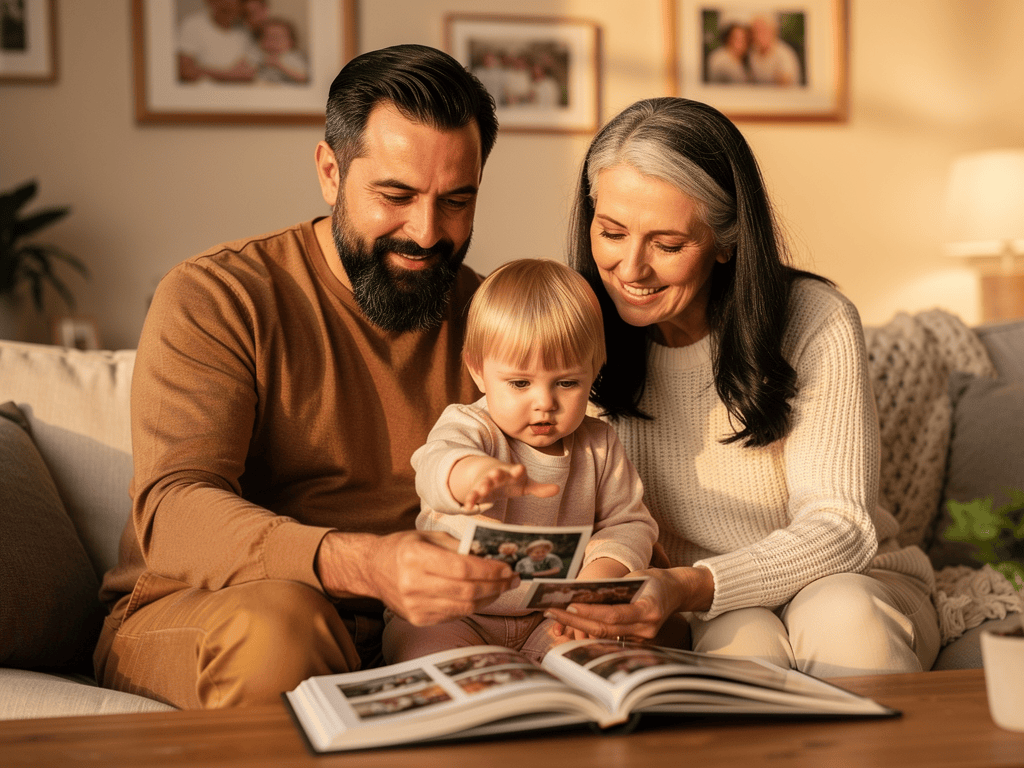
Why traditions are important and why they must evolve
Traditions are like an invisible bond that connects generations. They provide stability, create connection, and convey values that are passed from one generation to the next. As grandparents, you probably have many traditions that are important to you – perhaps certain holiday rituals, family recipes you cook every year, or special activities you did with your children.
But the world is changing, and with it the needs and interests of your grandchildren. What was important to you as a child or as a parent does not necessarily have to be relevant for your grandchildren. This does not mean that traditions become unimportant – rather, it means they must evolve to retain their meaning. If you carefully adapt or let go of some traditions, you can ensure that your grandchildren want to continue them because they are relevant and meaningful to them.
The key is to see traditions not as rigid rules, but as living practices that can evolve. If you are willing to carefully change traditions, you show your grandchildren that you value their perspective and that traditions are there for all generations, not just the older ones. This openness makes you an important ally to your grandchildren and helps you build a deep, meaningful relationship with them.
The importance of traditions for grandparents
Traditions give you as grandparents a sense of continuity and connection. They remind you of your own childhood, your parents and grandparents, and help you preserve your values and identity. Traditions can also provide comfort in times of change – they are like an anchor that gives you stability when the world around you changes.
For many grandparents, traditions are also a way to express their love and care. When you bake the same cookies every Christmas that your grandmother baked, or when you tell certain stories that have been passed down in your family, you show your grandchildren that they are part of a larger story. This connection is something special that you can give to your grandchildren.
At the same time, traditions can also be a burden if they become too rigid or no longer fit your life. If you feel that you are maintaining certain traditions only out of a sense of duty, without them bringing joy to you or your grandchildren, then it may be time to reconsider them. Traditions should be an enrichment, not a burden.
Why traditions must evolve
The world in which your grandchildren are growing up is different from the world in which you grew up. New technologies, changed social norms, and different life realities shape your grandchildren's lives. Traditions that made sense decades ago do not necessarily still fit today. If you carefully adapt traditions, you can ensure that they remain relevant for your grandchildren and that they want to continue them.
Change does not mean loss – on the contrary. If you adapt traditions, you can preserve their essence while creating space for new elements that are important to your grandchildren. A Christmas tradition, for example, can still bring the family together, even if the way it is celebrated changes. The meaning remains, only the form adapts.
If you are willing to change traditions, you also show your grandchildren that you take their perspective seriously. You show that traditions are not just for the past, but also for the future. This openness makes you an important ally to your grandchildren and helps you build a deep, meaningful relationship with them that lasts across generations.
Recognizing and reflecting on traditions
Before you can change or let go of traditions, it is important to become aware of which traditions you have and what they mean to you. Take time to think about your traditions – both the large, obvious ones and the small, everyday ones. Perhaps you have certain holiday rituals, family recipes you cook every year, or special activities you regularly do with your family.
Also reflect on which traditions are really important to you and which you may only maintain out of habit. Not every tradition has to last forever – some have served their purpose and can be let go to make room for new, more relevant traditions. If you become aware of which traditions are really close to your heart, you can decide which ones to keep, which to adapt, and which to let go.
Also talk to your family about your traditions. Ask your grandchildren which traditions are important to them and which they might like to change. These conversations can help you understand which traditions are relevant to the next generation and which may need to be adapted. If you involve your grandchildren in these considerations, you show them that their opinion matters and that traditions are for everyone, not just the older generations.
What traditions do you have?
Traditions can take many forms. Perhaps you have certain holiday rituals – such as baking cookies together at Christmas, reading certain stories, or singing certain songs. Perhaps you also have everyday traditions – such as Sunday breakfast together, the weekly walk, or regular phone calls with the family.
Family recipes can also be traditions – perhaps you cook the same dish every year on a certain occasion that your grandmother already cooked. Or perhaps you have certain activities you regularly do with your family – such as gardening together, playing certain games, or watching certain movies.
Take time to create a list of your traditions. Write down everything that comes to mind – both the large, obvious traditions and the small, everyday habits. If you become aware of which traditions you have, you can better decide which ones to keep, which to adapt, and which to let go.
Understanding the meaning of your traditions
Every tradition has a meaning – sometimes it is obvious, sometimes it lies deeper. If you understand why a tradition is important, you can better decide whether to keep, adapt, or let it go. Ask yourself: What is the core of this tradition? What makes it special? Why is it important to me?
Sometimes the meaning of a tradition is not the tradition itself, but what it represents – such as connection, love, community, or values. If you understand what a tradition really means, you can preserve that meaning even if the form changes. A Christmas tradition, for example, can still bring the family together, even if the way it is celebrated changes.
Also talk to your family about the meaning of your traditions. Perhaps your grandchildren see certain traditions differently than you, or perhaps they have different ideas about what is important. If you understand your grandchildren's perspective, you can adapt traditions so they are relevant to all generations. These conversations can also help your grandchildren better understand the meaning of your traditions and want to continue them.
Carefully changing instead of abruptly ending
If you notice that a tradition no longer quite fits, you do not have to give it up completely right away. Often it is better to carefully adapt traditions rather than abruptly ending them. If you preserve the essence of a tradition while creating space for new elements, you can ensure that it remains relevant for your grandchildren and that they want to continue it.
Careful changes can take many forms. Perhaps you can modernize a tradition – for example, you can combine an old story with modern elements or enrich a traditional recipe with new ingredients. Perhaps you can also adapt the frequency or timing of a tradition – for example, you can make a weekly tradition monthly or perform it at a different time that better fits your life.
It is important to involve your grandchildren in the design of the changes. Ask them what they wish for and listen to what they have to say. If your grandchildren feel that their opinion matters and that they can help shape the traditions, they will want to continue them. This collaboration makes traditions something shared that connects all generations.
Adapting traditions instead of giving up
If a tradition no longer quite fits, that does not mean you have to give it up completely. Often small adjustments are enough to make a tradition relevant again. Perhaps you can change the way you perform a tradition, or perhaps you can add new elements that are important to your grandchildren.
A Christmas tradition, for example, can still bring the family together, even if the way it is celebrated changes. Perhaps you can combine traditional elements with modern ones – for example, you can tell old stories with new technologies or enrich traditional recipes with new ingredients. The meaning remains, only the form adapts.
If you adapt traditions, you also show your grandchildren that traditions are alive and can evolve. You show that traditions are not just for the past, but also for the future. This openness makes you an important ally to your grandchildren and helps you build a deep, meaningful relationship with them.
Involving your grandchildren in the design
If you want to change traditions, it is important to involve your grandchildren in the design of the changes. Ask them what they wish for and listen to what they have to say. If your grandchildren feel that their opinion matters and that they can help shape the traditions, they will want to continue them.
This collaboration makes traditions something shared that connects all generations. If you develop new traditions together with your grandchildren or adapt existing ones, you create something that is relevant to everyone. This shared design also strengthens the relationship between you and your grandchildren and helps you build a deep, meaningful connection.
If you involve your grandchildren, you also show them that traditions are for everyone, not just the older generations. You show that their perspective matters and that traditions can evolve to remain relevant to all generations. This openness makes you an important ally to your grandchildren and helps you build a deep, meaningful relationship with them.
Letting go of traditions that no longer fit
Sometimes it is better to let go of a tradition than to desperately maintain it. If a tradition no longer brings joy to you or your grandchildren, if it has become a burden, or if it simply no longer fits your life, then it may be time to let it go. This does not mean you have to forget the meaning of the tradition – you can preserve the memories even if you no longer practice the tradition itself.
Letting go can also mean making room for new traditions. If you let go of an old tradition that no longer fits, you can create space for new, more relevant traditions that are important to your grandchildren. These new traditions can be just as meaningful as the old ones – perhaps even more meaningful because they are relevant to the current generation.
If you let go of a tradition, it is important to do so carefully and to talk to your family about it. Explain why you want to let go of the tradition and listen to what your family has to say. Perhaps you can develop a new tradition together that replaces the old one and is relevant to everyone.
When it is time to let go
There are various signs that it is time to let go of a tradition. If a tradition no longer brings joy to you or your grandchildren, if it has become a burden, or if it simply no longer fits your life, then it may be time to let it go. Also, if a tradition is only maintained out of a sense of duty, without it really having meaning, it may be better to let it go.
Sometimes it is also better to let go of a tradition if it no longer fits your family's values or lifestyle. If a tradition conflicts with modern values or life realities, it may be better to let it go and make room for new, more relevant traditions. This does not mean you have to forget the meaning of the tradition – you can preserve the memories even if you no longer practice the tradition itself.
If you are unsure whether you should let go of a tradition, talk to your family about it. Ask your grandchildren what they think and listen to what they have to say. Perhaps you can decide together whether a tradition should be let go or whether it can be adapted to remain relevant to everyone.
Creating new traditions together
If you let go of an old tradition, you can make room for new traditions that are important to your grandchildren. These new traditions can be just as meaningful as the old ones – perhaps even more meaningful because they are relevant to the current generation. If you develop new traditions together with your grandchildren, you create something that is relevant to everyone and connects all generations.
New traditions can take many forms. Perhaps you can develop a new holiday tradition that combines modern elements with traditional ones. Perhaps you can also create a new everyday tradition – such as cooking a new recipe together, regularly playing a new game, or watching a new series together.
If you create new traditions, it is important to involve your grandchildren. Ask them what they wish for and listen to what they have to say. If your grandchildren feel that their opinion matters and that they can help shape the traditions, they will want to continue them. This collaboration makes traditions something shared that connects all generations.
Making traditions relevant for your grandchildren
For your grandchildren to want to continue traditions, they must be relevant to them. This does not mean you have to give up all traditions – rather, you can design them so they are meaningful to your grandchildren. If you combine traditions with modern elements or explain the meaning to your grandchildren, you can ensure they want to continue them.
One way to make traditions relevant is to combine them with modern elements. Perhaps you can tell an old story with modern technologies, or perhaps you can enrich a traditional recipe with new ingredients. If you show that traditions can evolve and that they are there for all generations, your grandchildren will want to continue them.
It is also important to explain the meaning of your traditions to your grandchildren. If your grandchildren understand why a tradition is important and what it means to you, they will be more likely to continue it. Explain the history behind the tradition, the values it conveys, and the meaning it has for your family. These explanations help your grandchildren understand and appreciate the traditions.
Combining traditions with modern elements
One way to make traditions relevant is to combine them with modern elements. Perhaps you can tell an old story with modern technologies – for example, you can record a traditional story as an audiobook or illustrate it with pictures or videos. Perhaps you can also enrich a traditional recipe with new ingredients or prepare it in a modern way.
If you combine traditions with modern elements, you show your grandchildren that traditions are alive and can evolve. You show that traditions are not just for the past, but also for the future. This openness makes you an important ally to your grandchildren and helps you build a deep, meaningful relationship with them.
At the same time, you can preserve the essence of the tradition while creating space for new elements. A Christmas tradition, for example, can still bring the family together, even if the way it is celebrated changes. The meaning remains, only the form adapts.
Explaining the meaning to your grandchildren
If your grandchildren understand why a tradition is important and what it means to you, they will be more likely to continue it. Explain the history behind the tradition, the values it conveys, and the meaning it has for your family. These explanations help your grandchildren understand and appreciate the traditions.
If you explain the meaning of your traditions, you also connect your grandchildren with your family history. You show them that they are part of a larger story and that traditions create a connection between generations. This connection is something special that you can give to your grandchildren, and it helps them develop their own identity.
It is important to tailor the explanations to the age. For younger grandchildren, you can use simple explanations, while for older grandchildren you can have more complex conversations. Adapt your explanations to the age and maturity of your grandchildren so they can understand the meaning of the traditions.
Practical examples of gentle change
There are many ways to carefully change traditions. Here are some practical examples of how you can adapt traditions so they remain relevant for your grandchildren. These examples show that change does not mean loss, but that traditions can evolve to remain relevant to all generations.
It is important to use the examples as inspiration and adapt them to your own situation. Not every tradition has to be changed in the same way – some can be carefully adapted, others can be let go to make room for new traditions. Find out what works best for you and your family.
If you change traditions, it is important to proceed carefully and involve your grandchildren. Ask them what they wish for and listen to what they have to say. If your grandchildren feel that their opinion matters and that they can help shape the traditions, they will want to continue them.
Christmas and holiday traditions
Christmas traditions are often particularly important for families, but they can also be particularly difficult to change. If you want to carefully adapt a Christmas tradition, you can, for example, add modern elements – such as watching a new Christmas movie together or baking new cookie varieties alongside the traditional ones.
Perhaps you can also adapt the way you celebrate – for example, you can combine a traditional celebration with modern elements or hold the celebration at a different time that better fits your life. The meaning remains – the family comes together – only the form adapts.
If you want to let go of a Christmas tradition that no longer fits, you can make room for new traditions. Perhaps you can develop a new Christmas tradition together with your grandchildren that replaces the old one and is relevant to everyone. This new tradition can be just as meaningful as the old one – perhaps even more meaningful because it is relevant to the current generation.
Family rituals and habits
Everyday family rituals can also be carefully adapted. If you have breakfast together every Sunday, for example, you can perhaps adapt the way you have breakfast – for example, you can try new dishes or change the time you have breakfast so it better fits your life.
Perhaps you can also develop new rituals that complement or replace the old ones. If you regularly go for walks, for example, you can perhaps try new routes or combine the walks with new activities – such as collecting leaves together or watching birds.
If you adapt family rituals, it is important to proceed carefully and involve your grandchildren. Ask them what they wish for and listen to what they have to say. If your grandchildren feel that their opinion matters and that they can help shape the rituals, they will want to continue them.
Dealing with resistance
If you want to change traditions, you may encounter resistance – both from yourself and from other family members. Perhaps you feel that you cannot change the traditions of your parents or grandparents, or perhaps other family members have concerns when you want to adapt traditions.
It is important to take this resistance seriously and deal with it carefully. Talk to your family about your considerations and listen to what they have to say. Explain why you want to change the traditions and show that you respect the meaning of the traditions, even if you want to adapt the form.
Sometimes it can help if you make small, careful changes instead of large, abrupt ones. If you proceed step by step and involve your family in the design of the changes, you can reduce resistance and ensure that everyone feels comfortable with the new traditions. This careful approach helps you change traditions without losing the connection they create.
Different types of traditions
Strategies for careful adaptation
When is it time to let go of a tradition?
Tips for careful changes
- Start with small adjustments instead of big changes
- Involve your grandchildren in the design of the changes
- Preserve the essence of the tradition even if the form changes
- Explain the meaning of your traditions to your grandchildren
- Be open to new ideas and perspectives
- Proceed step by step and do not rush
Conversation starters about traditions
- "Which traditions are important to you and why?"
- "Are there traditions you would like to change?"
- "What does this tradition mean to you?"
- "How can we make this tradition relevant for everyone?"
- "What new traditions would you like to create?"
- "What connects you with our family traditions?"
Signs that a tradition should be adapted
- Your grandchildren no longer show interest in the tradition
- The tradition no longer brings joy to you or your grandchildren
- The tradition has become too elaborate or burdensome
- The tradition no longer fits your life or values
- The tradition is only maintained out of sense of duty
- Your grandchildren want to change or let go of the tradition