



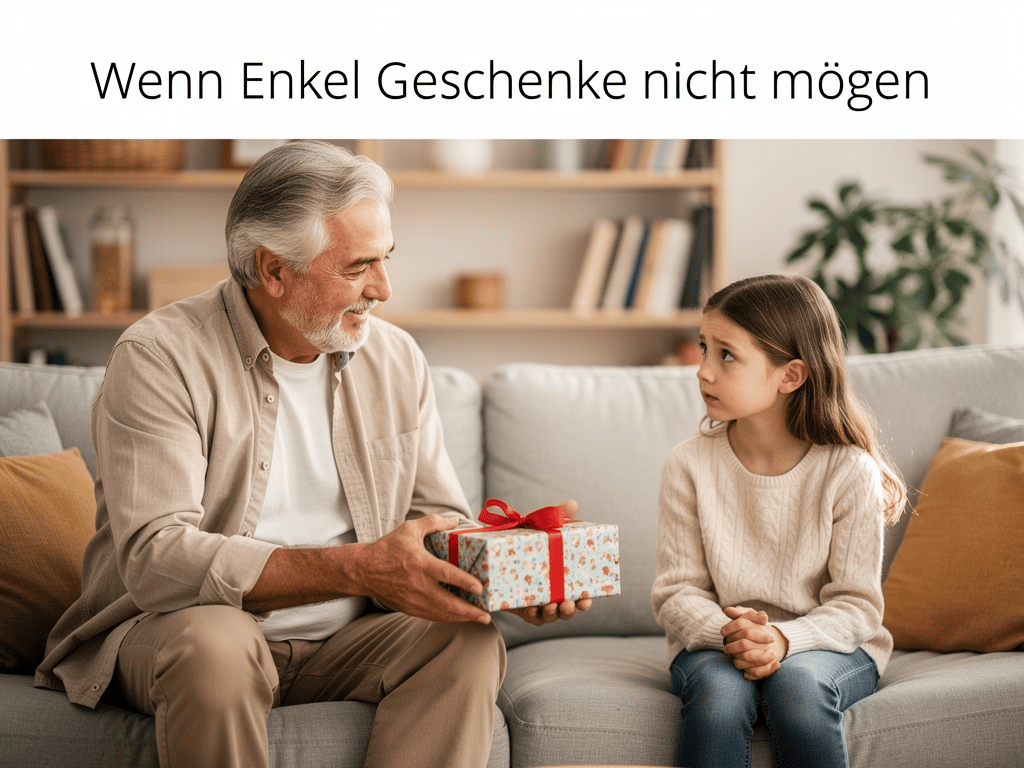
Why grandchildren sometimes don't like gifts
It is completely normal for grandchildren to sometimes not like gifts. This usually has nothing to do with the quality of the gift or the relationship with grandparents, but is part of the natural development of children and adolescents. As grandparents, you can understand that your grandchildren's preferences are constantly changing and that it is perfectly fine if a gift is not immediately received with enthusiasm.
Children go through various developmental phases in which their interests, preferences, and needs can change quickly. What was the favorite toy last week can already be uninteresting today. These changes are a sign that your grandchildren are developing and making new experiences. As grandparents, you can support this development by reacting understandingly and showing that it is okay when preferences change.
Sometimes it is also about the way of communication or the expectations associated with a gift. When grandchildren feel that they must like a certain gift, this can create pressure and lead them to resist it. It is important that gifts are given voluntarily and that grandchildren feel that their opinion is respected, even if they don't like a gift.
Developmental phases and taste
Children and adolescents go through various developmental phases in which their interests and preferences are constantly changing. What is interesting for a 5-year-old child can already be boring for a 10-year-old child. These changes are completely normal and show that your grandchildren are developing and collecting new experiences.
As grandparents, you can respect these developmental phases and understand that your grandchildren's preferences are changing. Instead of being disappointed when a gift is not immediately received with enthusiasm, you can show that you understand and support this development. Your grandchildren will appreciate it when you give them space to develop their own preferences, even if these differ from your expectations.
It is important that you do not try to control or influence your grandchildren's preferences. Let your grandchildren make their own experiences and develop their own preferences. As grandparents, you can support this by being open to conversations and showing interest in the things that interest your grandchildren, even if these differ from your own interests.
Communication and expectations
Sometimes it is about the way of communication or the expectations associated with a gift. When grandchildren feel that they must like a certain gift, this can create pressure and lead them to resist it. It is important that gifts are given voluntarily and that grandchildren feel that their opinion is respected.
As grandparents, you can show that it is okay when your grandchildren don't like a gift. Talk about it openly and show that the relationship with your grandchildren is more important than any gift. Your grandchildren will appreciate it when you react understandingly and show that their opinion is important, even if they don't like a gift.
It is also important that you do not set expectations for your grandchildren's reaction. Let your grandchildren have their own feelings and respect these, even if they do not meet your expectations. As grandparents, you can show that the relationship with your grandchildren is more important than any reaction to a gift.
Reacting calmly and understandingly
When grandchildren don't like gifts, it is important to react calmly and understandingly. Your reaction shapes how your grandchildren deal with such situations and how they perceive the relationship with you. When you react understandingly, you show your grandchildren that their opinion is important and that the relationship with you is more important than any gift.
It is completely normal that you are disappointed when a gift is not immediately received with enthusiasm. It is important that you do not take out this disappointment on your grandchildren, but that you understand that your grandchildren's reaction has nothing to do with your relationship. As grandparents, you can show that you understand that preferences change and that it is okay when a gift is not immediately received with enthusiasm.
Reacting calmly does not mean that you have to suppress your feelings. You can show your disappointment, but in a respectful way that does not strain the relationship with your grandchildren. It is important that you show that the relationship with your grandchildren is more important than any reaction to a gift and that you understand that preferences can change.
Understanding and accepting emotions
When grandchildren don't like gifts, various emotions can arise in you: disappointment, sadness, perhaps also anger or frustration. These emotions are completely normal and understandable. It is important that you recognize and accept these emotions without taking them out on your grandchildren.
As grandparents, you can show that you understand that your grandchildren have their own preferences and that it is okay when these differ from your expectations. Your grandchildren will appreciate it when you react understandingly and show that their opinion is important, even if they don't like a gift.
It is also important that you reflect on your own emotions and understand why you are disappointed. Sometimes the disappointment is not about the gift itself, but about the expectations you had attached to it. When you let go of these expectations, you can react more calmly and strengthen the relationship with your grandchildren.
No personal rejection
When grandchildren don't like gifts, this is not a personal rejection. Your grandchildren's reaction has nothing to do with your relationship, but with their own preferences and interests. As grandparents, you can understand that rejecting a gift does not mean that your grandchildren don't like you or that the relationship with you is not important.
It is important that you do not try to take your grandchildren's reaction personally. Your grandchildren have their own preferences and interests that can differ from yours. This is completely normal and shows that your grandchildren are developing and developing their own personality.
As grandparents, you can show that you understand that rejecting a gift has nothing to do with your relationship. Talk openly with your grandchildren about it and show that their opinion is important, even if they don't like a gift. Your grandchildren will appreciate it when you react understandingly and show that the relationship with you is more important than any gift.
Communication with grandchildren about gifts
Open communication is the key to understanding why grandchildren don't like gifts and how you can choose better gifts in the future. As grandparents, you can show that you are open to conversations and that your grandchildren's opinion is important, even if they don't like a gift.
It is important that you do not react defensively or try to convince your grandchildren that they must like a gift. Let your grandchildren have their own feelings and respect these, even if they do not meet your expectations. As grandparents, you can show that the relationship with your grandchildren is more important than any reaction to a gift.
Use the opportunity to learn more about your grandchildren's interests and preferences. Ask what interests them, what they like to do, and what they wish for. These conversations can help you choose gifts in the future that better suit your grandchildren and that they really like.
Having open conversations
Open conversations about gifts can help avoid misunderstandings and strengthen the relationship with your grandchildren. Talk with your grandchildren about why they don't like a gift and listen to what they have to say. It is important that you do not react defensively or try to convince your grandchildren that they must like a gift.
As grandparents, you can show that you understand that preferences change and that it is okay when a gift is not immediately received with enthusiasm. Your grandchildren will appreciate it when you react understandingly and show that their opinion is important, even if they don't like a gift.
Use the opportunity to learn more about your grandchildren's interests and preferences. Ask what interests them, what they like to do, and what they wish for. These conversations can help you choose gifts in the future that better suit your grandchildren and that they really like.
Asking about wishes and preferences
If you want to know what your grandchildren wish for, you can ask directly. Many grandchildren are happy when grandparents show interest in their wishes and take them into account. It is important that you do not try to control or influence your grandchildren's wishes, but that you are open to their ideas.
As grandparents, you can show that you respect your grandchildren's wishes, even if these differ from your own ideas. Your grandchildren will appreciate it when you take their wishes seriously and try to fulfill them, even if it is sometimes difficult.
It is also important that you do not try to guess your grandchildren's wishes, but that you ask directly. Many grandchildren are happy when grandparents show interest in their wishes and take them into account. These conversations can help you choose gifts in the future that better suit your grandchildren and that they really like.
Alternative gift ideas
When material gifts are not well received, alternative gift ideas can be a wonderful way to give gifts to your grandchildren while strengthening the relationship. Experiences, shared time, or practical support can often be more valuable than material gifts and show your grandchildren that you take time for them and that the relationship with you is important.
As grandparents, you can show that gifts do not always have to be material things. Experiences, shared time, or practical support can often be more valuable than material gifts and show your grandchildren that you take time for them and that the relationship with you is important. Your grandchildren will appreciate it when you show them that shared time is more important than any material gift.
It is important that you take into account your grandchildren's interests and preferences when choosing alternative gift ideas. Ask what interests your grandchildren, what they like to do, and what they wish for. These conversations can help you choose gifts that better suit your grandchildren and that they really like.
Experiences instead of objects
Experiences can often be more valuable than material gifts. A shared trip, a visit to a museum, a concert, or a shared hobby can be wonderful gifts that your grandchildren will remember for a long time. As grandparents, you can show that shared time is more important than any material gift.
It is important that you take into account your grandchildren's interests and preferences when choosing experiences. Ask what interests your grandchildren, what they like to do, and what they wish for. These conversations can help you choose experiences that better suit your grandchildren and that they really like.
Experiences create shared memories that will accompany your grandchildren throughout their lives. As grandparents, you can show that shared time is more important than any material gift and that the relationship with you is more valuable than any thing. Your grandchildren will appreciate it when you show them that you take time for them and that the relationship with you is important.
Giving shared time
Shared time is one of the most valuable gifts you can give your grandchildren. A shared afternoon, a shared hobby, or simply time you spend together can be more valuable than any material gift. As grandparents, you can show that shared time is more important than any thing and that the relationship with you is more valuable than any gift.
It is important that you take into account your grandchildren's interests and preferences when planning shared time. Ask what interests your grandchildren, what they like to do, and what they wish for. These conversations can help you choose activities that better suit your grandchildren and that they really like.
Shared time creates connection and strengthens the relationship between you and your grandchildren. As grandparents, you can show that you take time for your grandchildren and that the relationship with you is important. Your grandchildren will appreciate it when you show them that shared time is more important than any material gift and that you are interested in them.
Dealing with disappointment
It is completely normal that you are disappointed when a gift is not immediately received with enthusiasm. It is important that you do not take out this disappointment on your grandchildren, but that you understand that your grandchildren's reaction has nothing to do with your relationship. As grandparents, you can show that you understand that preferences change and that it is okay when a gift is not immediately received with enthusiasm.
It is important that you reflect on your own emotions and understand why you are disappointed. Sometimes the disappointment is not about the gift itself, but about the expectations you had attached to it. When you let go of these expectations, you can react more calmly and strengthen the relationship with your grandchildren.
As grandparents, you can show that the relationship with your grandchildren is more important than any reaction to a gift. Talk openly with your grandchildren about it and show that their opinion is important, even if they don't like a gift. Your grandchildren will appreciate it when you react understandingly and show that the relationship with you is more important than any gift.
Reflecting on own feelings
When you are disappointed because a gift was not immediately received with enthusiasm, it is important that you reflect on your own feelings. Ask yourself why you are disappointed and what your expectations were. Sometimes the disappointment is not about the gift itself, but about the expectations you had attached to it.
As grandparents, you can show that you understand that preferences change and that it is okay when a gift is not immediately received with enthusiasm. When you let go of your expectations, you can react more calmly and strengthen the relationship with your grandchildren. Your grandchildren will appreciate it when you react understandingly and show that their opinion is important.
It is also important that you do not try to hide or deny your disappointment. You can show your feelings, but in a respectful way that does not strain the relationship with your grandchildren. As grandparents, you can show that the relationship with your grandchildren is more important than any reaction to a gift and that you understand that preferences can change.
Seeing positive aspects
Even when a gift is not immediately received with enthusiasm, there are often positive aspects you can see. Perhaps the gift has an interesting function that your grandchildren will discover later, or it has a meaning that goes beyond the material. As grandparents, you can show that you see the positive aspects and that the relationship with your grandchildren is more important than any reaction to a gift.
It is important that you do not try to convince your grandchildren that they must like a gift. Let your grandchildren have their own feelings and respect these, even if they do not meet your expectations. As grandparents, you can show that the relationship with your grandchildren is more important than any reaction to a gift and that you understand that preferences can change.
Sometimes it can also be helpful to address the gift again later. Perhaps your grandchildren needed time to understand or appreciate the gift. As grandparents, you can show that you are patient and that the relationship with your grandchildren is more important than any immediate reaction to a gift.
Strengthening long-term relationship
The relationship with your grandchildren is more important than any reaction to a gift. As grandparents, you can show that you understand that preferences change and that it is okay when a gift is not immediately received with enthusiasm. Your grandchildren will appreciate it when you react understandingly and show that the relationship with you is more important than any gift.
It is important that you do not try to buy or control the relationship through gifts. The relationship with your grandchildren is based on trust, respect, and shared time, not on material gifts. As grandparents, you can show that shared time is more important than any thing and that the relationship with you is more valuable than any gift.
Use the opportunity to strengthen the relationship with your grandchildren, even when a gift is not immediately received with enthusiasm. Talk openly with your grandchildren about it and show that their opinion is important. Your grandchildren will appreciate it when you react understandingly and show that the relationship with you is more important than any gift.
Showing appreciation
Even when a gift is not immediately received with enthusiasm, you can show your grandchildren that you appreciate them. The relationship with your grandchildren is more important than any reaction to a gift. As grandparents, you can show that you understand that preferences change and that it is okay when a gift is not immediately received with enthusiasm.
It is important that you do not try to show appreciation through gifts, but through your time, your attention, and your affection. Your grandchildren will appreciate it when you show them that shared time is more important than any thing and that the relationship with you is more valuable than any gift.
As grandparents, you can show that you appreciate your grandchildren by taking time for them, listening to them, and showing interest in their interests. These gestures are often more valuable than material gifts and show your grandchildren that you are interested in them and that the relationship with you is important.
Creating shared memories
Shared memories are more valuable than any material gift. As grandparents, you can show that shared time is more important than any thing and that the relationship with you is more valuable than any gift. Your grandchildren will appreciate it when you show them that you take time for them and that the relationship with you is important.
It is important that you take into account your grandchildren's interests and preferences when creating shared memories. Ask what interests your grandchildren, what they like to do, and what they wish for. These conversations can help you choose activities that better suit your grandchildren and that they really like.
Shared memories create connection and strengthen the relationship between you and your grandchildren. As grandparents, you can show that you take time for your grandchildren and that the relationship with you is important. Your grandchildren will appreciate it when you show them that shared time is more important than any material gift and that you are interested in them.
Practical tips for future gifts
If you want to choose gifts in the future that your grandchildren really like, you can follow some practical tips. It is important that you take into account your grandchildren's interests and preferences and that you are open to conversations. Ask what interests your grandchildren, what they like to do, and what they wish for.
As grandparents, you can show that you respect your grandchildren's wishes, even if these differ from your own ideas. Your grandchildren will appreciate it when you take their wishes seriously and try to fulfill them, even if it is sometimes difficult. These conversations can help you choose gifts in the future that better suit your grandchildren and that they really like.
It is also important that you do not try to guess your grandchildren's wishes, but that you ask directly. Many grandchildren are happy when grandparents show interest in their wishes and take them into account. These conversations can help you choose gifts in the future that better suit your grandchildren and that they really like.
Reaction strategies when grandchildren don't like gifts
Alternative gift types for grandchildren
Communication tips for conversations about gifts
Tips for reacting calmly
- Take a deep breath and take a moment
- Remember that the reaction has nothing to do with your relationship
- Show understanding for your grandchildren's opinion
- Talk openly about your feelings, but respectfully
- Ask why the gift doesn't appeal
- Show that the relationship is more important than the gift
Questions to learn about wishes and preferences
- "What interests you particularly right now?"
- "Is there something you've been wishing for for a long time?"
- "What do you like to do in your free time?"
- "Is there something you'd like to try?"
- "What do you find exciting or interesting?"
- "Is there something you'd like to learn?"
Signs of a healthy relationship despite gift reaction
- Grandchildren share their opinion openly
- Grandchildren show interest in shared time
- Grandchildren ask about your interests
- Grandchildren show appreciation for your time
- Grandchildren tell about their experiences
- Grandchildren seek your closeness and company