



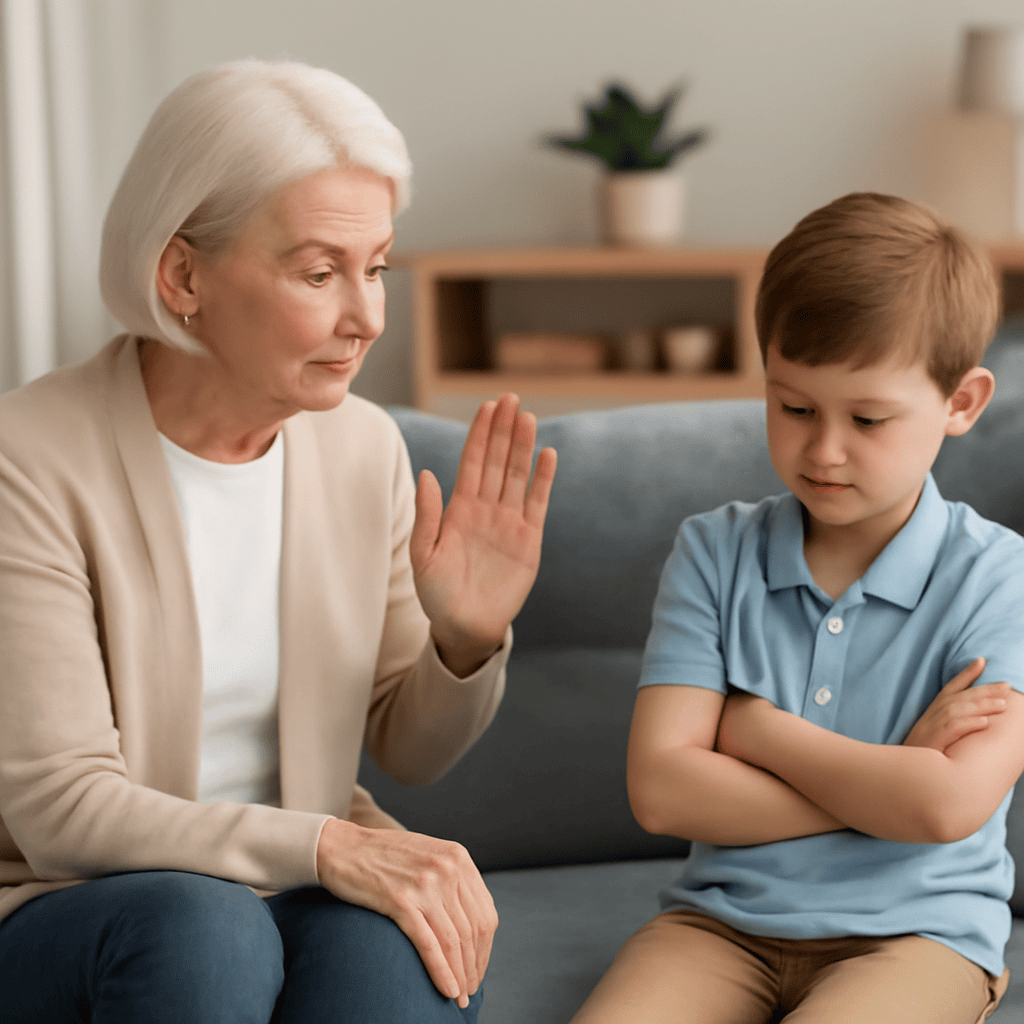
Why is it important to respect boundaries?
As grandparents, we often wish for a close, warm relationship with our grandchildren. It can therefore be very painful when a grandchild doesn't want physical closeness or withdraws. However, it's especially important in such situations to respect the child's boundaries. When you respect your grandchildren's boundaries, you show them that their feelings and needs are important. This strengthens the children's self-confidence and helps them develop healthy relationships.
Respect for boundaries is an important lesson you can teach your grandchildren. When children learn that their boundaries are respected, they develop healthy self-confidence and learn to respect others' boundaries as well. This is an important skill that will accompany them throughout their lives. By respecting your grandchildren's boundaries, you're doing something important for their development and their future.
The importance of boundaries for children
Boundaries are essential for children to develop healthy self-confidence and a sense of self-determination. When a child says "No" or withdraws, this is an important expression of their autonomy. As grandparents, you can help your grandchildren develop this autonomy by respecting their boundaries. This is especially important so that your grandchildren learn to stand up for themselves and recognize their own needs.
Children whose boundaries are respected develop stronger self-confidence and a better sense of their own needs. They learn that their feelings are important and that they have the right to say no. This ability is crucial for their development and helps them set healthy boundaries in other areas of their lives as well. When you respect your grandchildren's boundaries, you support them in becoming confident and self-determined people.
Long-term effects on the relationship
When you respect your grandchildren's boundaries, you build a relationship based on trust and respect. Children who experience that their boundaries are respected develop greater trust in the people who respect these boundaries. This can lead to a deeper and more authentic relationship in the long term, even if physical closeness is initially less.
A relationship based on respect is more sustainable than one based on forced closeness. When your grandchildren know that you respect their boundaries, they feel safer and can open up more relaxed when they're ready. This can lead to the relationship deepening over time and grandchildren seeking more closeness on their own when they feel safe. By respecting boundaries now, you're investing in a long-term healthy relationship with your grandchildren.
Recognizing and understanding boundaries
To be able to respect your grandchildren's boundaries, you must first recognize and understand them. Children often communicate their boundaries nonverbally, through body language, facial expressions, and behavior. It's important to pay attention to these signals and take them seriously, even if they're not explicitly stated.
Every child is different, and the way boundaries are shown can vary. Some children withdraw, others become restless or cry. Some say "No" or "Leave me alone" directly. It's important that you're attentive and perceive your grandchild's signals. When you recognize and respect boundaries, you show your grandchild that you take their needs seriously.
Interpreting body language and signals
Children often show their boundaries through body language. When a child turns their body away, crosses their arms, averts their gaze, or physically withdraws, these are clear signals that they don't want closeness. Also, when a child becomes stiff or tenses up when hugged, this is a sign that the closeness is uncomfortable. As grandparents, it's important to recognize and respect these signals.
Facial expressions can also say a lot about a child's feelings. A tense facial expression, furrowed eyebrows, or an averted gaze can indicate that the child doesn't want closeness. When you pay attention to these signals, you can better understand when your grandchild wants closeness and when they don't. This helps you build a respectful relationship based on understanding your grandchild's needs.
Understanding age-specific boundaries
The way children show boundaries can differ depending on age. Toddlers often show their boundaries through crying, pulling away, or turning away. School-age children can already communicate verbally that they don't want closeness, or they withdraw. Teenagers can communicate very clearly that they don't want physical closeness, and it's important to respect this.
It's also important to understand that boundaries can change over time. A child who used to like being hugged may seek less closeness in a certain phase. This is normal and part of development. As grandparents, you can remain flexible and respond to your grandchild's current needs instead of holding on to previous behavioral patterns. This shows your grandchild that you respect their development and that your relationship can evolve with them.
Respectful communication
Communication is the key to a healthy relationship, even when it comes to boundaries. When you talk to your grandchildren about their boundaries, you show them that their feelings are important and that you take them seriously. It's important that you're respectful and empathetic and don't try to persuade or circumvent the boundaries.
When you openly discuss boundaries with your grandchildren, you can better understand why they don't want closeness. Perhaps there's a specific reason, or it's simply a need for more space. When you have these conversations, you can find ways together to build a relationship that's comfortable for both sides. This strengthens trust and shows your grandchild that you respect their perspective.
Having open conversations
When you talk to your grandchildren about their boundaries, it's important that you take an open and non-judgmental attitude. Ask how your grandchild feels and listen to what they have to say. Avoid criticizing the boundaries or trying to change them. Instead, you should show that you understand and respect your grandchild's feelings.
You can also explain how you feel without questioning your grandchild's boundaries. For example: "I understand that you don't want a hug right now. That's okay. I'm still here for you when you need me." Such statements show that you respect the boundaries while expressing your affection and support. This can help build a relationship based on respect and understanding.
Accepting and validating feelings
It's important to accept and validate your grandchild's feelings, even if they're difficult for you to understand. When a grandchild doesn't want closeness, you should respect this decision without trying to change or question it. Show that you take your grandchild's feelings seriously and that it's okay to feel the way they feel.
Validation doesn't mean you have to agree with the feelings, but that you acknowledge and respect them. You can say: "I understand that you don't want a hug right now. That's completely okay." This shows your grandchild that their feelings are important and that you respect them. When children experience that their feelings are validated, they develop stronger self-confidence and a better sense of their own needs.
Finding alternative ways of closeness
Closeness doesn't always have to be physical. There are many other ways you can build a close relationship with your grandchildren, even if physical closeness isn't possible. Shared activities, conversations, interest in their hobbies, and simply being there when they need you are all ways to build an emotional connection.
When you find alternative ways of closeness, you show your grandchildren that relationships don't consist only of physical closeness. You can play, read, craft, cook, or simply spend time together without physical closeness being necessary. These activities can be just as valuable and help build a deep emotional connection based on respect and understanding.
Activities without physical closeness
There are many activities you can share with your grandchildren without needing physical closeness. Playing together, reading, crafting, cooking, or going for walks are all ways to spend time together and build a relationship. Exploring shared interests or doing projects together can also help create a connection.
It's important that you choose activities that your grandchild enjoys and feels comfortable with. Ask what your grandchild likes to do and show interest in their hobbies and interests. When you spend time together and share positive experiences, you build a relationship based on shared experiences, not forced closeness. This can lead to a deeper and more authentic connection.
Building emotional connection
An emotional connection doesn't only arise through physical closeness, but through understanding, respect, and shared experiences. When you show interest in your grandchildren's thoughts, feelings, and interests, you show them that they're important to you. Listen when they speak, ask questions, and show interest in their lives. This creates an emotional closeness that's often deeper than physical closeness.
Small gestures can also strengthen an emotional connection. A smile, an encouraging word, or simply being there when your grandchild needs you are all ways to show affection and support without needing physical closeness. When you build these emotional connections, you create a relationship based on trust and respect that can be stronger in the long term than a relationship based only on physical closeness.
Dealing with your own feelings
It's completely normal for you as grandparents to be disappointed or sad when a grandchild doesn't want closeness. These feelings are valid and important. However, it's important that you don't project these feelings onto your grandchild or try to overcome the boundaries to fulfill your own needs.
When you deal with your own feelings, you can better build a respectful relationship with your grandchild. It's okay to be sad or disappointed, but it's important that you process these feelings in a healthy way without crossing your grandchild's boundaries. If you need support, you can talk to other family members or seek professional help.
Processing disappointment and sadness
It's important that you acknowledge and process your own feelings. If you're disappointed or sad because your grandchild doesn't want closeness, that's completely understandable. Take time to process these feelings and look for healthy ways to deal with them. Perhaps it helps to talk to other grandparents who have had similar experiences, or with a therapist or counselor.
It's important that you don't project your feelings onto your grandchild. Your grandchild has the right to set their own boundaries, and it's not their responsibility to fulfill your emotional needs. When you process your own feelings, you can better build a respectful relationship with your grandchild that's based on their needs, not yours.
Seeking support
If you're having difficulty dealing with the situation, it's important that you seek support. Talk to other family members, friends, or professional counselors about your feelings. It can be helpful to talk to other grandparents who have had similar experiences, or with a therapist who can help you process your feelings.
Seeking support isn't a sign of weakness, but of strength. When you process your own feelings and receive support, you can better build a healthy relationship with your grandchild. This is important for your own health and for the relationship with your grandchild. When you take care of yourself, you can also be better there for your grandchild.
Building a long-term relationship
A healthy relationship with your grandchildren takes time and patience. When you respect your grandchildren's boundaries, you're investing in a long-term relationship based on trust and respect. It may be that the relationship develops over time and that your grandchildren seek more closeness on their own when they feel safe.
It's important that you're patient and don't try to force the relationship. When you respect boundaries and build a respectful relationship, you can create a deeper and more authentic connection that's stronger in the long term than a relationship based on forced closeness. When you invest now, you can build a relationship that lasts a lifetime.
Developing patience and trust
Patience is the key to a healthy relationship. When you respect your grandchildren's boundaries and remain patient, you show them that you respect their development and that you're willing to respond to their needs. This can lead to the relationship deepening over time and your grandchildren seeking more closeness on their own when they feel safe.
Trust arises through respect and consistency. When you respect your grandchildren's boundaries and repeatedly show that you take their needs seriously, you build trust. This can lead to your grandchildren feeling safer and opening up when they're ready. When you're patient and build trust, you can create a relationship based on mutual respect that's stronger in the long term.
Creating positive memories
Even if physical closeness isn't possible, you can create positive memories with your grandchildren. Shared activities, conversations, games, or projects can all contribute to positive memories that strengthen the relationship. When you share these positive experiences, you build a relationship based on joy and shared experiences.
Positive memories are important for the long-term relationship. When your grandchildren have positive memories of time spent with you, they will value and nurture this relationship. This can lead to the relationship deepening over time and your grandchildren wanting to spend more time with you on their own. When you create positive memories now, you're investing in a relationship that lasts a lifetime.
When professional help is useful
Sometimes it can be helpful to seek professional support, especially if the situation is very stressful or if you're having difficulty dealing with your own feelings. A therapist or counselor can help you process your feelings and develop strategies for building a healthy relationship with your grandchild.
Professional help can also be useful if you suspect there are deeper issues affecting the relationship. A therapist can help you identify and work through these issues so you can build a healthier relationship with your grandchild. If you need support, don't hesitate to seek professional help. This is a sign of strength and shows that you care about your relationship with your grandchild.
Common signals for boundaries in children
Alternative activities without physical closeness
Respectful communication strategies
Tips for respecting boundaries
- Pay attention to body language and nonverbal signals
- Respect a "No" immediately, without discussing
- Give your grandchild space when they withdraw
- Communicate openly about feelings and needs
- Validate your grandchild's feelings
- Look for alternative ways of closeness without physical contact
- Be patient and give the relationship time
- Avoid trying to persuade or circumvent boundaries
Signs of a healthy relationship despite less physical closeness
- Grandchild actively seeks your company
- Grandchild shares thoughts and feelings with you
- Grandchild shows interest in shared activities
- Grandchild feels comfortable in your presence
- Grandchild trusts you and seeks your support
- Grandchild shows affection in their own way
- Grandchild remembers positive shared experiences
When you should seek support
- When you're having difficulty processing your own feelings
- When the situation is very stressful for you
- When you suspect there are deeper issues
- When you don't know how to deal with the situation
- When the relationship with your grandchild is very tense
- When other family members are affected
- When you need professional counseling