



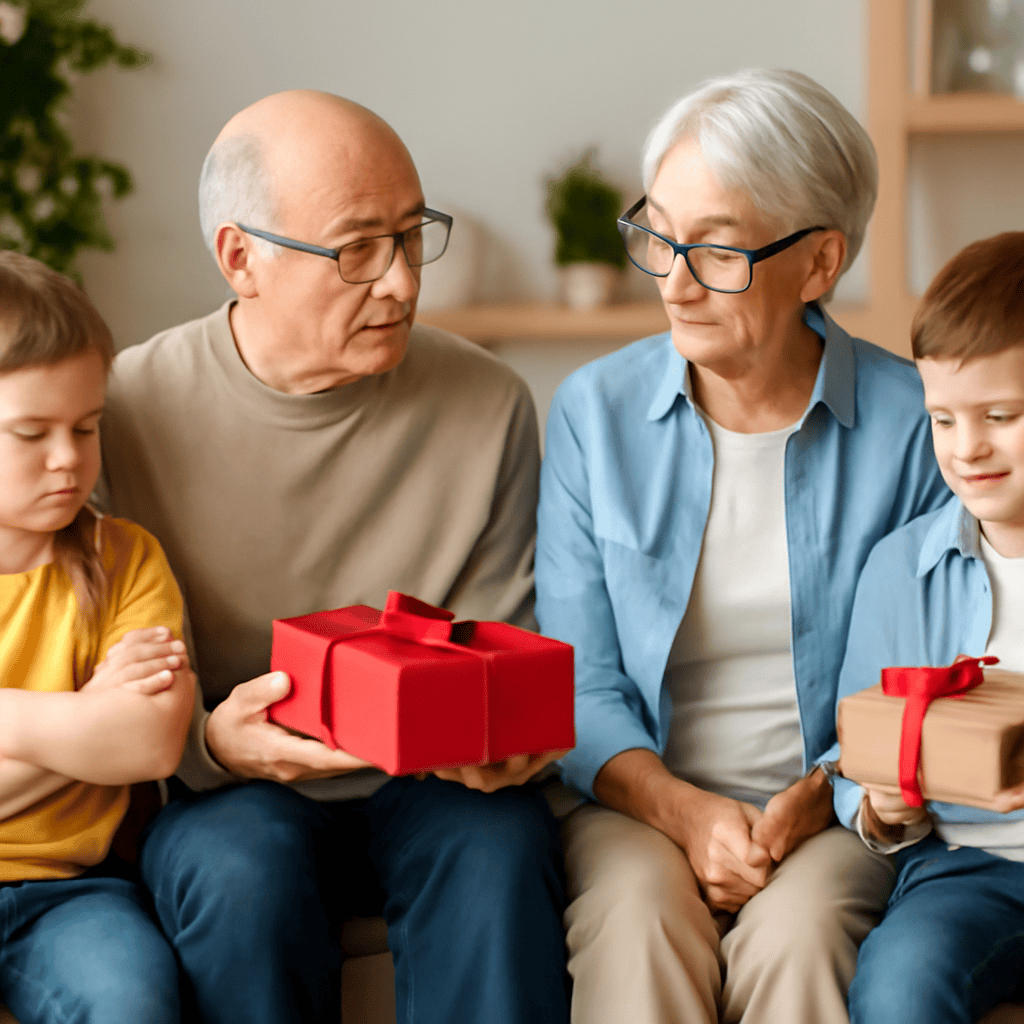
Why Grandchildren Have Different Expectations
As grandparents, you experience that your grandchildren have very different personalities, interests, and needs. This also shows in gifts: While one grandchild is happy about a new toy, another might prefer a book or shared time. These differences are completely normal and show that each grandchild is a unique person.
When you understand and respect these differences, you can find suitable gifts for all your grandchildren. It's not about giving everyone the same thing, but giving everyone the right thing. By responding to your grandchildren's individual wishes and needs, you show them that you see and value them as a person. This is a gift that goes far beyond material things.
Age Differences and Developmental Stages
Grandchildren of different ages naturally have different interests and needs. A five-year-old grandchild might be happy about a toy car, while a twelve-year-old grandchild might be more interested in technology or sports. These differences are part of normal development and show how your grandchildren grow and change.
When you consider age differences, you can find gifts that suit each grandchild. For younger grandchildren, you can choose age-appropriate toys or books; for older grandchildren, perhaps vouchers for shared activities or things that support their current interests. By responding to each grandchild's developmental stage, you show that you notice and want to support their individual development.
Individual Personalities and Interests
Each grandchild has their own personality and interests. While one grandchild might enjoy reading and be happy about books, another might love sports or music. These differences make your grandchildren the unique people they are and should be considered when choosing gifts.
When you know and respect your grandchildren's individual interests, you can find gifts that truly bring joy. A grandchild who likes to paint might be happy about high-quality paints or a painting course. A sports enthusiast might be happy about shared sports activities or appropriate equipment. By responding to each grandchild's personality, you show that you see and value them as an individual.
Developing Fair Gift Strategies
Fair gifts don't mean that every grandchild must receive the same thing. Much more important is that each grandchild receives a gift that suits them and that they truly appreciate. When you develop a fair gift strategy, you can avoid conflicts and ensure that all grandchildren feel valued.
A fair strategy can mean that you invest approximately the same value for all grandchildren but choose different gifts that suit each one. Or you can give shared gifts that all grandchildren can use together, such as an outing or a shared activity. It's important that you are transparent and explain why you make certain decisions.
Equal Value, Different Gifts
One way to give fairly is to invest approximately the same value for all grandchildren but choose different gifts that suit each grandchild. One grandchild might be happy about a more expensive toy, while another grandchild might be happy about several smaller gifts that match their interests.
When you choose this strategy, it's important not to compare values too precisely but to ensure that each grandchild feels valued. Sometimes a smaller but very fitting gift is more valuable than a more expensive but less fitting gift. By responding to individual wishes, you show each grandchild that you understand and value them.
Considering Individual Wishes
When you consider your grandchildren's individual wishes, you can find gifts that truly bring joy. Listen to what your grandchildren wish for and try to understand why certain things are important to them. Sometimes it's not about the material value but about the meaning a gift has for the grandchild.
A grandchild who is very interested in a particular topic might be happy about a gift that supports this interest, even if it might not be the most expensive gift. Another grandchild might value shared time or experiences more than material things. By responding to individual wishes, you show your grandchildren that you see them as a person and respect their interests.
Communication with Grandchildren
Open communication is the key to dealing with different expectations. When you talk with your grandchildren about gifts, you can better understand what is important to them and why. At the same time, you can explain how you choose gifts and why you make certain decisions.
Conversations about gifts should not be lecturing but open and curious. Listen to what your grandchildren think and feel, and show that you take their opinions seriously. When you are transparent about your gift strategy and explain why you make certain decisions, you can avoid misunderstandings and ensure that all grandchildren feel understood and valued.
Having Open Conversations
Have regular conversations with your grandchildren about their wishes and interests. Ask what is important to them, what they wish for, and why. Show interest in their hobbies and activities, and use this information to find suitable gifts.
When you talk openly about gifts, you can also explain how you choose gifts and why you make certain decisions. For example, explain that you try to find suitable gifts for all grandchildren, even if they are different. By being transparent, you can avoid misunderstandings and ensure that all grandchildren feel understood.
Understanding Wishes and Needs
Try to understand why your grandchildren wish for certain things. Sometimes it's not about the gift itself but about the feeling associated with it. A grandchild who wishes for a particular toy might want to play with it because it's fun. Another grandchild might wish for shared time because attention and care are important to them.
When you understand the needs behind the wishes, you can find gifts that truly fulfill what your grandchildren need. Sometimes an alternative gift that fulfills the same need can even be better than the originally wished-for gift. By responding to needs, you show your grandchildren that you understand them and that their well-being is important to you.
Dealing with Disappointments
Sometimes grandchildren can be disappointed when their expectations are not met. This is completely normal and human. As grandparents, you can learn to deal with such disappointments and find constructive solutions without a grandchild feeling disadvantaged.
It's important that you take the disappointment seriously and don't dismiss it. Listen to why the grandchild is disappointed and try to understand what is important to them. Sometimes you can find a solution together that works for everyone involved. By responding empathetically, you show your grandchildren that their feelings are important and that you are there for them.
When a Grandchild is Unhappy
When a grandchild is unhappy with a gift, it's important that you take the disappointment seriously. Listen to why the grandchild is unhappy and try to understand what is important to them. Sometimes it's not about the gift itself but about the feeling of not being understood or valued.
Try to find a solution together. Perhaps you can adjust or supplement the gift, or you can explain why you chose this gift. It's important that you don't react defensively but are open to feedback. By responding to the grandchild's needs, you show that their well-being is important to you and that you are willing to find solutions.
Avoiding Conflicts Between Grandchildren
When grandchildren receive different gifts, it can sometimes lead to envy or conflicts. To avoid such situations, it's important to be transparent about your gift strategy and explain why you make certain decisions.
For example, explain that you try to find a suitable gift for each grandchild, even if they are different. Emphasize that it's not about who gets the better or more expensive gift but that each grandchild receives a gift that suits them. By presenting differences as something positive, you can avoid envy and ensure that all grandchildren feel valued.
Establishing Shared Gift Rituals
Shared rituals can help make gifts a special moment that is equally valuable for all grandchildren. When you establish fixed rituals, you can ensure that all grandchildren feel treated equally, even if the gifts are different.
A shared ritual can be, for example, that you present all gifts together, that you have a small ceremony, or that you spend time together while the gifts are unwrapped. By embedding gifts in a shared ritual, you can ensure that the focus is not only on material things but also on shared time and appreciation for each other.
Fixed Rules for Gifts
Fixed rules can help avoid conflicts and ensure fairness. For example, you can establish that all grandchildren receive approximately the same value, that you invest approximately the same amount of time for all grandchildren, or that you design certain occasions equally for all grandchildren.
It's important that the rules apply to all grandchildren and that you are transparent about these rules. Explain to your grandchildren why you have certain rules and show that these rules are there to ensure fairness. By having fixed rules, you can provide clarity and avoid misunderstandings.
Shared Gift Time
A shared gift time can ensure that all grandchildren feel treated equally, even if the gifts are different. When you present all gifts together and unwrap them together, the focus is on shared time and joy, not just on material things.
During the shared gift time, you can also explain why you chose certain gifts and show that you found a suitable gift for each grandchild. By embedding gifts in a shared moment, you can ensure that all grandchildren feel valued and that differences between gifts don't take center stage.
Long-term Gift Planning
Long-term gift planning can help find fair and suitable gifts for all grandchildren throughout the year. When you plan ahead, you can ensure that you invest approximately the same amount for all grandchildren and that you find suitable gifts for each occasion.
Good planning doesn't mean you have to be rigid but that you can remain flexible and respond to your grandchildren's current wishes and needs. By planning ahead, however, you can ensure that you don't forget to find suitable gifts for all grandchildren and that you have a balanced distribution throughout the year.
Keeping Gift Notes
Keep notes about the gifts you give your grandchildren and about their reactions. This way, you can better understand over time what each grandchild likes and what they don't. These notes can help you find more suitable gifts in the future and ensure that you invest approximately the same amount for all grandchildren.
In your notes, you can also record which wishes your grandchildren have expressed, which interests they have, and which gifts were particularly well received. By collecting this information, you can get better and better over time at finding suitable gifts that truly bring joy.
Balanced Distribution Throughout the Year
Try to distribute gifts for all grandchildren evenly throughout the year. If you give several larger gifts to one grandchild, you can also plan suitable gifts for the other grandchildren so that no one feels disadvantaged.
A balanced distribution doesn't mean you always have to spend the same amount for all grandchildren, but that you pay attention to ensuring that all grandchildren receive approximately the same amount throughout the year. By planning ahead, you can ensure that you find suitable gifts for all grandchildren and that the distribution is fair.
Fairly Designing Special Occasions
Special occasions such as birthdays, Christmas, or other holidays can be a challenge when you want to find suitable gifts for several grandchildren. When you plan ahead and develop a fair strategy, you can ensure that all grandchildren feel valued on these special days.
For special occasions, you can, for example, establish that all grandchildren receive approximately the same value, that you invest approximately the same amount of time for all grandchildren, or that you give shared gifts that all grandchildren can use together. It's important that you are transparent about your strategy and that you explain why you make certain decisions.
Comparison of Different Gift Strategies
Age-Appropriate Gift Ideas
Solution Strategies for Conflicts
Tips for Fair Gifts
- Keep notes about gifts and your grandchildren's reactions
- Plan ahead to ensure balanced distribution
- Consider individual wishes and interests
- Be transparent about your gift strategy
- Establish fixed rules for all grandchildren
- Have regular conversations about wishes and needs
- View shared time as a valuable gift
- Avoid too precise comparisons between gifts
Conversation Starters About Gifts
- "What do you wish for most?"
- "What brings you the most joy?"
- "Is there something you've wanted for a long time?"
- "What would you like to do together with me?"
- "What hobbies or interests do you have right now?"
- "What is important to you about gifts?"
Signs That Your Gift Strategy is Fair
- All grandchildren are happy with their gifts
- There are no regular conflicts about gifts
- Grandchildren show understanding for different gifts
- Grandchildren feel valued and understood
- You feel you are finding suitable gifts
- Communication about gifts works well