



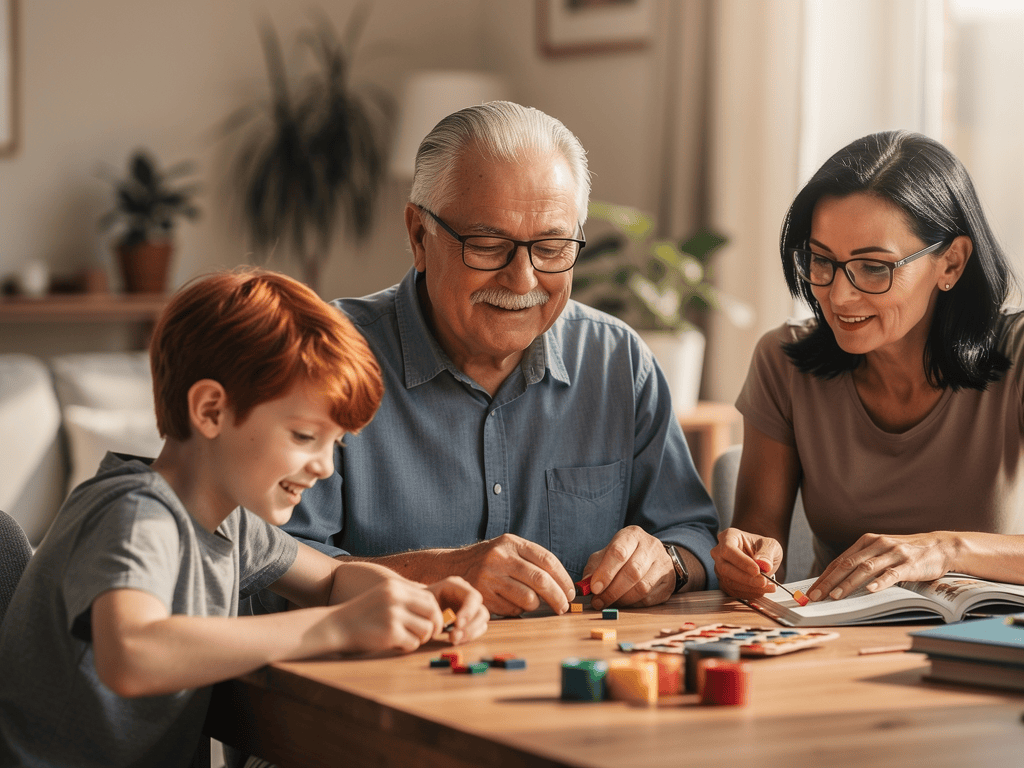
Why shared hobbies are so valuable
When you share your hobbies with your grandchildren as grandparents, you create something special: a connection that goes beyond the normal grandparent-grandchild relationship. Shared hobbies offer the opportunity to spend time together that is not only entertaining but also creates deep bonds. Your grandchildren will remember these shared experiences for their entire lives.
Hobbies that you share with your grandchildren become bridges between generations. They show your grandchildren not only what you like to do, but also who you are as a person. Through joint activities, your grandchildren learn about your values, your patience, and your passion. These experiences shape your grandchildren and help them understand you better and build a deeper relationship with you.
Shared hobbies are also a wonderful way to pass on skills and knowledge. When you show your grandchildren how to do something – whether it's gardening, cooking, crafts, or making music – you give them not only practical skills but also the joy of an activity that may accompany them throughout their lives. This passing on of knowledge and passion is a gift that your grandchildren will appreciate.
Strengthening bonds
Shared hobbies create regular opportunities to spend time together. These regular meetings naturally strengthen the bond between you and your grandchildren. When you work together on a project or engage in an activity, a special kind of closeness develops that cannot be achieved through normal conversations alone.
The shared time during the hobby is also a time when conversations arise naturally. While you are doing something together, you can talk about everything – about everyday life, about dreams, about challenges. These conversations in a relaxed atmosphere help your grandchildren feel comfortable with you and be open.
When your grandchildren see that you take time for them and that you enjoy being with them, it strengthens their self-esteem. They feel important and loved, which is invaluable for their development. This positive experience shapes their relationship with you and with other people in their lives.
Creating valuable memories
Shared hobbies create memories that last a lifetime. When your grandchildren are adults, they will remember the time you spent together gardening, cooking, or crafting. These memories are precious and become part of their identity.
The memories you create together are not only beautiful moments but also valuable lessons. Your grandchildren learn through these experiences how to be patient, how to make mistakes and learn from them, and how to find joy in simple things. These lessons will accompany them throughout their lives.
When you engage in hobbies together, you also create traditions that can be passed down through generations. Perhaps your grandchild will later have grandchildren themselves and share the same activities with their grandchildren. In this way, your hobbies become part of the family heritage that is passed down from generation to generation.
Passing on skills
When you share your hobbies with your grandchildren, you give them practical skills that they can use in their lives. These skills range from craft skills to artistic talents to practical knowledge about nature, cooking, or other areas.
Passing on skills is also a way to encourage your grandchildren to try new things and discover their own talents. When you show them how to do something, you give them the confidence to try it themselves. This encouragement can lead to your grandchildren developing new interests and finding their own passions.
By sharing your hobbies, you also show your grandchildren that learning is a lifelong process. You show them that it is never too late to learn something new and that it is joyful to continuously develop. This attitude will accompany your grandchildren in their own lives and help them remain curious and open to new experiences.
Which hobbies are particularly suitable?
Not every hobby is equally suitable for joint practice with grandchildren. The best hobbies are those that can be adapted to age and are interesting and entertaining for both you and your grandchildren. It is important that the hobby is fun and that both generations benefit from it.
The best hobbies for grandparents and grandchildren are those that offer room for creativity, learning, and shared successes. They should not be too complex or dangerous, but also not too simple, so that both generations are challenged. The ideal hobby is one that grows and develops the more you practice it together.
If you choose a hobby that you already practice, you can bring in your experience and knowledge. If you discover a new hobby together, you can both learn from each other and grow together. Both approaches have their advantages and can lead to wonderful shared experiences.
Creative hobbies
Creative hobbies such as painting, drawing, crafting, or handicrafts are excellent for joint practice with grandchildren. These activities offer room for creativity and self-expression while also providing the opportunity to learn and improve skills.
When crafting or painting together, you can show your grandchildren various techniques and encourage them to implement their own ideas. The results of your joint work can then be proudly presented or given away, which brings additional joy and pride.
Creative hobbies are also particularly suitable because they have no age limits. Both younger and older grandchildren can participate in creative projects if the activities are adapted accordingly. This makes creative hobbies a flexible option that can grow with your grandchildren.
Nature and gardening
Gardening, walks in nature, or observing birds and animals are wonderful hobbies that you can share with your grandchildren. These activities connect you with nature while offering many learning opportunities for your grandchildren.
When gardening together, you can show your grandchildren how plants grow, how to care for them, and how to harvest. These practical experiences teach your grandchildren not only knowledge about nature but also responsibility and patience. The joy when the first tomatoes are ripe or the flowers bloom is something you can experience together.
Nature hobbies also offer the opportunity to experience and understand the seasons together. Your grandchildren learn how nature changes throughout the year and how important it is to protect the environment. These experiences shape your grandchildren's environmental awareness and help them develop a sustainable lifestyle.
Music and culture
If you enjoy making music, singing, or listening to music, you can share this passion with your grandchildren. Making music or singing together creates special moments of connection and joy. Your grandchildren learn not only about music but also how music can bring people together.
Visiting concerts, theater performances, or museums together can also be a wonderful hobby that you share with your grandchildren. These cultural experiences broaden your grandchildren's horizons while providing opportunities for conversations about art, history, and culture.
Music and culture also offer the opportunity to pass on traditions. When you teach your grandchildren songs from your youth or tell stories from the past, you connect them with their family history and roots. This connection to the past is valuable for your grandchildren and helps them understand their identity.
Sports and movement
Sports activities such as walks, cycling, swimming, or light gymnastics can be wonderful shared hobbies. These activities are not only good for health but also offer the opportunity to spend time outdoors and be active together.
It is important that sports activities are adapted to the age and abilities of your grandchildren. For younger grandchildren, short walks or playful movements may be suitable, while older grandchildren may enjoy longer hikes or more challenging activities.
Joint sports activities also show your grandchildren how important movement and health are. You become role models who show that it is never too late to stay active and take care of your own health. This lesson will accompany your grandchildren throughout their lives.
Adapting hobbies to age
For shared hobbies to be enriching for both generations, it is important to adapt the activities to the age and abilities of your grandchildren. What is suitable for a 5-year-old may be too simple for a 15-year-old, and vice versa. The art lies in finding the right balance.
When you adapt your hobbies to age, you ensure that your grandchildren are neither overwhelmed nor underchallenged. Overwhelming leads to frustration, underchallenging to boredom. Both can cause your grandchildren to lose interest. The right balance ensures that both generations have fun and learn from each other.
Adapting to age does not mean that you have to simplify your hobbies. Instead, you can emphasize different aspects or structure the activities so that they are interesting for different age groups. With some creativity, you can adapt almost any hobby to be suitable for your grandchildren.
For younger grandchildren
For younger grandchildren, activities should be simple, playful, and safe. Focus on the joy of doing, not on perfection. Let your grandchildren experiment and make mistakes without correcting or criticizing them. The most important message is: "It's fun to do something together."
With younger grandchildren, you can also plan shorter activities, as their attention span is still limited. Several short sessions are often better than one long one. It is also important that you are flexible and can end the activity when your grandchild becomes tired or loses interest.
For younger grandchildren, you can also incorporate playful elements into your hobbies. When gardening, for example, you can tell stories about the plants or organize small competitions. When crafting, you can choose imaginative projects that stimulate your grandchildren's creativity.
For older grandchildren
Older grandchildren can handle more complex projects and more challenging activities. You can give them more responsibility and encourage them to contribute their own ideas. Older grandchildren also appreciate it when you show them how to do something correctly and when you acknowledge their progress.
With older grandchildren, you can also plan longer-term projects that span several weeks or months. These projects offer the opportunity to grow together and experience progress. The joint work on a larger project strengthens the bond and creates a sense of shared achievement.
Older grandchildren can also become partners who help you discover new aspects of your hobbies. Perhaps they show you new techniques they have learned or bring in new ideas. This mutual enrichment makes shared hobbies particularly valuable.
Starting joint projects
Joint projects are a wonderful way to share hobbies with your grandchildren. A project gives you a common goal and creates a structure for your shared time. Working on a project also offers the opportunity to experience progress and celebrate successes together.
Projects can be large or small, depending on what suits you and your grandchildren. A small project could be painting a picture together or completing a simple craft project. A larger project could be creating a garden together or creating a larger creative work.
It is important that the project is interesting and achievable for both generations. When you plan a project together, you can ensure that both can contribute their ideas and that the project is enriching for both generations. The joint planning is also a good way to spend time together and strengthen the relationship.
Planning projects
When planning a joint project, you should include your grandchildren's ideas. Ask them what they would like to do and listen to what they have to say. When your grandchildren feel involved in the project, they are more motivated and engaged.
Planning a project also offers the opportunity to learn and grow together. You can research together, get materials, and plan the steps. This process is just as valuable as the actual project and offers many opportunities for conversations and shared experiences.
When planning a project, you should also set realistic expectations. Not every project has to be perfect or become a masterpiece. It is important that you spend time together and have fun. The joy in the process is often more important than the end result.
Celebrating successes
When you complete a project together, you should celebrate this success. Show your grandchildren how proud you are of the joint work and make it clear that their contributions were important. This recognition strengthens your grandchildren's self-esteem and motivates them to start further projects.
Celebrating a success does not have to be big or elaborate. Sometimes it is enough to look at the finished project together and enjoy it. You can also take photos to capture the memory or show the project to other family members. These small gestures of recognition are valuable for your grandchildren.
If a project does not turn out exactly as planned, that is also okay. It is important that you worked on it together and that you learned from the experiences. Show your grandchildren that mistakes and challenges are part of the learning process and that it is important not to give up but to continue.
Mastering challenges
When you share your hobbies with your grandchildren, you will also encounter challenges. This is normal and part of the process. What matters is how you deal with these challenges. Patience, flexibility, and a positive approach to difficulties are important skills that you can teach your grandchildren.
Challenges can take various forms: perhaps your grandchild is not as interested as you imagined, perhaps there are age differences that make it difficult to find the right balance, or perhaps you encounter practical difficulties. It is important that you remain flexible and find solutions that work for both generations.
When you master challenges together, you show your grandchildren how to deal with difficulties and how to find solutions. This lesson is more valuable than any perfectly executed activity. Your grandchildren learn that it is okay to make mistakes and that you can grow from challenges.
Patience and flexibility
Patience is one of the most important virtues when sharing your hobbies with grandchildren. Your grandchildren learn at their own pace and have their own interests and preferences. It is important that you are patient and do not put pressure on your grandchildren. Let them learn and experiment at their own pace.
Flexibility is also important. Not every activity will go as you imagined. Sometimes you need to adjust your plans or change the activity if it does not work. This flexibility shows your grandchildren that it is okay to change plans and that adaptability is an important skill.
When you are patient and flexible, you create a relaxed atmosphere in which your grandchildren feel comfortable and dare to try new things. This atmosphere is more important than any perfectly executed activity. Your grandchildren will remember the time you spent together, not the perfection of the results.
Considering age differences
If you have several grandchildren of different ages, it can be a challenge to find activities that are suitable for everyone. In such cases, you can choose different approaches: you can offer activities that can be adapted for different age groups, or you can plan separate activities for different age groups.
Sometimes older grandchildren can also help the younger ones, which is a wonderful way to strengthen sibling bonds. When you involve older grandchildren, give them responsibility, and encourage them to help the younger ones, you create a positive dynamic that is enriching for everyone.
It is important that you are fair and ensure that all grandchildren have the opportunity to participate in activities and contribute their ideas. When you consider the needs and abilities of each grandchild, you can create activities that are enriching for everyone.
Hobbies as a gift for the future
When you share your hobbies with your grandchildren, you give them a gift that extends far beyond the shared time. The skills you teach them, the joy you experience together, and the memories you create will accompany your grandchildren throughout their lives.
Your grandchildren will take with them not only the practical skills you taught them but also the values and attitudes you conveyed through your hobbies. Patience, perseverance, creativity, and the joy of learning are just some of the values that can be conveyed through shared hobbies.
Perhaps your grandchildren will later share the hobbies you practiced together with their own children or grandchildren. In this way, your hobbies become part of the family heritage that is passed down from generation to generation. This continuity is a wonderful gift you can give to your family.
The time you spend with your grandchildren is valuable and irreplaceable. When you share your hobbies with them, you use this time optimally while creating something that lasts. Your grandchildren will appreciate these shared experiences and remember them, even when they are adults and go their own ways.
Overview of suitable hobbies for grandparents and grandchildren
Age-appropriate adaptation of hobbies
Steps for planning joint projects
Tips for starting shared hobbies
- Start with simple activities that quickly provide success experiences
- Let your grandchildren contribute ideas and consider their interests
- Be patient and don't expect perfection immediately
- Make the activity a regular ritual that both enjoy
- Celebrate small successes and show your joy about the shared time
- Adapt activities to the age and abilities of your grandchildren
Benefits of shared hobbies for grandchildren
- Strengthening bonds with grandparents through regular shared time
- Learning practical skills that are useful in life
- Developing patience, perseverance, and problem-solving skills
- Building self-confidence through successful joint projects
- Creating valuable memories that last a lifetime
- Passing on family values and traditions
Tips for dealing with challenges
- Stay flexible and adjust plans if necessary
- Be patient when your grandchildren learn at their own pace
- Accept that not every activity has to be perfect
- Use challenges as learning opportunities for both generations
- Get support from other family members if needed
- Remember that shared time is more important than the result