



The Importance of International Traditions for Grandchildren
In a world where families are spread across continents and have different cultural backgrounds, traditions become an important anchor for your grandchildren's identity. As grandparents, you can play a crucial role in helping your grandchildren understand and appreciate their cultural roots, even if they may have been born in a different country or have various cultural influences in their lives.
Traditions give your grandchildren a sense of belonging and help them understand where they come from. When you share your own cultural traditions with your grandchildren, you are not only passing on knowledge, but also a sense of connection to their family and their history. This connection can help your grandchildren become more confident and develop their own identity, even if they grow up in a multicultural environment.
Your grandchildren will grow up in a world where cultural diversity is becoming increasingly important. When you show them how to respect and appreciate different traditions, you give them important values that will accompany them throughout their lives. This ability to understand and respect different cultures will help your grandchildren become open and tolerant people who thrive in a globalized world.
Strengthening Cultural Identity
Cultural identity is important for your grandchildren's self-confidence and well-being. When you share your own cultural traditions with your grandchildren, you help them develop a sense of their origins. This can be especially important if your grandchildren live in a different country or have various cultural influences in their lives.
You don't need to organize large, elaborate celebrations to strengthen cultural identity. Often it's the small, everyday things that have the most impact: cooking a particular dish, telling a story, singing a song, or explaining a tradition. These small moments help your grandchildren understand that they are part of a larger story and that their culture is valuable and important.
When you strengthen cultural identity, you also show your grandchildren that it's okay to have various cultural influences. Many families today have multiple cultural backgrounds, and that's a positive thing. When you help your grandchildren understand and appreciate their various cultural roots, you give them the opportunity to develop a rich and diverse identity.
Creating Connection to Roots
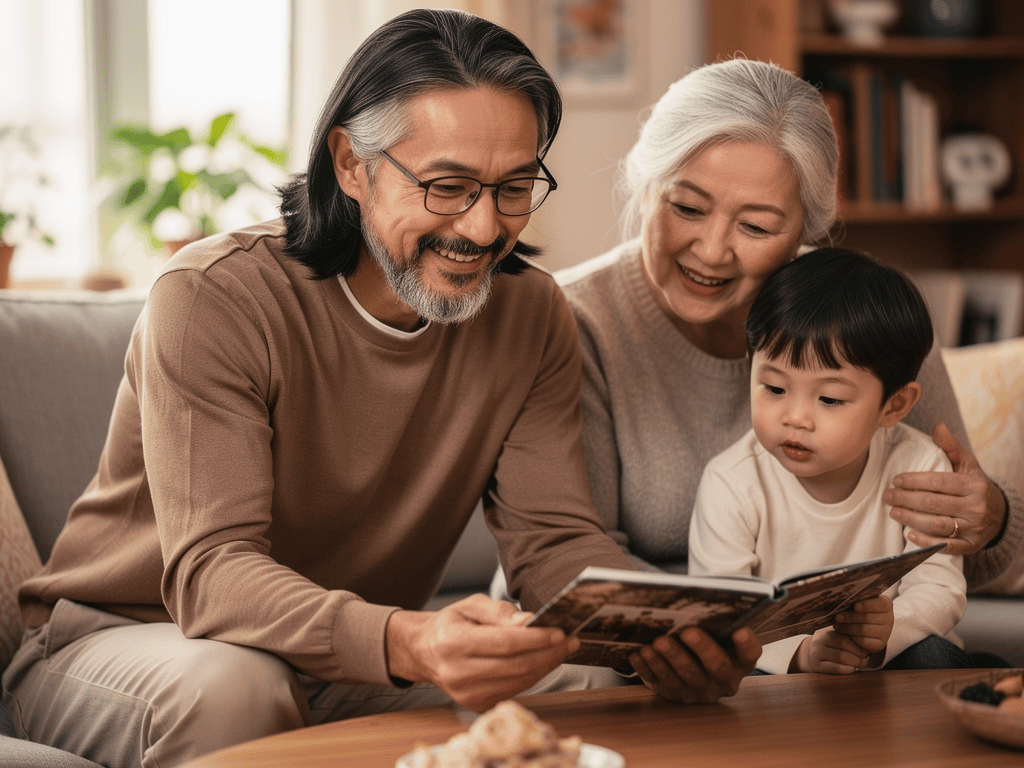
Having a connection to cultural roots can help your grandchildren feel grounded and connected, even if they live far from their country of origin. When you tell stories from your own childhood, show photos, or explain traditions, you help your grandchildren establish a connection to their family history.
This connection to roots can be especially important if your grandchildren grow up in a different country. You can help them understand that they are part of a larger story and that their family has a rich cultural tradition. This connection can help your grandchildren feel more secure and develop their own identity.
You can also help create a connection by exploring your family's history together. Perhaps you can create a family tree together, look at old photos, or tell stories about your ancestors. These activities not only help your grandchildren understand their roots, but also create beautiful shared memories that will accompany them throughout their lives.
Passing on Traditions from Different Cultures
As grandparents, you have the unique opportunity to pass on traditions from different cultures to your grandchildren. You can tell stories, celebrate festivals, and explain traditions that are important to your family. This passing on of traditions not only helps your grandchildren understand their cultural heritage, but also creates valuable shared memories.
You don't need to be experts to pass on traditions. Often it's enough to simply tell what you yourself have experienced or explain why certain traditions are important to your family. Your grandchildren will appreciate hearing these stories and understanding where they come from. This passing on of knowledge and traditions is a gift you can give your grandchildren.
When you pass on traditions, you can also show how different cultures are connected. Many traditions have similar roots or share common elements. When you help your grandchildren understand these connections, you show them that different cultures are not separate, but part of a larger human story.
Sharing Stories and Memories
Stories are one of the best ways to pass on traditions. When you tell stories from your own childhood, about your family, or about the traditions you have experienced, you help your grandchildren establish a connection to their cultural heritage. These stories don't need to be perfect or dramatic – often it's the simple, everyday stories that make the most impression.
You can also use stories from books, films, or history to explain traditions. Tell about people who have preserved important traditions or about events that were important to your culture. These stories help your grandchildren understand why traditions are important and how they came about.
When you tell stories, you can also involve your grandchildren. Ask them what they think or let them tell their own stories. This interaction not only helps your grandchildren understand the traditions, but also makes the conversations more lively and interesting. Together you can create new stories that become part of your family tradition.
Celebrating Festivals Together
Festivals and celebrations are a wonderful way to live and pass on traditions. When you celebrate festivals together with your grandchildren that are important to your culture, you help them understand and appreciate these traditions. You don't need to organize large, elaborate celebrations – even small, intimate celebrations can be very meaningful.
When you celebrate festivals, you can also combine different cultural elements. Perhaps you can celebrate a festival from your own culture while also incorporating elements from your grandchildren's culture. This combination shows your grandchildren that different cultures can come together and that it's possible to respect and celebrate different traditions.
It's important that you involve your grandchildren in planning and organizing the festivals. Let them help prepare the food, create the decorations, or explain the traditions. This participation not only helps your grandchildren understand the traditions, but also makes the celebrations something special that they will remember fondly.
Language as a Bridge Between Cultures
Language is one of the most important connections between cultures. When you speak your native language with your grandchildren or help them learn it, you are not only giving them a means of communication, but also access to your culture. Language carries many cultural values, stories, and traditions within it, and when your grandchildren learn your language, they can better understand these values.
You don't need to be professional language teachers to help your grandchildren learn languages. Often it's enough to simply speak with your grandchildren in your native language, tell stories, or sing songs. This natural way of learning languages can be very effective and is also more fun than formal instruction.
If you speak different languages in your family, you can also show how languages are connected. Many languages have similar words or structures, and when you explain these connections, you help your grandchildren understand languages better. This ability to understand and respect different languages will help your grandchildren thrive in a globalized world.
Promoting Multilingualism
Multilingualism is a gift you can give your grandchildren. If you speak different languages in your family, you can help your grandchildren learn and understand these languages. Multilingualism not only helps with communication, but also opens new possibilities for understanding and appreciating different cultures.
You don't need to be perfect in all languages to promote multilingualism. Often it's enough to simply speak with your grandchildren in different languages, depending on the situation or topic. Perhaps you can associate certain activities with certain languages – for example, speaking in one language while cooking, in another while playing.
It's important that you are patient and don't put pressure on your grandchildren. Learning languages takes time, and it's completely normal if your grandchildren make mistakes or sometimes forget words. When you show that you are proud of their progress and that it's okay to make mistakes, you help your grandchildren become more confident and develop their language skills.
Language Games and Activities
Language games and activities can be a fun way to learn and practice different languages. You can play games together, sing songs, or read stories that use different languages. These activities make language learning playful and help your grandchildren learn different languages naturally.
You can also develop activities that combine different languages. Perhaps you can create a multilingual book together, develop a game that uses different languages, or tell a story that switches between different languages. These creative activities not only help your grandchildren learn languages, but are also fun and create beautiful shared memories.
When you play language games, you can also show how different languages are connected. Many languages have similar words or expressions, and when you explain these connections, you help your grandchildren understand languages better. This ability to recognize connections between different languages will help your grandchildren learn and understand languages more easily.
Passing on Culinary Traditions
Food is one of the most important connections between cultures. When you cook or bake together with your grandchildren, you can not only prepare delicious food, but also pass on cultural traditions. Culinary traditions tell stories about origins, history, and values of a culture, and when you share these traditions with your grandchildren, you give them a taste of their cultural roots.
You don't need to be professional chefs to pass on culinary traditions. Often it's the simple, traditional dishes that mean the most. When you prepare a dish together with your grandchildren that is important to your family, you are not only telling a story, but also creating a connection to your culture. These shared cooking moments will become valuable memories that will accompany your grandchildren throughout their lives.
Culinary traditions can also be a bridge between different cultures. Many dishes have similar ingredients or preparation methods, even if they come from different cultures. When you prepare dishes from different cultures together with your grandchildren, you show them how different cultures are connected and how to respect and appreciate different traditions.
Cooking and Baking Together
Cooking and baking together is a wonderful way to spend time with your grandchildren while also passing on traditions. When you prepare a traditional dish together, you can tell stories, share memories, and explain why certain dishes are important to your family. These shared moments are not only educational, but also very bonding.
You can involve your grandchildren in all steps of cooking, depending on their age and abilities. Younger grandchildren might be able to help wash ingredients or stir, while older grandchildren might be able to take on more complex tasks. It's important that you are patient and encourage your grandchildren, even if they make mistakes.
When you cook together, you can also combine different cultural dishes. Perhaps you can prepare a dish from your own culture while also preparing a dish from your grandchildren's culture. This combination shows your grandchildren that different cultures can come together and that it's possible to respect and enjoy different culinary traditions.
Documenting and Passing on Recipes
Recipes are an important part of cultural traditions, and when you document and pass on these recipes, you help your grandchildren preserve these traditions. You can create a recipe book together with your grandchildren in which you document traditional dishes, tell stories about them, and explain why these dishes are important.
When you document recipes, you can also show how recipes have evolved over time. Perhaps you received a recipe from your own grandparents that you have adapted, or perhaps you have combined a traditional recipe with modern ingredients. These stories show your grandchildren that traditions are alive and can evolve while preserving their essence.
You can also use digital opportunities to document and share recipes. Perhaps you can create a digital recipe book together, record videos of cooking, or take photos of finished dishes. These digital records can help your grandchildren preserve and pass on the recipes even when you are no longer there, and they can also be shared with other family members who may live far away.
Music, Dance and Art as Cultural Expressions
Music, dance, and art are universal languages that can connect different cultures. When you listen to music, dance, or view art together with your grandchildren that is important to your culture, you help them understand and appreciate these cultural expressions. These activities can be very bonding and create beautiful shared memories.
You don't need to be professional musicians, dancers, or artists to pass on these traditions. Often it's enough to simply listen to music together, sing, or dance. When you show how much you love and appreciate these cultural expressions, your grandchildren will feel this enthusiasm and perhaps develop interest themselves.
Music, dance, and art can also be a bridge between different cultures. Many cultural expressions have similar elements or share common themes, even if they come from different cultures. When you explore different cultural expressions together with your grandchildren, you show them how different cultures are connected and how to respect and appreciate different traditions.
Traditional Music and Songs
Traditional music and songs are an important part of cultural traditions, and when you share these with your grandchildren, you help them understand their cultural roots. You can listen to music together, sing songs, or even play simple instruments. These activities are not only fun, but also help create cultural connections.
You can also tell stories about the music and songs. Perhaps you know where a particular song comes from, what story it tells, or what meaning it has for your culture. These stories help your grandchildren understand and appreciate the music better, and they also show how music can tell stories and preserve traditions.
If you speak different languages in your family, you can also sing songs in different languages. This not only helps your grandchildren learn languages, but also shows how music can connect different cultures. Together you can learn new songs or reinterpret old songs that become part of your family tradition.
Dance and Movement
Dance is a wonderful way to live and pass on cultural traditions. When you dance together with your grandchildren, you can not only have fun, but also pass on cultural movements and rhythms. Dance can be very bonding and helps create cultural connections, even if you are not professional dancers.
You can show simple dance steps or explore new movements together. It's important that you have fun and that your grandchildren feel comfortable. You don't need to make perfect movements – often it's the spontaneous, joyful moments that mean the most. These shared dance moments will become valuable memories that will accompany your grandchildren throughout their lives.
When you explore different cultural dances, you can also show how different cultures are connected. Many dances have similar movements or rhythms, even if they come from different cultures. When you try different dances together, you show your grandchildren how different cultures can come together and how to respect and appreciate different traditions.
Dealing with Cultural Differences
In a multicultural family, it's important to deal with cultural differences respectfully. As grandparents, you can help your grandchildren understand that different cultures can be different, but that all cultures are valuable and respectable. This ability to respect and appreciate different cultures will help your grandchildren become open and tolerant people.
You don't need to understand or explain all cultural differences. It's important that you show that you deal with differences respectfully and that you are willing to learn and understand. When you show that you appreciate and respect different cultures, your grandchildren will adopt this attitude and deal with cultural differences respectfully themselves.
When you deal with cultural differences, you can also show how different cultures have commonalities. Many cultures share similar values, traditions, or customs, even if they may seem very different at first glance. When you help your grandchildren recognize these commonalities, you show them that different cultures are not separate, but part of a larger human community.
Teaching Respect and Tolerance
Respect and tolerance are important values you can teach your grandchildren when dealing with cultural differences. When you show that you respect and appreciate different cultures, your grandchildren learn that all cultures are valuable and that it's important to deal with differences respectfully. These values will help your grandchildren become open and tolerant people.
You can teach respect and tolerance by exploring and appreciating different cultures. Perhaps you can read books together, watch films, or celebrate festivals that show different cultures. When you show how much you appreciate and respect different cultures, your grandchildren will adopt this attitude and deal with cultural differences respectfully themselves.
It's also important that you show that it's okay to ask questions and learn more about different cultures. When you show that you are curious and open, your grandchildren learn that there's nothing wrong with exploring and understanding different cultures. This openness will help your grandchildren become more confident and develop their own cultural identity.
Finding Common Ground
Even if different cultures can be different, they often have many commonalities. When you explore different cultures together with your grandchildren, you can help find these commonalities. Perhaps different cultures share similar values, traditions, or customs, even if they may seem very different at first glance.
When you find commonalities, you show your grandchildren that different cultures are not separate, but part of a larger human community. This realization can help your grandchildren feel more connected and understand that people all over the world have similar needs, values, and dreams. This connectedness can help your grandchildren feel more secure and develop their own identity.
You can also show how different cultures can learn from each other. Perhaps you can explore together how different cultures have solved similar problems or how they express similar values in different ways. These explorations not only help your grandchildren understand different cultures, but also show how important it is to learn from each other and respect different perspectives.
Using Digital Opportunities
In a digital world, there are many opportunities to pass on traditions even across great distances. If your grandchildren live far away or if you have different time zones, you can use digital technologies to stay in touch and share traditions. Video calls, shared online activities, or digital photo albums can help maintain cultural connections.
You don't need to be technology experts to use digital opportunities. Often it's enough to simply make video calls, share photos, or do shared online activities. When you show that you are willing to use new technologies to stay in touch with your grandchildren, you show them how important the connection is to you and how much you strive to pass on traditions.
Digital opportunities can also help document and preserve traditions. Perhaps you can create a digital photo album together, record videos of cooking, or create a digital story collection. These digital records can help your grandchildren preserve and pass on traditions even when you are no longer there, and they can also be shared with other family members who may live far away.
Different Categories of Traditions
Age-Appropriate Activities for International Traditions
Digital Tools for International Traditions
Practical Tips for Passing on Traditions
- Start with simple, everyday traditions that are important to your family
- Tell stories about your own experiences with these traditions
- Actively involve your grandchildren, let them help and participate
- Be patient and show that traditions can evolve
- Use different media: stories, music, food, festivals
- Document traditions together with your grandchildren for the future
Conversation Starters About International Traditions
- "Which traditions are important to our family and why?"
- "What would you like to know about our cultural heritage?"
- "Which traditions from different cultures do you find interesting?"
- "How can we combine different traditions in our family?"
- "What memories do you have of our shared festivals and celebrations?"
- "What would you like to pass on to the next generation?"
Signs That Grandchildren Are Developing a Cultural Connection
- Grandchildren show interest in stories and traditions from your culture
- They ask questions about your origins and family history
- They want to learn to cook traditional dishes or sing songs
- They tell others about their cultural roots
- They combine different cultural elements in their own lives
- They show respect and interest for different cultures