



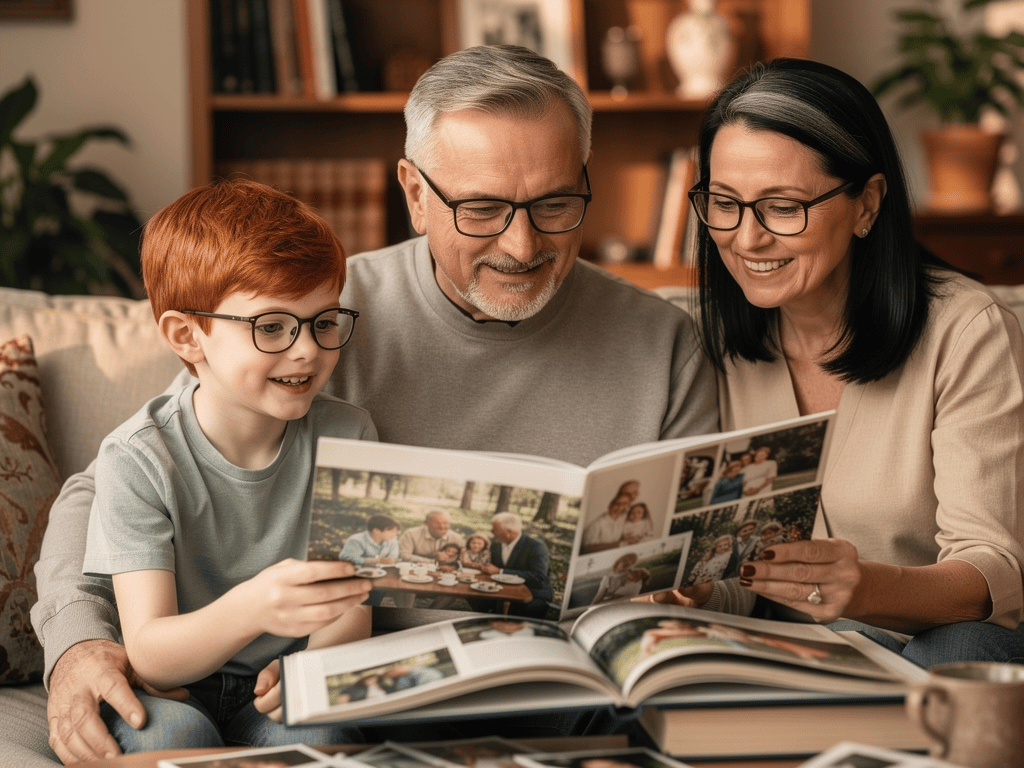
Why traditions are important and why they need to be adapted
Traditions are the foundation on which families build their identity and values. They give your grandchildren a sense of belonging, continuity, and connection with their family. When you as grandparents maintain and pass on traditions, you give your grandchildren something valuable: a sense of home and a connection to their family history. This connection will accompany your grandchildren throughout their lives and help them understand and appreciate their roots.
But the world is changing, and with it the needs and interests of your grandchildren. What was meaningful to you as a child or young adult does not necessarily have to be equally relevant for your grandchildren. Traditions that are not adapted can seem outdated and lose their meaning. When you modernize traditions, you ensure that they remain relevant for your grandchildren and that they will want to continue them. This is a gift you can give your grandchildren: traditions that stay alive and that they themselves will want to pass on to their children.
Modernizing traditions does not mean you have to give up the values and meaning behind them. On the contrary: when you carefully adapt traditions, you can ensure that the core values – such as togetherness, love, appreciation, and community – are preserved, while the form in which they are lived becomes attractive and relevant for your grandchildren. In this way, you create a bridge between past and future that your grandchildren will appreciate.
The importance of traditions for grandchildren
Traditions give your grandchildren a sense of security and stability. When they know that certain rituals and customs take place regularly, this creates a predictable structure in their lives. This structure is particularly valuable in a world that is changing rapidly and sometimes seems unpredictable. Traditions are like anchors that help your grandchildren orient themselves and feel secure.
Furthermore, traditions help your grandchildren develop their identity. When they are part of family traditions, they learn who they are and where they come from. They develop an understanding of their family history and values, which helps them go through life confidently and with a clear sense of their roots. This identity will strengthen your grandchildren and help them master challenges.
Traditions also create special moments of connection between you and your grandchildren. When you perform rituals together or celebrate holidays, memories are created that will accompany your grandchildren throughout their lives. These shared experiences strengthen the bond between you and your grandchildren and create a foundation for a close relationship that will last across generations.
Why adaptations are necessary
The world in which your grandchildren are growing up is different from the one in which you grew up. Technology, social values, and lifestyles have changed, and your grandchildren have different interests and needs than you had at their age. If traditions are not adapted, they can seem boring, irrelevant, or even burdensome to your grandchildren. That would be a shame, because traditions should bring joy and create connection, not be a burden.
Adaptations are also necessary because your grandchildren are part of a modern, diverse world. They have different ideas about how holidays should be celebrated, which activities are fun, and how time should be spent together. When you modernize traditions, you show your grandchildren that you respect their perspective and that you are willing to find new ways together that work for everyone involved.
At the same time, modernization does not mean that everything old has to be thrown away. It is about finding a balance between preserving and renewing. You can preserve the core values and meaning of your traditions while adapting the form so that they become attractive and relevant for your grandchildren. In this way, you create traditions that both honor the past and welcome the future.
Identifying traditions that can be modernized
Before you can modernize traditions, you must first identify which traditions exist in your family and which of them might need to be adapted. Take time to think about your family traditions: What customs and rituals are there? Which holidays are regularly celebrated? Which activities are repeated every year? Write down these traditions and consider which of them are particularly important for your grandchildren and which might be adapted.
It is important that you are honest with yourself. Not every tradition needs to be modernized, and some traditions may already be perfect as they are. But if you notice that your grandchildren are no longer interested in certain traditions or that they feel uncomfortable with certain rituals, then it may be time to think about adaptations. Listen to your grandchildren's signals and be open to change.
When identifying traditions that can be modernized, remember that it is not about changing everything. Sometimes small adjustments are enough to make a tradition more attractive to your grandchildren. Perhaps you can simply add new elements or slightly adapt the way something is done. The goal is to keep traditions alive, not to completely overhaul them.
Family customs and rituals
Family customs and rituals are often the heart of traditions. These can be regular activities, such as the shared Sunday breakfast, reading before bedtime, or baking together on certain occasions. These rituals create routines and give your grandchildren a sense of security and connection. When you modernize such rituals, you can ensure that they remain relevant for your grandchildren.
Consider which rituals you have and how they could be adapted. Perhaps you can modernize the Sunday breakfast by trying new dishes or adapting the activities afterward. Perhaps you can expand reading by also using digital stories or interactive books. The possibilities are diverse, and it is about finding ways that both preserve the meaning of the ritual and are interesting for your grandchildren.
It is important that you involve your grandchildren in the modernization. Ask them what they like about the existing rituals and what they might change. Let them contribute ideas and try new things together. In this way, the modernized rituals become something you have created together, and your grandchildren will identify more strongly with them.
Holidays and celebrations
Holidays and celebrations are special occasions where traditions become particularly evident. Christmas, Easter, birthdays, weddings – all these occasions often have fixed traditions that are passed down from generation to generation. These traditions are valuable, but they can also be adapted to remain relevant for your grandchildren.
When modernizing holidays and celebrations, remember that it is not about changing the meaning of the occasion, but the way it is celebrated. Perhaps you can add new activities that are interesting for your grandchildren, or adapt old activities to make them more modern. Perhaps you can also create new traditions that are specifically developed for your grandchildren.
An example: If you traditionally celebrate Christmas with a large feast, you might add a modern component, such as a shared afternoon activity or a new ritual that your grandchildren particularly like. In this way, you preserve the meaning of the celebration while making it more attractive for your grandchildren. Your grandchildren will appreciate these modernized celebrations and will want to continue them.
Carefully modernizing traditions
Modernizing traditions requires sensitivity and respect for what already exists. It is not about throwing away everything old and starting completely new, but about carefully making adjustments that keep traditions alive. When you modernize traditions, you should always keep in mind that the core values and meaning are more important than the exact form in which they are lived.
Start with small adjustments and observe how your grandchildren react. Not every change needs to be perfect immediately – it is a process of trying and adjusting. Be patient and open to feedback from your grandchildren. If something does not work, you can adjust it or switch to something else. It is important that you stay in conversation and find out together with your grandchildren what works.
When modernizing traditions, you should also involve other family members. Discuss your ideas with your children and other relatives, and listen to their perspectives. Not everyone will be immediately enthusiastic about changes, and that is okay. It is important that you have a dialogue and find compromises that work for everyone involved.
Preserving core values
When modernizing traditions, it is important to identify the core values behind them and preserve them. What is the essence of a tradition? What is the message or value that should be conveyed? When you identify these core values, you can ensure that they are also preserved in the modernized version.
For example: If a tradition consists of the family coming together and spending time together, then the core value is community and connection. These values can also be preserved in a modernized version, even if the activities that are performed are different. Perhaps you can play a modern game instead of a traditional one, or instead of a traditional meal, you can cook together and try new recipes.
The core values are what really make traditions. When you preserve them, the meaning of the tradition remains, even if the form changes. Your grandchildren will appreciate these values and pass them on, even if they may live the traditions in their own way.
Integrating new elements
Modernizing traditions also means integrating new elements that are relevant for your grandchildren. These can be modern activities, new technologies, current interests of your grandchildren, or simply new ideas that you develop together. It is important that these new elements enrich the tradition without undermining its core values.
When integrating new elements, let yourself be inspired by your grandchildren's interests. What do they like? What occupies them? What do they find exciting? When you incorporate these things into your traditions, you show your grandchildren that you respect their perspective and that their interests are important. This strengthens the relationship between you and your grandchildren and makes the traditions more attractive to them.
New elements can also mean that you expand traditions instead of replacing them. Perhaps you can add a new component to an existing tradition that is specifically developed for your grandchildren. In this way, you create a bridge between old and new that appeals to both generations and keeps traditions relevant for everyone.
Involving grandchildren in modernization
One of the best ways to modernize traditions is to actively involve your grandchildren in the process. When your grandchildren can participate in the modernization, they will identify more strongly with the traditions and will want to continue them. Furthermore, they learn how traditions are created and how they can be adapted, which helps them create and maintain traditions themselves.
When you involve your grandchildren, you show them that their opinion matters and that you respect their perspective. This strengthens your grandchildren's self-confidence and helps them feel like a valuable part of the family. At the same time, they learn how to deal constructively with change and how to find compromises that work for everyone.
Involving your grandchildren also makes modernization a shared project that strengthens the relationship between you and your grandchildren. When you develop ideas together, try things out, and make adjustments, you create positive memories and strengthen the connection between generations. This shared work will shape your grandchildren and help them see traditions as something living and capable of development.
Developing ideas together
Start by developing ideas together with your grandchildren about how traditions could be modernized. Organize a kind of brainstorming session where all ideas are welcome, no matter how crazy they may seem at first. Let your grandchildren be creative and encourage them to share their thoughts. You will be surprised at what creative and innovative ideas your grandchildren can have.
When developing ideas, make sure you keep the core values of the tradition in mind. Not every idea will fit, and that is okay. It is important that you discuss together which ideas could work and which might need to be adapted. In this way, your grandchildren learn how to deal constructively with ideas and how to find solutions that work for everyone.
Be open to your grandchildren's ideas, even if they may seem unusual at first. Sometimes the best modernizations are those that come from unexpected directions. When you show that you take your grandchildren's ideas seriously and that you are willing to try them out, you strengthen your grandchildren's confidence and encourage them to be creative.
Transferring responsibility
When modernizing traditions, you can also transfer responsibility to your grandchildren. Let them take over certain aspects of the tradition or develop and implement new elements. In this way, your grandchildren not only learn how traditions work, but they also develop a sense of ownership and responsibility for the traditions.
Transferring responsibility also helps your grandchildren develop important skills, such as planning, organizing, and conducting activities. These skills will help them in many areas of their lives. At the same time, it strengthens their self-confidence when they see that they can make an important contribution and that their work is appreciated.
When transferring responsibility, start with small tasks and gradually increase the scope. Perhaps let your grandchildren plan a small activity or design an element of the tradition first. If that works well, you can give them more responsibility. It is important that you stand by supportively and that you show that you are proud of their efforts.
Examples of modernized traditions
Concrete examples can help understand how traditions can be modernized. Here are some ideas that you can use as inspiration. Remember that every family is different and that the best modernizations are those that fit your family and your grandchildren. Let yourself be inspired by these examples, but develop your own ideas that fit your situation.
It is important that you do not try to change everything at once. Start with one tradition and try a modernization. If that works well, you can modernize more traditions. In this way, modernization becomes a gradual process that is pleasant for everyone involved and leaves room for adjustments.
The examples also show that modernization does not mean that everything old has to be thrown away. Often old and new elements can be combined to create something that both honors the past and welcomes the future. This balance is the key to successful modernized traditions.
Modernizing Christmas customs
Christmas is a holiday that is often characterized by many traditions. If you want to modernize your Christmas customs, you can, for example, add new activities that are interesting for your grandchildren. Perhaps you can read a modern Christmas story or watch a Christmas movie that is relevant for your grandchildren. Perhaps you can also make new decorations or sing modern Christmas carols.
Another example: If you traditionally come together on Christmas Eve, you might modernize the afternoon activities. Perhaps you can bake together and try new recipes, or you can do a modern activity that your grandchildren particularly like. In this way, you preserve the meaning of the celebration while making it more attractive for your grandchildren.
It is important that you preserve the core values of Christmas – such as community, love, reflection, and togetherness – even if you adapt the form. Your grandchildren will appreciate these values and pass them on, even if they may celebrate Christmas in their own way.
Dealing with resistance in the family
Not everyone in the family will be immediately enthusiastic about modernizing traditions. Some family members may not like changes or fear that the meaning of traditions will be lost. That is understandable, and it is important that you respect and take these concerns seriously. At the same time, you can help dispel fears and show that modernization does not mean that everything old is thrown away.
When you encounter resistance, take time for conversations. Explain why you want to modernize traditions and what benefits this can have for the grandchildren. Listen to the concerns of others and try to find compromises that work for everyone. It is important that you have a dialogue and that everyone involved feels heard.
Patience is important when modernizing traditions. Not every change will be immediately accepted, and sometimes it takes time for everyone to get used to new things. Be patient and give others time to get used to the changes. Over time, the modernized traditions will become something normal, and resistance will likely decrease.
Finding compromises
Compromises are important when modernizing traditions. Not everyone will agree with every change, and that is okay. It is important that you find ways that work for everyone involved. Perhaps you can modernize some elements while others remain traditional. Perhaps you can also develop different versions of a tradition that fit different family members.
When finding compromises, remember that it is not about one side winning and the other losing. It is about finding solutions that work for everyone and that take into account the needs of everyone involved. When you show that you are willing to compromise, other family members will also be more willing to accept changes.
Compromises can also mean that you proceed gradually. Perhaps you can make small changes first and then gradually make further adjustments. In this way, everyone involved can slowly get used to the changes, and modernization becomes a gradual process that is pleasant for everyone.
Showing patience and understanding
Patience and understanding are important when modernizing traditions. Not everyone will be immediately enthusiastic about changes, and some people need time to get used to new things. Be patient with family members who are skeptical or cannot immediately accept changes.
Show understanding for the concerns of others. Explain that you respect the meaning of traditions and that you are not trying to change everything. Show that modernization means keeping traditions alive, not destroying them. When you show understanding, others will be more willing to understand your perspective and find compromises.
At the same time, you should also be patient with yourself. Modernizing traditions is a process that takes time and is not always easy. It is okay if not everything is perfect immediately. It is important that you stay in conversation and that you find ways together with your family to modernize traditions that work for everyone.
Creating new traditions together
Modernizing traditions can also mean that you create completely new traditions that are specifically developed for your grandchildren. These new traditions can complement or even partially replace existing ones, and they can help bridge the gap between old and new. When you create new traditions, you have the opportunity to develop something that perfectly fits your family and your grandchildren.
New traditions can arise from the interests and needs of your grandchildren. Perhaps you can introduce a weekly activity that your grandchildren particularly like, or you can create an annual event that is specifically developed for your grandchildren. These new traditions will excite your grandchildren and help them feel like an important part of the family.
When creating new traditions, actively involve your grandchildren. Let them contribute ideas and help with development and implementation. In this way, the new traditions become something you have created together, and your grandchildren will identify more strongly with them. This shared creation strengthens the relationship between you and your grandchildren and creates positive memories that will last a long time.
Strategies for modernizing traditions
Categories of traditions that can be modernized
Core values that should be preserved during modernization
Practical tips for modernizing traditions
- Start with small adjustments and gradually increase the scope
- Actively involve your grandchildren in the process and listen to their ideas
- Preserve the core values of traditions even if you adapt the form
- Be patient and give everyone time to get used to changes
- Try new things and be open to feedback
- Create a balance between old and new
- Document the modernized traditions so they can be passed on
Questions you can ask your grandchildren
- "What do you like about our family traditions?"
- "What would you change if you could?"
- "What new traditions would you like to introduce?"
- "What makes traditions important to you?"
- "How can we make our traditions more interesting for you?"
- "What activities would you like to add to our traditions?"
Signs that modernization is successful
- Your grandchildren show interest in the modernized traditions
- They ask when the next tradition will take place
- They contribute their own ideas and want to participate
- They tell others about the traditions
- They want to continue the traditions themselves
- The mood at traditions is positive and cheerful