



Why Traditions Are So Important for Grandchildren
Traditions are more than just old customs – they are the foundation on which your grandchildren can build their identity and connection to the family. When you as grandparents maintain and pass on traditions, you give your grandchildren something invaluable: a sense of belonging, security, and continuity that will accompany them throughout their lives.
Your grandchildren are growing up in a fast-paced world where much is constantly changing. Traditions offer them an anchor, a fixed point they can rely on. When you practice the same rituals and customs with your grandchildren that you may have shared with your own children, you create a bridge between generations and give your grandchildren a sense of being part of something greater.
Traditions also help your grandchildren understand and appreciate their roots. When you tell stories from your family, when you celebrate holidays together, or when you maintain certain rituals, you pass on values that have been handed down through generations. These values will shape your grandchildren and help them become responsible and compassionate people who can one day enrich their own families with the same traditions.
Traditions Create Connection
Traditions are like invisible threads that connect families across generations. When you practice the same rituals with your grandchildren that you may have shared with your own parents or grandparents, you create a deep connection that endures over time. Your grandchildren will feel this connection, even if they are too young to fully understand it.
This connection is especially important when families live far apart or when circumstances change. Traditions can be like a thread that holds all family members together, even when they cannot be together every day. When you regularly maintain traditions – whether during shared meals, holidays, or special rituals – you give your grandchildren the feeling that they are always part of the family, no matter where they are.
Traditions also help your grandchildren develop their own identity. When they know where they come from and what values shape their family, they can move through life more confidently. This connection to family and traditions gives your grandchildren support and helps them know, even in difficult times, that they are not alone and that they can rely on a strong family.
Traditions Provide Security and Orientation
In a world that is constantly changing, traditions give your grandchildren security and orientation. When they know that certain things always remain the same – that the same holidays occur every year, that certain rituals are maintained, or that certain stories are told – this gives them a sense of stability and predictability that is very valuable in an uncertain world.
Traditions also help your grandchildren deal with change. When much in their lives changes – new school, new friends, new environment – traditions can be like a safe harbor they can always return to. This stability helps your grandchildren become more confident and better cope with challenges because they know there are certain things they can always rely on.
As grandparents, you can convey this security by reliably maintaining traditions and letting your grandchildren participate. When your grandchildren see that you take time for traditions and that they are important to you, they learn to appreciate traditions and maintain them themselves. This lesson will accompany your grandchildren throughout their lives and help them create stability and security in their own lives.
Which Traditions Are Particularly Valuable?
Not all traditions are equally important, but every tradition that conveys values, creates connection, or leaves positive memories is valuable for your grandchildren. The most valuable traditions are often those that are regularly maintained and that actively involve your grandchildren so they can truly experience and internalize them.
Valuable traditions do not have to be grand or elaborate. Often, it is the small, regular rituals that mean the most: baking together on weekends, reading a particular story, walking together, or telling family stories. These small traditions are often the ones your grandchildren will value most because they are associated with positive feelings and beautiful memories.
As grandparents, you can decide which traditions you want to pass on. What matters is that the traditions fit you and your family and that they are meaningful for your grandchildren. Traditions should not become a burden but bring joy and strengthen the relationship between you and your grandchildren. When you maintain traditions that are important to you and that you enjoy sharing, your grandchildren will feel this enthusiasm and learn to value the traditions themselves.
Family Rituals and Customs
Family rituals are the traditions that have emerged within your family and that may have been passed down through several generations. These rituals can be very different: cooking certain dishes together, celebrating family holidays in a particular way, telling certain stories, or maintaining certain habits. These family rituals are particularly valuable because they are unique to your family and connect your grandchildren with their family history.
When you pass on family rituals, you convey not only the tradition itself but also the history and values behind it. Explain to your grandchildren why certain rituals are important, where they come from, and what they mean. When your grandchildren understand why you do certain things, they are more likely to value these traditions and want to continue them themselves.
Family rituals can also be tied to special occasions: birthdays, holidays, seasonal changes, or other important events. These rituals give your grandchildren something to look forward to and create positive expectations. When your grandchildren know that certain rituals take place on certain occasions, this gives them a sense of structure and predictability that is very valuable.
Cultural and Regional Traditions
Cultural and regional traditions connect your grandchildren with their origins and culture. When you maintain traditions from your region or cultural background, you help your grandchildren understand and appreciate their roots. These traditions can be very diverse: regional festivals, cultural customs, traditional music or dances, certain foods, or crafts.
When you pass on cultural traditions, you also convey a sense of pride and belonging to your grandchildren. Your grandchildren learn that they are part of a larger community and that their origins are something special. This connection to culture and region can help your grandchildren develop their own identity and become more confident.
Cultural traditions can also build bridges to other people. When your grandchildren learn about traditions from different cultures, they become more open and tolerant. They learn that there are different ways to do things and that diversity is something positive. As grandparents, you can help your grandchildren develop this openness by introducing various traditions and explaining why they are important.
Actively Passing On Traditions
Passing on traditions means more than just mentioning them – it means actively living them and letting your grandchildren participate. If you want to truly pass on traditions, you must maintain them regularly and actively involve your grandchildren so they can not only know the traditions but also experience and internalize them.
The best way to pass on traditions is to practice them together with your grandchildren. Do not let your grandchildren just watch, but actively involve them. When you cook, bake, tell stories, or perform rituals together, your grandchildren experience the traditions firsthand and learn to value them. These shared experiences create memories that will accompany your grandchildren throughout their lives.
It is also important to be patient and not expect your grandchildren to understand everything immediately or implement it perfectly. Learning traditions is a process that takes time. Be patient, explain again and again why certain things are important, and show how to maintain traditions. Over time, your grandchildren will internalize the traditions and contribute to their continuation themselves.
Telling Stories and Sharing Memories
Stories are one of the most powerful ways to pass on traditions. When you tell your grandchildren stories from your family, you convey not only the traditions themselves but also the values, emotions, and meaning behind them. Stories bring traditions to life and help your grandchildren understand and internalize them.
Tell your grandchildren about traditions you have experienced yourself, about people who maintained these traditions, and about the memories you associate with them. Share not only the facts but also the feelings: How did you feel when you experienced these traditions? What did they mean to you? When you share your emotions, you help your grandchildren build an emotional connection to the traditions.
Also let your grandchildren tell stories. Ask them which traditions are important to them, what memories they associate with them, and how they feel when they experience these traditions. When you listen and show interest, you help your grandchildren develop their own thoughts and feelings about traditions. These conversations not only strengthen the relationship between you and your grandchildren but also help keep traditions alive.
Shared Activities and Rituals
Shared activities are the best way to experience and internalize traditions. When you regularly spend time with your grandchildren and maintain traditions, you create positive memories and help your grandchildren truly understand the traditions. These shared activities do not have to be grand or elaborate – often, it is the small, regular rituals that mean the most.
Think together with your grandchildren about which activities you want to do regularly. Perhaps you can cook or bake together, walk together, do crafts together, or read stories together. What matters is that the activities take place regularly and that your grandchildren can actively participate. When your grandchildren see that you take time for these activities and that they are important to you, they will learn to value these traditions themselves.
Rituals can also be tied to specific times or occasions. Perhaps you have a particular ritual for Sunday mornings, birthdays, or holidays. These regular rituals give your grandchildren something to look forward to and create positive expectations. When your grandchildren know that certain rituals take place at certain times, this gives them a sense of structure and security that is very valuable.
Creating New Traditions Together
Traditions do not always have to be old – you can also create new traditions that are specifically for you and your grandchildren. New traditions can be just as valuable as old ones, especially when they are developed together and reflect the values and interests of your family. When you create new traditions, you give your grandchildren the opportunity to actively participate in shaping them and contribute their own ideas.
New traditions can emerge when circumstances change or when you discover new interests or activities. Perhaps you develop a new tradition that fits your modern lifestyle or a tradition that brings different generations together. What matters is that the new tradition fits you and your family and that it is regularly maintained so it truly becomes a tradition.
When you create new traditions, you can also pour old values into modern forms. Perhaps you maintained certain rituals in the past that no longer fit today, but the values behind them are still important. Find new ways to convey these values and develop new traditions that reflect these values. This way, you can ensure that important values are not lost, even if the form changes.
Developing Modern Traditions
Modern traditions can be just as valuable as old ones, especially when they fit your lifestyle and are regularly maintained. Perhaps you develop a tradition that incorporates technology – for example, regular video calls with your grandchildren, shared online games, or sharing photos and memories through digital channels. These modern traditions can be just as meaningful as traditional rituals.
Modern traditions can also reflect new interests or hobbies. Perhaps you discover a new passion together with your grandchildren – whether it is a particular sport, hobby, or activity – and develop it into a tradition. When you regularly spend time together doing something that brings you both joy, you create positive memories and a tradition your grandchildren will value.
What matters is that modern traditions are no less valuable than old ones. What counts is not the age of the tradition but the meaning it has for you and your grandchildren. When a modern tradition is regularly maintained and conveys positive memories and values, it is just as valuable as an old tradition. As grandparents, you can help develop and maintain these modern traditions.
Involving Grandchildren in Shaping Traditions
When you create new traditions, you should actively involve your grandchildren. Ask them which activities are important to them, which rituals they wish for, and how they imagine spending time with you. When your grandchildren can participate in shaping traditions, they are more likely to value them and want to maintain them themselves.
Also let your grandchildren contribute ideas. Perhaps they have ideas about what certain traditions could look like, or they want to do certain activities regularly. When you respond to your grandchildren's ideas and take them seriously, you show that their opinion matters and that traditions are something shaped together, not something simply imposed.
Traditions developed together are often the strongest because they reflect the interests and needs of all participants. When you and your grandchildren develop traditions together, you create something that truly fits your family and that everyone will value. This shared shaping also strengthens the relationship between you and your grandchildren and helps keep traditions alive.
Documenting and Preserving Traditions
To ensure that traditions are not lost, it is important to document and preserve them. When you write down, photograph, or film traditions, you create a lasting memory that will still exist when you are no longer there to pass on the traditions personally. This documentation is a gift for your grandchildren and for future generations.
Documentation also helps preserve traditions accurately. When you write down how certain rituals are performed, which stories are told, or what meaning certain traditions have, you ensure that this information is not lost. Your grandchildren can later use this documentation to maintain the traditions themselves or pass them on to their own children.
Documentation can also be a beautiful shared activity. When you take photos, record videos, or write down memories together with your grandchildren, you not only create documentation but also positive memories. This shared activity can itself become a tradition and helps strengthen the relationship between you and your grandchildren.
Collecting Photos, Videos, and Mementos
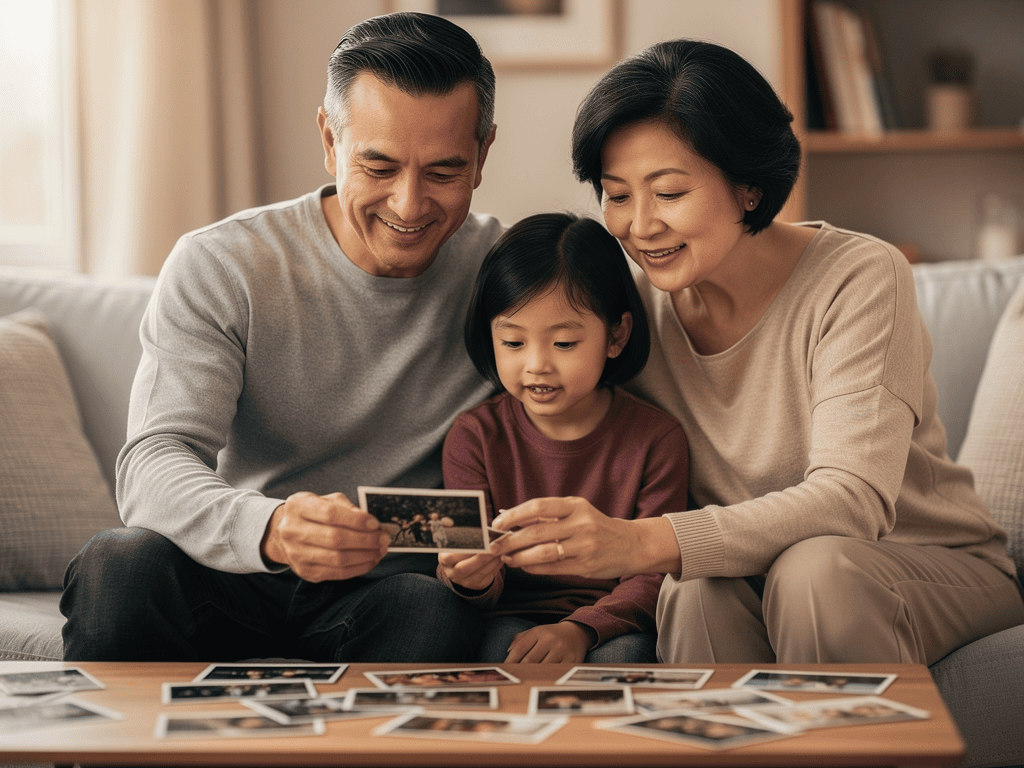
Photos and videos are a wonderful way to document and preserve traditions. When you take photos of shared activities, holidays, or rituals, you create visual memories that your grandchildren can look at later. These photos help your grandchildren remember the traditions and maintain them themselves.
Videos can be particularly valuable because they capture not only what happened but also the emotions and atmosphere. When you record videos of shared activities, your grandchildren can later not only see what happened but also hear how you laughed, how you told stories, or how you explained traditions. These videos are a valuable legacy for your grandchildren.
Mementos can also help preserve traditions. Perhaps you collect certain objects associated with traditions – a particular recipe book, a photo album, certain decorations, or other items. These mementos can later be passed on to your grandchildren and help keep traditions alive. When you use these mementos together with your grandchildren and explain what they mean, you help your grandchildren build a connection to the traditions.
Writing Down Traditions
Written documentation is an important way to preserve traditions. When you write down how certain rituals are performed, which stories are told, or what meaning certain traditions have, you ensure that this information is not lost. Your grandchildren can later use this written documentation to maintain the traditions themselves.
You can create a family book or traditions book where you document all important traditions. Write down how certain rituals are performed, which stories are told, which recipes are used, or what meaning certain traditions have. Also add photos, drawings, or other mementos to make the documentation more vivid.
When you document in writing, you can also involve your grandchildren. Let them write along, make drawings, or add their own thoughts and memories. When your grandchildren can participate in documentation, they will better understand and learn to value traditions. This shared documentation can itself become a tradition and helps keep traditions alive.
Dealing with Lost Traditions
Sometimes traditions are lost – perhaps because circumstances have changed, because certain people are no longer there, or because interests have changed. When traditions are lost, it is sad, but it does not mean they are lost forever. As grandparents, you can help revive lost traditions or find new ways to convey the values that stood behind the traditions.
When you notice that certain traditions are being lost, you can try to revive them. Perhaps you can reintroduce the traditions, adapt them to modern circumstances, or maintain them in a new way. What matters is that you do not give up and that you try to preserve the traditions, even when it is sometimes difficult.
Sometimes it is also okay to let go of traditions when they no longer fit or become a burden. Traditions should bring joy and strengthen the relationship between generations, not burden it. When a tradition no longer works or no longer brings joy to anyone, you can let it go and instead develop new traditions that better fit your current situation.
Reviving Traditions
When traditions have been lost, you can try to revive them. Perhaps you still remember how certain rituals were performed, or you have documentation or mementos that help you bring the traditions back to life. When you revive traditions, you can also adapt them to modern circumstances so they work again.
To revive traditions, you can also involve other family members. Ask your children, grandchildren, or other relatives if they remember certain traditions or if they have ideas on how to revive them. Together, you can bring traditions back to life and ensure they are not lost.
When you revive traditions, it is important to be patient and not expect everything to work perfectly immediately. Learning and maintaining traditions takes time. Be patient, try different approaches, and find out what works for you and your family. Over time, the revived traditions will become a natural part of your family life.
Finding New Ways to Pass On Old Values
Sometimes it is not possible to revive certain traditions, but the values that stood behind them are still important. In such cases, you can find new ways to convey these values, even if the form changes. The values are more important than the form – when you find new ways to convey important values, you preserve what is essential, even if the tradition itself changes.
When you find new ways to pass on old values, you can also use modern methods. Perhaps you can convey values through stories, games, activities, or conversations, even if the original tradition no longer works. What matters is that the values are passed on, not that the exact form is maintained.
As grandparents, you can help develop these new ways. Think about which values are important to you and how you can convey these values in a modern way. When you find new ways to pass on old values, you ensure that important values are not lost, even if the form changes. This flexibility helps keep traditions alive and ensures they remain relevant in the future.
Traditions as a Gift for the Future
Traditions are a gift you can give your grandchildren for the future. When you maintain and pass on traditions, you give your grandchildren not only beautiful memories but also values, orientation, and a sense of belonging that will accompany them throughout their lives. These traditions will shape your grandchildren and help them become responsible and compassionate people.
Your grandchildren may one day pass these traditions on to their own children, and thus the traditions will live on through generations. When you maintain and pass on traditions, you create something that endures beyond your own lifetime and will shape your family in the future as well. This continuity is a valuable gift for your grandchildren and for future generations.
Traditions are also a gift for yourself. When you maintain traditions and share them with your grandchildren, you create positive memories and strengthen the relationship with your grandchildren. These shared experiences are valuable and help strengthen the bond between generations. As grandparents, you can be proud to preserve and pass on traditions, and you can be sure that your grandchildren will value these traditions and one day pass them on themselves.
Different Categories of Traditions
Methods for Passing On Traditions
Values Conveyed Through Traditions
Tips for Passing On Traditions
- Maintain traditions regularly so they become habits
- Actively involve your grandchildren, not just as observers
- Explain the meaning and history behind traditions
- Be patient and do not expect immediate perfection
- Adapt traditions to modern circumstances if necessary
- Document traditions with photos, videos, or in writing
- Let your grandchildren contribute ideas and help shape traditions
- Create new traditions that fit your family
Traditions Particularly Valuable for Grandchildren
- Regular shared meals with stories and conversations
- Baking or cooking family recipes together
- Reading stories aloud or reading together
- Shared walks or trips to special places
- Celebrating birthdays and other important occasions
- Telling family stories and memories
- Maintaining seasonal rituals and festivals
- Shared crafts or creative activities
Signs That Traditions Remain Alive
- Grandchildren ask about certain traditions and rituals
- They tell others about their family traditions
- They want to perform certain traditions themselves
- They show interest in the history behind traditions
- They develop their own ideas for new traditions
- They associate positive memories with traditions