



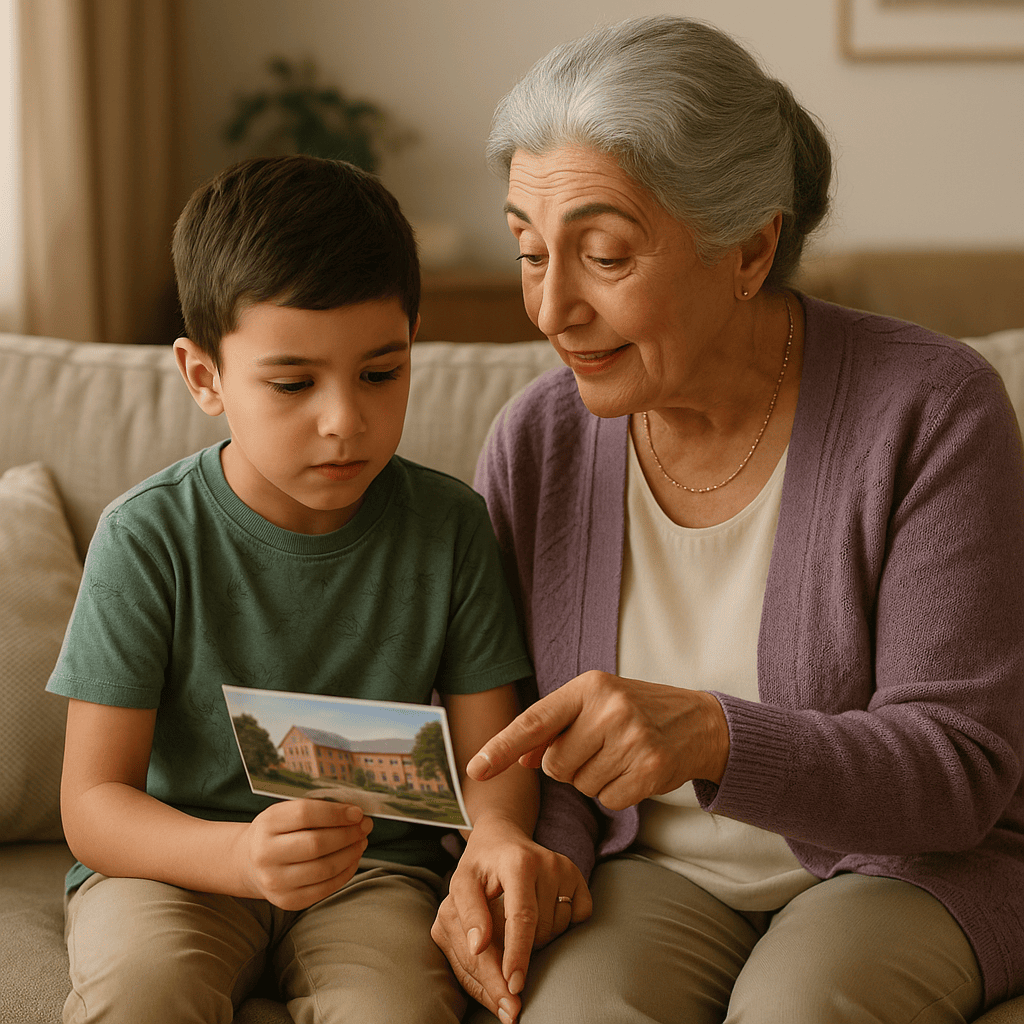
Why is it important to talk to grandchildren about nursing homes?
When a grandparent moves into a nursing home, it is a major change for the whole family. For grandchildren, this change can be particularly difficult to understand. They may wonder why Grandma or Grandpa no longer lives at home, whether they are still loved, or whether they are to blame for this situation. As grandparents, you can help your grandchildren understand and accept this change by speaking openly and empathetically with them.
Open conversations about the nursing home help your grandchildren better understand the situation and express their fears and concerns. If you do not talk to your grandchildren, they may feel left alone or develop false ideas. Through honest conversations, you can show your grandchildren that they are important and that their feelings are taken seriously. This strengthens the relationship between you and your grandchildren and helps them cope with the change.
Your grandchildren will remember these conversations for the rest of their lives. When you show them that it is okay to talk about difficult topics and that their questions are important, you give them an important tool that they can use in other life situations as well. This openness and empathy will strengthen your relationship with your grandchildren and help them become confident and empathetic people.
Openness creates trust
When you speak openly with your grandchildren about the nursing home, you show them that you trust them and that their opinion matters. This openness creates a sense of security and trust that is very valuable for the relationship between you and your grandchildren. When your grandchildren know they can talk to you about anything, they will also turn to you in the future when they have questions or concerns.
Openness does not mean that you have to tell all the details or that you have to answer all questions immediately. Rather, it means that you are honest and that you can admit when you yourself are uncertain. When you show that adults are sometimes uncertain too and that it is okay to ask questions, you help your grandchildren accept and deal with their own uncertainties.
This openness will also help your grandchildren learn to communicate openly and honestly themselves. When they see how you deal with difficult topics, they learn that it is important to talk about feelings and that it is okay to seek help when needed. This ability will help your grandchildren communicate openly and honestly in other life situations as well.
Taking fears and concerns seriously
Grandchildren often have fears and concerns when a grandparent moves into a nursing home. They may wonder if they are still loved, if they are to blame, or if they will also have to go to a nursing home when they get old. These fears are completely normal and should be taken seriously. As grandparents, you can help your grandchildren understand and overcome their fears.
It is important that you do not minimize or dismiss your grandchildren's fears. Even if your grandchildren's concerns may seem exaggerated to you, they are very real to your grandchildren. Take time to listen and understand what is on your grandchildren's minds. Show that you take their feelings seriously and that it is okay to be afraid or uncertain.
Through empathetic conversations, you can help your grandchildren overcome their fears. Explain that the nursing home is a place where Grandma or Grandpa is well cared for and that the love for the grandchildren does not diminish because of this. Show that the relationship with the grandchildren remains important and that regular visits and contact are still possible. This reassurance will help your grandchildren feel safer and better accept the change.
Finding age-appropriate explanations
The way you talk to your grandchildren about the nursing home should be adapted to your grandchildren's age. Younger children need simple, concrete explanations, while older children and teenagers can have more complex conversations. Adapt your explanations to your grandchildren's understanding and maturity so they can understand and process the information.
It is important that you are honest, but also that you prepare the information in a way that your grandchildren can understand. Use simple language and avoid complicated medical or legal terms. Explain the situation so that your grandchildren can understand what is happening and why it is happening, without overwhelming or frightening them.
Be patient and take time for questions. Your grandchildren will probably have many questions, and it is important that you can answer these questions. If you yourself are uncertain or cannot answer all questions, that is okay. Show that it is normal not to know everything and that you can search for answers together.
For younger children (3-6 years)
For younger children, you should use very simple and concrete explanations. Explain that Grandma or Grandpa now lives in a special house where there are many people who help. Use positive images and avoid negative associations. Explain that the nursing home is a place where Grandma or Grandpa is well cared for and where there are many activities.
For younger children, it is important that you emphasize that the love for the grandchildren remains the same. Explain that Grandma or Grandpa still loves the grandchildren and that regular visits are still possible. Show that the relationship with the grandchildren remains important and that the grandchildren continue to play an important role in Grandma or Grandpa's life.
Use stories or picture books to explain the topic. There are many children's books that deal with the topic of nursing homes or care. Read these books together with your grandchildren and use them as a conversation starter. Such stories can help make the topic tangible and answer questions your grandchildren may have.
For school children (7-12 years)
School children can already understand more complex explanations. You can explain that Grandma or Grandpa needs help in daily life and that the nursing home is a place where this help is provided professionally. Explain that there can be various reasons why someone moves into a nursing home and that this can be a normal and important decision.
For school children, it is important that you are honest, but also that you emphasize the positive aspects. Explain that the nursing home is a place where Grandma or Grandpa is well cared for, where there are many activities, and where they have contact with other people. Show that the nursing home does not mean that Grandma or Grandpa is forgotten, but that it is a place where they can live well.
School children often have many questions and want to understand exactly what is happening. Take time for these questions and answer them honestly. If you yourself are uncertain or cannot answer all questions, that is okay. Show that it is normal not to know everything and that you can search for answers together. This openness will help your grandchildren better understand and accept the situation.
For teenagers (13+ years)
Teenagers can already have very complex conversations and understand difficult aspects of the topic. You can be honest about the reasons why someone moves into a nursing home and also about the challenges that may be associated with it. It is important that you also emphasize the positive aspects and show that the nursing home can be an important and meaningful decision.
Teenagers often have their own ideas and fears about nursing homes. Take these seriously and talk about them. Explain that the nursing home does not mean that Grandma or Grandpa is forgotten, but that it is a place where they are well cared for and where they remain part of the family. Show that the relationship with the grandchildren remains important and that regular visits and contact are still possible.
Teenagers can also be actively involved in planning and designing visits. Ask them what they would like to do with Grandma or Grandpa and involve them in the planning. Show that their opinion matters and that they can make an important contribution to maintaining the relationship with Grandma or Grandpa. This involvement will help your grandchildren feel valued and actively participate in the situation.
Having empathetic conversations
Empathetic conversations about the nursing home are important so that your grandchildren can understand and accept the situation. It is important that you choose a calm and relaxed moment when you have time and are not distracted. Take time for the conversation and show that you are there for your grandchildren and that their questions and feelings are important.
It is also important that you are honest, but also empathetic. Use simple language and avoid complicated terms. Explain the situation so that your grandchildren can understand it without overwhelming or frightening them. Show that it is okay to ask questions and that you can search for answers together.
Let your grandchildren express their feelings and take them seriously. Even if your grandchildren's feelings may seem exaggerated to you, they are very real to your grandchildren. Show that you understand their feelings and that it is okay to be sad, angry, or uncertain. This acknowledgment will help your grandchildren process their feelings and cope with the situation.
The right time
The right time for a conversation about the nursing home is important. Choose a moment when you have time and are not distracted. Ideally, it is a calm moment when you and your grandchildren are relaxed and can focus on the conversation. Avoid having the conversation when you are stressed or when your grandchildren are tired or distracted.
It is also important that you do not have the conversation too early, but also not too late. If the move to the nursing home is already planned, you should talk to your grandchildren in time so they have time to process the information and ask questions. If you wait too long, your grandchildren may feel left alone or develop false ideas.
Sometimes it is also helpful to have several short conversations instead of one long conversation. Your grandchildren can then better process the information and have time to develop questions. Show that you are always there for questions and that it is okay to bring up the topic again and again.
Honest and simple language
It is important that you are honest, but also that you prepare the information in a way that your grandchildren can understand. Use simple language and avoid complicated medical or legal terms. Explain the situation so that your grandchildren can understand what is happening and why it is happening, without overwhelming or frightening them.
Also avoid negative formulations or statements that create fear. Instead of "Grandma is too old to live alone," you can say "Grandma now needs more help in daily life, and in the nursing home she gets this help from professionals." This positive formulation helps your grandchildren better understand and accept the situation.
It is also important that you can admit when you yourself are uncertain or cannot answer all questions. Show that it is normal not to know everything and that you can search for answers together. This openness will help your grandchildren accept their own uncertainties and deal with them.
Allowing and acknowledging feelings
Let your grandchildren express their feelings and take them seriously. Even if your grandchildren's feelings may seem exaggerated to you, they are very real to your grandchildren. Show that you understand their feelings and that it is okay to be sad, angry, or uncertain. This acknowledgment will help your grandchildren process their feelings and cope with the situation.
It is important that you do not minimize or dismiss your grandchildren's feelings. Even if you may think that your grandchildren's concerns are exaggerated, they are very real to your grandchildren. Take time to listen and understand what is on your grandchildren's minds. Show that you take their feelings seriously and that it is okay to have different feelings.
Also help your grandchildren name and understand their feelings. Ask how they feel and help them put their feelings into words. Show that it is okay to have different feelings and that feelings can also change. This support will help your grandchildren better understand and deal with their feelings.
Presenting the nursing home positively
It is important to present the nursing home positively so that your grandchildren understand that it is a good place where Grandma or Grandpa is well cared for. Explain that the nursing home is a place where there are many activities, where Grandma or Grandpa has contact with other people, and where they are professionally cared for. Show that the nursing home does not mean that Grandma or Grandpa is forgotten, but that it is a place where they can live well.
Also emphasize the benefits of the nursing home: professional care, regular meals, activities, and contact with other people. Explain that the nursing home is a place where Grandma or Grandpa is safe and where they get the support they need. This positive presentation will help your grandchildren better understand and accept the situation.
It is also important that you show that the relationship with the grandchildren remains important and that regular visits and contact are still possible. Explain that the grandchildren continue to play an important role in Grandma or Grandpa's life and that their visits are very much appreciated. This emphasis on the ongoing relationship will help your grandchildren feel safer and better accept the change.
Explaining benefits and opportunities
Explain to your grandchildren the benefits of the nursing home: professional care, regular meals, activities, and contact with other people. Show that the nursing home is a place where Grandma or Grandpa is safe and where they get the support they need. This explanation will help your grandchildren understand why the nursing home can be a good decision.
Also explain that the nursing home offers many opportunities: shared activities, outings, celebrations, and parties. Show that the nursing home is not only a place of care but also a place where Grandma or Grandpa can continue to be active and participate in life. This positive presentation will help your grandchildren see the nursing home as a positive place.
It is also important that you show that the grandchildren continue to be part of Grandma or Grandpa's life. Explain that the grandchildren can still visit, that they can participate in activities, and that their visits are very much appreciated. This emphasis on the ongoing relationship will help your grandchildren feel safer and better accept the change.
Planning visits and activities
Plan regular visits to the nursing home together with your grandchildren. Show that the visits are important and that Grandma or Grandpa looks forward to them. Involve your grandchildren in the planning and ask them what they would like to do with Grandma or Grandpa. This involvement will help your grandchildren feel valued and actively participate in the situation.
Think together about what activities you can do during visits: playing together, telling stories, looking at photos, singing, or simply being together. Show that visits do not have to be boring but can be beautiful moments that are valuable for both Grandma or Grandpa and the grandchildren.
It is also important that you set realistic expectations. Explain that visits can sometimes be short when Grandma or Grandpa is tired, and that this is okay. Show that it is important to pay attention to Grandma or Grandpa's needs and that even short visits are valuable. This realistic presentation will help your grandchildren have realistic expectations and experience visits positively.
Dealing with fears and concerns
Grandchildren often have fears and concerns when a grandparent moves into a nursing home. These fears are completely normal and should be taken seriously. As grandparents, you can help your grandchildren understand and overcome their fears by listening empathetically and finding reassuring answers.
It is important that you do not minimize or dismiss your grandchildren's fears. Even if your grandchildren's concerns may seem exaggerated to you, they are very real to your grandchildren. Take time to listen and understand what is on your grandchildren's minds. Show that you take their feelings seriously and that it is okay to be afraid or uncertain.
Through empathetic conversations, you can help your grandchildren overcome their fears. Explain that the nursing home is a place where Grandma or Grandpa is well cared for and that the love for the grandchildren does not diminish because of this. Show that the relationship with the grandchildren remains important and that regular visits and contact are still possible. This reassurance will help your grandchildren feel safer and better accept the change.
Common fears of grandchildren
Grandchildren often have various fears when a grandparent moves into a nursing home. Common fears are: that they are no longer loved, that they are to blame, that they will also have to go to a nursing home when they get old, or that Grandma or Grandpa is sad. These fears are completely normal and should be taken seriously.
It is important that you address these fears and find reassuring answers. Explain that the love for the grandchildren remains the same, that they are not to blame, and that the nursing home is a good place where Grandma or Grandpa is well cared for. Show that the relationship with the grandchildren remains important and that regular visits and contact are still possible.
Take time to listen and understand what is on your grandchildren's minds. Ask what fears they have and help them name and understand these fears. Show that it is okay to be afraid or uncertain and that you can search for solutions together. This support will help your grandchildren overcome their fears and feel safer.
Finding reassuring answers
Finding reassuring answers is important so that your grandchildren can feel safer. Explain that the nursing home is a place where Grandma or Grandpa is well cared for and that the love for the grandchildren does not diminish because of this. Show that the relationship with the grandchildren remains important and that regular visits and contact are still possible.
It is also important that you are honest, but also reassuring. Avoid promising things you cannot keep, but also show that there are many positive aspects. Explain that the nursing home is a good place where Grandma or Grandpa is safe and where they get the support they need. This reassurance will help your grandchildren feel safer and better accept the change.
Also show that you are there for your grandchildren and that they can always turn to you when they have questions or concerns. This support will help your grandchildren feel safer and know that they are not alone. This certainty will help your grandchildren overcome their fears and cope with the situation.
Maintaining the relationship with grandchildren
Even when a grandparent moves into a nursing home, it is important to continue maintaining the relationship with the grandchildren. Regular contact, visits, and shared activities help maintain the relationship and show the grandchildren that they remain important. As grandparents, you can help organize and design these contacts.
It is important that you show that the grandchildren continue to play an important role in Grandma or Grandpa's life. Explain that the visits are very much appreciated and that Grandma or Grandpa looks forward to seeing the grandchildren. Show that the relationship with the grandchildren remains important and that regular visits and contact are still possible.
This ongoing relationship will not only help the grandchildren but also Grandma or Grandpa. Regular visits and contact help maintain the connection and show that the family continues to stand together. This support will help everyone involved cope with the change and continue to maintain the relationship.
Maintaining regular contact
Regular contact is important to maintain the relationship with the grandchildren. Plan regular visits to the nursing home together with your grandchildren and show that these visits are important. Involve your grandchildren in the planning and ask them what they would like to do with Grandma or Grandpa. This involvement will help your grandchildren feel valued and actively participate in the situation.
In addition to visits, you can also use other contact options: phone calls, letters, photos, or small gifts. Show that there are many ways to stay in touch, even if visits are not as frequent as before. These various contact options will help your grandchildren maintain the relationship and continue to feel connected.
It is also important that you set realistic expectations. Explain that visits can sometimes be short when Grandma or Grandpa is tired, and that this is okay. Show that it is important to pay attention to Grandma or Grandpa's needs and that even short visits are valuable. This realistic presentation will help your grandchildren have realistic expectations and experience visits positively.
Designing shared activities
Shared activities during visits help maintain the relationship with the grandchildren and create beautiful moments. Think together about what activities you can do: playing together, telling stories, looking at photos, singing, or simply being together. Show that visits do not have to be boring but can be beautiful moments that are valuable for both Grandma or Grandpa and the grandchildren.
It is important that the activities are adapted to Grandma or Grandpa's condition. If Grandma or Grandpa is tired or cannot be as active, you should choose quieter activities. Show that it is important to pay attention to Grandma or Grandpa's needs and that even quiet moments are valuable. This consideration will help your grandchildren develop empathy and understand that it is important to be considerate of others.
Also involve your grandchildren in planning the activities. Ask them what they would like to do with Grandma or Grandpa and show that their ideas are important. This involvement will help your grandchildren feel valued and actively participate in the situation. Together, you can create beautiful moments that are valuable for both Grandma or Grandpa and the grandchildren.
Practical support for the family
As grandparents, you can also provide practical support to help the family cope with the situation. You can help organize visits, care for the grandchildren when the parents are at the nursing home, or with other practical tasks. This support will help the whole family and shows that you continue to be an important part of the family.
It is also important that you show that you are there for the family and that you can help when help is needed. Show that you understand that this situation is difficult for everyone and that you are willing to help where you can. This support will help the whole family cope with the situation and continue to maintain the relationship.
This practical support will not only help the family but also you. When you can actively help, you feel useful and valued. This positive experience will help you cope with the situation and continue to be an important part of the family. Your grandchildren will appreciate this support and remember how important you are to the family.
Age-appropriate explanations for nursing homes
Common questions from grandchildren about nursing homes
Possible activities during visits
Tips for empathetic conversations
- Choose a calm moment without distractions
- Use simple and honest language
- Let your grandchildren express their feelings
- Take fears and concerns seriously
- Answer questions honestly and patiently
- Show that it is okay to be uncertain
- Plan several short conversations instead of one long one
Emphasizing positive aspects of nursing homes
- Professional care and support
- Regular meals and care
- Many activities and offers
- Contact with other people
- Safety and support in daily life
- Continue to be part of the family
- Regular visits are possible
Signs that grandchildren understand the situation
- Grandchildren ask questions and show interest
- They can express their feelings
- They understand that love remains the same
- They look forward to visits
- They show empathy for Grandma or Grandpa
- They accept the change
- They stay in contact with Grandma or Grandpa