



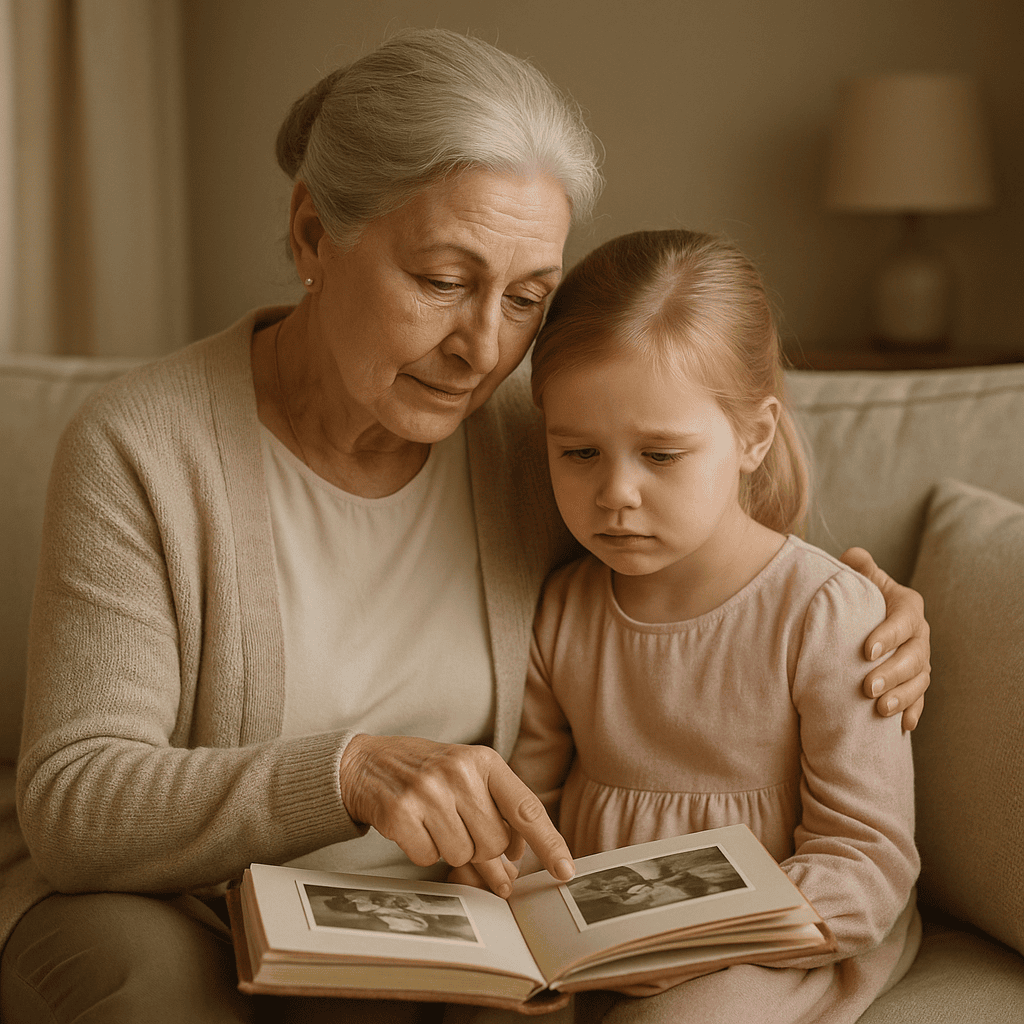
Why is it important to talk to grandchildren about death?
Death is a natural part of life, but for children it can be very confusing and frightening. As grandparents, you have a special responsibility to help your grandchildren understand and cope with death. When you talk openly and sensitively with your grandchildren about death, you give them important tools that will accompany them throughout their lives.
Your grandchildren will face death in the course of their lives – whether through the loss of a pet, a family member, or a friend. If you talk to your grandchildren about death early on and help them understand their feelings, you will better prepare them for these difficult moments. Your support can help your grandchildren develop healthy coping strategies and deal with grief.
When you talk to your grandchildren about death, you also show them that it is okay to be sad and to show feelings. You convey to them that grief is a natural part of life and that there are people who support them. This openness can strengthen the relationship between you and your grandchildren and help them feel safer and more understood.
Natural part of life
Death is a natural part of the life cycle, just like birth and growth. When you help your grandchildren understand that death is part of life, you can take away their fear and give them a healthy perspective. Explain that all living things – people, animals, plants – have a life cycle and that death is at the end of this cycle.
It is important that you are honest but also hopeful. Explain that death is sad, but that life also offers many beautiful moments. Show your grandchildren that it is important to enjoy life and appreciate the time with loved ones. This balance between reality and hope can help your grandchildren develop a healthy attitude toward death.
When you present death as a natural part of life, you also help your grandchildren to be less afraid. Children who understand that death is part of life are often better prepared when they face loss. Your openness and honesty can help your grandchildren accept death as part of life without developing excessive fear.
Emotional support for grandchildren
When you talk to your grandchildren about death, you offer them emotional support in a difficult time. Your grandchildren need someone who listens to them, answers their questions, and takes their feelings seriously. As grandparents, you can take on this important role and help your grandchildren process their grief.
Your support can help your grandchildren develop healthy coping strategies. When you show that it is okay to be sad and that there are different ways to deal with grief, you help your grandchildren find their own strategies. These skills will help your grandchildren deal with difficult situations in the future as well.
When you talk to your grandchildren about death, you also show them that they are not alone. Your grandchildren see that adults can also be sad and that it is normal to show feelings. This openness can strengthen the relationship between you and your grandchildren and help them feel safer. Your support can help your grandchildren feel understood and loved, even in difficult times.
Age-appropriate explanations
The way you talk to your grandchildren about death should be adapted to the age and developmental stage of your grandchildren. Younger children understand death differently than older children or teenagers, and it is important that you adjust your explanations accordingly. When you communicate age-appropriately, you can ensure that your grandchildren understand what is being said and are not overwhelmed.
For younger children, you should use simple, concrete explanations and avoid abstract concepts. Older children can have more complex conversations and often have more questions. Teenagers can have philosophical discussions and may want to share their own thoughts and feelings. Adapt your conversations to the age and maturity of your grandchildren.
It is also important that you pay attention to your grandchildren's signals. If they look confused or have many questions, take time to explain and clarify. If they want to change the topic or don't want to talk about it anymore, respect that. Your grandchildren should determine the pace at which they want to engage with the topic.
Toddlers (2-5 years)
Toddlers do not yet fully understand death and often see it as something temporary. You can explain that death means that someone no longer breathes, no longer eats, and no longer speaks. Use simple, concrete words and avoid euphemisms like "fallen asleep" or "gone away" that can be confusing.
For toddlers, it is important that you are honest but also reassuring. Explain that death is sad, but that the person who died is no longer in pain. Show your grandchildren that it is okay to be sad and that you are there for them. Your support can help toddlers feel safer.
Toddlers can also be supported through rituals and memories. Perhaps you can look at photos together, tell stories, or perform small rituals to remember the deceased person. These activities can help toddlers process the loss and preserve memories.
School children (6-10 years)
School children begin to understand that death is final and that all living things will die at some point. They often have many questions and want to understand exactly what happens. Be patient and answer their questions honestly and age-appropriately. Explain that death means that the body no longer functions and that the person will not come back.
School children can also have more complex emotions and may develop fear that other people might also die. Take these fears seriously and reassure your grandchildren without making unrealistic promises. Explain that most people live to be very old and that it is normal to be afraid, but that you are there for them.
For school children, books, stories, or films can also be helpful to talk about death. Use these media as conversation starters and discuss together what happened and how the characters deal with the loss. These conversations can help school children understand and process their own feelings.
Teenagers (11-14 years)
Teenagers already understand death very well and can have philosophical discussions. They may want to talk about the meaning of life, life after death, or spiritual questions. Be open to these conversations and respect your grandchildren's thoughts and feelings, even if they differ from yours.
Teenagers can also experience very intense grief and may have difficulty expressing their feelings. Show that you are there for them and that it is okay to be sad. Encourage your grandchildren to share their feelings, but also respect when they need time for themselves. Your support can help teenagers process their grief.
For teenagers, creative forms of expression can also be helpful – perhaps they want to write, paint, make music, or find other ways to express their feelings. Support these activities and show interest in what your grandchildren create. These creative forms of expression can help teenagers process their grief and preserve memories.
How to start the conversation?
Starting the conversation about death can be difficult, but it is important that you do it. Don't wait for your grandchildren to ask questions – sometimes they need help to address the topic. When you start the conversation, you show your grandchildren that it is okay to talk about death and that you are there for them.
The best time for a conversation is when you have time and are in a quiet, familiar environment. Avoid starting the conversation when you are stressed or when your grandchildren are distracted. Choose a moment when you are both relaxed and have time for questions and conversations.
Start the conversation sensitively and openly. Ask your grandchildren what they already know about death or if they have questions. Listen to what they have to say and take their thoughts and feelings seriously. Show that you are there for them and that there are no wrong questions or feelings.
The right time
The right time to talk about death depends on the situation. If someone has died, you should talk to your grandchildren as soon as possible so they hear the news from you and not from others. If you want to talk about death in general, you can choose a quiet moment when you have time and your grandchildren are receptive.
It is important that you don't wait until a loss occurs. If you talk to your grandchildren about death early on, you can better prepare them. Use natural opportunities – perhaps when a pet dies, when you see a funeral, or when the topic comes up in a book or film. These moments can be good conversation starters.
When you start the conversation, you should also pay attention to whether your grandchildren are ready. If they are tired, stressed, or distracted, it may not be the right time. Wait for a moment when you are both relaxed and have time for a conversation. Your grandchildren should feel that you are taking time for them.
Sensitive conversation guidance
When you talk to your grandchildren about death, it is important to be sensitive and patient. Use a calm, reassuring voice and take time for questions and conversations. Show that you are there for your grandchildren and that their thoughts and feelings are important. Your sensitivity can help your grandchildren feel safer.
Listen actively to what your grandchildren have to say and ask questions to understand what they think and feel. Avoid minimizing their feelings or saying they shouldn't be sad. Instead, show that it is okay to be sad and that you are there for them. Your support can help your grandchildren process their grief.
When you have the conversation, you should also be honest but also hopeful. Explain the reality of death, but also show that life offers many beautiful moments and that memories live on. This balance between reality and hope can help your grandchildren develop a healthy perspective.
Dealing with grief
Grief is a natural response to loss, and children grieve differently than adults. As grandparents, you can help your grandchildren understand and process their grief. When you show that grief is normal and that there are different ways to deal with it, you help your grandchildren develop healthy coping strategies.
Children can express grief in different ways – some become sad and cry, some become angry or aggressive, some withdraw. It is important that you accept these different forms of expression and help your grandchildren understand their feelings. Show that there is no "right" way to grieve and that everyone reacts differently.
Your support can help your grandchildren process their grief. When you are there for your grandchildren, listen, and take their feelings seriously, you show them that they are not alone. Your presence and support can help your grandchildren feel safer and cope with their grief.
Recognizing grief in children
Grief in children can manifest differently than in adults. Some children become very sad and cry a lot, others become angry, aggressive, or withdraw. Some children also show their grief through physical symptoms such as headaches or stomachaches. It is important that you recognize these different signs and support your grandchildren.
Children can also experience their grief in waves – sometimes they seem fine, and then they suddenly become very sad again. This is normal and part of the grieving process. Show patience and understanding when your grandchildren express their grief in different ways. Your support can help your grandchildren process their feelings.
If you notice that your grandchildren are very sad over a longer period, have difficulty sleeping or eating, or withdraw, you may want to seek professional help. Grief is normal, but if it lasts too long or affects daily life, professional support can be helpful.
Supporting grandchildren in grief
When your grandchildren are grieving, it is important that you are there for them and support them. Listen when they want to talk and respect when they need time for themselves. Show that it is okay to be sad and that you are there for them. Your presence and support can help your grandchildren process their grief.
You can also support your grandchildren through rituals and memories. Perhaps you can look at photos together, tell stories, or perform small rituals to remember the deceased person. These activities can help your grandchildren express their grief and preserve memories.
It is also important that you show your own feelings. If you are sad yourself, it is okay to show that. Your grandchildren see that adults can also be sad and that it is normal to show feelings. This openness can strengthen the relationship between you and your grandchildren and help them feel safer.
Rituals and memories
Rituals can play an important role in coping with grief. They provide structure and help process the loss and preserve memories. As grandparents, you can develop rituals together with your grandchildren that help them cope with the loss and honor the deceased person.
Memories are an important part of the grieving process. When you share and preserve memories together with your grandchildren, you help them keep the deceased person in their hearts. These memories can help your grandchildren feel connected to the deceased person and process their grief.
Rituals and memories can also help strengthen the relationship between you and your grandchildren. When you think about the deceased person together and share memories, you create positive moments in a difficult time. These shared experiences can help your grandchildren feel supported and loved.
Creating shared rituals
Shared rituals can help your grandchildren cope with the loss and honor the deceased person. Perhaps you can light a candle together, look at photos, tell stories, or visit a special place associated with the deceased person. These rituals can help your grandchildren express their grief and preserve memories.
Rituals can also be performed regularly – perhaps on special days such as the deceased person's birthday or memorial days. These regular rituals can help your grandchildren maintain a connection to the deceased person and process their grief. Your support in these rituals can help your grandchildren feel safer.
It is important that the rituals are meaningful for your grandchildren. Let your grandchildren help decide which rituals you want to perform and show that their ideas and wishes are important. When the rituals are personally meaningful for your grandchildren, they can better help them cope with the loss.
Preserving memories
Memories are an important part of the grieving process and can help your grandchildren keep the deceased person in their hearts. Perhaps you can create a memory book together, collect photos, or write down stories. These activities can help your grandchildren preserve their memories and process their grief.
You can also talk about the deceased person together with your grandchildren and share memories. Tell stories that you experienced together or talk about the qualities you appreciated about the person. These conversations can help your grandchildren feel connected to the deceased person and process their grief.
Memories can also be preserved through creative activities. Perhaps your grandchildren want to paint, write, or do something else creative to express their memories. Support these activities and show interest in what your grandchildren create. These creative forms of expression can help your grandchildren process their grief and preserve memories.
Common questions from children
Children often have many questions about death, and it is important that you answer these questions honestly and age-appropriately. When you are open to questions and answer patiently, you help your grandchildren understand death and reduce their fears. Your openness can help your grandchildren feel safer.
Some questions can be difficult, and it is okay if you don't have all the answers. Show that there are questions that no one has a definitive answer to and that it is okay to be uncertain. Your honesty can help your grandchildren understand that death is a complex topic and that there are different perspectives.
It is also important that you pay attention to your grandchildren's signals. If they have many questions, take time to answer. If they want to change the topic or don't want to talk about it anymore, respect that. Your grandchildren should determine the pace at which they want to engage with the topic.
What happens after death?
This question concerns many children, and there is no simple answer. If you are spiritual or religious, you can share your beliefs. If not, you can explain that no one knows exactly what happens after death, but that many people believe that the soul lives on or that the person lives on in people's memories.
It is important that you are honest and respect different perspectives. Explain that there are different faiths and beliefs and that everyone can have their own point of view. Show that it is okay to have questions and that no one has all the answers. Your openness can help your grandchildren develop their own thoughts.
You can also explain that the person who died lives on in people's memories. Tell how the deceased person influenced the world and how their values and qualities live on in other people. This perspective can help your grandchildren understand that death does not mean the end of all connections.
Will grandma/grandpa come back?
Younger children in particular often ask this question, and it is important that you answer honestly. Explain that death is final and that the person will not come back. Use simple, clear words and avoid euphemisms that can be confusing. Your honesty can help your grandchildren understand the loss.
At the same time, you can explain that the person lives on in memories and that you can think about them together. Show that there are ways to maintain the connection to the deceased person even if they are no longer physically present. This balance between reality and hope can help your grandchildren process the loss.
If your grandchildren are sad because the person won't come back, take their grief seriously and show that you are there for them. Explain that it is okay to be sad and that you can think about the person together. Your support can help your grandchildren process their grief and preserve memories.
Professional support
Sometimes professional support can be helpful, especially if your grandchildren are grieving very intensely or have difficulty coping with the loss. Grief counselors, psychologists, or other professionals can help your grandchildren process their grief and develop healthy coping strategies.
If you notice that your grandchildren are very sad over a longer period, have difficulty sleeping or eating, withdraw, or show other signs of persistent grief, you may want to seek professional help. Grief is normal, but if it lasts too long or affects daily life, professional support can be helpful.
Professional support does not mean that you have failed. On the contrary – it shows that you care about your grandchildren's well-being and that you are willing to seek help when it is needed. Your care can help your grandchildren get the support they need to process their grief.
Age-appropriate explanations about death
Signs of grief in children
Ideas for shared rituals
Tips for conversations about death
- Use simple, clear words and avoid euphemisms
- Be honest but also reassuring and hopeful
- Listen actively and take questions and feelings seriously
- Adapt your explanations to your grandchildren's age
- Show that it is okay to be sad
- Respect your grandchildren's pace in the conversation
What you should avoid
- Using euphemisms like "fallen asleep" or "gone away"
- Minimizing or ignoring your grandchildren's feelings
- Making unrealistic promises
- Completely avoiding the topic
- Giving too many details that could be overwhelming
- Comparing your grandchildren's grief with your own
How you can support your grandchildren
- Be there for your grandchildren and listen
- Show that grief is normal and okay
- Create rituals and memories together
- Be patient and respect your grandchildren's pace
- Seek professional help if necessary
- Show your own feelings and live openness